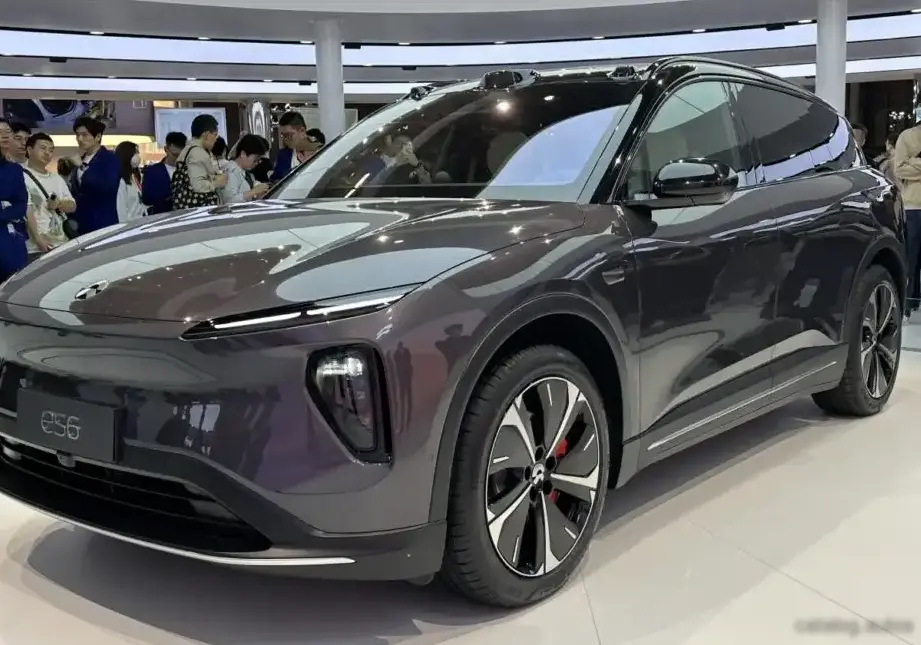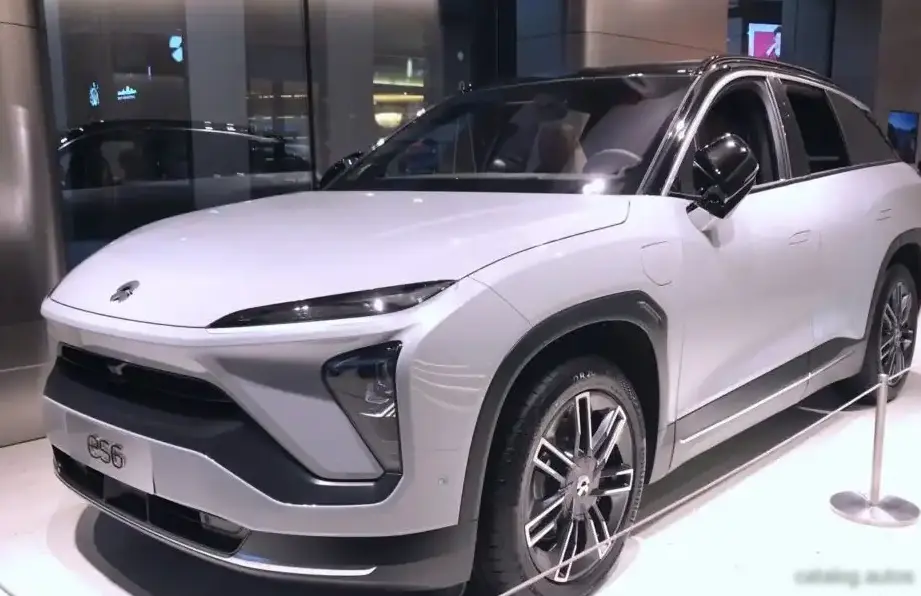
The NIO ES6, specifically the 100 kWh (435 Hp) 4WD Electric variant, represents a significant entry into the burgeoning premium electric SUV market. Introduced in 2019 and produced through April 2023, the ES6 was NIO’s second mass-produced vehicle, following the ES8. It aimed to provide a compelling blend of performance, range, and technology, targeting a growing segment of consumers seeking a sustainable and luxurious driving experience. The ES6 I, as the first generation is known, played a crucial role in establishing NIO as a major player in the Chinese EV landscape and began the company’s expansion into international markets.
Technical Specifications
| Brand | NIO |
| Model | ES6 |
| Generation | ES6 I |
| Type | 100 kWh (435 Hp) 4WD Electric |
| Start of production | 2019 |
| End of production | April, 2023 |
| Powertrain Architecture | BEV (Electric Vehicle) |
| Body type | SUV |
| Seats | 5 |
| Doors | 5 |
| Fuel Type | Electricity |
| Acceleration 0 – 100 km/h | 5.6 sec |
| Acceleration 0 – 62 mph | 5.6 sec |
| Acceleration 0 – 60 mph | 5.3 sec |
| Maximum speed | 200 km/h (124.27 mph) |
| Gross battery capacity | 100 kWh |
| All-electric range | 600 km (372.82 mi) |
| Electric motor power (Front) | 218 Hp |
| Electric motor location (Front) | Front axle, Transverse |
| Electric motor power (Rear) | 218 Hp |
| Electric motor location (Rear) | Rear axle, Transverse |
| System power | 435 Hp |
| System torque | 610 Nm (449.91 lb.-ft.) |
| Trunk (boot) space – minimum | 584 l (20.62 cu. ft.) |
| Trunk (boot) space – maximum | 1433 l (50.61 cu. ft.) |
| Length | 4850 mm (190.94 in.) |
| Width | 1965 mm (77.36 in.) |
| Height | 1758 mm (69.21 in.) |
| Wheelbase | 2900 mm (114.17 in.) |
| Front track | 1668 mm (65.67 in.) |
| Rear track | 1672 mm (65.83 in.) |
| Drag coefficient (Cd) | 0.29 |
| Drivetrain Architecture | One electric motor drives the front wheels, one electric motor drives the rear wheels. |
| Drive wheel | All wheel drive (4×4) |
| Number of gears | 1 |
| Gearbox type | Automatic transmission |
| Front suspension | Double wishbone |
| Rear suspension | Independent multi-link suspension |
| Front brakes | Ventilated discs |
| Rear brakes | Ventilated discs |
| Assisting systems | ABS (Anti-lock braking system) |
| Tires size | 255/55 R19 |
| Wheel rims size | 19 |
Powertrain & Engine Architecture
The NIO ES6 100 kWh utilizes a dual-motor, all-wheel-drive (AWD) Battery Electric Vehicle (BEV) powertrain. Unlike traditional internal combustion engine vehicles, the ES6 doesn’t have an “engine” in the conventional sense. Instead, it employs two permanent magnet synchronous motors – one driving the front axle and the other powering the rear. Each motor produces 218 horsepower, combining for a total system output of 435 horsepower and 610 Nm (449.91 lb.-ft.) of torque. The 100 kWh battery pack, sourced from CATL, is a lithium-ion unit providing a claimed range of 600 km (372.82 miles) under the New European Driving Cycle (NEDC) standard. The vehicle features a single-speed automatic transmission, typical of most electric vehicles, as the electric motors deliver instant torque across a wide RPM range, negating the need for multiple gears. NIO’s battery management system (BMS) is a key component, optimizing battery performance, longevity, and safety. The system also supports fast charging capabilities, allowing for significant range replenishment in relatively short periods.
Driving Characteristics
The ES6 100 kWh 4WD delivers brisk acceleration, achieving 0-60 mph in approximately 5.3 seconds. The dual-motor setup provides excellent traction and stability, particularly in adverse weather conditions. The instant torque characteristic of electric motors results in a responsive and engaging driving experience. Compared to potential lower-range ES6 models with smaller battery packs or single-motor configurations, the 100 kWh variant offers significantly improved range and acceleration. While the single-speed transmission simplifies the driving experience, it does mean a lack of traditional gear changes. The regenerative braking system allows for one-pedal driving in certain situations, enhancing efficiency and driver convenience. The ES6’s weight, inherent to its large battery pack, is noticeable, but the well-tuned suspension mitigates much of this, providing a comfortable ride.
Equipment & Trim Levels
The ES6 100 kWh typically came well-equipped, reflecting its positioning as a premium electric SUV. Standard features included a large touchscreen infotainment system, a digital instrument cluster, leather upholstery, heated and ventilated front seats, a panoramic sunroof, and a comprehensive suite of advanced driver-assistance systems (ADAS) such as adaptive cruise control, lane keeping assist, and automatic emergency braking. NIO offered a range of optional extras, including a premium sound system, Nappa leather upholstery, and advanced autonomous driving features. The interior design emphasized minimalism and a high-tech aesthetic. The ES6 also featured NIO’s unique user interface and connectivity services, including over-the-air software updates.
Chassis & Braking
The ES6 utilizes a double wishbone suspension setup at the front and an independent multi-link suspension at the rear, providing a comfortable and controlled ride. Ventilated disc brakes are fitted on all four wheels, offering ample stopping power. The electronic stability control (ESC) system and anti-lock braking system (ABS) work in conjunction to enhance safety and stability. The ES6’s chassis is designed to accommodate the weight of the large battery pack while maintaining a relatively low center of gravity, contributing to its handling characteristics. The standard tire size is 255/55 R19, providing a good balance between comfort and grip.
Market Reception & Comparison
The NIO ES6 was generally well-received by critics and consumers alike. It was praised for its spacious interior, long range, strong performance, and advanced technology. Compared to other electric SUVs in its class, such as the Tesla Model Y and the Audi e-tron, the ES6 offered a competitive combination of features and value. The ES6’s range was comparable to the Model Y Long Range, while its interior was often lauded for its higher perceived quality. However, some critics noted that NIO’s charging infrastructure was less developed than Tesla’s, particularly outside of China. Fuel economy, being an electric vehicle, is measured in kilowatt-hours per 100 kilometers (kWh/100km), and the ES6’s efficiency was competitive within its segment.
Legacy
The NIO ES6 played a pivotal role in establishing NIO as a credible competitor in the electric vehicle market. The 100 kWh variant, with its extended range and strong performance, became a popular choice among early adopters. While production of the ES6 I ended in 2023 with the introduction of a refreshed model, the original ES6 remains a sought-after vehicle in the used car market. The powertrain has proven to be relatively reliable, with few widespread issues reported. The ES6’s success paved the way for NIO’s subsequent models and its continued expansion into global markets. The vehicle demonstrated the viability of Chinese EV manufacturers and helped accelerate the transition towards sustainable transportation.