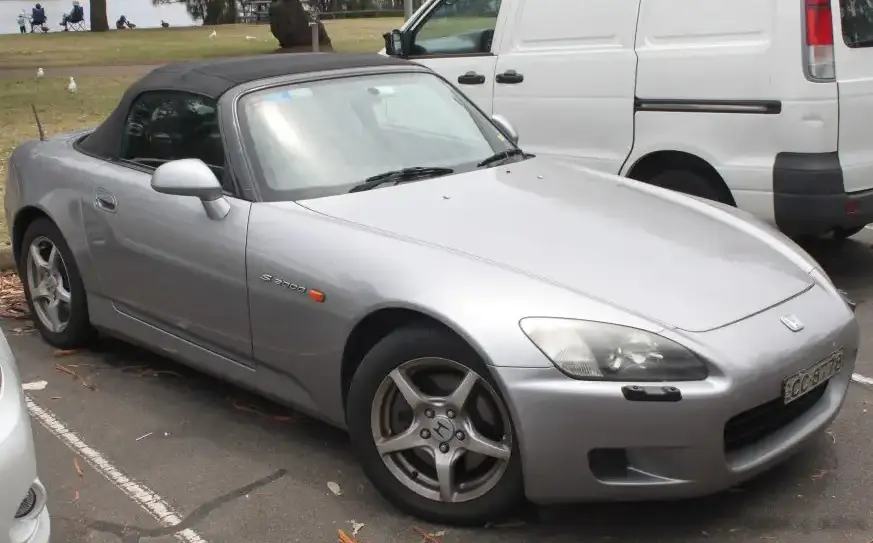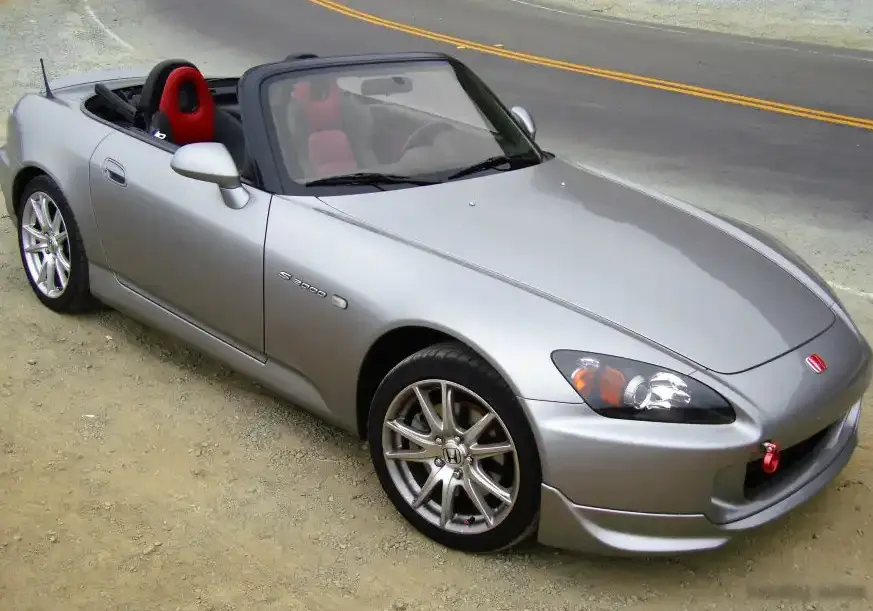
The Honda S2000, specifically the AP1 variant produced from 2004 to 2009, represents a high-water mark in Honda’s sports car lineage. This iteration, often referred to as the facelifted AP1, built upon the foundation laid by the original S2000 (introduced in 1999) with a larger engine and refinements to the chassis and styling. Positioned as a pure roadster, the S2000 aimed to deliver an engaging, high-revving driving experience, appealing to enthusiasts who prioritized performance and handling over outright luxury. It was sold primarily in North America, Japan, and Europe, becoming a cult favorite for its precise handling and naturally aspirated engine.
Technical Specifications
| Brand | Honda |
| Model | S2000 |
| Generation | S2000 (AP1, facelift 2004) |
| Type (Engine) | 2.2 (242 Hp) |
| Start of production | 2004 |
| End of production | 2009 |
| Powertrain Architecture | Internal Combustion engine |
| Body type | Cabriolet |
| Seats | 2 |
| Doors | 2 |
| Fuel consumption (economy) – urban | 13.2 l/100 km (17.8 US mpg, 21.4 UK mpg, 7.6 km/l) |
| Fuel consumption (economy) – extra urban | 7.9 l/100 km (29.8 US mpg, 35.8 UK mpg, 12.7 km/l) |
| Fuel consumption (economy) – combined | 9.9 l/100 km (23.8 US mpg, 28.5 UK mpg, 10.1 km/l) |
| Fuel Type | Petrol (Gasoline) |
| Acceleration 0 – 100 km/h | 6.2 sec |
| Acceleration 0 – 62 mph | 6.2 sec |
| Acceleration 0 – 60 mph | 5.9 sec |
| Maximum speed | 240 km/h (149.13 mph) |
| Emission standard | Euro 4 |
| Weight-to-power ratio | 5.2 kg/Hp, 193.6 Hp/tonne |
| Weight-to-torque ratio | 5.7 kg/Nm, 176.8 Nm/tonne |
| Power | 242 Hp @ 7800 rpm |
| Power per litre | 112.2 Hp/l |
| Torque | 221 Nm @ 6500-7500 rpm (163 lb.-ft. @ 6500-7500 rpm) |
| Maximum engine speed | 8000 rpm |
| Engine layout | Front, Longitudinal |
| Engine Model/Code | F22B |
| Engine displacement | 2157 cm3 (131.63 cu. in.) |
| Number of cylinders | 4 |
| Engine configuration | Inline |
| Cylinder Bore | 87 mm (3.43 in.) |
| Piston Stroke | 90.7 mm (3.57 in.) |
| Compression ratio | 11.1:1 |
| Number of valves per cylinder | 4 |
| Fuel injection system | Multi-port manifold injection |
| Engine aspiration | Naturally aspirated engine |
| Valvetrain | DOHC, VTEC |
| Engine oil capacity | 4.8 l (5.07 US qt | 4.22 UK qt) |
| Coolant | 6.5 l (6.87 US qt | 5.72 UK qt) |
| Kerb Weight | 1250 kg (2755.78 lbs.) |
| Max. weight | 1535 kg (3384.1 lbs.) |
| Max load | 285 kg (628.32 lbs.) |
| Trunk (boot) space – minimum | 160 l (5.65 cu. ft.) |
| Fuel tank capacity | 50 l (13.21 US gal | 11 UK gal) |
| Length | 4135 mm (162.8 in.) |
| Width | 1750 mm (68.9 in.) |
| Height | 1285 mm (50.59 in.) |
| Wheelbase | 2400 mm (94.49 in.) |
| Front track | 1470 mm (57.87 in.) |
| Rear (Back) track | 1510 mm (59.45 in.) |
| Ride height (ground clearance) | 130 mm (5.12 in.) |
| Drag coefficient (Cd) | 0.37 |
| Minimum turning circle (turning diameter) | 10.8 m (35.43 ft.) |
| Drivetrain Architecture | The Internal combustion engine (ICE) drives the rear wheels of the vehicle. |
| Drive wheel | Rear wheel drive |
| Number of gears and type of gearbox | 6 gears, manual transmission |
| Front suspension | Double wishbone |
| Rear suspension | Double wishbone |
| Front brakes | Ventilated discs |
| Rear brakes | Disc |
| Assisting systems | ABS (Anti-lock braking system) |
| Steering type | Steering rack and pinion |
| Power steering | Electric Steering |
| Tires size | Front wheel tires: 215/45 R17Rear wheel tires: 245/40 R17 |
| Wheel rims size | Front wheel rims: 7.0J x 17Rear wheel rims: 8.5J x 17 |
Powertrain & Engine Architecture
The 2004-2009 S2000 AP1 featured the F22B inline-four engine, displacing 2.2 liters. This was an increase from the original AP1’s 2.0-liter engine, addressing criticisms of the earlier model’s lack of low-end torque. The F22B utilized Honda’s VTEC (Variable Valve Timing and Lift Electronic Control) system, which switched between two distinct camshaft profiles. At lower RPMs, a mild cam profile provided improved fuel efficiency and drivability. Above 6,000 rpm, the VTEC system engaged a more aggressive cam profile, dramatically increasing valve lift and allowing the engine to rev freely to its 8,000 rpm redline. Fuel delivery was handled by a multi-point fuel injection system. The engine was longitudinally mounted, driving the rear wheels. The transmission was a close-ratio 6-speed manual, crucial for maximizing the engine’s performance potential. There was no automatic transmission option for the S2000.
Driving Characteristics
The S2000 AP1 was renowned for its precise handling and exhilarating driving experience. The 242 horsepower and 163 lb-ft of torque, while not overwhelming by modern standards, were delivered in a linear and predictable manner. The engine demanded to be revved to unlock its full potential, rewarding drivers with a thrilling surge of power as it approached the redline. The 6-speed manual transmission featured short throws and a precise gate, encouraging spirited shifting. The car’s relatively lightweight construction (around 2,755 lbs) contributed to its nimble handling and responsive steering. The suspension, featuring double wishbones at both the front and rear, provided excellent body control and minimized roll during cornering. While the engine offered usable power throughout the rev range, the peak torque figure required drivers to maintain momentum and utilize the gearbox effectively.
Equipment & Trim Levels
The S2000 AP1 was relatively sparsely equipped, focusing on the core driving experience. Standard features included power windows and locks, air conditioning, and a basic audio system. The interior was functional and driver-focused, with supportive bucket seats and a well-placed steering wheel. Optional extras included a premium audio system, leather upholstery, and a hardtop convertible roof. The AP1 did not offer a wide range of trim levels; it was largely sold as a single, well-equipped model with a few available options.
Chassis & Braking
The S2000’s chassis was a key element of its handling prowess. It featured a rigid, unit-body construction with extensive use of high-strength steel. The suspension utilized double wishbones at all four corners, providing precise wheel control and minimizing body roll. Braking duties were handled by ventilated discs at the front and solid discs at the rear, equipped with an Anti-lock Braking System (ABS). The steering was a rack-and-pinion system with electric power assistance, offering precise and responsive feedback.
Market Reception & Comparison
The S2000 AP1 was widely praised by automotive critics for its exceptional handling, high-revving engine, and engaging driving experience. It was often compared to other roadsters, such as the Mazda MX-5 Miata and the BMW Z3/Z4. While the Miata offered a more affordable and accessible entry point to the roadster market, the S2000 provided significantly more power and performance. Compared to the BMW Z3/Z4, the S2000 was often lauded for its more precise handling and more rewarding engine. Fuel economy was reasonable for a sports car of its caliber, averaging around 24 mpg in combined driving. Reliability was generally good, although preventative maintenance, particularly regarding oil changes, was crucial to ensure the longevity of the high-revving engine.
Legacy
The Honda S2000 AP1 has become a highly sought-after sports car among enthusiasts. Its combination of performance, handling, and reliability has ensured its enduring appeal. Well-maintained examples command premium prices in the used car market. The F22B engine, while requiring diligent maintenance, is known for its durability and responsiveness. The S2000 represents a unique chapter in Honda’s history, showcasing the company’s engineering prowess and commitment to creating a truly driver-focused sports car. It remains a benchmark for roadster design and a testament to the enduring appeal of the naturally aspirated engine.