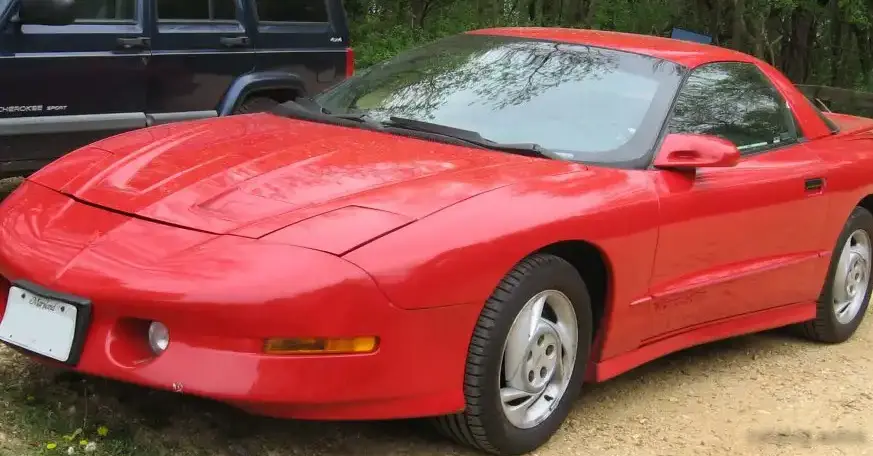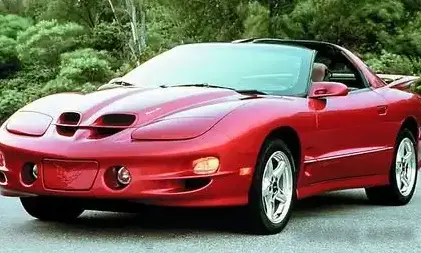
The Pontiac Firebird IV Cabrio 5.7i V8 Trans Am, produced from November 1992 through 2000, represented the final iteration of the fourth-generation Firebird. This particular variant, combining a potent 5.7-liter V8 engine with a four-speed automatic transmission and a convertible body style, occupied a premium position within the Firebird lineup. It was aimed at buyers seeking a blend of performance, open-air driving enjoyment, and relative comfort. The fourth-generation Firebird (1993-2002) shared its platform, the F-body, with the Chevrolet Camaro, and the Trans Am trim level signified the highest performance offering within the Firebird range.
Technical Specifications
| Brand | Pontiac |
| Model | Firebird |
| Generation | Firebird IV Cabrio |
| Type | 5.7i V8 Trans Am (275 Hp) Automatic |
| Start of production | November, 1992 |
| End of production | 2000 |
| Powertrain Architecture | Internal Combustion engine |
| Body type | Cabriolet |
| Seats | 4 |
| Doors | 2 |
| Fuel Type | Petrol (Gasoline) |
| Weight-to-power ratio | 5.8 kg/Hp, 173.6 Hp/tonne |
| Weight-to-torque ratio | 3.6 kg/Nm, 278.4 Nm/tonne |
| Power | 275 Hp @ 5000 rpm |
| Power per litre | 48 Hp/l |
| Torque | 441 Nm @ 2400 rpm, 325.26 lb.-ft. @ 2400 rpm |
| Engine layout | Front, Longitudinal |
| Engine Model/Code | LT1 |
| Engine displacement | 5733 cm3, 349.85 cu. in. |
| Number of cylinders | 8 |
| Engine configuration | V-engine |
| Cylinder Bore | 101.6 mm, 4 in. |
| Piston Stroke | 88.4 mm, 3.48 in. |
| Compression ratio | 10.3:1 |
| Number of valves per cylinder | 2 |
| Fuel injection system | Multi-port manifold injection |
| Engine aspiration | Naturally aspirated engine |
| Engine oil capacity | 4.3 l, 4.54 US qt | 3.78 UK qt |
| Coolant | 14.3 l, 15.11 US qt | 12.58 UK qt |
| Kerb Weight | 1584 kg, 3492.12 lbs |
| Trunk (boot) space – minimum | 365 l, 12.89 cu. ft. |
| Trunk (boot) space – maximum | 954 l, 33.69 cu. ft. |
| Fuel tank capacity | 59 l, 15.59 US gal | 12.98 UK gal |
| Length | 5004 mm, 197.01 in. |
| Width | 1892 mm, 74.49 in. |
| Height | 1321 mm, 52.01 in. |
| Wheelbase | 2566 mm, 101.02 in. |
| Front track | 1542 mm, 60.71 in. |
| Rear (Back) track | 1539 mm, 60.59 in. |
| Drivetrain Architecture | The Internal combustion engine (ICE) drives the rear wheels of the vehicle. |
| Drive wheel | Rear wheel drive |
| Number of gears and type of gearbox | 4 gears, automatic transmission |
| Front suspension | Spring Strut |
| Rear suspension | Coil spring |
| Front brakes | Ventilated discs |
| Rear brakes | Drum |
| Assisting systems | ABS (Anti-lock braking system) |
| Steering type | Steering rack and pinion |
| Power steering | Hydraulic Steering |
| Tires size | 245/50 R16 |
| Wheel rims size | 16 |
Powertrain & Engine Architecture
The heart of the Firebird Trans Am was the 5.7-liter (349.85 cubic inch) LT1 small-block V8 engine. This engine, a descendant of the legendary Chevrolet small-block, featured a cast iron block with aluminum cylinder heads. The LT1 utilized a reverse-flow cooling system, which improved cylinder head temperature control and allowed for a more efficient intake manifold design. Fuel delivery was handled by a multi-port fuel injection system, providing precise fuel metering for optimal performance and emissions. The engine produced 275 horsepower at 5000 rpm and 325 lb-ft of torque at 2400 rpm. The four-speed automatic transmission, a 4L60E, was chosen for its smoothness and ease of use, catering to drivers who preferred a more relaxed driving experience. While not as performance-oriented as the available six-speed manual, the 4L60E was a robust unit capable of handling the engine’s output.
Driving Characteristics
The 5.7L automatic Firebird Trans Am offered a compelling blend of power and comfort. The automatic transmission, while not offering the direct control of a manual, provided smooth and relatively quick shifts. Acceleration was brisk, with the car capable of reaching 60 mph in around 5.8 seconds. The torque output of the LT1 engine meant that strong acceleration was available across a wide range of engine speeds. Compared to the base 3.8-liter V6 models, the 5.7L Trans Am offered a significantly more engaging driving experience. However, it wasn’t quite as sharp or responsive as the manual transmission-equipped versions, which appealed to more performance-focused drivers. The convertible top added some structural flex, noticeable during spirited driving, but didn’t detract significantly from the overall experience.
Equipment & Trim Levels
The Trans Am trim level came standard with a number of features designed to enhance both comfort and performance. These included leather bucket seats, air conditioning, power windows and locks, and a premium sound system. The convertible top was power-operated and featured a glass rear window. Optional extras included a Monsoon stereo system, automatic climate control, and various cosmetic enhancements. The interior typically featured a dark gray or black color scheme, with the Trans Am logo prominently displayed on the seats and dashboard. The gauge cluster included a speedometer, tachometer, and various warning lights, providing the driver with essential information about the vehicle’s operation.
Chassis & Braking
The Firebird IV Cabrio utilized a unibody construction for rigidity. The front suspension consisted of a strut-type setup, while the rear suspension employed a coil-spring arrangement. The braking system featured ventilated discs at the front and drum brakes at the rear. Anti-lock brakes (ABS) were standard, enhancing safety and control during emergency braking situations. The steering was rack-and-pinion, providing precise and responsive handling. The standard tire size was 245/50R16, mounted on 16-inch alloy wheels. The suspension tuning was geared towards a balance between comfort and handling, providing a relatively smooth ride while still offering decent cornering ability.
Market Reception & Comparison
The 5.7L automatic Firebird Trans Am was generally well-received by automotive critics. It was praised for its powerful engine, comfortable ride, and attractive styling. However, some reviewers noted that the automatic transmission didn’t fully exploit the engine’s potential. Compared to the manual transmission versions, the automatic offered slightly lower fuel economy and a less engaging driving experience. Against competitors like the Ford Mustang GT and Chevrolet Camaro Z28, the Firebird Trans Am offered a similar level of performance and features, often at a slightly lower price point. Reliability was generally good, although the LT1 engine was known to be sensitive to oil quality and maintenance.
Legacy
The Pontiac Firebird IV Cabrio 5.7i V8 Trans Am represents a high point in the Firebird’s history. The LT1 engine proved to be a durable and capable powerplant, and the fourth-generation Firebird remains a popular choice among enthusiasts today. While the automatic transmission may not be the preferred choice for hardcore performance enthusiasts, it offers a comfortable and enjoyable driving experience. Well-maintained examples of this variant are increasingly sought after by collectors and enthusiasts, and values have been steadily rising in recent years. The Firebird Trans Am, particularly in convertible form with the 5.7L V8, continues to be a symbol of American muscle car heritage.