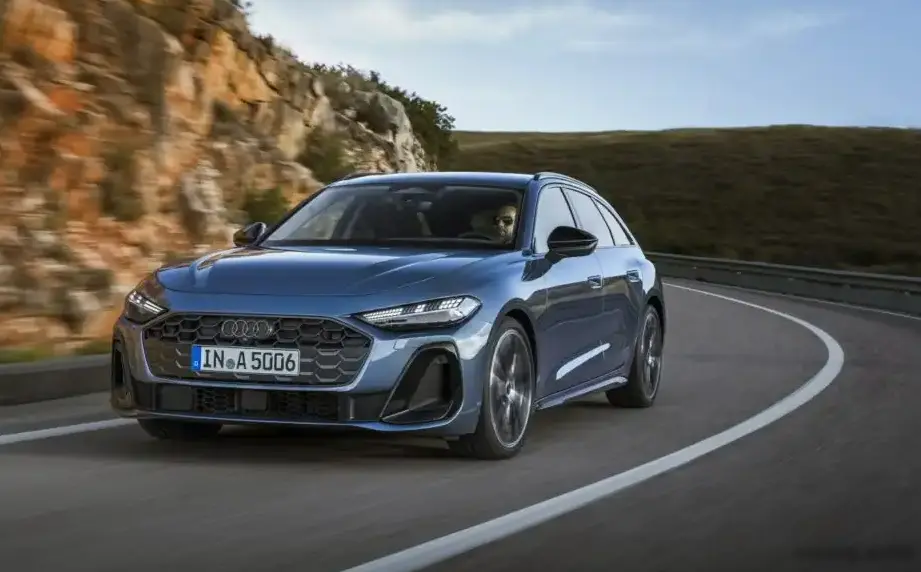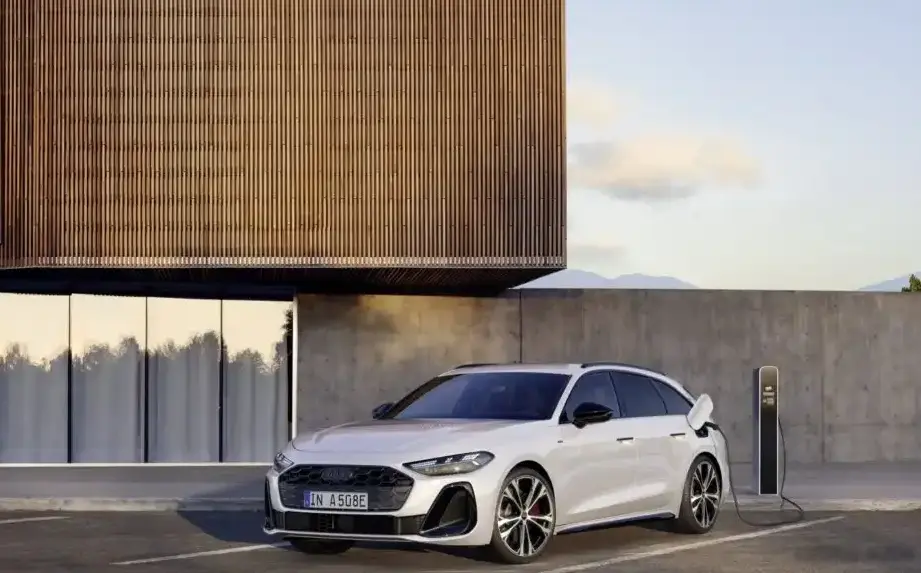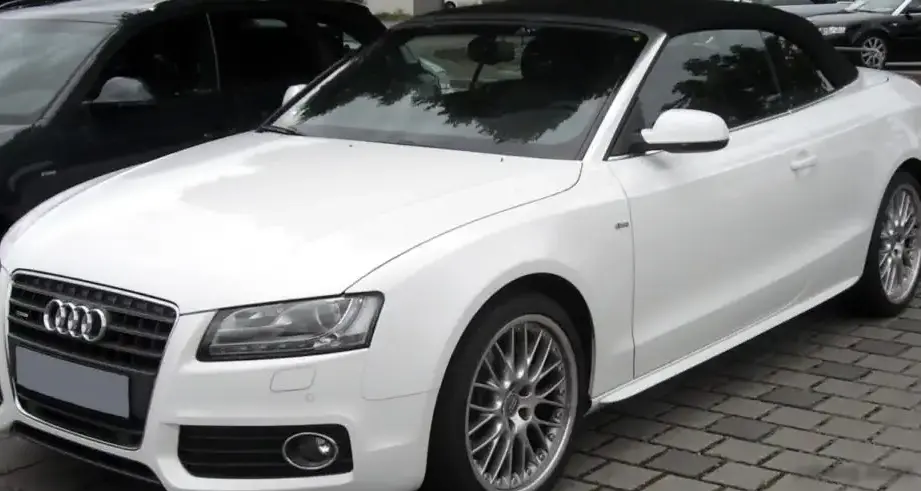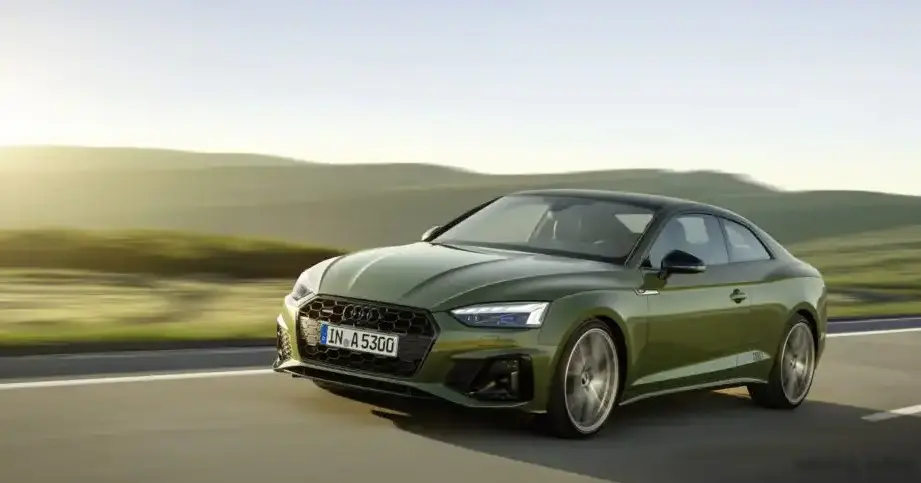
The Audi A5 Coupe (F5, facelift) 45 TFSI quattro ultra S tronic represents a refinement of Audi’s popular luxury coupe, produced from 2019 to 2020. This variant sits within the broader F5 A5 generation, which itself builds upon the success of the original B8 and B9 models. The facelift brought updated styling, enhanced technology, and improvements to the powertrain, solidifying the A5’s position as a competitive offering in the premium coupe segment. The “45 TFSI” designation indicates a 2.0-liter turbocharged four-cylinder engine producing 245 horsepower, paired with Audi’s quattro ultra all-wheel-drive system and a seven-speed S tronic dual-clutch transmission. This configuration aimed to balance performance, efficiency, and all-weather capability, appealing to buyers seeking a sophisticated and capable grand tourer.
Technical Specifications
| Brand | Audi |
| Model | A5 |
| Generation | A5 Coupe (F5, facelift 2019) |
| Type (Engine) | 45 TFSI (245 Hp) quattro ultra S tronic |
| Start of production | 2019 |
| End of production | 2020 |
| Powertrain Architecture | Internal Combustion engine |
| Body type | Coupe |
| Seats | 4 |
| Doors | 2 |
| Fuel consumption (urban) | 8.4-8.6 l/100 km (28 – 27.4 US mpg) |
| Fuel consumption (extra urban) | 5.2-5.6 l/100 km (45.2 – 42 US mpg) |
| Fuel consumption (combined) | 6.4-6.7 l/100 km (36.8 – 35.1 US mpg) |
| CO2 emissions | 145-152 g/km |
| Fuel Type | Petrol (Gasoline) |
| Acceleration 0 – 100 km/h | 5.8 sec |
| Acceleration 0 – 62 mph | 5.8 sec |
| Acceleration 0 – 60 mph | 5.5 sec |
| Maximum speed | 250 km/h (155.34 mph) |
| Emission standard | Euro 6d – TEMP – EVAP – ISC |
| Weight-to-power ratio | 6.2 kg/Hp |
| Weight-to-torque ratio | 4.1 kg/Nm |
| Power | 245 Hp @ 5000-6500 rpm |
| Torque | 370 Nm @ 1600-4300 rpm (272.9 lb.-ft. @ 1600-4300 rpm) |
| Engine layout | Front, Longitudinal |
| Engine Model/Code | DKNA |
| Engine displacement | 1984 cm3 (121.07 cu. in.) |
| Number of cylinders | 4 |
| Engine configuration | Inline |
| Cylinder Bore | 82.5 mm (3.25 in.) |
| Piston Stroke | 92.8 mm (3.65 in.) |
| Number of valves per cylinder | 4 |
| Fuel injection system | Direct injection |
| Engine aspiration | Turbocharger, Intercooler |
| Engine oil capacity | 5.2 l (5.49 US qt | 4.58 UK qt) |
| Kerb Weight | 1530 kg (3373.07 lbs.) |
| Max. weight | 2035 kg (4486.41 lbs.) |
| Max load | 505 kg (1113.33 lbs.) |
| Trunk (boot) space – minimum | 450 l (15.89 cu. ft.) |
| Fuel tank capacity | 58 l (15.32 US gal | 12.76 UK gal) |
| Max. roof load | 75 kg (165.35 lbs.) |
| Permitted trailer load with brakes (8%) | 1900 kg (4188.78 lbs.) |
| Permitted trailer load with brakes (12%) | 1700 kg (3747.86 lbs.) |
| Permitted trailer load without brakes | 750 kg (1653.47 lbs.) |
| Permitted towbar download | 80 kg (176.37 lbs.) |
| Length | 4697 mm (184.92 in.) |
| Width | 1846 mm (72.68 in.) |
| Width including mirrors | 2029 mm (79.88 in.) |
| Height | 1371 mm (53.98 in.) |
| Wheelbase | 2764 mm (108.82 in.) |
| Front track | 1587 mm (62.48 in.) |
| Rear (Back) track | 1568 mm (61.73 in.) |
| Front overhang | 898 mm (35.35 in.) |
| Rear overhang | 1035 mm (40.75 in.) |
| Minimum turning circle | 11.5 m (37.73 ft.) |
| Drivetrain Architecture | All wheel drive (4×4) |
| Number of gears and type of gearbox | 7 gears, automatic transmission S tronic |
| Front suspension | Independent multi-link suspension |
| Rear suspension | Independent multi-link suspension |
| Front brakes | Ventilated discs |
| Rear brakes | Disc |
| Assisting systems | ABS (Anti-lock braking system) |
| Steering type | Steering rack and pinion |
| Power steering | Electric Steering |
| Tires size | 225/50 R17 |
| Wheel rims size | 7.5J x 17 |
Powertrain & Engine Architecture
At the heart of the A5 45 TFSI lies the EA888 2.0-liter turbocharged four-cylinder engine, specifically the DKNA variant. This engine is a staple in the Volkswagen Group’s product lineup, known for its blend of performance and efficiency. It utilizes direct fuel injection, delivering fuel directly into the combustion chamber for precise control and improved power output. The engine also features an integrated exhaust manifold for faster warm-up times and reduced emissions. The turbocharger, coupled with an intercooler, provides significant boost, contributing to the engine’s 245 horsepower and 272.9 lb.-ft. of torque. The S tronic seven-speed dual-clutch transmission offers rapid and seamless gear changes, enhancing both acceleration and fuel economy. The quattro ultra system is an on-demand all-wheel-drive system. It primarily operates in front-wheel drive to maximize efficiency, but can seamlessly engage all four wheels when traction is needed, providing enhanced stability and control in adverse conditions.
Driving Characteristics
The 45 TFSI with the S tronic transmission delivers a refined and engaging driving experience. Acceleration from 0-60 mph in approximately 5.5 seconds is brisk, making it feel responsive in everyday driving situations. The S tronic transmission provides quick shifts, and the quattro ultra system ensures confident handling in various weather conditions. Compared to the base 40 TFSI model, the 45 TFSI offers a noticeable increase in power and torque, resulting in more effortless acceleration and passing maneuvers. While not as overtly sporty as the S5 variant, the 45 TFSI strikes a good balance between performance and comfort. The gear ratios are tuned for a blend of acceleration and fuel efficiency, with taller gears for relaxed cruising on the highway.
Equipment & Trim Levels
The A5 45 TFSI quattro ultra S tronic typically came well-equipped as standard. Features included Audi’s MMI infotainment system with a 7-inch display, automatic climate control, leather upholstery, and a suite of driver-assistance systems such as lane departure warning and automatic emergency braking. Optional extras included a larger touchscreen display, a premium sound system, navigation, and adaptive cruise control. Trim levels varied slightly by market, but generally offered packages that added features like sport seats, upgraded interior trim, and exterior styling enhancements. The interior design emphasized a clean and modern aesthetic, with high-quality materials and a driver-focused layout.
Chassis & Braking
The A5 Coupe features a sophisticated chassis design with independent multi-link suspension at both the front and rear. This setup provides a comfortable ride while maintaining precise handling characteristics. The suspension is tuned to balance comfort and control, offering a composed ride even on uneven surfaces. The braking system consists of ventilated discs at the front and solid discs at the rear, providing ample stopping power. ABS (Anti-lock Braking System) is standard, enhancing safety and stability during emergency braking situations. The steering is electrically assisted, offering a precise and responsive feel.
Market Reception & Comparison
The Audi A5 Coupe 45 TFSI quattro ultra S tronic was generally well-received by automotive critics. It was praised for its stylish design, refined interior, and engaging driving dynamics. The 2.0-liter engine was considered a good compromise between performance and fuel economy. Compared to competitors like the BMW 4 Series and Mercedes-Benz C-Class Coupe, the A5 offered a compelling combination of features and value. Fuel economy figures of around 36.8 – 35.1 US mpg combined were competitive for its class. Reliability reports generally indicated good overall reliability, although some owners reported minor issues with the infotainment system.
Legacy
The EA888 2.0-liter turbocharged engine has proven to be a durable and reliable powerplant, and the S tronic transmission is also known for its longevity when properly maintained. The quattro ultra system, while offering efficiency benefits, has received some criticism for its occasional hesitation when engaging all-wheel drive. In the used car market, the A5 45 TFSI quattro ultra S tronic remains a popular choice, offering a blend of luxury, performance, and practicality. Regular maintenance, including oil changes and timely servicing of the turbocharger and transmission, is crucial for ensuring the long-term reliability of this powertrain.