
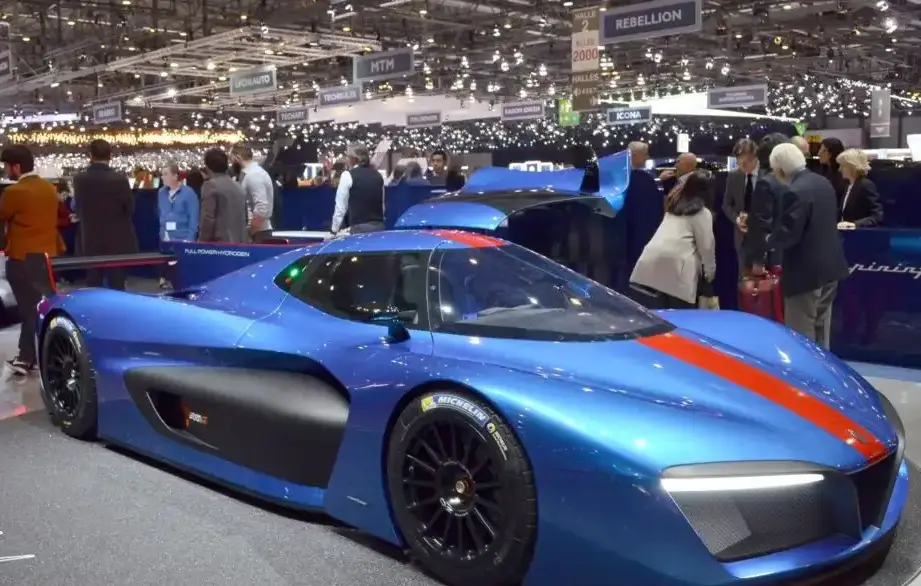
The Pininfarina H2 Speed is a concept electric-hydrogen fuel cell vehicle unveiled in 2018. Representing a bold step towards sustainable performance, the H2 Speed aimed to showcase Pininfarina’s design prowess and technological innovation within the emerging field of alternative fuel vehicles. It builds upon the earlier Pininfarina H2 concept, refining the design and focusing on a more performance-oriented driving experience. The H2 Speed is a two-seater coupe, intended as a demonstration of what could be achieved by combining hydrogen fuel cell technology with high-performance vehicle dynamics. Production never moved beyond the concept stage, but the H2 Speed served as a significant statement of intent for the Italian design house.
Technical Specifications
| Brand | Pininfarina |
| Model | H2 Speed |
| Generation | H2 Speed |
| Type (Engine) | Electric-Hydrogen (FCEV) |
| Start of Production | 2018 |
| Body Type | Coupe |
| Seats | 2 |
| Doors | 2 |
| Fuel Type | Hydrogen / Electricity |
| Acceleration 0-100 km/h | 3.4 sec |
| Acceleration 0-62 mph | 3.4 sec |
| Acceleration 0-60 mph | 3.2 sec |
| Maximum Speed | 300 km/h (186.41 mph) |
| Weight-to-Power Ratio | 2.2 kg/Hp, 456.6 Hp/tonne |
| Electric Motor Power | 653 Hp @ 13000 rpm |
| System Power | 653 Hp @ 13000 rpm |
| Kerb Weight | 1430 kg (3152.61 lbs) |
| Length | 4730 mm (186.22 in) |
| Width | 1956 mm (77.01 in) |
| Height | 1113 mm (43.82 in) |
| Wheelbase | 2968 mm (116.85 in) |
| Front Overhang | 987 mm (38.86 in) |
| Rear Overhang | 775 mm (30.51 in) |
| Tire Size | 30/68 R18; 31/71 R18 |
| Wheel Rim Size | 12J x 18; 13J x 18 |
Powertrain & Engine Architecture
The Pininfarina H2 Speed utilizes a Fuel Cell Electric Vehicle (FCEV) powertrain. This means it combines hydrogen fuel cells with an electric motor to generate power. Hydrogen is stored onboard and fed into the fuel cell stack, where it reacts with oxygen from the air to produce electricity, with water as the only emission. This electricity then powers the electric motor, delivering propulsion. The H2 Speed boasts a single electric motor producing 653 horsepower at 13,000 rpm, and a corresponding system power output of 653 hp. The fuel cell system is designed for rapid refueling, aiming to match the convenience of gasoline refueling. The architecture prioritizes efficiency and zero-emission operation, representing a departure from traditional internal combustion engines.
Driving Characteristics
Given its concept status, extensive real-world driving data is limited. However, the H2 Speed’s specifications suggest a very high-performance driving experience. The claimed 0-60 mph acceleration time of 3.2 seconds and a top speed of 186 mph (300 km/h) place it firmly in supercar territory. The electric motor delivers instant torque, providing rapid acceleration. The relatively lightweight construction, with a kerb weight of 1430 kg (3152.61 lbs), contributes to the vehicle’s agility. The H2 Speed’s driving characteristics are intended to demonstrate that hydrogen fuel cell technology can deliver performance comparable to, or exceeding, that of traditional gasoline-powered sports cars. The lack of traditional gears and the instant torque delivery of the electric motor would result in a unique driving feel, differing significantly from vehicles with internal combustion engines and multi-speed transmissions.
Equipment & Trim Levels
As a concept vehicle, the Pininfarina H2 Speed was presented as a showcase of design and technology rather than a production model with defined trim levels. The interior is minimalist and driver-focused, featuring high-quality materials and a modern aesthetic. The cabin is designed for two occupants, emphasizing a sporty and intimate driving experience. The dashboard incorporates digital displays providing information on vehicle performance, fuel cell status, and energy consumption. While specific details on standard or optional equipment are scarce, the H2 Speed’s presentation suggests a high level of fit and finish, with an emphasis on lightweight materials and aerodynamic efficiency. The exterior design incorporates active aerodynamic elements, further enhancing performance and efficiency.
Chassis & Braking
The H2 Speed features a lightweight chassis designed to maximize performance and efficiency. While specific details regarding the suspension setup are limited, it is likely to employ a sophisticated independent suspension system to provide precise handling and ride comfort. The vehicle’s low center of gravity, resulting from the placement of the fuel cell stack and battery pack, contributes to its stability. The braking system is expected to utilize high-performance brakes to provide ample stopping power, commensurate with the vehicle’s performance capabilities. Tire sizes are 30/68 R18 and 31/71 R18, mounted on 12J x 18 and 13J x 18 wheels respectively, suggesting a focus on maximizing grip and handling.
Market Reception & Comparison
The Pininfarina H2 Speed received positive attention from the automotive press for its striking design and innovative powertrain. Critics praised Pininfarina’s ability to create a visually appealing and technologically advanced concept vehicle. However, as a concept car, it wasn’t directly compared to production vehicles in terms of fuel economy or reliability. Compared to other hydrogen fuel cell vehicles under development at the time, the H2 Speed stood out for its emphasis on performance and sporty styling. The H2 Speed aimed to address concerns about the practicality and desirability of hydrogen fuel cell technology by demonstrating its potential in a high-performance application. Its reception highlighted the growing interest in alternative fuel vehicles and the potential for hydrogen to play a role in the future of transportation.
Legacy
The Pininfarina H2 Speed, while remaining a concept, served as an important stepping stone in the development of hydrogen fuel cell technology and its application in high-performance vehicles. It demonstrated Pininfarina’s commitment to sustainable mobility and its ability to push the boundaries of automotive design. The H2 Speed’s legacy lies in its contribution to the ongoing exploration of alternative fuel technologies and its influence on the design of future hydrogen-powered vehicles. While the concept itself did not reach production, the knowledge and experience gained from its development likely informed Pininfarina’s subsequent work in the field of sustainable transportation. The vehicle continues to be recognized as a significant example of innovative automotive design and engineering.
