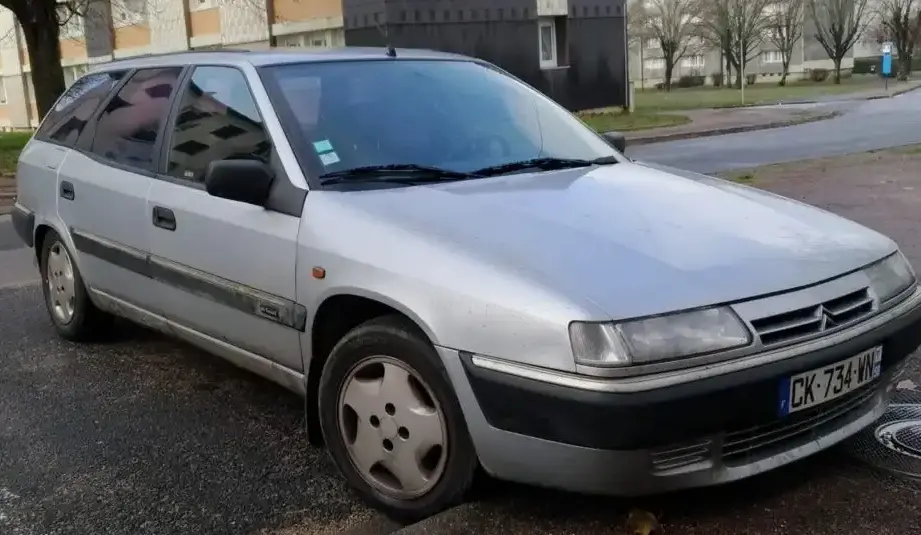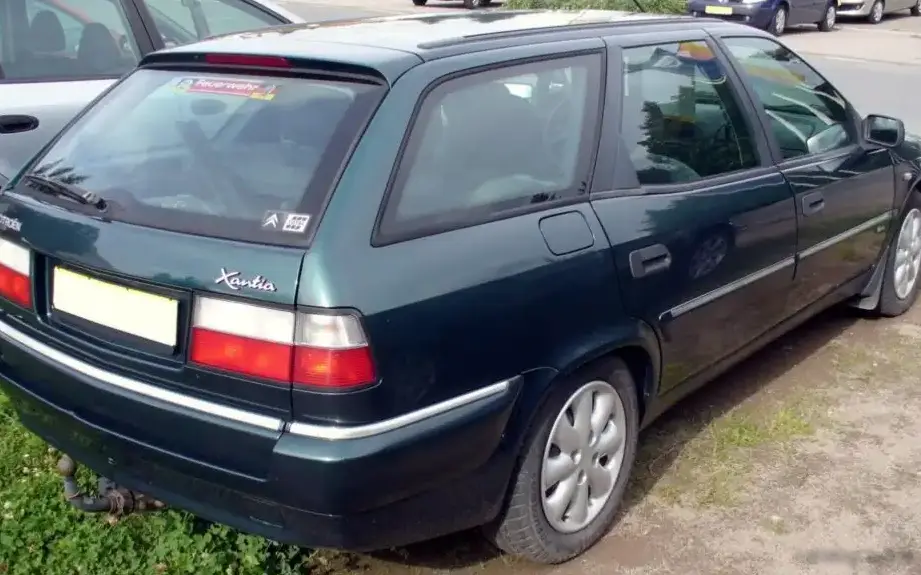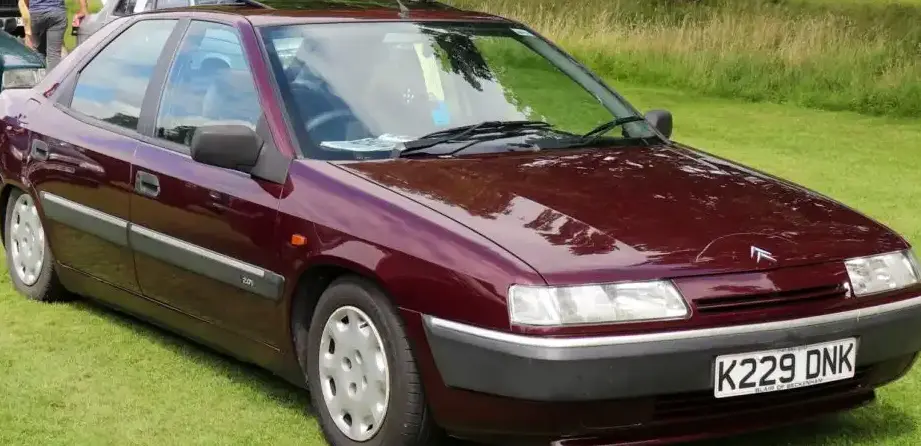
The Citroen Xantia 1.9D, produced between 1995 and 1996, represented an entry-level offering within the first generation (X1) Xantia lineup. Positioned as a practical and economical choice, it catered to buyers prioritizing fuel efficiency and affordability over outright performance. The Xantia itself was Citroen’s replacement for the BX, aiming to blend comfort, practicality, and a touch of innovation – hallmarks of the brand. This particular 1.9D variant played a significant role in broadening the Xantia’s appeal, especially in European markets where diesel engines were highly favored for their economy.
Technical Specifications
| Brand | Citroen |
| Model | Xantia |
| Generation | Xantia (X1) |
| Type (Engine) | 1.9 D (68 Hp) |
| Start of production | 1995 |
| End of production | 1996 |
| Powertrain Architecture | Internal Combustion engine |
| Body type | Hatchback |
| Seats | 5 |
| Doors | 5 |
| Fuel consumption (urban) | 7.6 l/100 km (30.9 US mpg, 37.2 UK mpg, 13.2 km/l) |
| Fuel consumption (extra urban) | 5.1 l/100 km (46.1 US mpg, 55.4 UK mpg, 19.6 km/l) |
| Fuel consumption (combined) | 6.6 l/100 km (35.6 US mpg, 42.8 UK mpg, 15.2 km/l) |
| Fuel Type | Diesel |
| Acceleration 0 – 100 km/h | 18.2 sec |
| Acceleration 0 – 62 mph | 18.2 sec |
| Acceleration 0 – 60 mph | 17.3 sec |
| Maximum speed | 158 km/h (98.18 mph) |
| Weight-to-power ratio | 17.8 kg/Hp, 56.2 Hp/tonne |
| Weight-to-torque ratio | 10.1 kg/Nm, 99.2 Nm/tonne |
| Power | 68 Hp @ 4600 rpm |
| Power per litre | 35.7 Hp/l |
| Torque | 120 Nm @ 2000 rpm (88.51 lb.-ft. @ 2000 rpm) |
| Engine layout | Front, Transverse |
| Engine Model/Code | D9B XUD9A |
| Engine displacement | 1905 cm3 (116.25 cu. in.) |
| Number of cylinders | 4 |
| Engine configuration | Inline |
| Cylinder Bore | 83 mm (3.27 in.) |
| Piston Stroke | 88 mm (3.46 in.) |
| Compression ratio | 23:1 |
| Number of valves per cylinder | 2 |
| Fuel injection system | Precombustion chamber injection |
| Engine aspiration | Naturally aspirated engine |
| Valvetrain | OHC |
| Engine oil capacity | 4.25 l (4.49 US qt | 3.74 UK qt) |
| Coolant | 7.5 l (7.93 US qt | 6.6 UK qt) |
| Kerb Weight | 1210 kg (2667.59 lbs.) |
| Max. weight | 1745 kg (3847.07 lbs.) |
| Max load | 535 kg (1179.47 lbs.) |
| Trunk (boot) space – minimum | 480 l (16.95 cu. ft.) |
| Trunk (boot) space – maximum | 878 l (31.01 cu. ft.) |
| Fuel tank capacity | 65 l (17.17 US gal | 14.3 UK gal) |
| Max. roof load | 75 kg (165.35 lbs.) |
| Permitted towbar download | 50 kg (110.23 lbs.) |
| Length | 4444 mm (174.96 in.) |
| Width | 1755 mm (69.09 in.) |
| Height | 1387 mm (54.61 in.) |
| Wheelbase | 2740 mm (107.87 in.) |
| Front track | 1482 mm (58.35 in.) |
| Rear (Back) track | 1442 mm (56.77 in.) |
| Front overhang | 931 mm (36.65 in.) |
| Rear overhang | 773 mm (30.43 in.) |
| Minimum turning circle | 11 m (36.09 ft.) |
| Drivetrain Architecture | The Internal combustion engine (ICE) drives the front wheels of the vehicle. |
| Drive wheel | Front wheel drive |
| Number of gears and type of gearbox | 5 gears, manual transmission |
| Front suspension | Independent type McPherson, Wishbone |
| Rear suspension | Hydro-pneumatic element, Trailing arm |
| Front brakes | Ventilated discs |
| Rear brakes | Disc |
| Assisting systems | ABS (Anti-lock braking system) |
| Steering type | Steering rack and pinion |
| Power steering | Hydraulic Steering |
| Tires size | 175/70 R14 |
INTRODUCTION
The Citroen Xantia 1.9D, launched in 1995 and continuing through 1996, was a key variant within the X1 series of the Xantia. Built on the shared PSA Group platform (1HX0/A3), it offered a more economical alternative to the petrol-powered versions. The Xantia was designed to be a comfortable and technologically advanced family car, and the 1.9D aimed to bring those qualities to a wider audience by lowering the purchase price and running costs. It was primarily sold in Europe, where diesel engines were – and continue to be – popular due to favorable taxation and fuel economy.
Powertrain & Engine Architecture
At the heart of the Xantia 1.9D lies the D9B XUD9A engine, a 1.9-liter inline-four diesel. This engine is a naturally aspirated unit utilizing precombustion chamber injection, a common diesel technology of the era. This system involves a small precombustion chamber connected to the main cylinder, where fuel is initially ignited before being transferred to the main chamber for complete combustion. The engine features an overhead camshaft (OHC) valvetrain with two valves per cylinder. The Xantia 1.9D was exclusively offered with a 5-speed manual transmission. This gearbox was chosen to maximize fuel efficiency and provide adequate performance for the engine’s torque characteristics. The engine produced 68 horsepower at 4600 rpm and 120 Nm (88.51 lb-ft) of torque at 2000 rpm.
Driving Characteristics
The Xantia 1.9D’s driving experience was defined by its focus on practicality and economy. Acceleration was modest, taking around 18.2 seconds to reach 62 mph (100 km/h), and a top speed of 98.18 mph (158 km/h). The 5-speed manual transmission helped to keep the engine in its optimal torque band, making it reasonably drivable in everyday conditions. Compared to the more powerful petrol versions, the 1.9D lacked outright punch, but it offered a smoother, more relaxed driving experience. The gear ratios were optimized for fuel efficiency, meaning the engine wasn’t revving excessively at highway speeds. The Xantia’s renowned hydropneumatic suspension, even in this base trim, provided a remarkably comfortable ride, absorbing bumps and imperfections in the road with ease.
Equipment & Trim Levels
The Xantia 1.9D typically came with a fairly basic level of equipment, reflecting its position as the entry-level model. Standard features generally included power steering, central locking, and a basic stereo system. Interior upholstery was typically cloth, and the dashboard featured a functional, if somewhat utilitarian, design. Optional extras, such as air conditioning, electric windows, and upgraded audio systems, were available, but added to the overall cost. The trim level was generally focused on providing essential comfort and convenience without unnecessary luxuries.
Chassis & Braking
The Xantia 1.9D utilized an independent McPherson strut front suspension and a hydro-pneumatic trailing arm rear suspension. The hydro-pneumatic system, a Citroen signature, allowed for self-leveling and adjustable ride height, contributing to the car’s exceptional ride quality. Braking was handled by ventilated discs at the front and solid discs at the rear. An Anti-lock Braking System (ABS) was included as standard, enhancing safety. The Xantia’s chassis was designed to provide a balance between comfort and handling, prioritizing a smooth ride over sporty dynamics.
Market Reception & Comparison
The Xantia 1.9D was generally well-received by critics as a practical and economical family car. It was praised for its comfortable ride, spacious interior, and fuel efficiency. However, its performance was often criticized as being somewhat lackluster, especially when compared to the more powerful petrol versions. Compared to the Xantia 2.0i or the later V6 models, the 1.9D offered significantly less power and acceleration. However, it also consumed considerably less fuel and was more affordable to purchase and maintain. The 1.9D was often seen as a sensible choice for drivers who prioritized economy and practicality over performance.
Legacy
The Citroen Xantia 1.9D, while not the most exciting variant in the lineup, proved to be a reliable and durable car. The XUD9A engine is known for its robustness and longevity, and many examples are still on the road today. In the used car market, the 1.9D is often sought after by those looking for a classic Citroen with low running costs. While parts availability can be a concern for older vehicles, the XUD9A engine is relatively well-supported. The Xantia 1.9D represents a practical and economical choice from a period when Citroen was at the forefront of automotive innovation, particularly in suspension technology.