
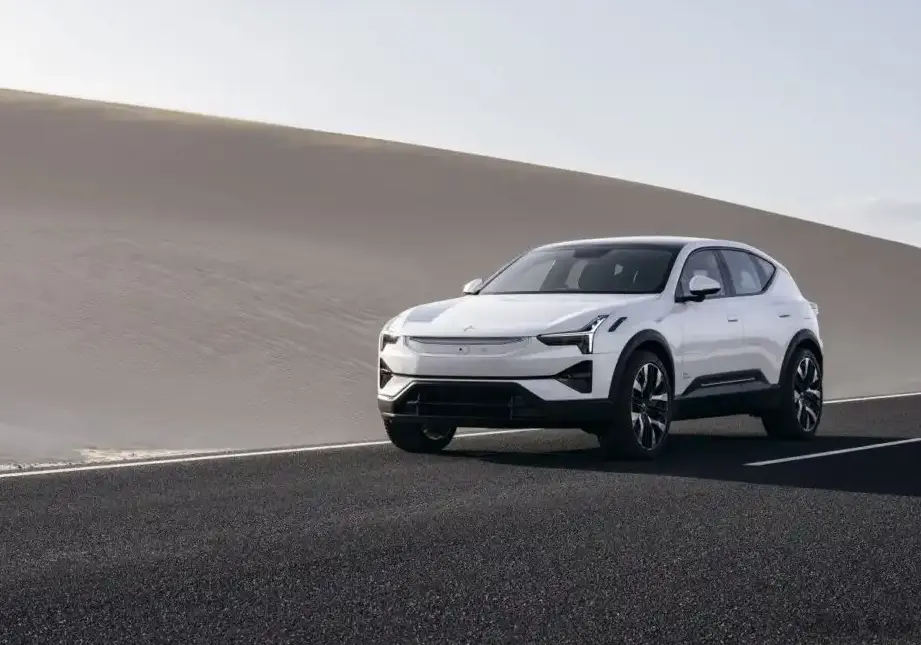
The Polestar 3 111 kWh (490 Hp) AWD Long Range Dual Motor is an all-electric performance SUV produced by the Swedish manufacturer Polestar, beginning in October 2022. Representing Polestar’s entry into the competitive luxury SUV segment, it builds upon the established design language and technological advancements of the Polestar 2, while offering a larger footprint and increased practicality. Production is slated to continue through October 2025. This particular variant, equipped with the 111 kWh battery pack and dual-motor all-wheel-drive system, sits at the top of the initial Polestar 3 lineup, offering the longest range and highest performance capabilities. It is a key model in Polestar’s strategy to expand its portfolio and challenge established premium automotive brands.
Technical Specifications
| Brand | Polestar |
| Model | 3 |
| Generation | 3 |
| Type (Engine) | 111 kWh (490 Hp) AWD Long range Dual motor |
| Start of production | October, 2022 |
| End of production | October, 2025 |
| Powertrain Architecture | BEV (Electric Vehicle) |
| Body type | SUV |
| Seats | 5 |
| Doors | 5 |
| Fuel Type | Electricity |
| Acceleration 0 – 100 km/h | 5 sec |
| Acceleration 0 – 62 mph | 5 sec |
| Acceleration 0 – 60 mph | 4.8 sec |
| Maximum speed | 210 km/h (130.49 mph) |
| Weight-to-power ratio | 5.3 kg/Hp, 189.6 Hp/tonne |
| Weight-to-torque ratio | 3.1 kg/Nm, 325.1 Nm/tonne |
| Gross battery capacity | 111 kWh |
| Net (usable) battery capacity | 107 kWh |
| Battery voltage | 400 V |
| Battery technology | Lithium nickel manganese cobalt oxides (Li-NMC) |
| Battery location | Below the floor |
| All-electric range (WLTP) | 610 km (379.04 mi) |
| Average Energy consumption (WLTP) | 20.1-21.1 kWh/100 km (32.35 – 33.96 kWh/100 mi) |
| MPGe | 104 – 99 |
| km/kWh | 5 – 4.7 |
| mi/kWh | 3.1 – 2.9 |
| Electric motor 1 location | Front axle, Transverse |
| Electric motor 2 location | Rear axle, Transverse |
| System power | 490 Hp |
| System torque | 840 Nm (619.55 lb.-ft.) |
| Kerb Weight | 2584-2670 kg (5696.74 – 5886.34 lbs.) |
| Trunk (boot) space – minimum | 484 l (17.09 cu. ft.) |
| Trunk (boot) space – maximum | 1411 l (49.83 cu. ft.) |
| Max. roof load | 100 kg (220.46 lbs.) |
| Permitted trailer load with brakes (12%) | 2200 kg (4850.17 lbs.) |
| Permitted towbar download | 100 kg (220.46 lbs.) |
| Length | 4900 mm (192.91 in.) |
| Width including mirrors | 2120 mm (83.46 in.) |
| Height | 1627 mm (64.06 in.) |
| Wheelbase | 2985 mm (117.52 in.) |
| Ride height (ground clearance) | 211 mm (8.31 in.) |
| Drag coefficient (Cd) | 0.29 |
| Minimum turning circle | 11.8 m (38.71 ft.) |
| Drivetrain Architecture | One electric motor drives the front wheels, one electric motor drives the rear wheels. |
| Drive wheel | All wheel drive (4×4) |
| Number of gears | 1 |
| Type of gearbox | automatic transmission |
| Front suspension | Double wishbone |
| Rear suspension | Independent multi-link suspension |
| Front brakes | Ventilated discs, 400 mm |
| Rear brakes | Ventilated discs, 390 mm |
| Steering type | Steering rack and pinion |
| Power steering | Electric |
| Front wheel tires | 265/45 R21; 265/40 R22 |
| Rear wheel tires | 295/40 R21; 295/35 R22 |
| Front wheel rims | 21; 22 |
| Rear wheel rims | 21; 22 |
Powertrain & Engine Architecture
The Polestar 3 utilizes a dual-motor, all-wheel-drive (AWD) powertrain. Each axle is driven by a permanent magnet synchronous motor. The 111 kWh battery pack, positioned low in the vehicle’s floor, provides a substantial energy reserve for extended range. The battery employs Lithium-Nickel-Manganese-Cobalt (Li-NMC) chemistry, offering a balance of energy density, thermal stability, and cost. The 400V architecture allows for relatively fast charging times, supporting DC fast charging up to 250 kW. The powertrain management system is sophisticated, dynamically distributing torque between the front and rear axles for optimal traction and efficiency. The single-speed automatic transmission is integral to each motor, providing seamless acceleration. Regenerative braking is a key component of the system, capturing kinetic energy during deceleration and converting it back into electricity, further enhancing range.
Driving Characteristics
The 490 horsepower and 619.55 lb.-ft. of torque delivered by the dual-motor setup provide brisk acceleration. The 0-60 mph sprint is achieved in approximately 4.8 seconds. The instant torque characteristic of electric motors results in strong off-the-line performance. The AWD system ensures confident handling in various weather conditions. The low center of gravity, thanks to the battery pack’s placement, contributes to stable cornering. While not as overtly sporty as some performance SUVs, the Polestar 3 offers a refined and engaging driving experience. The single-speed transmission provides linear power delivery, without the gear changes found in traditional internal combustion engine vehicles. The steering is precise and well-weighted, providing good feedback to the driver.
Equipment & Trim Levels
The Polestar 3 111 kWh Long Range variant comes standard with a high level of equipment. Interior features include a premium, minimalist cabin with sustainable materials. A large, vertically-oriented touchscreen infotainment system dominates the dashboard, controlling most vehicle functions. Standard safety features include Pilot Assist, an advanced driver-assistance system incorporating adaptive cruise control and lane keeping assist. Other standard amenities include a panoramic glass roof, premium audio system, and heated front seats. Optional extras include a Performance Pack (adding increased power and a sport-tuned suspension), Nappa leather upholstery, and a head-up display.
Chassis & Braking
The Polestar 3 utilizes a double wishbone front suspension and an independent multi-link rear suspension, tuned for a balance of comfort and handling. Ventilated disc brakes are fitted to all four wheels, with 400mm rotors at the front and 390mm rotors at the rear, providing ample stopping power. The electronic stability control (ESC) system is integrated with the AWD system to enhance stability and control. The steering system is an electric power-assisted rack and pinion setup, offering precise and responsive steering feel. The vehicle’s relatively high curb weight (2584-2670 kg) is mitigated by the low center of gravity and the responsive suspension system.
Market Reception & Comparison
The Polestar 3 has been generally well-received by automotive critics, praised for its stylish design, advanced technology, and strong performance. Comparisons to rivals such as the Porsche Cayenne, BMW iX, and Tesla Model X are common. The Polestar 3’s range of 379 miles (WLTP) is competitive within its segment. While the price point is premium, it is positioned competitively against its rivals. Some critics have noted the infotainment system’s complexity and the limited availability of physical controls. The Polestar 3’s focus on sustainability and minimalist design appeals to a specific segment of the luxury SUV market.
Legacy
As a relatively new model, the long-term reliability of the Polestar 3 powertrain remains to be fully established. However, Polestar’s commitment to quality and its use of proven battery technology suggest a high level of durability. The electric powertrain is expected to require less maintenance than a traditional internal combustion engine. The Polestar 3 represents a significant step forward for the brand, establishing it as a serious contender in the luxury electric SUV segment. Its innovative technology and sustainable design principles are likely to influence future automotive developments. On the used car market, early examples of the Polestar 3 are expected to hold their value well, particularly those equipped with desirable options such as the Performance Pack.
