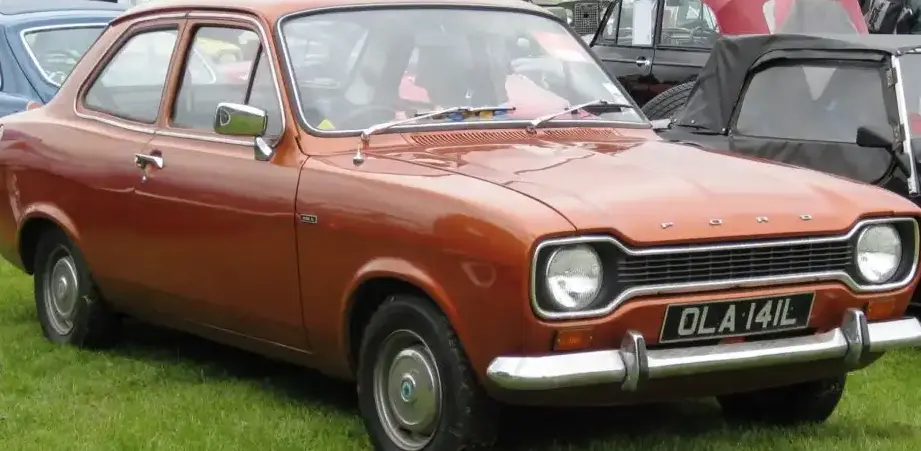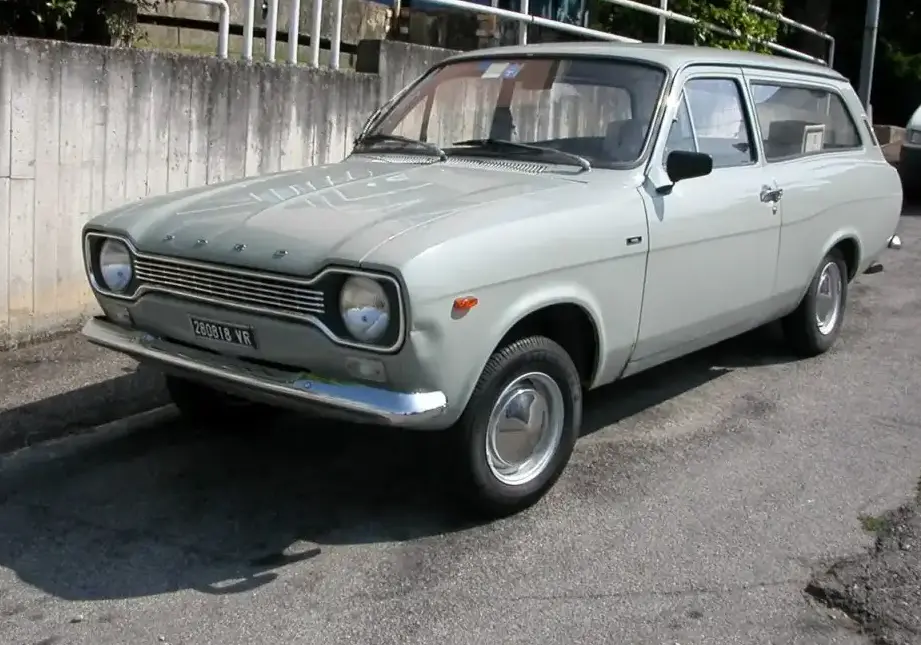
The Ford Escort II, produced between 1974 and 1980, represented a significant evolution of the original Escort, building upon its success as a compact, affordable family car. The 1.1-liter variant, delivering 45 horsepower, occupied the entry-level position within the Escort II range. This model was primarily aimed at budget-conscious buyers seeking economical transportation, and it played a crucial role in establishing the Escort as a dominant force in the European small car market. While not known for blistering performance, the 1.1 Escort II offered a practical and reliable solution for everyday driving needs. It was a mainstay of British and European roads for much of the late 1970s.
Technical Specifications
| Brand | Ford |
| Model | Escort |
| Generation | Escort II (ATH) |
| Type (Engine) | 1.1 (45 Hp) |
| Start of Production | 1974 |
| End of Production | 1980 |
| Powertrain Architecture | Internal Combustion Engine |
| Body Type | Sedan |
| Fuel Type | Petrol (Gasoline) |
| Power | 45 Hp |
| Engine Aspiration | Naturally Aspirated |
Powertrain & Engine Architecture
The heart of the Escort II 1.1 was the Ford 1100cc inline-four cylinder engine. This engine, internally designated as the Kent engine, was a simple, robust design that had been in production for some time, proving its reliability. It featured a single overhead camshaft (SOHC) operating a two-valve per cylinder configuration. Fuel delivery was managed by a single downdraft carburetor, typically a Ford 32 DGV, which was known for its simplicity and ease of maintenance. The engine’s modest 45 horsepower output was achieved at approximately 6000 rpm, with peak torque of around 58 lb-ft at 3000 rpm. This meant the engine required to be revved to achieve reasonable acceleration.
The 1.1-liter engine was typically paired with a four-speed manual transmission, although a three-speed automatic transmission was offered as an option, albeit less common. The automatic transmission, while providing convenience, further reduced the car’s already limited acceleration. The drivetrain was front-wheel drive, a relatively modern configuration for the time, contributing to improved handling and traction compared to rear-wheel drive alternatives. The engine’s design prioritized fuel economy and durability over outright performance, making it well-suited for the demands of everyday commuting.
Driving Characteristics
Driving the Escort II 1.1 was a decidedly unhurried experience. Acceleration was modest, and overtaking required careful planning. The 0-60 mph time was estimated to be around 18-20 seconds, making it one of the slower cars in its class. However, the car’s light weight and relatively nimble handling made it enjoyable to drive on winding roads. The four-speed manual transmission allowed drivers to keep the engine in its optimal power band, while the optional automatic transmission, though convenient, resulted in noticeable performance loss. The steering was light and precise, providing good feedback to the driver. The suspension, consisting of MacPherson struts at the front and a leaf spring rear suspension, offered a comfortable ride, although it could become somewhat bouncy on uneven surfaces.
Compared to the higher-powered Escort II variants, such as the 1.6-liter models, the 1.1 felt significantly underpowered. The 1.6 offered a much more responsive driving experience, with considerably more torque and horsepower. However, the 1.1’s simplicity and fuel efficiency were its key strengths, appealing to a different segment of the market.
Equipment & Trim Levels
The Escort II 1.1 was typically offered in basic trim levels, reflecting its position as the entry-level model. Standard equipment included cloth upholstery, a basic instrument panel with speedometer and fuel gauge, and manually operated windows and door locks. Optional extras included a radio, heated rear window, and upgraded interior trim. The interior was functional and durable, designed to withstand the rigors of daily use. The dashboard layout was straightforward and easy to use, with all essential controls within easy reach of the driver.
The exterior styling was relatively understated, with simple steel wheels, chrome bumpers, and basic trim. The car was available in a range of solid colors, with metallic paint options available at an extra cost. The overall impression was one of practicality and affordability, rather than luxury or sophistication.
Chassis & Braking
The Escort II featured a monocoque chassis construction, providing a good balance of strength and weight. The front suspension utilized MacPherson struts, offering a comfortable ride and good handling characteristics. The rear suspension employed a leaf spring setup, which was cost-effective but less sophisticated than the front suspension. The braking system consisted of disc brakes at the front and drum brakes at the rear. The brakes were adequate for the car’s performance, but lacked the stopping power of more modern braking systems.
Steering was rack and pinion, providing precise and responsive handling. The car’s relatively light weight contributed to its nimble handling characteristics. Stabilizer bars were not typically fitted to the base 1.1 models, further emphasizing its focus on affordability.
Market Reception & Comparison
The Escort II 1.1 was generally well-received by critics as a practical and economical family car. It was praised for its reliability, fuel efficiency, and affordability. However, it was also criticized for its lack of performance and basic interior. Compared to its rivals, such as the Vauxhall Astra and the Volkswagen Golf, the Escort II 1.1 offered a competitive price point and a reputation for durability. Fuel economy was a key selling point, averaging around 35-40 mpg in real-world driving conditions.
The 1.6-liter Escort II offered significantly better performance and a more refined driving experience, but at a higher price. The 1.1 appealed to buyers who prioritized economy and reliability over outright performance. The automatic transmission version, while convenient, was often criticized for its sluggish performance and reduced fuel economy.
Legacy
The Ford Escort II 1.1 remains a popular choice among classic car enthusiasts, particularly those seeking an affordable and reliable restoration project. The engine is relatively simple to maintain and repair, and spare parts are readily available. While not a high-performance vehicle, the 1.1 Escort II offers a charming and nostalgic driving experience. Its enduring popularity is a testament to its robust design and practical appeal. Today, well-maintained examples command reasonable prices in the used car market, making it an accessible entry point into the world of classic Ford ownership. The 1.1 engine, while modest in its output, proved to be remarkably durable, with many examples still running reliably after decades of service.