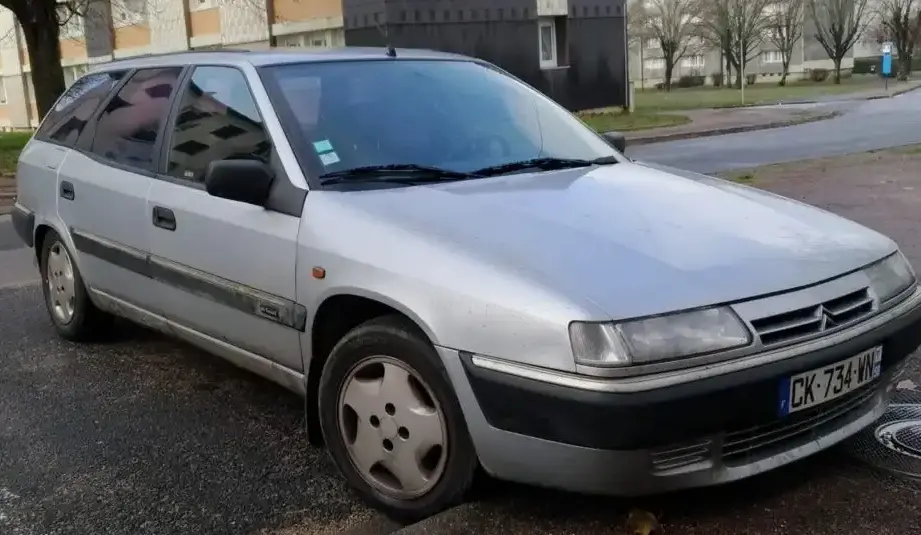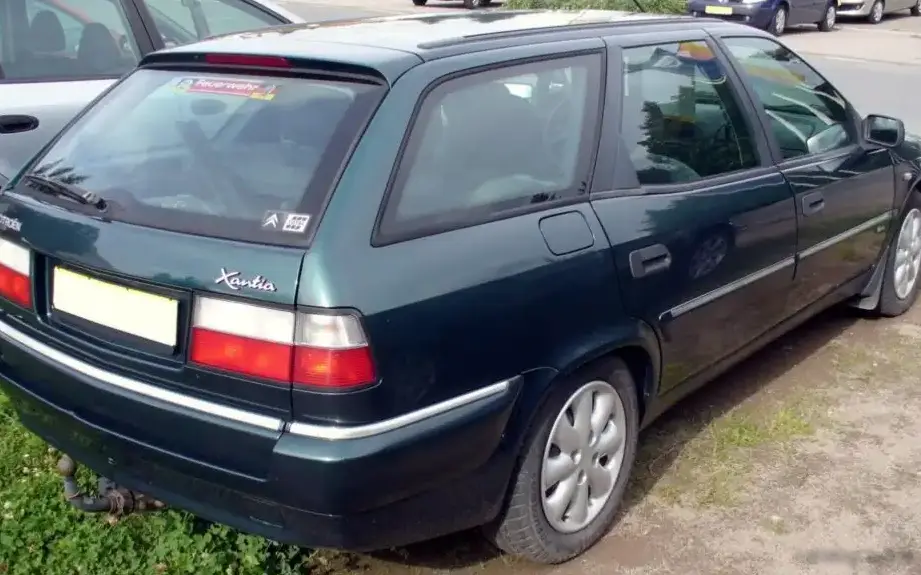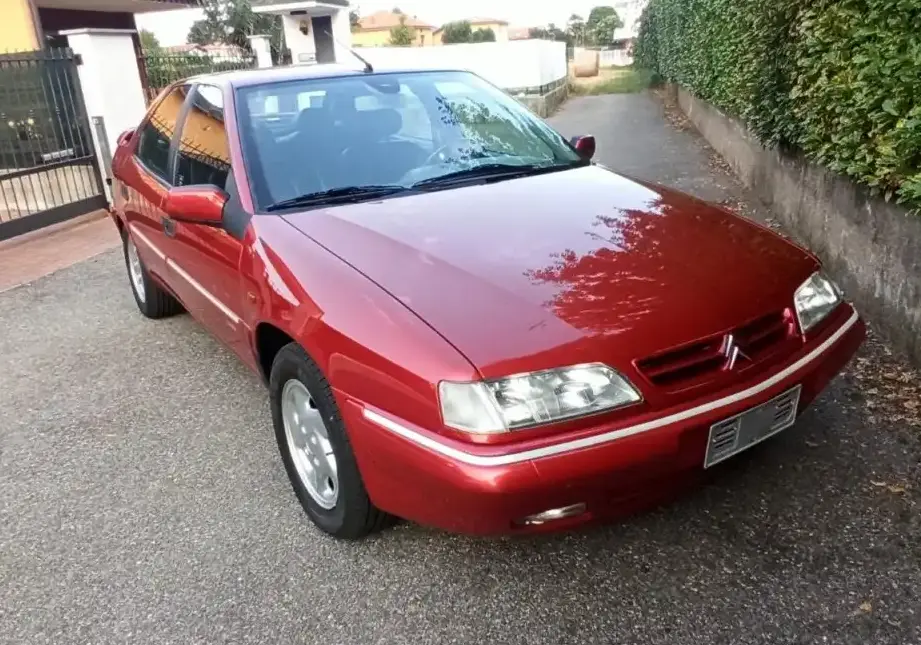
The Citroën Xantia 3.0 V6 S Automatic, produced between 1998 and 2001, represented the performance pinnacle of the X2 generation Xantia line. Positioned as the flagship trim, it offered a luxurious and powerful driving experience within Citroën’s mid-size hatchback range. The Xantia itself was a successor to the BX, continuing Citroën’s tradition of innovative hydropneumatic suspension and distinctive styling. This variant, with its 3.0-liter V6 engine and automatic transmission, catered to buyers seeking a refined and capable grand tourer, particularly in European markets where it competed with vehicles like the Ford Mondeo and Peugeot 605.
Technical Specifications
| Brand | Citroen |
| Model | Xantia |
| Generation | Xantia (X2) |
| Type (Engine) | 3.0 V6 S (190 Hp) Automatic |
| Start of production | 1998 year |
| End of production | 2001 year |
| Powertrain Architecture | Internal Combustion engine |
| Body type | Hatchback |
| Seats | 5 |
| Doors | 4 |
| Fuel consumption (economy) – urban | 17.2 l/100 km (13.7 US mpg, 16.4 UK mpg, 5.8 km/l) |
| Fuel consumption (economy) – extra urban | 8.4 l/100 km (28 US mpg, 33.6 UK mpg, 11.9 km/l) |
| Fuel consumption (economy) – combined | 11.6 l/100 km (20.3 US mpg, 24.4 UK mpg, 8.6 km/l) |
| CO2 emissions | 281 g/km |
| Fuel Type | Petrol (Gasoline) |
| Acceleration 0 – 100 km/h | 9.7 sec |
| Acceleration 0 – 62 mph | 9.7 sec |
| Acceleration 0 – 60 mph | 9.2 sec |
| Maximum speed | 255 km/h (158.45 mph) |
| Emission standard | Euro 2 |
| Weight-to-power ratio | 7.9 kg/Hp, 127 Hp/tonne |
| Weight-to-torque ratio | 5.6 kg/Nm, 178.5 Nm/tonne |
| Power | 190 Hp @ 5500 rpm |
| Power per litre | 64.5 Hp/l |
| Torque | 267 Nm @ 4000 rpm (196.93 lb.-ft. @ 4000 rpm) |
| Engine layout | Front, Transverse |
| Engine Model/Code | XZF ES9J4 |
| Engine displacement | 2946 cm3 (179.78 cu. in.) |
| Number of cylinders | 6 |
| Engine configuration | V-engine |
| Cylinder Bore | 87 mm (3.43 in.) |
| Piston Stroke | 82.6 mm (3.25 in.) |
| Compression ratio | 10.5:1 |
| Number of valves per cylinder | 4 |
| Fuel injection system | Multi-port manifold injection |
| Engine aspiration | Naturally aspirated engine |
| Valvetrain | DOHC |
| Engine oil capacity | 5.5 l (5.81 US qt | 4.84 UK qt) |
| Coolant | 10 l (10.57 US qt | 8.8 UK qt) |
| Kerb Weight | 1496 kg (3298.12 lbs.) |
| Max. weight | 1960 kg (4321.06 lbs.) |
| Max load | 464 kg (1022.94 lbs.) |
| Trunk (boot) space – minimum | 480 l (16.95 cu. ft.) |
| Trunk (boot) space – maximum | 878 l (31.01 cu. ft.) |
| Fuel tank capacity | 65 l (17.17 US gal | 14.3 UK gal) |
| Max. roof load | 75 kg (165.35 lbs.) |
| Permitted trailer load with brakes (12%) | 1500 kg (3306.93 lbs.) |
| Permitted trailer load without brakes | 750 kg (1653.47 lbs.) |
| Permitted towbar download | 85 kg (187.39 lbs.) |
| Length | 4524 mm (178.11 in.) |
| Width | 1755 mm (69.09 in.) |
| Width including mirrors | 1980 mm (77.95 in.) |
| Height | 1410 mm (55.51 in.) |
| Wheelbase | 2740 mm (107.87 in.) |
| Front track | 1502 mm (59.13 in.) |
| Rear (Back) track | 1454 mm (57.24 in.) |
| Front overhang | 983 mm (38.7 in.) |
| Rear overhang | 801 mm (31.54 in.) |
| Minimum turning circle (turning diameter) | 10.8 m (35.43 ft.) |
| Drivetrain Architecture | The Internal combustion engine (ICE) drives the front wheels of the vehicle. |
| Drive wheel | Front wheel drive |
| Number of gears and type of gearbox | 4 gears, automatic transmission |
| Front suspension | Independent type McPherson, Wishbone |
| Rear suspension | Hydro-pneumatic element, Trailing arm |
| Front brakes | Ventilated discs |
| Rear brakes | Disc |
| Assisting systems | ABS (Anti-lock braking system) |
| Steering type | Steering rack and pinion |
| Power steering | Hydraulic Steering |
| Tires size | 205/60 R15 |
| Wheel rims size | 15 |
Powertrain & Engine Architecture
The heart of the Xantia 3.0 V6 S is the XFZ ES9J4 engine, a 2.946-liter, naturally aspirated V6. This engine, derived from the PSA-Renault collaboration, features a 60-degree V-angle and a cast iron block with aluminum cylinder heads. It utilizes a multi-port fuel injection system and a double overhead camshaft (DOHC) valvetrain with four valves per cylinder. The engine produces 190 horsepower at 5500 rpm and 267 Nm (196.93 lb-ft) of torque at 4000 rpm. The automatic transmission is a four-speed unit, designed to provide smooth shifts and complement the engine’s characteristics. While not a particularly modern transmission by today’s standards, it was well-regarded for its reliability and suitability for long-distance cruising.
Driving Characteristics
The Xantia 3.0 V6 S Automatic offered a distinctly different driving experience compared to the lower-powered versions. The V6 engine provided ample power for effortless acceleration and comfortable highway cruising. The automatic transmission, while not offering the driver engagement of a manual, provided smooth and predictable gear changes. The 0-60 mph time of around 9.2 seconds and a top speed of 158.45 mph were respectable for the era. However, the car’s weight (approximately 3298 lbs) and the efficiency of the automatic transmission meant that fuel economy was considerably lower than the 1.8L or 2.0L models. The hydropneumatic suspension, a Citroën hallmark, provided a remarkably smooth and comfortable ride, absorbing bumps and imperfections in the road with ease.
Equipment & Trim Levels
As the top-of-the-line Xantia, the 3.0 V6 S Automatic came generously equipped. Standard features typically included leather upholstery, air conditioning, power windows and mirrors, central locking, and an upgraded audio system. Optional extras could include a sunroof, upgraded wheels, and metallic paint. The interior was designed with comfort and practicality in mind, offering ample space for passengers and luggage. The dashboard layout was functional and ergonomically designed, although the styling was somewhat dated even at the time of its release.
Chassis & Braking
The Xantia’s chassis featured an independent McPherson strut front suspension and a unique hydro-pneumatic rear suspension. This system allowed for self-leveling and adjustable ride height, contributing to the car’s exceptional ride quality. Braking duties were handled by ventilated discs at the front and solid discs at the rear, with ABS (Anti-lock Braking System) as standard. The steering was a rack and pinion system with hydraulic power assistance, providing precise and responsive handling.
Market Reception & Comparison
The Xantia 3.0 V6 S Automatic was generally well-received by automotive critics, who praised its comfortable ride, powerful engine, and spacious interior. However, its relatively high price and fuel consumption were often cited as drawbacks. Compared to the more economical 1.8L and 2.0L models, the V6 S appealed to a smaller segment of buyers who prioritized performance and luxury over fuel efficiency. It offered a compelling alternative to more mainstream competitors like the Ford Mondeo and Peugeot 605, particularly for those seeking a unique and sophisticated driving experience.
Legacy
The Citroën Xantia 3.0 V6 S Automatic remains a sought-after classic among Citroën enthusiasts. The ES9J4 V6 engine is known for its durability, although regular maintenance is essential. The hydropneumatic suspension, while providing an exceptional ride, can require specialized knowledge and parts for repair. Today, well-maintained examples command a premium in the used car market, appealing to collectors and drivers who appreciate the Xantia’s unique blend of comfort, performance, and French automotive engineering. Its innovative suspension system and powerful V6 engine continue to set it apart as a distinctive and memorable vehicle from the late 1990s and early 2000s.