
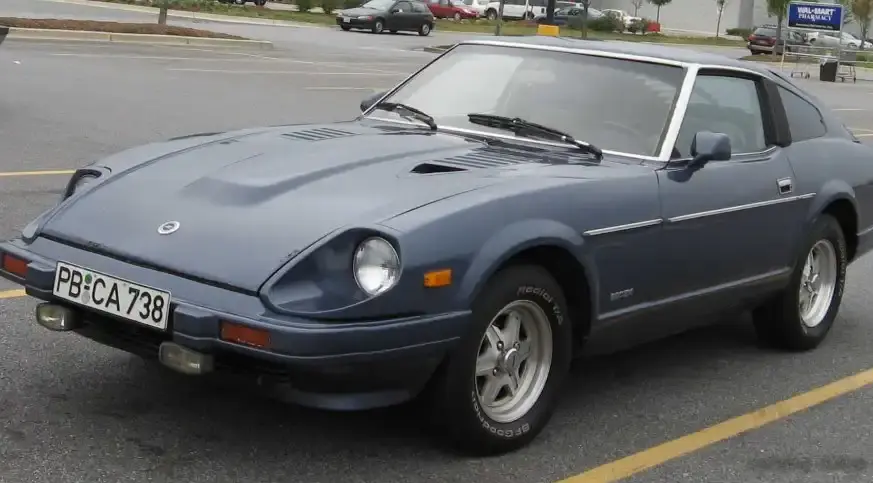
The Nissan 280ZX (HGS130), specifically the 2.7-liter (200 horsepower) variant produced between 1983 and 1984, represents the final iteration of the S130 series Z cars. Positioned as a late-model offering, it aimed to provide a blend of performance and refinement as the Z platform transitioned towards a more modern design language. This version was primarily sold in the North American market, where the Z car had established a strong following. It served as a bridge between the earlier, more classically styled 280Z and the dramatically redesigned 300ZX that followed.
Technical Specifications
| Brand | Nissan |
| Model | 280ZX, ZXT |
| Generation | 280ZX, ZXT (HGS130) |
| Engine Type | 2.7L Inline-Six |
| Start of Production | 1983 |
| End of Production | 1984 |
| Powertrain Architecture | Internal Combustion Engine |
| Body Type | Coupe |
| Seats | 2 |
| Doors | 3 |
| Fuel Type | Petrol (Gasoline) |
| Power | 200 hp |
| Engine Aspiration | Naturally Aspirated |
| Drivetrain | Front Wheel Drive |
Introduction
The Nissan 280ZX, introduced in 1978, was the successor to the highly popular 260Z and 280Z. The HGS130 chassis, representing the later years of the second-generation Z, received a significant facelift in 1982, often referred to as the “ZXT” model. This update included a redesigned front end with a more aerodynamic appearance, flush-mounted headlights, and a revised rear end. The 2.7-liter engine, while retaining the inline-six configuration, was a notable upgrade from the earlier 2.8-liter units, offering increased power and improved fuel efficiency. The 1983-1984 200hp version was a key part of the ZXT’s appeal, aiming to deliver a more modern driving experience.
Powertrain & Engine Architecture
The 2.7-liter (2664 cc) inline-six engine, designated as the VG27E, was the heart of this 280ZX variant. It featured a cast iron block and an aluminum cylinder head, utilizing a single overhead camshaft (SOHC) design with two valves per cylinder. Fuel delivery was managed by Nissan’s electronic fuel injection (EFI) system, contributing to improved responsiveness and reduced emissions. The engine produced 200 horsepower at 5600 rpm and 175 lb-ft of torque at 4400 rpm. The VG27E was known for its relatively smooth operation and decent power output for its displacement. The engine was paired with a four-speed automatic transmission, which was the standard offering for this trim level. While a five-speed manual transmission was available on other 280ZX models, it wasn’t offered with the 2.7-liter engine.
Driving Characteristics
The 280ZX 2.7 automatic offered a comfortable and refined driving experience, prioritizing ease of use over outright performance. The automatic transmission, while smooth, did result in some power loss compared to the manual transmission equipped models. Acceleration was adequate for highway cruising and everyday driving, but it wasn’t particularly quick. The front-wheel drive configuration, a departure from the rear-wheel drive layout of earlier Z cars, provided improved stability in inclement weather but altered the car’s handling characteristics. Compared to the earlier 280Z, the ZXT felt heavier and less nimble, a consequence of increased size and added features. The automatic transmission’s gear ratios were geared towards fuel economy and smooth transitions, rather than aggressive acceleration. The power delivery was linear, with a usable powerband across a wide range of engine speeds.
Equipment & Trim Levels
The 2.7-liter 280ZX typically came well-equipped, reflecting its position as a late-model offering. Standard features included air conditioning, power windows, power locks, and a tilt steering wheel. The interior featured cloth upholstery, although leather options were available. The dashboard layout was functional and straightforward, with easy-to-read gauges. Optional extras included a premium sound system, cruise control, and a sunroof. The ZXT trim also featured a more modern instrument cluster and upgraded interior trim compared to earlier 280ZX models. The overall interior ambiance was geared towards comfort and convenience.
Chassis & Braking
The 280ZX utilized a MacPherson strut front suspension and a Chapman strut rear suspension. The front suspension incorporated coil springs and an anti-roll bar, while the rear suspension used coil springs. Braking duties were handled by power-assisted disc brakes on all four wheels. The braking system provided adequate stopping power for the car’s weight and performance. The front suspension geometry was tuned for comfortable ride quality, while the rear suspension aimed to minimize body roll during cornering. The 2.7-liter models generally had a slightly softer suspension setup compared to the more performance-oriented manual transmission variants.
Market Reception & Comparison
The 1983-1984 280ZX 2.7 automatic received mixed reviews. Critics praised its comfortable ride, refined interior, and improved fuel efficiency compared to earlier Z cars. However, some lamented the loss of the rear-wheel drive layout and the somewhat lackluster performance of the automatic transmission. Compared to the 280Z, the ZXT offered a more modern and luxurious experience, but it also felt heavier and less engaging to drive. Compared to the upcoming 300ZX, the 280ZX 2.7 was seen as a transitional model, lacking the advanced technology and performance of its successor. Fuel economy was rated at around 19 mpg city and 27 mpg highway, which was competitive for the time.
Legacy
The Nissan 280ZX 2.7 automatic, while not the most sought-after Z car variant, holds a place in automotive history as the final evolution of the S130 platform. The VG27E engine proved to be relatively reliable, and many examples are still on the road today. However, like many cars of this era, they are susceptible to rust and age-related issues. In the used car market, these 280ZXs are generally affordable and offer a classic Japanese sports car experience. They appeal to enthusiasts who appreciate the Z car heritage and are looking for a comfortable and reliable classic coupe. Parts availability is generally good, although some specific trim pieces can be difficult to find. The 280ZX 2.7 automatic represents a unique chapter in the Z car story, bridging the gap between the classic 280Z and the technologically advanced 300ZX.
