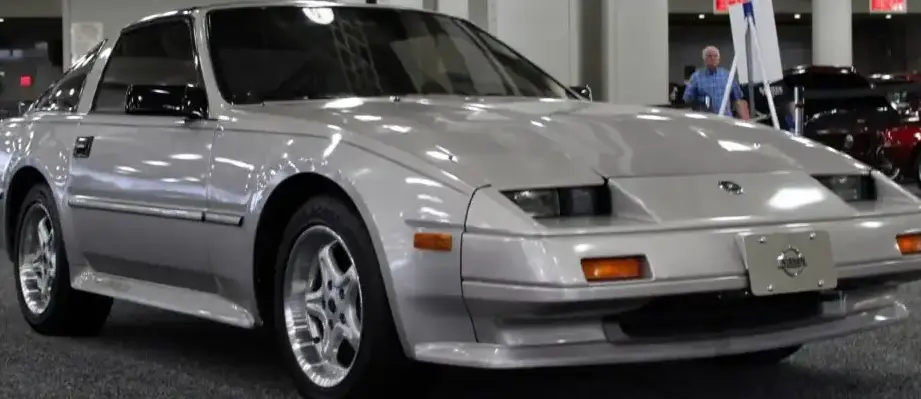
The Nissan 300ZX (Z31) 3.0 Turbo, produced from 1984 to 1990, represented a significant leap forward for Nissan’s Z-car lineage. Positioned as the performance flagship of the Z31 generation, it offered a blend of grand touring comfort and genuine sports car capability. This model was primarily aimed at the North American and Japanese markets, where demand for powerful, technologically advanced coupes was high. The Z31 series, replacing the aging 280ZX (S130), introduced a more modern aesthetic and a suite of new technologies, with the 3.0 Turbo serving as the range-topping variant. It was a direct competitor to cars like the Porsche 944 Turbo and Mazda RX-7 Turbo.
Technical Specifications
| Brand | Nissan |
| Model | 300 ZX |
| Generation | 300 ZX (Z31) |
| Type (Engine) | 3.0 Turbo (229 Hp) |
| Start of production | 1984 |
| End of production | 1990 |
| Powertrain Architecture | Internal Combustion engine |
| Body type | Coupe |
| Seats | 4 |
| Doors | 2 |
| Fuel consumption (economy) – urban | 14.5 l/100 km (16.2 US mpg, 19.5 UK mpg, 6.9 km/l) |
| Fuel consumption (economy) – extra urban | 7.6 l/100 km (30.9 US mpg, 37.2 UK mpg, 13.2 km/l) |
| Fuel Type | Petrol (Gasoline) |
| Acceleration 0 – 100 km/h | 7.1 sec |
| Acceleration 0 – 62 mph | 7.1 sec |
| Acceleration 0 – 60 mph | 6.7 sec |
| Maximum speed | 250 km/h (155.34 mph) |
| Weight-to-power ratio | 6.2 kg/Hp, 160.1 Hp/tonne |
| Weight-to-torque ratio | 4.4 kg/Nm, 228 Nm/tonne |
| Power | 229 Hp @ 5400 rpm |
| Power per litre | 77.4 Hp/l |
| Torque | 326 Nm @ 4400 rpm (240.45 lb.-ft. @ 4400 rpm) |
| Engine layout | Front, Longitudinal |
| Engine Model/Code | VG30ET |
| Engine displacement | 2960 cm3 (180.63 cu. in.) |
| Number of cylinders | 6 |
| Engine configuration | V-engine |
| Cylinder Bore | 87 mm (3.43 in.) |
| Piston Stroke | 83 mm (3.27 in.) |
| Compression ratio | 7.8:1 |
| Number of valves per cylinder | 4 |
| Fuel injection system | Multi-port manifold injection |
| Engine aspiration | Turbocharger |
| Valvetrain | DOHC |
| Engine oil capacity | 4 l (4.23 US qt | 3.52 UK qt) |
| Coolant | 11 l (11.62 US qt | 9.68 UK qt) |
| Kerb Weight | 1430 kg (3152.61 lbs.) |
| Max. weight | 1810 kg (3990.37 lbs.) |
| Max load | 380 kg (837.76 lbs.) |
| Fuel tank capacity | 77 l (20.34 US gal | 16.94 UK gal) |
| Max. roof load | 100 kg (220.46 lbs.) |
| Permitted trailer load with brakes (12%) | 1500 kg (3306.93 lbs.) |
| Permitted trailer load without brakes | 600 kg (1322.77 lbs.) |
| Permitted towbar download | 75 kg (165.35 lbs.) |
| Length | 4540 mm (178.74 in.) |
| Width | 1725 mm (67.91 in.) |
| Height | 1310 mm (51.57 in.) |
| Wheelbase | 2520 mm (99.21 in.) |
| Front track | 1415 mm (55.71 in.) |
| Rear (Back) track | 1435 mm (56.5 in.) |
| Drivetrain Architecture | Rear wheel drive |
| Number of gears and type of gearbox | 5 gears, manual transmission |
| Front suspension | Independent, type McPherson with coil spring and anti-roll bar |
| Rear suspension | Transverse stabilizer, Trailing arm |
| Front brakes | Ventilated discs |
| Rear brakes | Disc |
| Steering type | Steering rack and pinion |
| Power steering | Hydraulic Steering |
| Tires size | Front wheel tires: 205/55 R16 Rear wheel tires: 225/50 R16 |
| Wheel rims size | Front wheel rims: 7J x 16 Rear wheel rims: 7J x 16 |
Powertrain & Engine Architecture
The heart of the 300ZX Turbo was the VG30ET, a 3.0-liter, naturally aspirated V6 engine augmented by a Garrett T25 turbocharger. This engine was a derivative of the VG30E, but featured a lower compression ratio (7.8:1 vs. 8.5:1) and strengthened internals to handle the increased boost pressure. The engine utilized multi-port fuel injection, a double overhead camshaft (DOHC) valvetrain, and a robust cast iron block with an aluminum cylinder head. The turbocharger provided approximately 8.5 psi of boost. The Z31 300ZX was exclusively offered with a five-speed manual transmission, providing direct control over the engine’s power. The transmission was known for its durability and precise shift feel.
Driving Characteristics
The 300ZX 3.0 Turbo delivered a noticeably different driving experience compared to the naturally aspirated versions. The turbocharger provided a significant boost in power and torque, resulting in brisk acceleration. Zero to sixty mph times were consistently in the 6.7-7.1 second range, making it a genuinely quick car for its time. The manual transmission allowed for precise gear selection, maximizing the engine’s performance. While the turbocharger did introduce some lag, the power delivery was strong and linear once the boost came on. The suspension, while comfortable for everyday driving, offered good body control during spirited cornering.
Equipment & Trim Levels
The 300ZX Turbo was generally well-equipped, reflecting its position as the premium model in the lineup. Standard features included power windows, power locks, cruise control, and an upgraded sound system. Leather upholstery was a common option, as were features like a sunroof and automatic climate control. The interior design was modern for the time, with a driver-focused layout and clear instrumentation. The digital dashboard, a hallmark of the Z31, provided a wealth of information to the driver, including speed, engine parameters, and trip data.
Chassis & Braking
The Z31 chassis featured independent suspension all around, with McPherson struts at the front and a trailing arm setup at the rear. Stabilizer bars were fitted front and rear to reduce body roll. Braking duties were handled by ventilated discs at the front and solid discs at the rear. Power-assisted steering provided light and precise control. The suspension tuning aimed for a balance between comfort and handling, making the 300ZX a capable all-rounder.
Market Reception & Comparison
The 300ZX Turbo was generally well-received by automotive critics. It was praised for its performance, handling, and overall refinement. However, some critics noted the turbo lag and the relatively high price compared to other sports cars in its class. Compared to the naturally aspirated 300ZX, the Turbo offered a substantial performance upgrade, but at a higher cost and with slightly lower fuel economy. The Turbo also required more diligent maintenance due to the added complexity of the turbocharging system. Against competitors like the Porsche 944 Turbo, the 300ZX offered a comparable level of performance at a more affordable price point.
Legacy
The Nissan 300ZX (Z31) 3.0 Turbo remains a popular choice among enthusiasts today. The VG30ET engine is known for its durability and potential for modification. While finding well-maintained examples can be challenging, the Z31 Turbo offers a compelling blend of classic styling, strong performance, and relative affordability. The car’s technological innovations, such as the digital dashboard and advanced suspension design, continue to impress. Parts availability is generally good, although some specific components can be difficult to source. The Z31 300ZX Turbo represents a high point in Nissan’s Z-car history and a significant contribution to the sports car landscape of the 1980s.