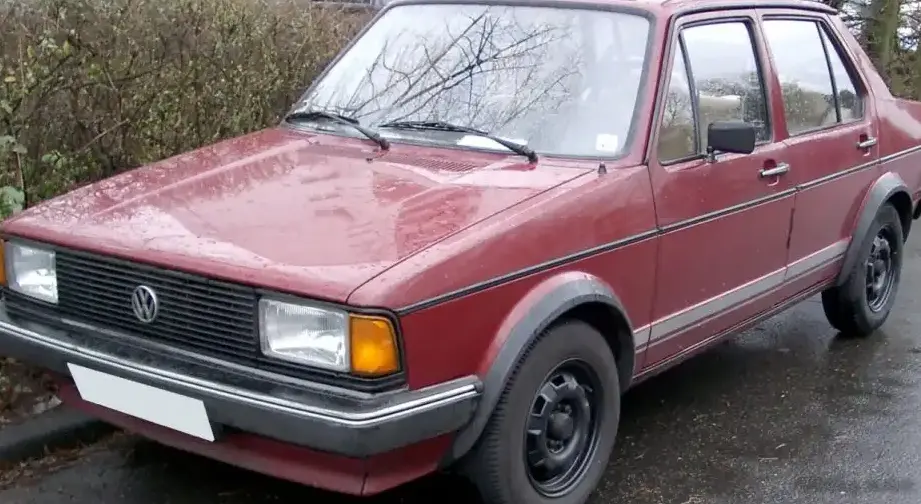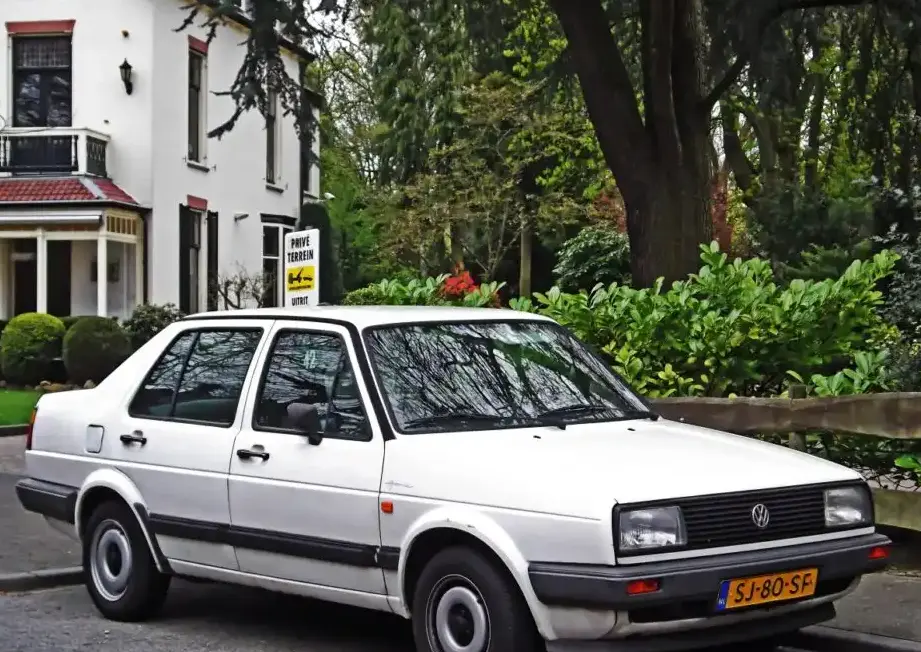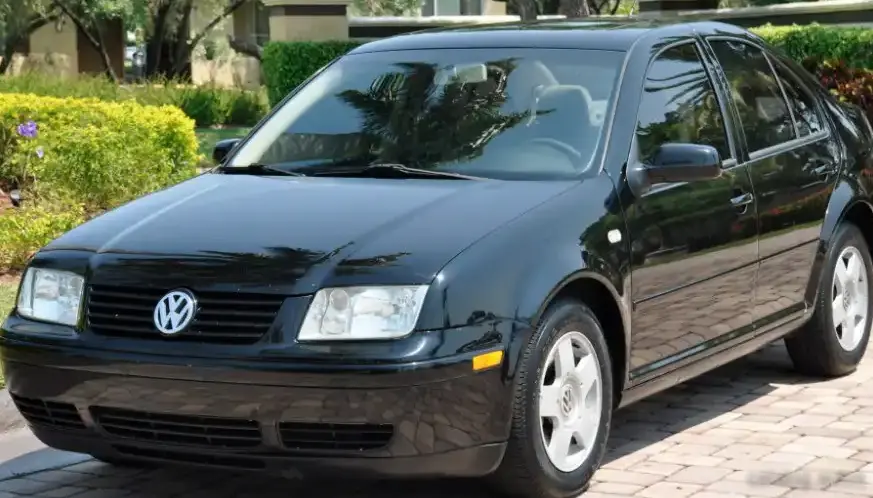
The Volkswagen Jetta IV 1.9 TDI Automatic, produced between 2001 and 2005, represents a significant offering in the fourth generation (Mk4) Jetta lineup. Built on the Volkswagen Group’s A4 platform (also known as the 1HX0/A3 platform), this variant aimed to provide a balance of fuel efficiency, practicality, and comfortable driving experience. It served as a popular choice for drivers seeking a diesel-powered sedan with the convenience of an automatic transmission, particularly in European markets where diesel engines held a strong preference. In the US market, the Jetta TDI models gained a following for their exceptional fuel economy, though the automatic transmission was less common than the manual.
Technical Specifications
| Brand | Volkswagen |
| Model | Jetta |
| Generation | Jetta IV |
| Type (Engine) | 1.9 TDI (130 Hp) Automatic |
| Start of production | 2001 |
| End of production | 2005 |
| Powertrain Architecture | Internal Combustion engine |
| Body type | Sedan |
| Seats | 5 |
| Doors | 4 |
| Fuel consumption (urban) | 9 l/100 km (26.1 US mpg, 31.4 UK mpg, 11.1 km/l) |
| Fuel consumption (extra urban) | 5 l/100 km (47 US mpg, 56.5 UK mpg, 20 km/l) |
| Fuel consumption (combined) | 6.5 l/100 km (36.2 US mpg, 43.5 UK mpg, 15.4 km/l) |
| Fuel Type | Diesel |
| Acceleration 0 – 100 km/h | 10.9 sec |
| Acceleration 0 – 62 mph | 10.9 sec |
| Acceleration 0 – 60 mph | 10.4 sec |
| Maximum speed | 202 km/h (125.52 mph) |
| Weight-to-power ratio | 10 kg/Hp, 99.6 Hp/tonne |
| Weight-to-torque ratio | 4.2 kg/Nm, 237.5 Nm/tonne |
| Power | 130 Hp @ 4000 rpm |
| Power per litre | 68.6 Hp/l |
| Torque | 310 Nm @ 1900 rpm (228.64 lb.-ft. @ 1900 rpm) |
| Engine layout | Front, Transverse |
| Engine Model/Code | ASZ |
| Engine displacement | 1896 cm3 (115.7 cu. in.) |
| Number of cylinders | 4 |
| Engine configuration | Inline |
| Cylinder Bore | 79.5 mm (3.13 in.) |
| Piston Stroke | 95.5 mm (3.76 in.) |
| Compression ratio | 19:1 |
| Number of valves per cylinder | 2 |
| Fuel injection system | Pump-nozzle (Unit Injector) |
| Engine aspiration | Turbocharger, Intercooler |
| Valvetrain | OHC |
| Engine oil capacity | 4.5 l (4.76 US qt | 3.96 UK qt) |
| Coolant | 6 l (6.34 US qt | 5.28 UK qt) |
| Kerb Weight | 1305 kg (2877.03 lbs.) |
| Max. weight | 1850 kg (4078.55 lbs.) |
| Max load | 545 kg (1201.52 lbs.) |
| Trunk (boot) space – minimum | 455 l (16.07 cu. ft.) |
| Fuel tank capacity | 55 l (14.53 US gal | 12.1 UK gal) |
| Length | 4376 mm (172.28 in.) |
| Width | 1735 mm (68.31 in.) |
| Height | 1446 mm (56.93 in.) |
| Wheelbase | 2513 mm (98.94 in.) |
| Front track | 1513 mm (59.57 in.) |
| Rear (Back) track | 1494 mm (58.82 in.) |
| Drivetrain Architecture | The Internal combustion engine (ICE) drives the front wheels of the vehicle. |
| Drive wheel | Front wheel drive |
| Number of gears and type of gearbox | 5 gears, automatic transmission |
| Front suspension | Coil spring |
| Rear suspension | Coil spring |
| Front brakes | Ventilated discs |
| Rear brakes | Disc |
| Assisting systems | ABS (Anti-lock braking system) |
| Steering type | Steering rack and pinion |
| Power steering | Hydraulic Steering |
| Tires size | 195/65 R15V |
| Wheel rims size | 15 |
Powertrain & Engine Architecture
The heart of the Jetta IV 1.9 TDI Automatic is the ASZ engine code, a 1.9-liter inline-four cylinder diesel engine. This engine is a direct injection diesel, utilizing the pump-nozzle (Unit Injector) technology developed by Bosch. This system delivers highly pressurized fuel directly into the combustion chamber, promoting efficient combustion and reducing emissions. The engine features an overhead camshaft (OHC) valvetrain with two valves per cylinder. A turbocharger with an intercooler is employed to increase power output and improve torque across the rev range. The automatic transmission is a conventional five-speed hydraulic automatic, chosen for its ease of use and comfort. While not known for its sportiness, it provided smooth shifts and adequate performance for everyday driving.
Driving Characteristics
The 130 horsepower and 310 Nm (228.64 lb-ft) of torque delivered by the 1.9 TDI engine, coupled with the five-speed automatic transmission, resulted in a driving experience focused on efficiency and usability rather than outright speed. Acceleration from 0-60 mph took around 10.4 seconds, and top speed was approximately 125.52 mph. Compared to the manual transmission version, the automatic offered slightly reduced acceleration due to transmission losses. Compared to higher-output Jetta variants like the VR6, the TDI Automatic was significantly slower, but it excelled in fuel economy. The automatic transmission’s gear ratios were tuned for fuel efficiency and smooth cruising, prioritizing comfort over aggressive acceleration. The torque characteristics of the diesel engine meant that usable power was available from low engine speeds, making it well-suited for everyday driving and highway passing maneuvers.
Equipment & Trim Levels
The Jetta IV 1.9 TDI Automatic typically came with a reasonable level of standard equipment. This included power windows, power locks, air conditioning, and an AM/FM radio. Higher trim levels, such as the GLX, added features like alloy wheels, a sunroof, upgraded interior upholstery, and a more sophisticated audio system. Optional extras included a CD changer, leather seats, and heated front seats. Interior upholstery was typically cloth, with higher trims offering leather options. The dashboard layout was functional and straightforward, typical of Volkswagen designs of the era.
Chassis & Braking
The Jetta IV featured a MacPherson strut front suspension and a multi-link rear suspension, providing a comfortable and controlled ride. The front brakes were ventilated discs, while the rear brakes were solid discs. ABS (Anti-lock Braking System) was standard. The suspension was tuned for comfort, prioritizing ride quality over sporty handling. Stabilizer bars were fitted to both the front and rear axles to reduce body roll during cornering. The chassis was designed to accommodate the weight of the diesel engine and the automatic transmission, providing a stable and predictable driving experience.
Market Reception & Comparison
The Jetta IV 1.9 TDI Automatic was generally well-received by automotive critics for its fuel efficiency and practicality. It was praised for its comfortable ride and spacious interior. However, the automatic transmission was sometimes criticized for being somewhat sluggish compared to the manual gearbox. Compared to other Jetta trims, the TDI Automatic appealed to a different audience – those prioritizing fuel economy and ease of driving over performance. The 1.8T models offered more power, while the VR6 provided a more luxurious experience. The TDI Automatic’s fuel economy was significantly better than both of these trims, making it a popular choice for drivers who covered long distances.
Legacy
The 1.9 TDI engine, particularly the ASZ variant, has earned a reputation for being remarkably durable and reliable. When properly maintained, these engines can accumulate very high mileage. The automatic transmission, while not as robust as the engine, is generally reliable as well. Today, the Jetta IV 1.9 TDI Automatic remains a relatively affordable and practical used car option. Its fuel efficiency and simple mechanical design make it appealing to budget-conscious buyers and those seeking a reliable commuter vehicle. However, potential buyers should be aware of the age of the vehicle and the potential for wear and tear on components like the turbocharger and fuel injectors. Finding a well-maintained example is key to enjoying the long-term benefits of this durable and efficient diesel sedan.