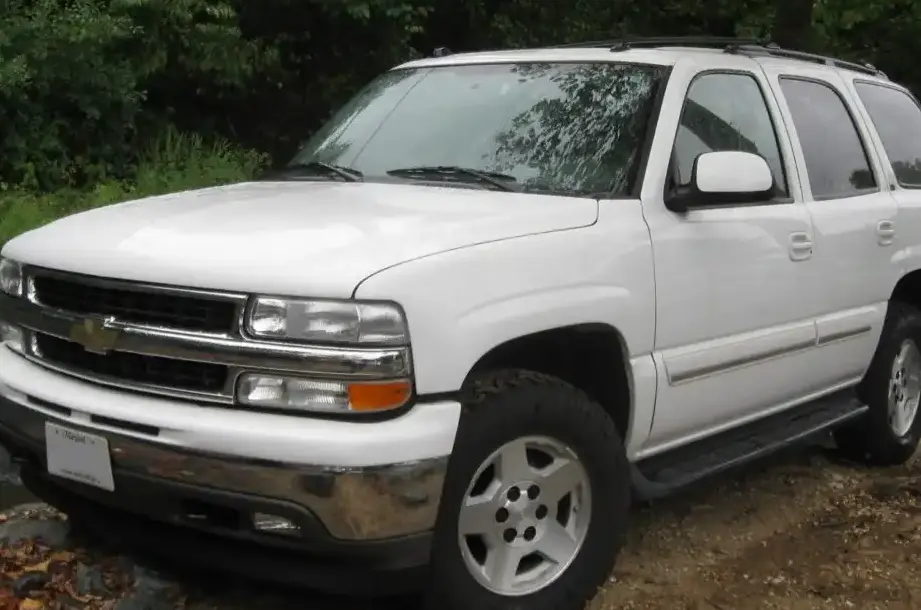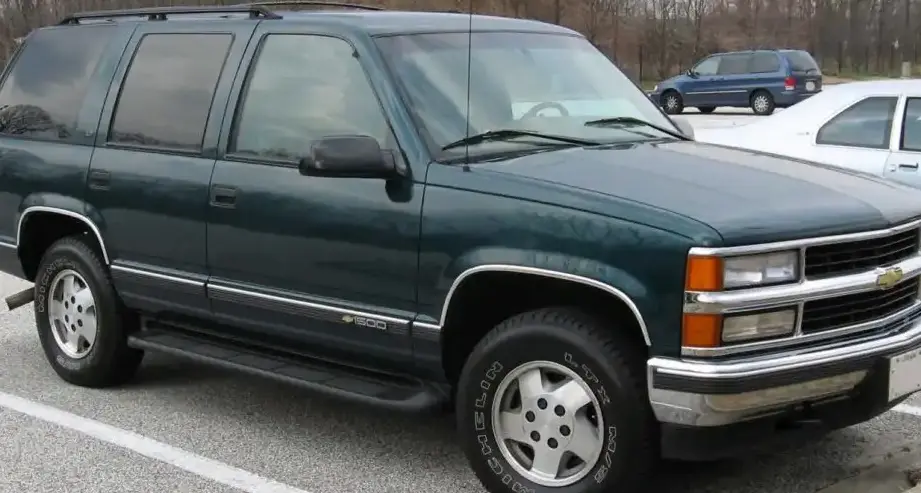
The Chevrolet Tahoe (GMT410) 5.7L V8 4WD, produced from 1997 to 1999, represents a significant iteration of Chevrolet’s full-size SUV. Part of the GMT410 platform generation, this Tahoe variant occupied a middle-ground position in the lineup, offering a balance between capability, space, and affordability. It served as a popular choice for families and those needing a robust vehicle for towing and hauling, particularly in regions where four-wheel drive was essential. This model bridged the gap between the base engine options and the more powerful, yet pricier, Vortec V8 configurations.
Technical Specifications
| Brand | Chevrolet |
| Model | Tahoe |
| Generation | Tahoe (GMT410) |
| Type (Engine) | 5.7L i V8 4WD (254 Hp) |
| Start of production | 1997 |
| End of production | 1999 |
| Powertrain Architecture | Internal Combustion engine |
| Body type | SUV |
| Seats | 6 |
| Doors | 5 |
| Fuel consumption (urban) | 20.7 l/100 km (11.4 US mpg) |
| Fuel consumption (extra urban) | 13.1 l/100 km (18 US mpg) |
| Fuel Type | Petrol (Gasoline) |
| Maximum speed | 160 km/h (99.42 mph) |
| Power | 254 Hp @ 4600 rpm |
| Power per litre | 44.3 Hp/l |
| Torque | 447 Nm @ 2800 rpm (329.69 lb.-ft. @ 2800 rpm) |
| Engine layout | Front, Longitudinal |
| Engine displacement | 5733 cm3 (349.85 cu. in.) |
| Number of cylinders | 8 |
| Engine configuration | V-engine |
| Cylinder Bore | 101.6 mm (4 in.) |
| Piston Stroke | 88.4 mm (3.48 in.) |
| Compression ratio | 9.4:1 |
| Number of valves per cylinder | 2 |
| Fuel injection system | Multi-port manifold injection |
| Engine aspiration | Naturally aspirated engine |
| Engine oil capacity | 4.8 l (5.07 US qt | 4.22 UK qt) |
| Coolant | 16.5 l (17.44 US qt | 14.52 UK qt) |
| Max. weight | 3084 kg (6799.06 lbs.) |
| Trunk (boot) space – minimum | 1894 l (66.89 cu. ft.) |
| Trunk (boot) space – maximum | 3347 l (118.2 cu. ft.) |
| Fuel tank capacity | 114 l (30.12 US gal | 25.08 UK gal) |
| Length | 5057 mm (199.09 in.) |
| Width | 1941 mm (76.42 in.) |
| Height | 1829 mm (72.01 in.) |
| Wheelbase | 2985 mm (117.52 in.) |
| Front track | 1628 mm (64.09 in.) |
| Rear (Back) track | 1613 mm (63.5 in.) |
| Drive wheel | All wheel drive (4×4) |
| Number of gears and type of gearbox | 4 gears, automatic transmission |
| Front suspension | Coil spring |
| Rear suspension | Leaf spring |
| Front brakes | Disc |
| Rear brakes | Drum |
| Assisting systems | ABS (Anti-lock braking system), Hydraulic Power Steering |
| Tires size | 245/75 R16 |
Powertrain & Engine Architecture
The heart of this Tahoe variant is the 5.7-liter (349 cubic inch) small-block Chevrolet V8 engine. This engine, internally designated as the Vortec 5700, is a pushrod engine featuring two valves per cylinder and a cast iron block with aluminum cylinder heads. The multi-port fuel injection system delivers fuel directly to each cylinder, optimizing combustion efficiency. The 4L60E four-speed automatic transmission was the standard pairing for this engine. This transmission is known for its durability and relatively smooth shifting characteristics, although it could sometimes feel sluggish when compared to more modern automatic transmissions. The 4L60E features electronic control for improved shift quality and adaptability to driving conditions.
Driving Characteristics
The 5.7L V8 with the 4L60E automatic provided adequate, but not exhilarating, performance. Acceleration from 0 to 60 mph typically took around 8-9 seconds. The automatic transmission’s gear ratios were geared more towards towing and fuel economy than outright speed. While the engine delivered a respectable 447 Nm (329.69 lb-ft) of torque, the transmission’s programming and the vehicle’s substantial weight meant that passing maneuvers required planning. Compared to the 6.5L diesel option, the 5.7L offered quicker acceleration but significantly less towing capacity. Compared to the 4.3L V6, the 5.7L provided a noticeable power increase, making it a more suitable choice for those frequently hauling heavy loads or navigating challenging terrain.
Equipment & Trim Levels
The 1997-1999 Tahoe 5.7L 4WD typically came standard with features like air conditioning, power windows and locks, and an AM/FM stereo. Higher trim levels, such as the LT, added features like leather upholstery, upgraded sound systems, and alloy wheels. Optional extras included a sunroof, rear air conditioning, and a towing package. Interior upholstery was typically cloth, with leather available as an upgrade. The dashboard layout was functional and straightforward, prioritizing ease of use over aesthetic flair.
Chassis & Braking
The GMT410 Tahoe utilized a body-on-frame construction, providing a robust and durable platform. The front suspension consisted of coil springs, while the rear suspension employed leaf springs. This setup prioritized load-carrying capacity and ride comfort over sporty handling. The braking system featured disc brakes on the front wheels and drum brakes on the rear. Anti-lock brakes (ABS) were standard, enhancing safety during emergency braking situations. The 4WD system was typically a part-time system, allowing the driver to switch between two-wheel drive and four-wheel drive as needed.
Market Reception & Comparison
The Tahoe 5.7L 4WD was generally well-received by consumers seeking a versatile and capable SUV. Critics praised its spacious interior, comfortable ride, and strong towing capacity. However, fuel economy was a common complaint, with the 5.7L V8 returning around 11.4 mpg in the city and 18 mpg on the highway. Compared to the 4.3L V6, the 5.7L offered a significant performance boost, but at the cost of increased fuel consumption. The 6.5L diesel provided superior towing capacity but was considerably more expensive. Reliability was generally good, although the 4L60E transmission was known to require occasional maintenance.
Legacy
The Chevrolet Tahoe (GMT410) 5.7L V8 4WD remains a popular choice in the used car market today, particularly among those seeking a classic American SUV. The 5.7L Vortec engine is known for its durability and relatively simple maintenance requirements. While fuel economy is not its strong suit, its robust construction and ample space continue to appeal to a wide range of buyers. Parts availability is generally good, making it a relatively easy vehicle to maintain and repair. These Tahoes are often sought after for restoration projects or as reliable work vehicles.