Technical Specifications
| Brand | Volkswagen |
| Model | Jetta |
| Generation | Jetta IV Wagon |
| Type (Engine) | 2.0 (115 Hp) |
| Start of production | 1999 |
| End of production | 2005 |
| Powertrain Architecture | Internal Combustion engine |
| Body type | Station wagon (estate) |
| Seats | 5 |
| Doors | 5 |
| Fuel consumption (urban) | 11 l/100 km (21.4 US mpg) |
| Fuel consumption (extra urban) | 6.2 l/100 km (37.9 US mpg) |
| Fuel consumption (combined) | 8 l/100 km (29.4 US mpg) |
| Fuel Type | Petrol (Gasoline) |
| Acceleration 0 – 100 km/h | 11 sec |
| Acceleration 0 – 62 mph | 11 sec |
| Acceleration 0 – 60 mph | 10.5 sec |
| Maximum speed | 195 km/h (121.17 mph) |
| Weight-to-power ratio | 11.2 kg/Hp |
| Weight-to-torque ratio | 7.6 kg/Nm |
| Power | 115 Hp @ 5200 rpm |
| Power per litre | 58 Hp/l |
| Torque | 170 Nm @ 2400 rpm (125.39 lb.-ft. @ 2400 rpm) |
| Engine layout | Front, Transverse |
| Engine Model/Code | AVH, BBW, BEV |
| Engine displacement | 1984 cm3 (121.07 cu. in.) |
| Number of cylinders | 4 |
| Engine configuration | Inline |
| Cylinder Bore | 82.5 mm (3.25 in.) |
| Piston Stroke | 92.8 mm (3.65 in.) |
| Compression ratio | 10:1 |
| Number of valves per cylinder | 2 |
| Fuel injection system | Multi-port manifold injection |
| Engine aspiration | Naturally aspirated engine |
| Valvetrain | OHC |
| Engine oil capacity | 4.2 l (4.44 US qt | 3.7 UK qt) |
| Coolant | 5 l (5.28 US qt | 4.4 UK qt) |
| Kerb Weight | 1292 kg (2848.37 lbs.) |
| Max. weight | 1800 kg (3968.32 lbs.) |
| Max load | 508 kg (1119.95 lbs.) |
| Trunk (boot) space – minimum | 1470 l (51.91 cu. ft.) |
| Trunk (boot) space – maximum | 1470 l (51.91 cu. ft.) |
| Fuel tank capacity | 55 l (14.53 US gal | 12.1 UK gal) |
| Length | 4409 mm (173.58 in.) |
| Width | 1735 mm (68.31 in.) |
| Height | 1473 mm (57.99 in.) |
| Wheelbase | 2515 mm (99.02 in.) |
| Front track | 1513 mm (59.57 in.) |
| Rear (Back) track | 1494 mm (58.82 in.) |
| Drivetrain Architecture | The Internal combustion engine (ICE) drives the front wheels of the vehicle. |
| Drive wheel | Front wheel drive |
| Number of gears and type of gearbox | 5 gears, manual transmission |
| Front suspension | Coil spring |
| Rear suspension | Coil spring |
| Front brakes | Ventilated discs |
| Rear brakes | Disc |
| Assisting systems | ABS (Anti-lock braking system) |
| Steering type | Steering rack and pinion |
| Power steering | Hydraulic Steering |
| Tires size | 195/65 R15 |
| Wheel rims size | 6J x 15 |
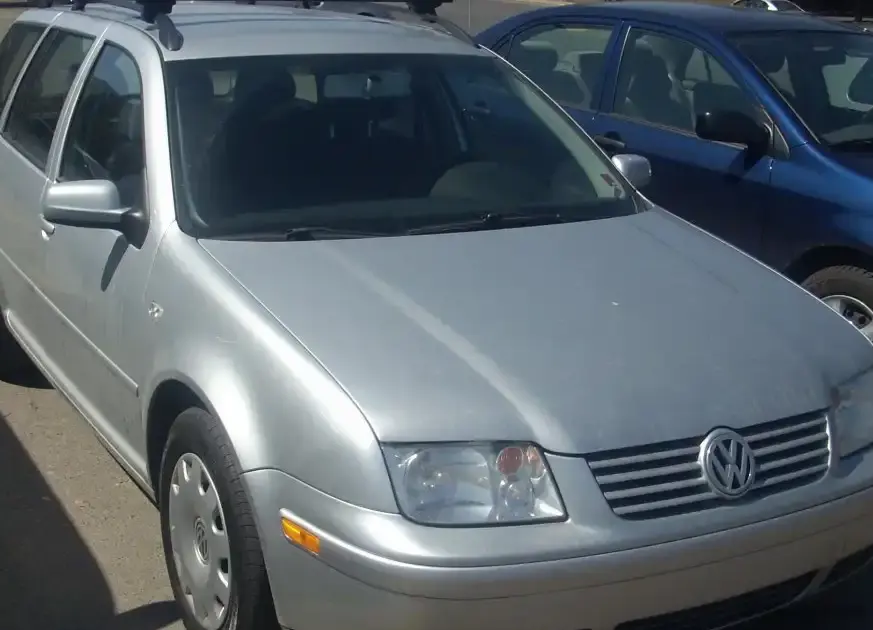
The Volkswagen Jetta IV Wagon 2.0, produced from 1999 to 2005, was a significant offering in Volkswagen’s North American and European lineup. It represented a practical and refined wagon option based on the successful Mk4 Jetta sedan. The 2.0-liter engine, designated with engine codes AVH, BBW, and BEV, was a popular choice for buyers seeking a balance between fuel economy and usable performance. This variant was positioned to attract families and individuals needing a versatile vehicle without the higher price tag of the more performance-oriented trims.
Powertrain & Engine Architecture
The Jetta IV Wagon 2.0 is powered by a 2.0-liter inline-four cylinder engine. This engine is naturally aspirated and utilizes a multi-port fuel injection system. The engine’s design prioritized reliability and ease of maintenance, making it a practical choice for everyday use. The engine features an 8-valve SOHC (Single Overhead Camshaft) valvetrain, contributing to its mechanical simplicity. This engine produced 115 horsepower at 5200 rpm and 125 lb-ft of torque at 2400 rpm. The engine is mounted transversely, driving the front wheels. While a five-speed manual transmission was standard, a four-speed automatic transmission was a frequently chosen option, offering convenience at the expense of some performance and fuel efficiency.
Driving Characteristics
The Jetta IV Wagon 2.0, when equipped with the five-speed manual transmission, provided a reasonably engaging driving experience. Acceleration from 0-60 mph took approximately 10.5 seconds, which was adequate for daily commuting and general driving. The automatic transmission added a slight delay to this time. The engine delivered sufficient torque for comfortable highway cruising and passing, though downshifting was often necessary for quicker acceleration. The suspension, tuned for comfort, effectively absorbed road imperfections, providing a smooth ride. Compared to the more powerful 1.8T models, the 2.0-liter engine felt less responsive, especially at higher RPMs. However, the 2.0L engine offered a more predictable and linear power delivery, making it easier to manage in typical traffic conditions.
Equipment & Trim Levels
The Jetta IV Wagon 2.0 typically came standard with features like air conditioning, power windows and locks, and an AM/FM stereo. Higher trim levels, such as the GL, added features like alloy wheels, upgraded interior trim, and a sunroof. Optional extras included a CD changer, heated front seats, and side airbags. The standard interior upholstery was cloth, with leather options available on higher trim levels. The dashboard layout was functional and user-friendly, with clear gauges and intuitive controls. The wagon’s rear seats could be folded down to create a large, flat cargo area, significantly increasing its versatility.
Chassis & Braking
The Jetta IV Wagon 2.0 utilized a MacPherson strut front suspension and a multi-link rear suspension, providing a good balance between ride comfort and handling. The front brakes were ventilated discs, while the rear brakes were solid discs. ABS (Anti-lock Braking System) was standard equipment. The steering system was a rack-and-pinion setup with hydraulic power assistance, offering precise and responsive steering feel. The suspension was tuned to prioritize ride comfort over sporty handling, making it well-suited for everyday driving. The standard tire size was 195/65 R15, offering a good compromise between ride quality and grip.
Market Reception & Comparison
The Jetta IV Wagon 2.0 was generally well-received by automotive critics as a practical and reliable family vehicle. It was praised for its spacious interior, comfortable ride, and reasonable fuel efficiency. However, some critics pointed out that the 2.0-liter engine lacked the power and refinement of the optional 1.8T turbocharged engine. Compared to the 1.8T models, the 2.0-liter version offered better fuel economy and potentially lower maintenance costs, but at the expense of performance. The 2.0L was also often more affordable, making it an attractive option for budget-conscious buyers. When compared to competitors like the Toyota Corolla Wagon and Honda Civic Wagon, the Jetta offered a more European driving experience and a more upscale interior.
Legacy
The Jetta IV Wagon 2.0 has proven to be a relatively reliable vehicle, with a significant number of examples still in operation today. The 2.0-liter engine is known for its durability and relatively straightforward maintenance requirements. Common issues include minor oil leaks and occasional sensor failures, but these are typically inexpensive to address. In the used car market, the Jetta IV Wagon 2.0 remains a popular choice for buyers seeking an affordable and practical wagon. Its combination of space, reliability, and fuel efficiency continues to make it a compelling option, even two decades after its production ceased. The availability of aftermarket parts and a supportive online community further contribute to its enduring appeal.