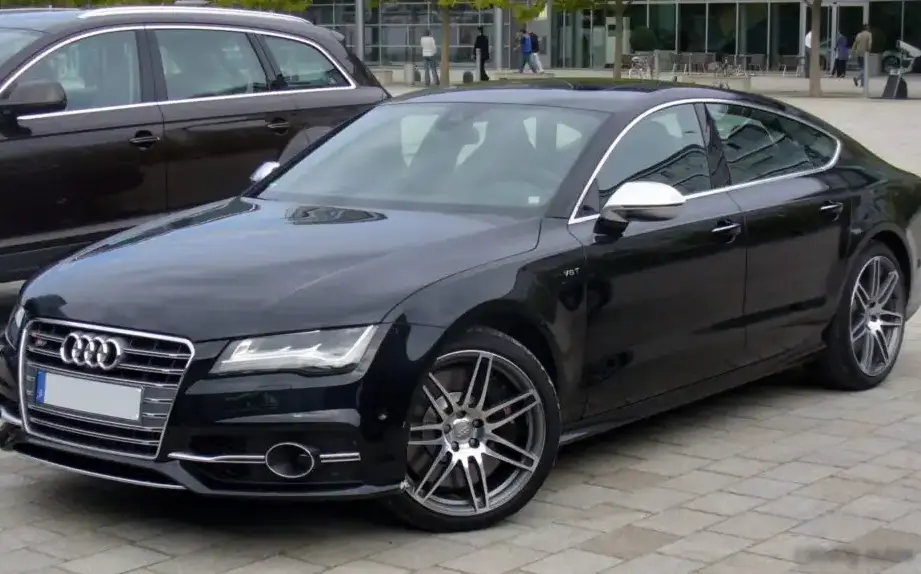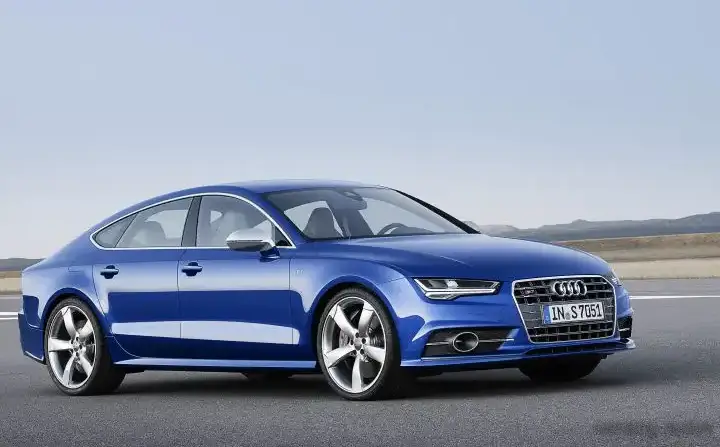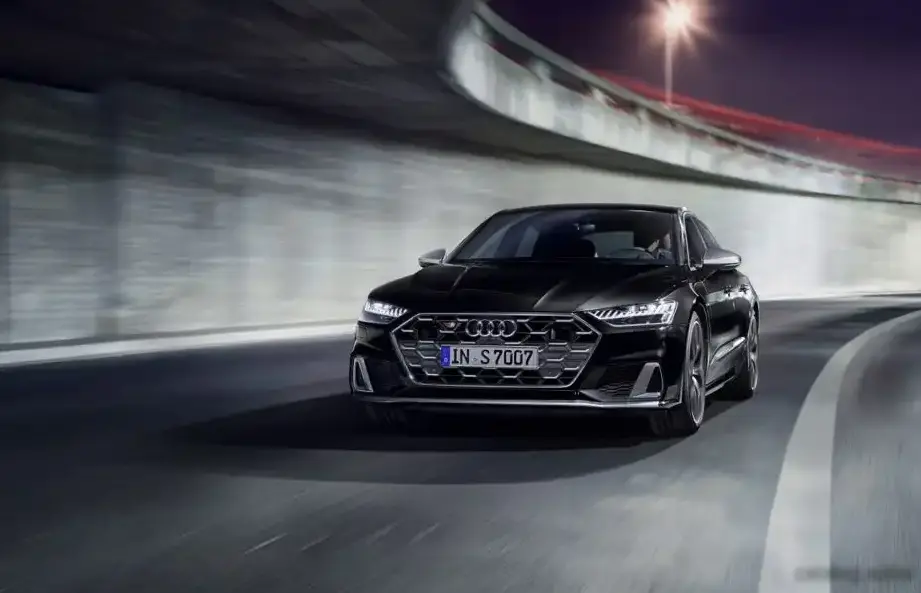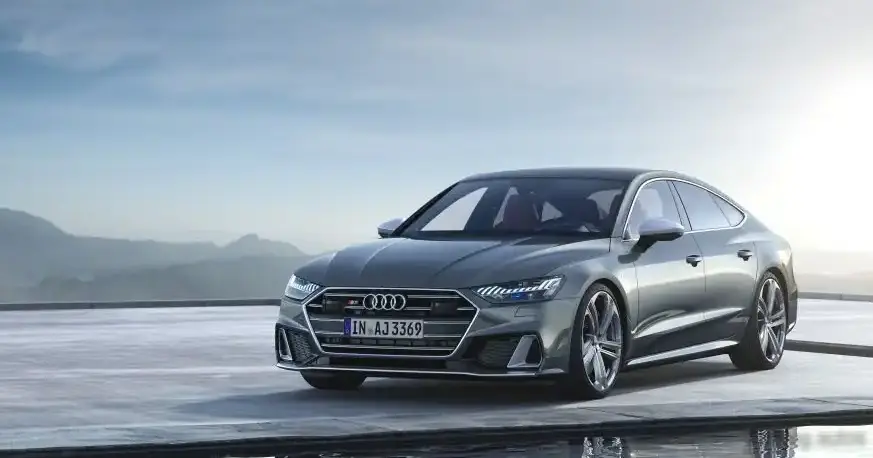
The Audi S7 Sportback (C8) 3.0 TDI V6, produced from November 2020 to May 2023, represents a compelling blend of performance, luxury, and efficiency within the Audi S7 lineup. Positioned as a diesel-powered alternative to the gasoline variants, this model catered to European markets prioritizing fuel economy and torque. It falls within the C8 generation of the S7 Sportback, built on the Volkswagen Group’s MLB Evo platform (1HX0/A3). This variant distinguished itself through its potent 3.0-liter TDI engine, mild-hybrid technology, and standard quattro all-wheel drive, offering a unique driving experience compared to its gasoline-powered siblings.
Technical Specifications
| Brand | Audi |
| Model | S7 |
| Generation | S7 Sportback (C8) |
| Type (Engine) | 3.0 TDI V6 (344 Hp) Mild Hybrid quattro tiptronic |
| Start of production | November, 2020 |
| End of production | May, 2023 |
| Powertrain Architecture | MHEV (Mild Hybrid Electric Vehicle) |
| Body type | Liftback |
| Seats | 5 |
| Doors | 5 |
| Combined fuel consumption (WLTP) | 7.1-7.5 l/100 km (33.1 – 31.4 US mpg) |
| CO2 emissions (WLTP) | 186-195 g/km |
| Fuel Type | Diesel |
| Acceleration 0 – 100 km/h | 5.1 sec |
| Acceleration 0 – 62 mph | 5.1 sec |
| Acceleration 0 – 60 mph | 4.8 sec |
| Maximum speed | 250 km/h (155.34 mph) |
| Emission standard | Euro 6d-ISC-FCM |
| Weight-to-power ratio | 5.8 kg/Hp |
| Weight-to-torque ratio | 2.9 kg/Nm |
| Net (usable) battery capacity | 0.5 kWh |
| Battery voltage | 48 V |
| Battery technology | Lithium-ion (Li-Ion) |
| Battery weight | 10 kg (22.05 lbs) |
| Battery location | Under the trunk |
| Recuperation output | 8 kW |
| Power | 344 Hp @ 3850-4000 rpm |
| Torque | 700 Nm @ 1750-3250 rpm (516.29 lb.-ft.) |
| Engine layout | Front, Longitudinal |
| Engine Model/Code | EA897evo3 / DMKD |
| Engine displacement | 2967 cm3 (181.06 cu. in.) |
| Number of cylinders | 6 |
| Engine configuration | V-engine |
| Cylinder Bore | 83 mm (3.27 in.) |
| Piston Stroke | 91.4 mm (3.6 in.) |
| Compression ratio | 15.5:1 |
| Number of valves per cylinder | 4 |
| Fuel injection system | Diesel Commonrail |
| Engine aspiration | Turbocharger and Electric Powered Compressor, Intercooler |
| Valvetrain | DOHC |
| Engine oil capacity | 6.1 l (6.45 US qt | 5.37 UK qt) |
| Coolant | 16.7 l (17.65 US qt | 14.69 UK qt) |
| Kerb Weight | 2010 kg (4431.29 lbs) |
| Max. weight | 2635 kg (5809.18 lbs) |
| Max load | 625 kg (1377.89 lbs) |
| Trunk (boot) space – minimum | 525 l (18.54 cu. ft.) |
| Trunk (boot) space – maximum | 1380 l (48.73 cu. ft.) |
| Fuel tank capacity | 63 l (16.64 US gal | 13.86 UK gal) |
| AdBlue tank | 22 l (5.81 US gal | 4.84 UK gal) |
| Max. roof load | 90 kg (198.42 lbs) |
| Permitted trailer load with brakes (8%) | 2100 kg (4629.71 lbs) |
| Permitted trailer load without brakes | 750 kg (1653.47 lbs) |
| Length | 4979 mm (196.02 in.) |
| Width | 1908 mm (75.12 in.) |
| Height | 1417 mm (55.79 in.) |
| Wheelbase | 2928 mm (115.28 in.) |
| Front track | 1646 mm (64.8 in.) |
| Rear track | 1629 mm (64.13 in.) |
| Front brakes | Ventilated discs, 400 mm |
| Rear brakes | Ventilated discs, 350 mm |
| Number of gears | 8 |
| Gearbox type | Automatic transmission tiptronic |
Powertrain & Engine Architecture
At the heart of the S7 Sportback 3.0 TDI lies the EA897evo3 engine, a 3.0-liter V6 diesel engine producing 344 horsepower and a substantial 700 Nm (516 lb-ft) of torque. This engine utilizes a sophisticated diesel commonrail fuel injection system and a two-stage turbocharger, augmented by an electric powered compressor (EPC) to minimize turbo lag and enhance low-end responsiveness. The EPC provides boost on demand, working in conjunction with the conventional turbocharger to deliver a more immediate and linear power delivery. The engine also incorporates a particulate filter to meet stringent emissions standards. The mild-hybrid system, operating at 48V, features a belt starter generator (BSG) and a small lithium-ion battery. This system enables features like extended start-stop operation, coasting with engine off, and regenerative braking, contributing to improved fuel efficiency. Power is transmitted to all four wheels via Audi’s quattro all-wheel-drive system and an eight-speed tiptronic automatic transmission. The tiptronic transmission offers both automatic shifting and manual control via steering wheel-mounted paddles.
Driving Characteristics
The 3.0 TDI variant of the S7 Sportback delivers a markedly different driving experience compared to the higher-output gasoline engines. While lacking the outright acceleration of its petrol counterparts, the TDI compensates with abundant low-end torque, making it exceptionally effortless for everyday driving and overtaking maneuvers. The eight-speed tiptronic transmission is well-tuned, providing smooth and quick gear changes. The quattro all-wheel-drive system ensures excellent traction in all weather conditions. The EPC effectively mitigates turbo lag, providing a responsive throttle feel. The gear ratios are optimized for both fuel efficiency and performance, with a focus on maximizing torque delivery in the mid-range. Compared to a manual transmission, the automatic offers convenience, but some driving enthusiasts may find it less engaging.
Equipment & Trim Levels
The S7 Sportback 3.0 TDI typically came well-equipped as standard. Key features included Audi’s virtual cockpit digital instrument cluster, a touchscreen infotainment system with navigation, leather upholstery, three-zone automatic climate control, and a premium sound system. Optional extras included features like adaptive cruise control, a head-up display, massaging front seats, and a panoramic sunroof. Interior trim options varied, with choices in wood, carbon fiber, and aluminum accents. The exterior styling was consistent with other S7 models, featuring a sporty body kit, quad exhaust outlets, and distinctive S7 badging.
Chassis & Braking
The S7 Sportback 3.0 TDI utilizes an independent multi-link suspension setup at both the front and rear axles. This configuration provides a comfortable ride quality while maintaining precise handling characteristics. The suspension is tuned to balance sportiness and comfort, offering a good compromise for both daily driving and spirited driving. Braking duties are handled by ventilated disc brakes on all four wheels, with larger discs at the front for enhanced stopping power. The electronic stability control (ESC) system and anti-lock braking system (ABS) are standard features. Available options included adaptive dampers, which allowed the driver to adjust the suspension stiffness to suit their preferences.
Market Reception & Comparison
The Audi S7 Sportback 3.0 TDI was particularly well-received in European markets where diesel engines are popular due to their fuel efficiency and low running costs. Critics praised the engine’s strong torque output, smooth power delivery, and refined driving experience. Fuel economy figures of 7.1-7.5 l/100 km (31.4-33.1 mpg) were considered competitive for a vehicle of this size and performance. Compared to the gasoline-powered S7 variants, the TDI offered superior fuel economy but slightly slower acceleration. Compared to other diesel-powered luxury cars in its class, the S7 TDI was often lauded for its sophisticated technology, high-quality interior, and engaging driving dynamics.
Legacy
The EA897evo3 engine family, including the 3.0 TDI variant, has proven to be relatively reliable, although preventative maintenance is crucial. Common issues can include diesel particulate filter (DPF) clogging, injector problems, and turbocharger wear. The mild-hybrid system has also demonstrated good durability. In the used car market, the S7 Sportback 3.0 TDI represents a compelling value proposition for buyers seeking a luxurious and efficient grand tourer. Its combination of performance, comfort, and technology continues to make it a desirable option, particularly for those who prioritize fuel economy and long-distance driving.