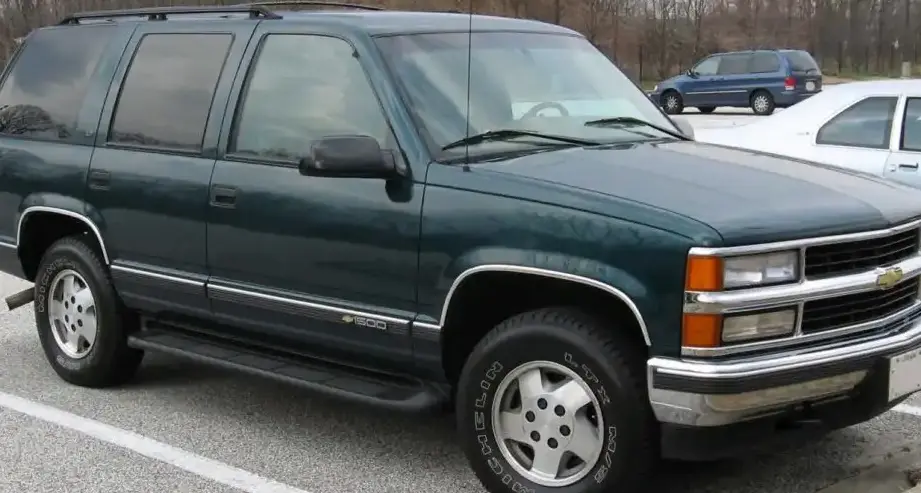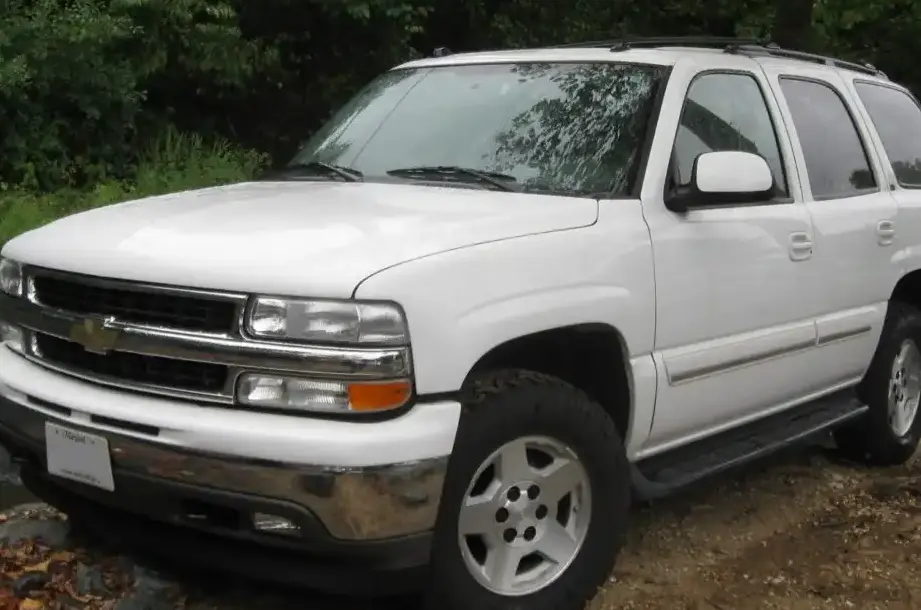
The Chevrolet Tahoe (GMT820) 4.8L V8, produced from 2004 to 2007, represented a significant iteration of Chevrolet’s full-size SUV. Part of the GMT820 platform generation, this Tahoe aimed to balance the capability expected of a large SUV with improved refinement and a more accessible price point within the Tahoe lineup. Positioned as a mid-range offering, it slotted below the more powerful 5.3L and 6.0L V8 options, catering to buyers prioritizing value and adequate performance for everyday use and towing. The GMT820 Tahoe marked a shift towards more car-like handling and interior comfort compared to its predecessors, while retaining the body-on-frame construction favored for heavy-duty applications.
Technical Specifications
| Brand | Chevrolet |
| Model | Tahoe |
| Generation | Tahoe (GMT820) |
| Type (Engine) | 4.8L i V8 (290 Hp) |
| Start of production | 2004 |
| End of production | 2007 |
| Powertrain Architecture | Internal Combustion engine |
| Body type | SUV |
| Seats | 9 |
| Doors | 5 |
| Fuel consumption (urban) | 16.8 l/100 km (14 US mpg, 16.8 UK mpg) |
| Fuel consumption (extra urban) | 13.1 l/100 km (18 US mpg, 21.6 UK mpg) |
| Fuel Type | Petrol (Gasoline) |
| Maximum speed | 156 km/h (96.93 mph) |
| Weight-to-power ratio | 7.8 kg/Hp, 128.9 Hp/tonne |
| Weight-to-torque ratio | 5.6 kg/Nm, 177.8 Nm/tonne |
| Power | 290 Hp @ 5600 rpm |
| Power per litre | 60.3 Hp/l |
| Torque | 400 Nm @ 4000 rpm (295.02 lb.-ft. @ 4000 rpm) |
| Engine layout | Front, Longitudinal |
| Engine displacement | 4807 cm3 (293.34 cu. in.) |
| Number of cylinders | 8 |
| Engine configuration | V-engine |
| Cylinder Bore | 96 mm (3.78 in.) |
| Piston Stroke | 83 mm (3.27 in.) |
| Compression ratio | 9.5:1 |
| Number of valves per cylinder | 2 |
| Fuel injection system | Multi-port manifold injection |
| Engine aspiration | Naturally aspirated engine |
| Engine oil capacity | 5.7 l (6.02 US qt | 5.02 UK qt) |
| Coolant | 15.9 l (16.8 US qt | 13.99 UK qt) |
| Kerb Weight | 2250 kg (4960.4 lbs.) |
| Max. weight | 2949 kg (6501.43 lbs.) |
| Max load | 699 kg (1541.03 lbs.) |
| Trunk (boot) space – minimum | 460 l (16.24 cu. ft.) |
| Trunk (boot) space – maximum | 2920 l (103.12 cu. ft.) |
| Fuel tank capacity | 98 l (25.89 US gal | 21.56 UK gal) |
| Length | 5052 mm (198.9 in.) |
| Width | 2004 mm (78.9 in.) |
| Height | 1885 mm (74.21 in.) |
| Wheelbase | 2946 mm (115.98 in.) |
| Front track | 1651 mm (65 in.) |
| Rear (Back) track | 1676 mm (65.98 in.) |
| Drivetrain Architecture | Rear wheel drive |
| Number of gears and type of gearbox | 4 gears, automatic transmission |
| Front suspension | Torsion |
| Rear suspension | Transverse stabilizer |
| Front brakes | Ventilated discs |
| Rear brakes | Disc |
| Assisting systems | ABS (Anti-lock braking system) |
| Power steering | Hydraulic Steering |
| Tires size | 265/70 R17 |
Powertrain & Engine Architecture
The heart of this Tahoe variant is the 4.8L (293 cubic inch) Vortec 4800 V8 engine. This engine, designated with codes like LU7, is a member of the Vortec family known for its robust design and relatively simple architecture. It features a cast iron block with aluminum cylinder heads, a 9.5:1 compression ratio, and a two-valve-per-cylinder configuration. Fuel delivery is managed by a multi-port fuel injection system, providing adequate atomization for efficient combustion. The engine’s design prioritized low-end torque, making it suitable for towing and hauling. Paired with the 4.8L is a four-speed automatic transmission (likely the 4L60E), chosen for its durability and ease of use. This transmission features electronic control for smoother shifting and optimized performance. The transmission’s gear ratios were tuned to provide a balance between acceleration and fuel economy, though the latter was not a primary focus given the vehicle’s size and weight.
Driving Characteristics
The 4.8L V8 and four-speed automatic combination in the GMT820 Tahoe delivers adequate, but not exhilarating, performance. Acceleration from a standstill is reasonable, but the vehicle’s substantial weight (around 4,960 pounds) is noticeable. The engine produces sufficient torque for everyday driving and towing, but passing maneuvers at highway speeds require planning. Compared to the 5.3L V8, the 4.8L feels less powerful, particularly when fully loaded. The automatic transmission shifts smoothly, but lacks the responsiveness of a manual transmission or a more modern automatic with additional gears. The gear ratios are optimized for cruising, but can feel somewhat spaced apart during quick acceleration. Overall, the driving experience is comfortable and predictable, prioritizing usability over sporty handling.
Equipment & Trim Levels
The 4.8L Tahoe typically came standard with features like air conditioning, power windows and locks, a CD player, and cloth upholstery. Higher trim levels, such as the LT, added features like leather seats, upgraded audio systems, and alloy wheels. Optional extras included a sunroof, rear entertainment system, and a navigation system. The interior design was functional and spacious, with seating for up to nine passengers depending on the configuration. The dashboard layout was straightforward, with easy-to-read gauges and intuitive controls. The 4.8L trim often served as a base for fleet sales, so many examples were equipped with minimal options.
Chassis & Braking
The GMT820 Tahoe utilizes a traditional body-on-frame construction, providing a robust and durable platform. The front suspension consists of torsion bars, while the rear suspension features a solid axle with coil springs and a transverse stabilizer bar. This setup provides a comfortable ride, but doesn’t offer the precise handling of independent rear suspension. Braking duties are handled by ventilated discs at the front and discs at the rear, with ABS (Anti-lock Braking System) as standard equipment. The braking system is adequate for the vehicle’s weight, but requires a firm pedal input. Steering is hydraulic power-assisted, providing a reasonable level of feedback.
Market Reception & Comparison
The 4.8L Tahoe was generally well-received as a value-oriented option within the Tahoe lineup. Critics noted its comfortable ride, spacious interior, and adequate performance for most buyers. However, it was often criticized for its relatively low fuel economy and lack of refinement compared to newer SUVs. Compared to the 5.3L V8, the 4.8L offered lower initial cost and slightly better fuel economy, but at the expense of performance. The 4.8L also proved to be a reliable powertrain, with relatively few reported issues. Its simplicity contributed to lower maintenance costs compared to more complex engine designs.
Legacy
The Chevrolet Tahoe (GMT820) 4.8L V8 has become a popular choice in the used car market due to its affordability and reliability. The 4.8L engine is known for its durability and relatively simple maintenance requirements. While fuel economy is not a strong point, the Tahoe’s spacious interior and towing capacity continue to appeal to buyers seeking a large SUV. Today, well-maintained examples can be found with reasonable mileage, offering a practical and capable vehicle for families and those needing to haul cargo or tow trailers. The GMT820 generation Tahoe, particularly the 4.8L variant, represents a transitional period in SUV design, bridging the gap between traditional body-on-frame construction and the more modern, car-based SUVs that followed.