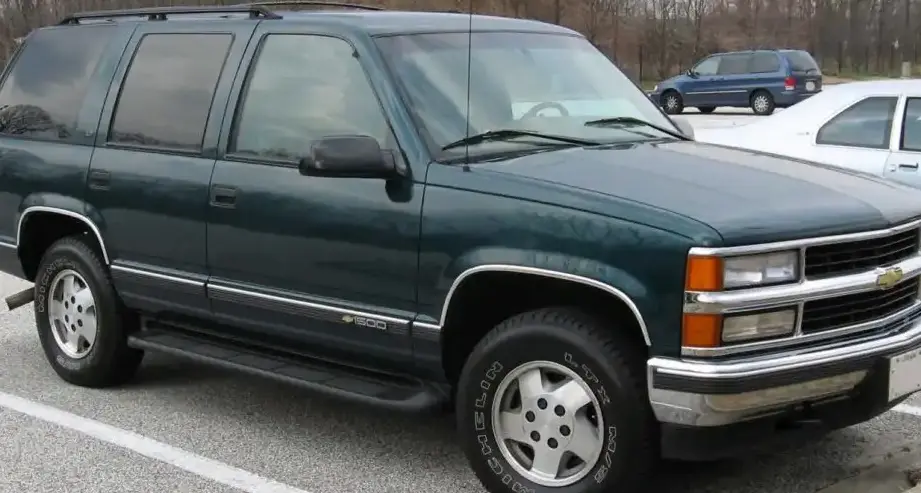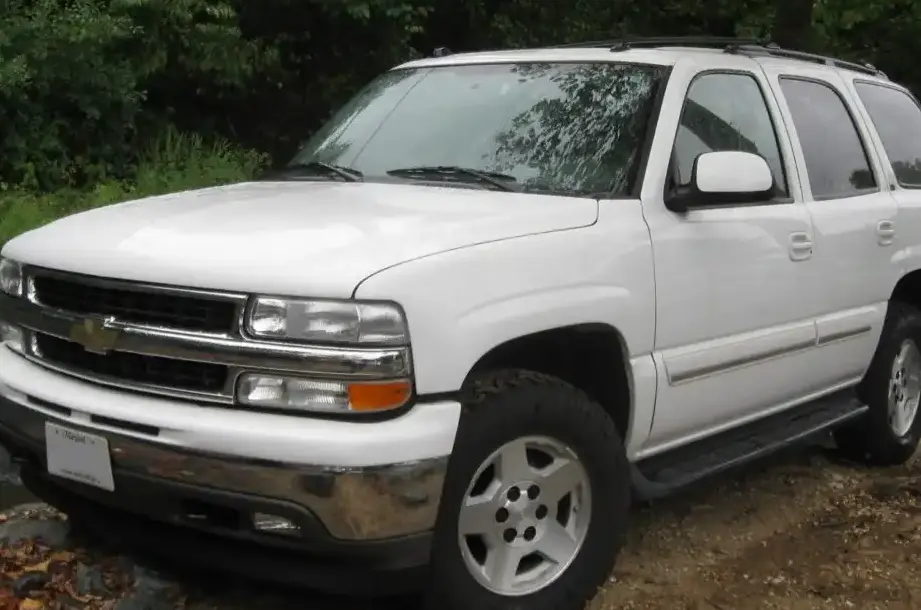
The Chevrolet Tahoe (GMT820) 4.8i V8 4WD, produced from 2005 to 2007, represented a significant iteration of Chevrolet’s full-size SUV. Part of the GMT820 platform generation, this Tahoe variant occupied a middle ground in the lineup, offering a balance between capability, space, and affordability. It served as a popular choice for families and those needing a robust vehicle for towing and hauling, particularly in North America where full-size SUVs are highly favored. This specific configuration, with the 4.8-liter V8 engine and four-speed automatic transmission, aimed to provide a more accessible entry point into the Tahoe range compared to the more powerful 5.3L and 6.0L engine options.
Technical Specifications
| Brand | Chevrolet |
| Model | Tahoe |
| Generation | Tahoe (GMT820) |
| Type (Engine) | 4.8 i V8 4WD (290 Hp) |
| Start of production | 2005 |
| End of production | 2007 |
| Powertrain Architecture | Internal Combustion engine |
| Body type | SUV |
| Seats | 5 |
| Doors | 5 |
| Fuel consumption (urban) | 16.8 l/100 km (14 US mpg, 16.8 UK mpg) |
| Fuel consumption (extra urban) | 13.1 l/100 km (18 US mpg, 21.6 UK mpg) |
| Fuel Type | Petrol (Gasoline) |
| Maximum speed | 156 km/h (96.93 mph) |
| Weight-to-power ratio | 8.1 kg/Hp, 123.4 Hp/tonne |
| Weight-to-torque ratio | 5.9 kg/Nm, 170.2 Nm/tonne |
| Power | 290 Hp @ 5600 rpm |
| Power per litre | 60.3 Hp/l |
| Torque | 400 Nm @ 4000 rpm (295.02 lb.-ft. @ 4000 rpm) |
| Engine layout | Front, Longitudinal |
| Engine displacement | 4807 cm3 (293.34 cu. in.) |
| Number of cylinders | 8 |
| Engine configuration | V-engine |
| Cylinder Bore | 96 mm (3.78 in.) |
| Piston Stroke | 83 mm (3.27 in.) |
| Compression ratio | 9.5:1 |
| Number of valves per cylinder | 2 |
| Fuel injection system | Multi-port manifold injection |
| Engine aspiration | Naturally aspirated engine |
| Engine oil capacity | 5.7 l (6.02 US qt | 5.02 UK qt) |
| Coolant | 15.9 l (16.8 US qt | 13.99 UK qt) |
| Kerb Weight | 2350 kg (5180.86 lbs.) |
| Max. weight | 3085 kg (6801.26 lbs.) |
| Max load | 735 kg (1620.4 lbs.) |
| Trunk (boot) space – minimum | 460 l (16.24 cu. ft.) |
| Trunk (boot) space – maximum | 2920 l (103.12 cu. ft.) |
| Fuel tank capacity | 98 l (25.89 US gal | 21.56 UK gal) |
| Length | 5052 mm (198.9 in.) |
| Width | 2004 mm (78.9 in.) |
| Height | 1885 mm (74.21 in.) |
| Wheelbase | 2946 mm (115.98 in.) |
| Front track | 1651 mm (65 in.) |
| Rear (Back) track | 1676 mm (65.98 in.) |
| Drive wheel | All wheel drive (4×4) |
| Number of gears and type of gearbox | 4 gears, automatic transmission |
| Front suspension | Torsion |
| Rear suspension | Transverse stabilizer |
| Front brakes | Ventilated discs |
| Rear brakes | Disc |
| Assisting systems | ABS (Anti-lock braking system) |
| Power steering | Hydraulic Steering |
| Tires size | 265/70 R17 |
Powertrain & Engine Architecture
The heart of this Tahoe variant was the 4.8-liter (293 cubic inch) Vortec 4800 V8 engine. This engine, part of the Vortec family, was known for its robust construction and relatively simple design. It featured a cast iron block with aluminum cylinder heads, a 9.5:1 compression ratio, and a two-valve-per-cylinder configuration. Fuel delivery was handled by a multi-port fuel injection system, providing adequate, though not cutting-edge, performance. The engine code for this generation was typically identified as LM7. The 4L60E four-speed automatic transmission was the standard pairing for the 4.8L engine. This transmission was a workhorse, known for its durability, but it lacked the efficiency and smoothness of more modern transmissions. It featured electronic control for shift points and torque converter lockup.
Driving Characteristics
The 4.8L V8 with the 4L60E automatic delivered adequate, but not exhilarating, performance. Acceleration was sufficient for everyday driving and towing, but it wasn’t particularly quick. The 290 horsepower and 400 Nm (295 lb-ft) of torque provided enough grunt for merging onto highways and maintaining speed on inclines. However, compared to the 5.3L or 6.0L versions of the Tahoe, this variant felt noticeably less powerful. The four-speed automatic transmission, while reliable, contributed to a less refined driving experience. Gear changes were not always seamless, and the lack of an overdrive gear meant higher engine speeds at highway cruising speeds, impacting fuel economy. The 4WD system provided enhanced traction in inclement weather and off-road conditions, making it a versatile vehicle for various terrains.
Equipment & Trim Levels
The 4.8L Tahoe typically came standard with features like air conditioning, power windows and locks, a basic audio system, and cloth upholstery. Higher trim levels, such as the LT, added features like leather seats, upgraded audio systems, and additional chrome exterior trim. Optional extras included a sunroof, rear entertainment system, and a navigation system. The interior design was functional and spacious, prioritizing practicality over luxury. The third-row seat was often an option, increasing passenger capacity to seven or eight depending on the configuration.
Chassis & Braking
The GMT820 Tahoe utilized a body-on-frame construction, providing a robust and durable platform. The front suspension consisted of independent torsion bars, while the rear suspension featured a solid axle with multi-leaf springs. This setup prioritized load-carrying capacity and towing ability over handling precision. Braking duties were handled by ventilated disc brakes at the front and solid discs at the rear. Anti-lock brakes (ABS) were standard, enhancing safety during emergency braking situations. The steering system was hydraulic power steering, providing adequate assistance for maneuvering the large SUV.
Market Reception & Comparison
The 4.8L Tahoe was generally well-received as a capable and affordable full-size SUV. Critics noted its spacious interior, strong towing capacity, and comfortable ride. However, the 4.8L engine was often criticized for being underpowered compared to the larger engine options. Fuel economy was also a concern, typical for a vehicle of this size and weight. Compared to the 5.3L Tahoe, the 4.8L offered a lower purchase price but sacrificed performance. The 5.3L was the more popular choice for those needing more power for towing or hauling. The 4.8L appealed to buyers who prioritized affordability and didn’t require the extra power of the larger engines.
Legacy
The Chevrolet Tahoe (GMT820) 4.8L V8 4WD has proven to be a relatively reliable vehicle, particularly the powertrain. The 4.8L Vortec engine is known for its durability, and the 4L60E transmission, while not the most sophisticated, is generally robust when properly maintained. Today, these Tahoes can be found in the used car market at relatively affordable prices. Common issues include oil leaks, corrosion, and wear and tear on suspension components. However, with regular maintenance, these vehicles can provide many years of reliable service. They remain popular choices for those needing a large, capable SUV for work or family use, and their relatively simple mechanical design makes them appealing to DIY mechanics.