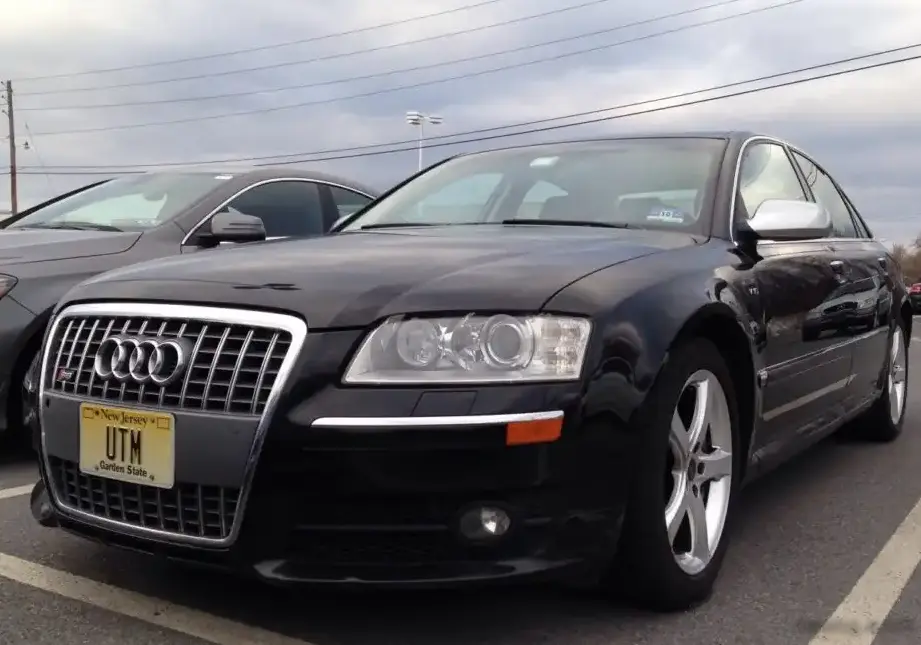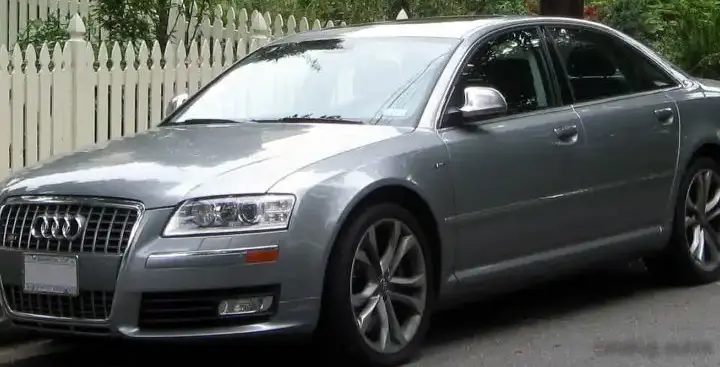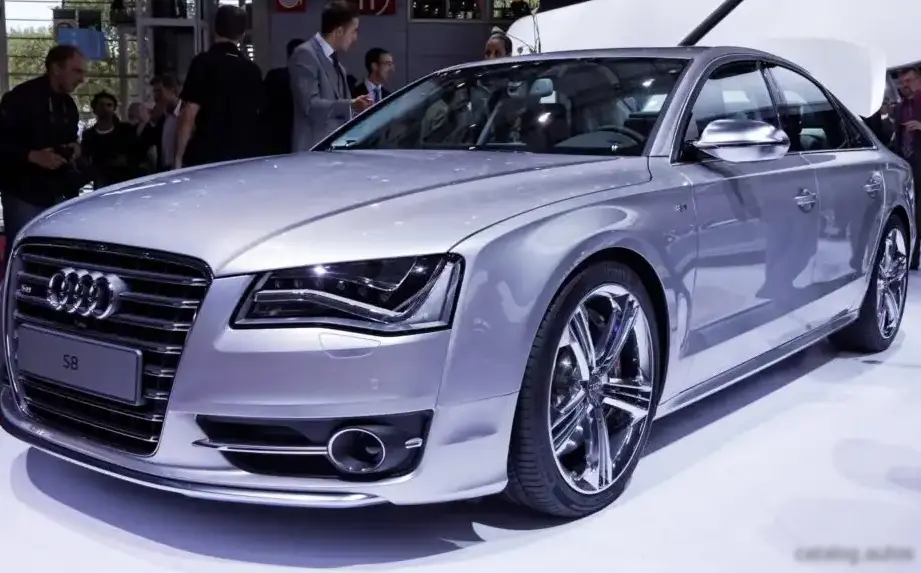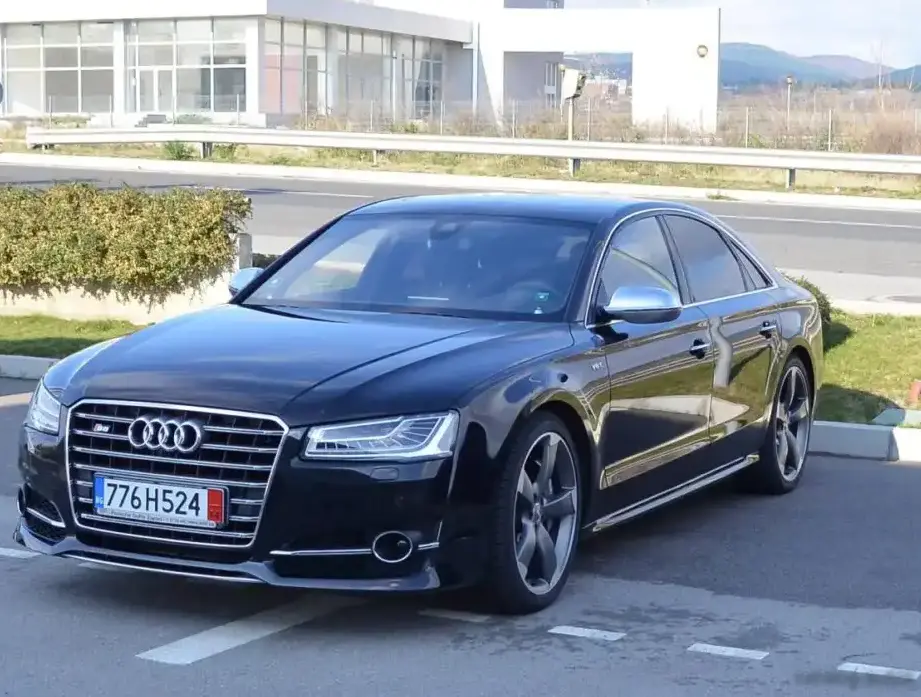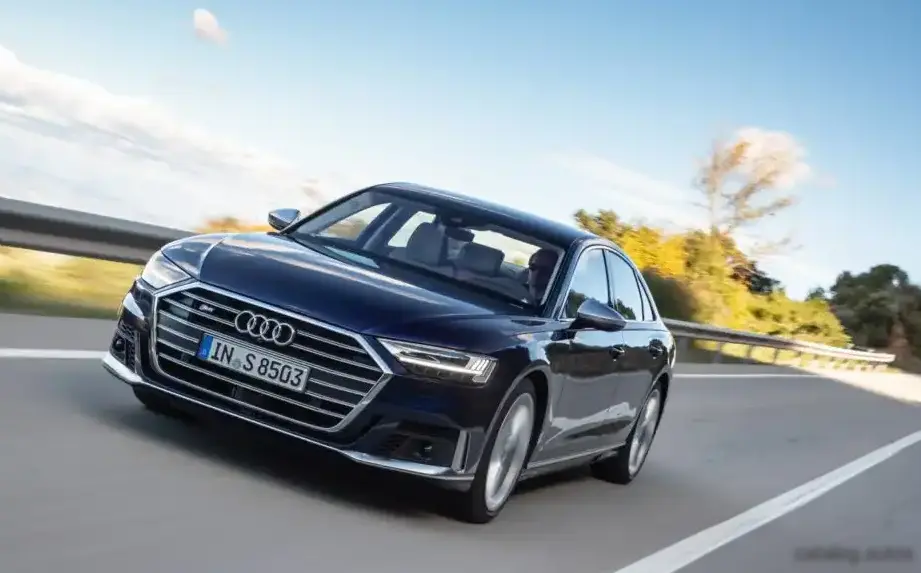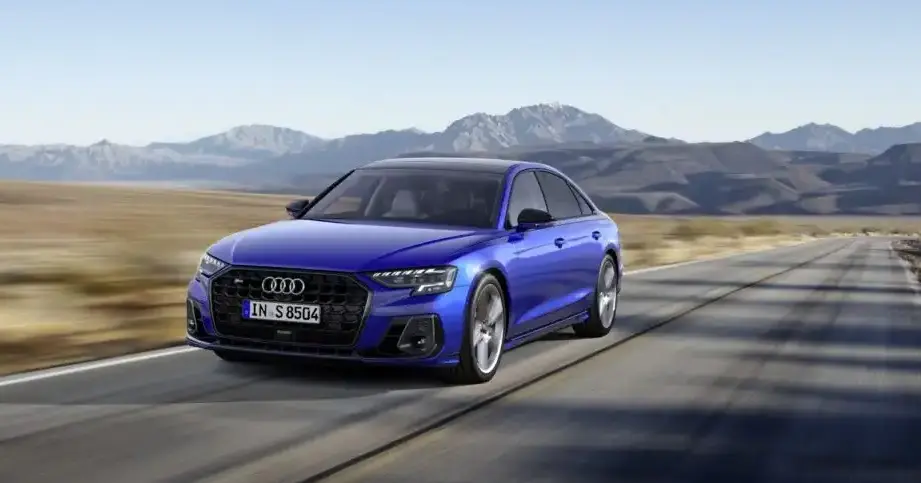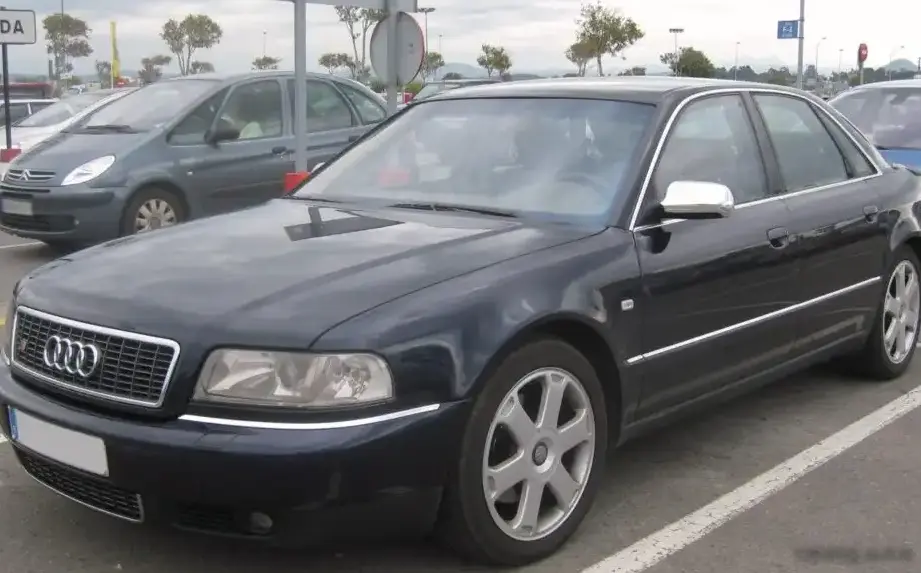
The Audi S8 (D2) 4.2 V8 40V quattro tiptronic, produced between 1999 and 2002, represents the pinnacle of performance for the first generation of Audi’s flagship luxury sedan. Positioned as the high-performance variant of the D2 S8, it offered a substantial upgrade over the standard A8 models, competing directly with the BMW 7 Series and Mercedes-Benz S-Class in the luxury performance segment. This iteration of the S8 was notable for its powerful V8 engine, all-wheel drive system, and advanced, for the time, automatic transmission. It was a key model in establishing Audi’s reputation for technological innovation and driving dynamics.
Technical Specifications
| Brand | Audi |
| Model | S8 |
| Generation | S8 (D2) |
| Type (Engine) | 4.2 V8 40V (360 Hp) quattro tiptronic |
| Start of production | 1999 year |
| End of production | 2002 year |
| Powertrain Architecture | Internal Combustion engine |
| Body type | Sedan |
| Seats | 5 |
| Doors | 4 |
| Fuel consumption (economy) – urban (NEDC) | 21.7 l/100 km (10.8 US mpg, 13 UK mpg, 4.6 km/l) |
| Fuel consumption (economy) – extra urban (NEDC) | 9.6 l/100 km (24.5 US mpg, 29.4 UK mpg, 10.4 km/l) |
| Fuel consumption (economy) – combined (NEDC) | 13.9 l/100 km (16.9 US mpg, 20.3 UK mpg, 7.2 km/l) |
| CO2 emissions (NEDC) | 334 g/km |
| Fuel Type | Petrol (Gasoline) |
| Acceleration 0 – 100 km/h | 6.6 sec |
| Acceleration 0 – 62 mph | 6.6 sec |
| Acceleration 0 – 60 mph | 6.3 sec |
| Maximum speed | 250 km/h (155.34 mph), Electronically limited |
| Emission standard | Euro 3 |
| Weight-to-power ratio | 4.9 kg/Hp, 205.7 Hp/tonne |
| Weight-to-torque ratio | 4.1 kg/Nm, 245.7 Nm/tonne |
| Power | 360 Hp @ 7000 rpm |
| Power per litre | 86.3 Hp/l |
| Torque | 430 Nm @ 3400 rpm (317.15 lb.-ft. @ 3400 rpm) |
| Engine layout | Front, Longitudinal |
| Engine Model/Code | AVP |
| Engine displacement | 4172 cm3 (254.59 cu. in.) |
| Number of cylinders | 8 |
| Engine configuration | V-engine |
| Cylinder Bore | 84.5 mm (3.33 in.) |
| Piston Stroke | 93 mm (3.66 in.) |
| Compression ratio | 11:1 |
| Number of valves per cylinder | 5 |
| Fuel injection system | Multi-port manifold injection |
| Engine aspiration | Naturally aspirated engine |
| Valvetrain | DOHC |
| Engine oil capacity | 7.5 l (7.93 US qt | 6.6 UK qt) |
| Coolant | 11 l (11.62 US qt | 9.68 UK qt) |
| Kerb Weight | 1750 kg (3858.09 lbs.) |
| Max. weight | 2350 kg (5180.86 lbs.) |
| Max load | 600 kg (1322.77 lbs.) |
| Trunk (boot) space – minimum | 525 l (18.54 cu. ft.) |
| Fuel tank capacity | 90 l (23.78 US gal | 19.8 UK gal) |
| Max. roof load | 100 kg (220.46 lbs.) |
| Permitted trailer load with brakes (8%) | 2300 kg (5070.63 lbs.) |
| Permitted trailer load with brakes (12%) | 2300 kg (5070.63 lbs.) |
| Permitted trailer load without brakes | 750 kg (1653.47 lbs.) |
| Permitted towbar download | 95 kg (209.44 lbs.) |
| Length | 5034 mm (198.19 in.) |
| Width | 1880 mm (74.02 in.) |
| Height | 1418 mm (55.83 in.) |
| Wheelbase | 2880 mm (113.39 in.) |
| Front track | 1591 mm (62.64 in.) |
| Rear (Back) track | 1580 mm (62.2 in.) |
| Front overhang | 1018 mm (40.08 in.) |
| Rear overhang | 1136 mm (44.72 in.) |
| Drag coefficient (Cd) | 0.29 |
| Minimum turning circle (turning diameter) | 12.3 m (40.35 ft.) |
| Drivetrain Architecture | The Internal combustion engine (ICE) drives permanently the four wheels of the vehicle. |
| Drive wheel | All wheel drive (4×4) |
| Number of gears and type of gearbox | 5 gears, automatic transmission tiptronic |
| Front suspension | Independent multi-link suspension, Transverse stabilizer |
| Rear suspension | Independent on trapezoidal lever, Transverse stabilizer |
| Front brakes | Ventilated discs |
| Rear brakes | Ventilated discs |
| Assisting systems | ABS (Anti-lock braking system) |
| Steering type | Steering rack and pinion |
| Power steering | Hydraulic Steering |
| Tires size | 245/45 R18 |
| Wheel rims size | 8J x 18 |
INTRODUCTION
The Audi S8 (D2) 4.2 V8 40V quattro tiptronic, launched in 1999 as part of the D2 generation (1994-2002), was a significant step forward for Audi’s performance division. Built on the 1HX0/A3 platform, the S8 aimed to deliver the comfort and refinement expected of a luxury sedan, combined with the performance of a sports car. The “40V” designation refers to the four valves per cylinder in the engine, a key element in its power output. The tiptronic transmission offered a blend of convenience and driver control, making it a popular choice for those seeking a high-performance luxury vehicle.
Powertrain & Engine Architecture
At the heart of the S8 4.2 V8 quattro tiptronic lies the AVP engine code, a 4.2-liter naturally aspirated V8 engine. This engine produced 360 horsepower at 7000 rpm and 430 Nm (317 lb-ft) of torque at 3400 rpm. The engine featured a multi-port fuel injection system and a double overhead camshaft (DOHC) valvetrain. The 90-degree V8 configuration provided inherent smoothness and balance. Paired with this engine was a five-speed tiptronic automatic transmission, a sophisticated system that allowed for both fully automatic operation and manual gear selection via steering wheel-mounted paddles or the gear selector. The tiptronic transmission was designed to provide quick and precise shifts, enhancing the driving experience. The engine’s longitudinal front-engine layout contributed to the car’s balanced handling characteristics.
Driving Characteristics
The S8 4.2 V8 quattro tiptronic offered a compelling driving experience. While not as overtly sporty as some of its rivals, it delivered strong acceleration – 0 to 60 mph in approximately 6.3 seconds and a electronically limited top speed of 155 mph. The tiptronic transmission, while smooth, could feel slightly less responsive than a traditional manual gearbox, particularly during aggressive driving. However, the ability to manually shift gears provided a degree of control that appealed to enthusiasts. The quattro all-wheel drive system provided excellent traction in all weather conditions, enhancing stability and confidence. The suspension, tuned for comfort, offered a refined ride quality, absorbing bumps and imperfections in the road with ease.
Equipment & Trim Levels
The S8 4.2 V8 quattro tiptronic came standard with a comprehensive list of features befitting its luxury status. These included leather upholstery, power-adjustable heated front seats, a premium sound system, automatic climate control, and a sunroof. Optional extras included upgraded leather packages, rear seat entertainment systems, and a navigation system. The interior design was characterized by its understated elegance and high-quality materials. Exterior features included unique S8 badging, alloy wheels, and subtle aerodynamic enhancements.
Chassis & Braking
The S8’s chassis was designed to provide a balance of comfort and handling. It featured an independent multi-link suspension at the front and an independent trapezoidal lever suspension at the rear, both with transverse stabilizers. This setup minimized body roll and provided precise steering response. The braking system consisted of ventilated discs on all four wheels, coupled with an Anti-lock Braking System (ABS) for enhanced safety. The S8’s robust braking performance ensured confident stopping power, even under demanding conditions.
Market Reception & Comparison
The Audi S8 4.2 V8 quattro tiptronic was generally well-received by automotive critics. It was praised for its powerful engine, refined ride quality, and luxurious interior. However, some critics noted that the tiptronic transmission could feel slightly sluggish compared to manual gearboxes. Compared to other trims in the S8 lineup, the 4.2 V8 tiptronic represented the top-of-the-range offering, providing the highest level of performance and luxury. Fuel economy, at around 16.9 US mpg combined, was typical for a high-performance V8 sedan of that era, but significantly lower than the more fuel-efficient A8 models.
Legacy
The Audi S8 (D2) 4.2 V8 quattro tiptronic remains a desirable classic car today. The AVP engine, while complex, is generally considered reliable when properly maintained. However, like any older vehicle, it requires regular servicing and attention to detail. Parts availability can be a challenge, but a dedicated community of enthusiasts ensures that support and expertise are available. The S8’s combination of performance, luxury, and technological innovation has cemented its place as a significant model in Audi’s history, and it continues to be appreciated by collectors and enthusiasts alike. The tiptronic transmission, while not without its quirks, proved to be a durable and capable unit, contributing to the car’s long-term reliability.