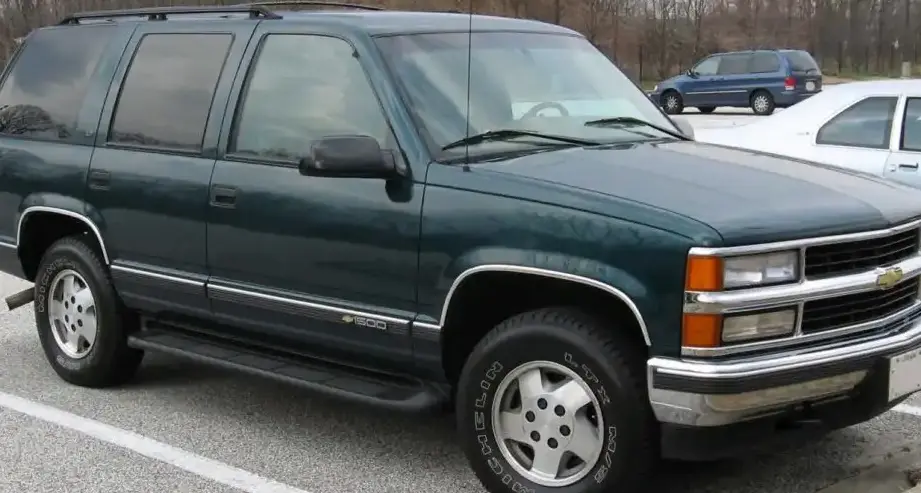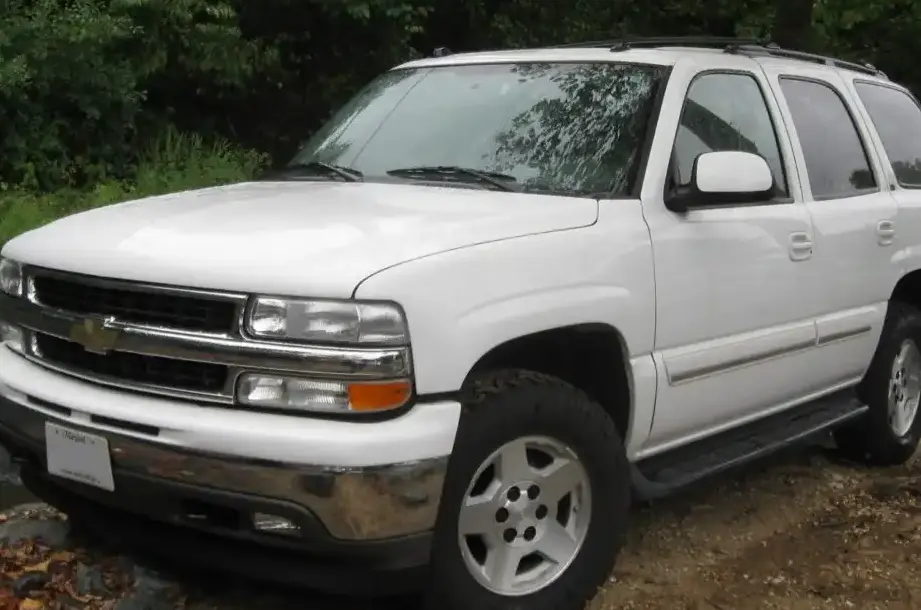
The Chevrolet Tahoe (GMT820) 5.3L V8 4WD, produced from 1999 to 2004, represents the second generation of the popular full-size SUV. This variant occupied a significant position in Chevrolet’s lineup, offering a balance between capability, space, and affordability within the Tahoe range. It was a key player in the booming SUV market of the late 1990s and early 2000s, appealing to families and those needing a versatile vehicle for both daily driving and towing. The GMT820 platform brought significant improvements in ride quality and interior space compared to its predecessor.
Technical Specifications
| Brand | Chevrolet |
| Model | Tahoe |
| Generation | Tahoe (GMT820) |
| Type (Engine) | 5.3L i V8 4WD (273 Hp) |
| Start of production | 1999 |
| End of production | 2004 |
| Powertrain Architecture | Internal Combustion engine |
| Body type | SUV |
| Seats | 5 |
| Doors | 5 |
| Fuel consumption (urban) | 19.7 l/100 km (11.9 US mpg, 14.3 UK mpg, 5.1 km/l) |
| Fuel consumption (extra urban) | 12.9 l/100 km (18.2 US mpg, 21.9 UK mpg, 7.8 km/l) |
| Fuel consumption (combined) | 15.4 l/100 km (15.3 US mpg, 18.3 UK mpg, 6.5 km/l) |
| Fuel Type | Petrol (Gasoline) |
| Acceleration 0 – 100 km/h | 12 sec |
| Acceleration 0 – 62 mph | 12 sec |
| Acceleration 0 – 60 mph | 11.4 sec |
| Maximum speed | 170 km/h (105.63 mph) |
| Weight-to-power ratio | 8.9 kg/Hp, 112.9 Hp/tonne |
| Weight-to-torque ratio | 5.7 kg/Nm, 176.5 Nm/tonne |
| Power | 273 Hp @ 5200 rpm |
| Power per litre | 51.2 Hp/l |
| Torque | 427 Nm @ 4000 rpm (314.94 lb.-ft. @ 4000 rpm) |
| Engine layout | Front, Longitudinal |
| Engine displacement | 5328 cm3 (325.13 cu. in.) |
| Number of cylinders | 8 |
| Engine configuration | V-engine |
| Cylinder Bore | 96 mm (3.78 in.) |
| Piston Stroke | 92 mm (3.62 in.) |
| Compression ratio | 9.5:1 |
| Number of valves per cylinder | 2 |
| Fuel injection system | Multi-port manifold injection |
| Engine aspiration | Naturally aspirated engine |
| Engine oil capacity | 5.7 l (6.02 US qt, 5.02 UK qt) |
| Coolant capacity | 13.6 l (14.37 US qt, 11.97 UK qt) |
| Kerb Weight | 2419 kg (5332.98 lbs.) |
| Max. weight | 3084 kg (6799.06 lbs.) |
| Max load | 665 kg (1466.07 lbs.) |
| Trunk (boot) space – minimum | 460 l (16.24 cu. ft.) |
| Trunk (boot) space – maximum | 2920 l (103.12 cu. ft.) |
| Fuel tank capacity | 98 l (25.89 US gal, 21.56 UK gal) |
| Length | 5052 mm (198.9 in.) |
| Width | 2068 mm (81.42 in.) |
| Height | 1960 mm (77.17 in.) |
| Wheelbase | 2946 mm (115.98 in.) |
| Front track | 1651 mm (65 in.) |
| Rear (Back) track | 1676 mm (65.98 in.) |
| Drive wheel | All wheel drive (4×4) |
| Number of gears and type of gearbox | 4 gears, automatic transmission |
| Front suspension | Torsion |
| Rear suspension | Transverse stabilizer |
| Front brakes | Ventilated discs |
| Rear brakes | Ventilated discs |
| Assisting systems | ABS (Anti-lock braking system), Hydraulic Steering |
| Tires size | 265/70 R16 H |
INTRODUCTION
The 1999-2004 Chevrolet Tahoe, built on the GMT820 platform, represented a significant step forward for the full-size SUV. This generation Tahoe aimed to provide a more refined and comfortable experience than previous models, while retaining the rugged capability expected of a Chevrolet truck. The 5.3L V8 4WD variant was a popular choice, offering a good balance of power, towing capacity, and everyday usability. It sat in the middle of the Tahoe lineup, offering more power and capability than the base 4.8L V8, but at a lower price point than the available diesel options.
Powertrain & Engine Architecture
At the heart of this Tahoe variant lies the Chevrolet small-block 5.3L (325 cubic inch) V8 engine, typically identified by engine codes like Vortec 5300. This engine is a third-generation small-block, featuring a cast iron block and aluminum cylinder heads. It utilizes a multi-port fuel injection system, delivering fuel directly to each cylinder for optimized combustion. The engine boasts two valves per cylinder and a 9.5:1 compression ratio. The 4L60E four-speed automatic transmission was the standard pairing for the 5.3L V8. This transmission is electronically controlled, offering smooth shifts and adaptive shift patterns. The 4L60E is known for its durability, but can be prone to issues with age and high mileage, particularly concerning the 3-2 shift and torque converter lockup.
Driving Characteristics
The 5.3L V8 paired with the 4L60E automatic transmission delivered adequate, though not exhilarating, performance. Acceleration from 0-60 mph took around 11.4 seconds, making it competitive with other full-size SUVs of the era. The automatic transmission’s gear ratios were geared towards towing and hauling, prioritizing low-end torque over outright speed. While the 5.3L provided sufficient power for most driving situations, it lacked the responsiveness of the higher-output engines or the manual transmission options. The 4WD system provided enhanced traction in inclement weather and off-road conditions, but it wasn’t designed for serious off-roading. The Tahoe’s substantial weight contributed to a noticeable body roll in corners, and the steering felt somewhat vague compared to more modern SUVs.
Equipment & Trim Levels
The 5.3L 4WD Tahoe typically came standard with features like air conditioning, power windows and locks, and an AM/FM stereo. Higher trim levels, such as the LT, added features like leather upholstery, heated seats, a premium sound system, and alloy wheels. Optional extras included a sunroof, rear entertainment system, and upgraded towing packages. Interior materials were generally durable and practical, though not particularly luxurious. The dashboard layout was functional and straightforward, with easy-to-read gauges and controls.
Chassis & Braking
The GMT820 Tahoe utilized a body-on-frame construction, providing a robust and durable platform. The front suspension consisted of torsion bars, while the rear suspension featured a solid axle with coil springs and a transverse stabilizer bar. This setup provided a comfortable ride, but it wasn’t particularly sporty. Braking duties were handled by ventilated discs on all four wheels, assisted by an Anti-lock Braking System (ABS). The braking system was adequate for the Tahoe’s weight, but it lacked the stopping power of more modern braking systems. The 4WD system was a part-time system, requiring the driver to manually engage or disengage four-wheel drive as needed.
Market Reception & Comparison
The 5.3L V8 4WD Tahoe was well-received by consumers and critics alike. It was praised for its spacious interior, comfortable ride, and strong towing capacity. However, some critics noted its relatively poor fuel economy and somewhat lackluster performance. Compared to the base 4.8L V8 Tahoe, the 5.3L offered a noticeable improvement in power and towing capability. Compared to the diesel options, the 5.3L was more affordable and easier to maintain, but it lacked the diesel’s superior fuel economy and low-end torque. The Tahoe competed directly with the Ford Expedition and the GMC Yukon, offering a similar blend of features and capabilities.
Legacy
The GMT820 Tahoe, particularly the 5.3L V8 4WD variant, remains a popular choice in the used car market. The 5.3L Vortec engine is known for its reliability and longevity, provided it’s properly maintained. Common maintenance items include regular oil changes, transmission fluid flushes, and cooling system maintenance. While these vehicles are now over two decades old, many are still on the road, testament to their durability. However, potential buyers should be aware of potential issues with the 4L60E transmission and the possibility of rust, particularly in areas with harsh winters. The GMT820 Tahoe represents a significant era in SUV history, offering a blend of capability, space, and affordability that continues to appeal to buyers today.