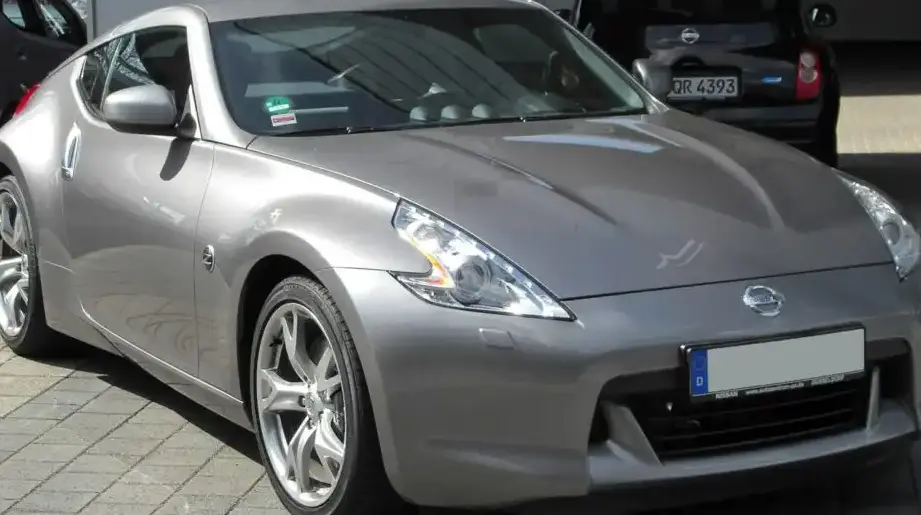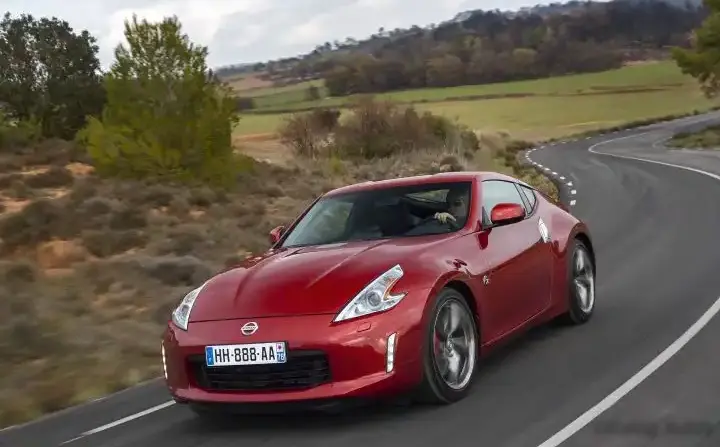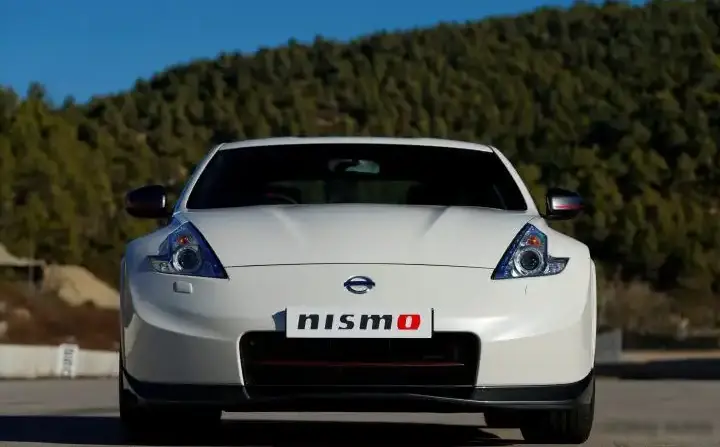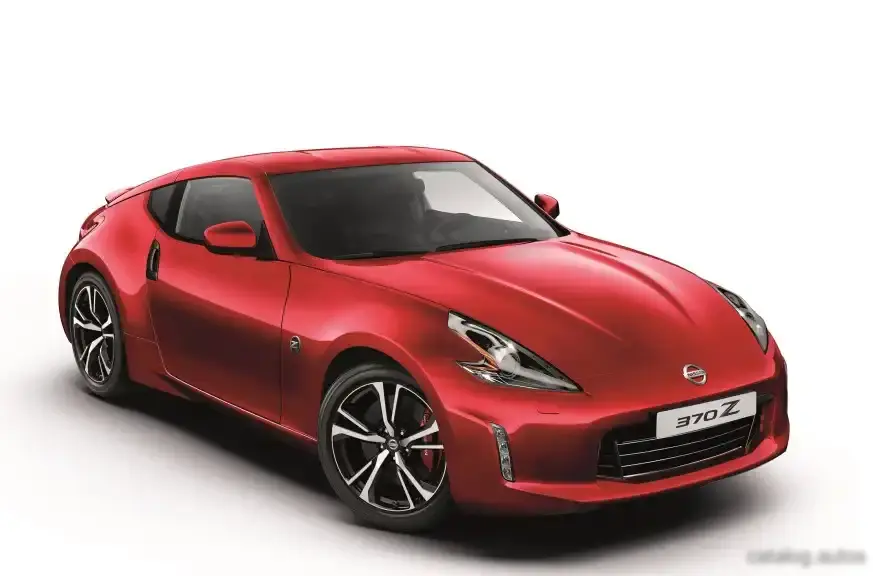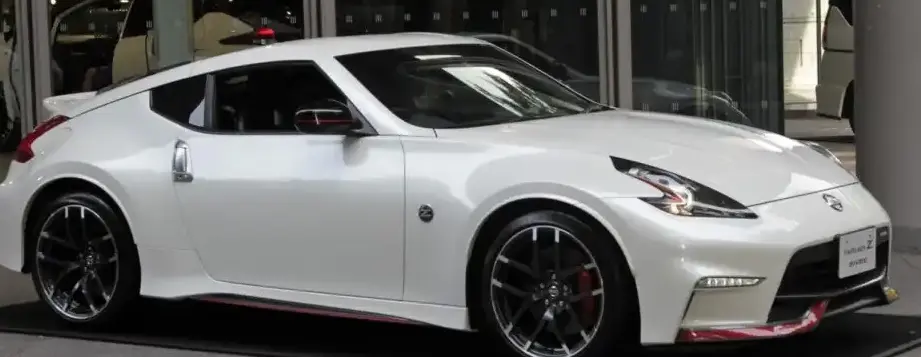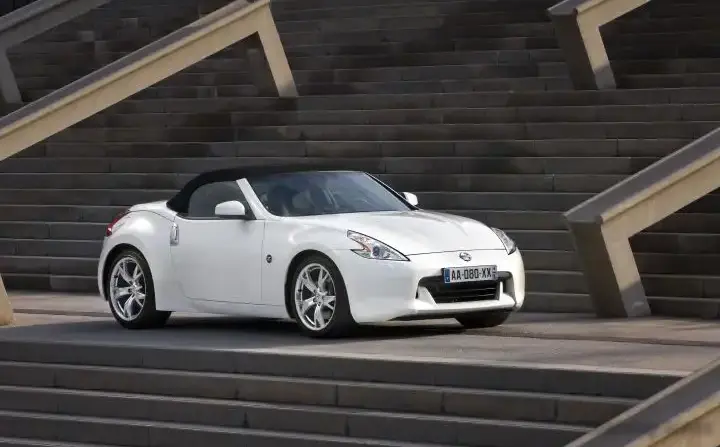
The Nissan 370Z Roadster, specifically the 3.7-liter V6 variant producing 328 horsepower, was a performance-focused two-seat convertible offered by Nissan from 2009 to 2012. Representing the convertible iteration of the Z34 generation 370Z, it aimed to deliver an open-air driving experience without significantly compromising the sporty character of the coupe. This model occupied the top trim level within the 370Z Roadster lineup, offering the most powerful engine option available. It was primarily marketed towards enthusiasts seeking a blend of performance, style, and the thrill of open-top motoring, largely competing with vehicles like the BMW Z4 and Porsche Boxster in the North American market.
Technical Specifications
| Brand | Nissan |
| Model | 370Z |
| Generation | 370Z Roadster |
| Type (Engine) | 3.7 V6 (328 Hp) |
| Start of production | 2009 |
| End of production | 2012 |
| Powertrain Architecture | Internal Combustion engine |
| Body type | Roadster |
| Seats | 2 |
| Doors | 2 |
| Fuel consumption (economy) – urban (NEDC) | 16.2 l/100 km (14.5 US mpg, 17.4 UK mpg, 6.2 km/l) |
| Fuel consumption (economy) – extra urban (NEDC) | 8.3 l/100 km (28.3 US mpg, 34 UK mpg, 12 km/l) |
| Fuel consumption (economy) – combined (NEDC) | 11.2 l/100 km (21 US mpg, 25.2 UK mpg, 8.9 km/l) |
| CO2 emissions (NEDC) | 262 g/km |
| Fuel Type | Petrol (Gasoline) |
| Acceleration 0 – 100 km/h | 5.5 sec |
| Acceleration 0 – 62 mph | 5.5 sec |
| Acceleration 0 – 60 mph | 5.2 sec |
| Maximum speed | 250 km/h (155.34 mph) |
| Emission standard | Euro 5 |
| Weight-to-power ratio | 4.6 kg/Hp, 215.2 Hp/tonne |
| Weight-to-torque ratio | 4.2 kg/Nm, 238.2 Nm/tonne |
| Power | 328 Hp @ 7000 rpm |
| Power per litre | 88.7 Hp/l |
| Torque | 363 Nm @ 5200 rpm (267.74 lb.-ft. @ 5200 rpm) |
| Engine layout | Front, Longitudinal |
| Engine Model/Code | VQ37VHR |
| Engine displacement | 3696 cm3 (225.54 cu. in.) |
| Number of cylinders | 6 |
| Engine configuration | V-engine |
| Cylinder Bore | 95.5 mm (3.76 in.) |
| Piston Stroke | 86 mm (3.39 in.) |
| Compression ratio | 11:1 |
| Number of valves per cylinder | 4 |
| Fuel injection system | Multi-port manifold injection |
| Engine aspiration | Naturally aspirated engine |
| Valvetrain | DOHC, VVEL |
| Engine oil capacity | 4.9 l (5.18 US qt | 4.31 UK qt) |
| Coolant | 8.6 l (9.09 US qt | 7.57 UK qt) |
| Kerb Weight | 1524 kg (3359.84 lbs.) |
| Max. weight | 1885 kg (4155.71 lbs.) |
| Max load | 361 kg (795.87 lbs.) |
| Trunk (boot) space – minimum | 140 l (4.94 cu. ft.) |
| Fuel tank capacity | 72 l (19.02 US gal | 15.84 UK gal) |
| Length | 4250 mm (167.32 in.) |
| Width | 1845 mm (72.64 in.) |
| Height | 1325 mm (52.17 in.) |
| Wheelbase | 2550 mm (100.39 in.) |
| Front track | 1540-1550 mm (60.63 – 61.02 in.) |
| Rear (Back) track | 1565-1595 mm (61.61 – 62.8 in.) |
| Front overhang | 840 mm (33.07 in.) |
| Rear overhang | 860 mm (33.86 in.) |
| Drag coefficient (Cd) | 0.33 |
| Minimum turning circle (turning diameter) | 10.6 m (34.78 ft.) |
| Drivetrain Architecture | Rear wheel drive |
| Drive wheel | Rear wheel drive |
| Number of gears and type of gearbox | 6 gears, manual transmission |
| Front suspension | Double wishbone, Transverse stabilizer |
| Rear suspension | Independent multi-link suspension, Transverse stabilizer |
| Front brakes | Ventilated discs, 355 mm |
| Rear brakes | Ventilated discs, 350 mm |
| Assisting systems | ABS (Anti-lock braking system) |
| Steering type | Steering rack and pinion |
| Power steering | Hydraulic Steering |
| Tires size | Front wheel tires: 225/50 R18; 245/40 R19 Rear wheel tires: 245/45 R18; 275/35 R19 |
| Wheel rims size | Front wheel rims: 8J x 18; 9J x 19 Rear wheel rims: 9J x 18; 10J x 19 |
INTRODUCTION
The Nissan 370Z Roadster 3.7 V6 (328 Hp) debuted in 2009 as part of the Z34 generation, succeeding the 350Z Roadster. Built on the FM (Front-Midship) platform, it aimed to provide a more balanced weight distribution and improved handling characteristics. The Roadster variant offered a power-retractable hardtop, a feature that added convenience and security compared to traditional soft-top convertibles. This particular 328 hp version represented the pinnacle of performance for the 370Z Roadster during its production run, offering a significant power upgrade over the base models. Production continued until 2012, with minor revisions throughout its lifespan.
Powertrain & Engine Architecture
At the heart of the 370Z Roadster 3.7 V6 was Nissan’s VQ37VHR 3.7-liter naturally aspirated V6 engine. This engine, a member of the highly-regarded VQ engine family, featured a 60-degree V-angle and utilized a lightweight aluminum block and cylinder heads. The “VVEL” (Variable Valve Event and Lift) system was a key component, allowing for precise control of valve timing and lift, optimizing both power and fuel efficiency. Fuel delivery was handled by a multi-port fuel injection system. The engine produced 328 horsepower at 7000 rpm and 267.74 lb-ft of torque at 5200 rpm. The engine was paired with a 6-speed manual transmission as standard, delivering power to the rear wheels. The transmission featured a short-throw shifter for precise gear changes.
Driving Characteristics
The 370Z Roadster 3.7 V6 offered a spirited driving experience. The 328 hp engine provided ample power for both everyday driving and enthusiastic performance. Acceleration from 0-60 mph was achieved in approximately 5.2 seconds, and the car had a top speed electronically limited to 155.34 mph. The rear-wheel-drive configuration and well-tuned suspension contributed to responsive handling and a balanced feel. While the Roadster’s added weight compared to the coupe slightly diminished the ultimate track performance, it still offered a rewarding and engaging driving experience. The 6-speed manual transmission provided precise control, although the clutch pedal could be somewhat heavy for some drivers.
Equipment & Trim Levels
The 370Z Roadster 3.7 V6 came well-equipped as standard. Key features included leather upholstery, automatic climate control, a Bose audio system, power-adjustable seats, and a power-retractable hardtop. Optional extras included navigation system, heated seats, and various cosmetic enhancements. The interior design was driver-focused, with a clear and concise instrument panel. The Roadster’s interior offered a comfortable and refined environment, although space was limited, as expected in a two-seat convertible.
Chassis & Braking
The 370Z Roadster utilized a double wishbone front suspension and an independent multi-link rear suspension, both featuring transverse stabilizers. This setup provided a good balance of ride comfort and handling precision. The braking system consisted of ventilated discs on all four wheels, with larger discs at the front (355mm) compared to the rear (350mm). ABS (Anti-lock Braking System) was standard. The chassis was designed to minimize body flex, crucial for a convertible, ensuring a stable and confident driving experience.
Market Reception & Comparison
The 370Z Roadster 3.7 V6 was generally well-received by automotive critics. It was praised for its powerful engine, engaging handling, and the convenience of its retractable hardtop. However, some reviewers noted the relatively small trunk space and the somewhat firm ride. Compared to the base 370Z Roadster models, the 328 hp variant offered a significant performance upgrade, justifying its higher price tag. Against competitors like the BMW Z4 and Porsche Boxster, the 370Z Roadster offered a compelling value proposition, providing similar performance at a lower cost. Fuel economy was reasonable for a performance car, averaging around 21 US mpg in combined driving.
Legacy
The Nissan 370Z Roadster 3.7 V6 has proven to be a relatively reliable sports car. The VQ37VHR engine is known for its durability, and the overall mechanical design is robust. In the used car market, these Roadsters hold their value reasonably well, particularly well-maintained examples with low mileage. While not as technologically advanced as some newer sports cars, the 370Z Roadster continues to appeal to enthusiasts who appreciate its classic sports car formula: a powerful engine, rear-wheel drive, and an engaging driving experience. Common maintenance items include regular oil changes and inspections of the convertible top mechanism.