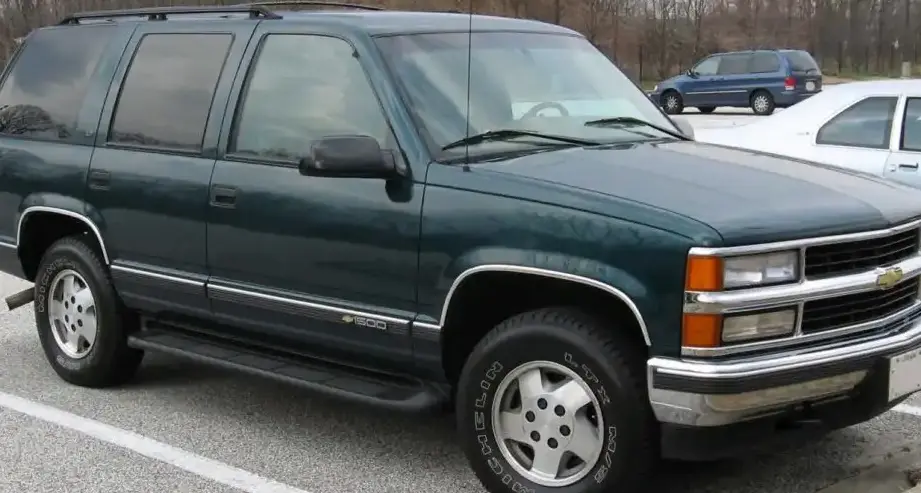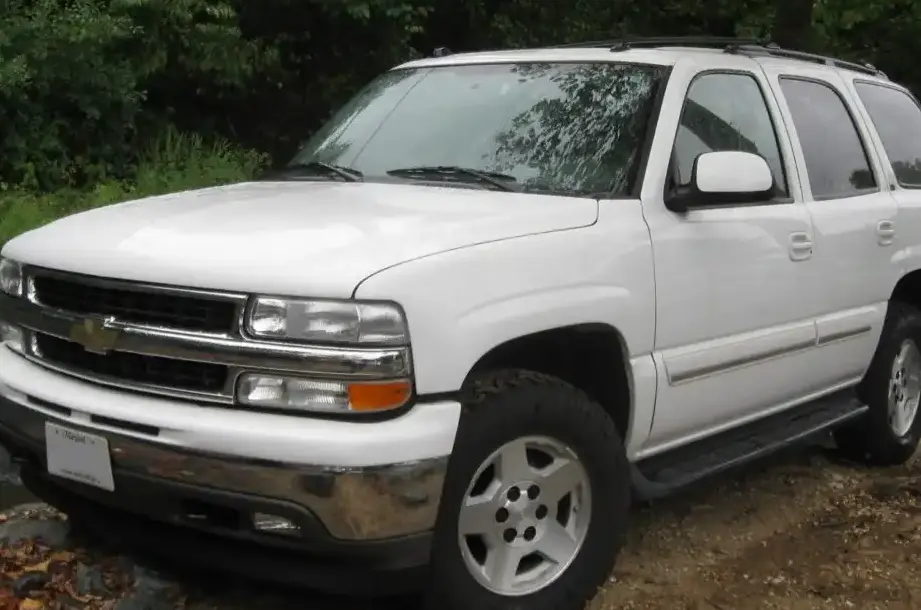
The Chevrolet Tahoe (GMT820) 5.3L V8 4WD, produced from 1999 to 2004, represents the second generation of the popular full-size SUV. This variant occupied a significant position in Chevrolet’s lineup, offering a balance between capability, space, and affordability within the Tahoe range. It was a key player in the booming SUV market of the late 1990s and early 2000s, appealing to families and those needing a versatile vehicle for both daily driving and towing. The GMT820 platform, shared with the GMC Yukon and Cadillac Escalade, provided a robust foundation for this workhorse SUV. This particular configuration, with the 5.3L engine and automatic transmission, was positioned as the mainstream offering, appealing to a broad customer base seeking a capable SUV without the premium price tag of the higher-trim models.
Technical Specifications
| Brand | Chevrolet |
| Model | Tahoe |
| Generation | Tahoe (GMT820) |
| Type (Engine) | 5.3L i V8 4WD (288 Hp) |
| Start of production | 1999 |
| End of production | 2004 |
| Powertrain Architecture | Internal Combustion engine |
| Body type | SUV |
| Seats | 9 |
| Doors | 5 |
| Fuel Type | Petrol (Gasoline) |
| Maximum speed | 170 km/h (105.63 mph) |
| Weight-to-power ratio | 7.9 kg/Hp, 126.9 Hp/tonne |
| Weight-to-torque ratio | 5.2 kg/Nm, 193.8 Nm/tonne |
| Power | 288 Hp @ 5200 rpm |
| Power per litre | 54.1 Hp/l |
| Torque | 440 Nm @ 4400 rpm (324.53 lb.-ft. @ 4400 rpm) |
| Engine layout | Front, Longitudinal |
| Engine displacement | 5327 cm3 (325.07 cu. in.) |
| Number of cylinders | 8 |
| Engine configuration | V-engine |
| Cylinder Bore | 96 mm (3.78 in.) |
| Piston Stroke | 92 mm (3.62 in.) |
| Compression ratio | 9.5:1 |
| Number of valves per cylinder | 2 |
| Fuel injection system | Multi-port manifold injection |
| Engine aspiration | Naturally aspirated engine |
| Engine oil capacity | 5.7 l (6.02 US qt | 5.02 UK qt) |
| Coolant | 13.6 l (14.37 US qt | 11.97 UK qt) |
| Kerb Weight | 2270 kg (5004.49 lbs.) |
| Max. weight | 2948 kg (6499.23 lbs.) |
| Max load | 678 kg (1494.73 lbs.) |
| Trunk (boot) space – minimum | 460 l (16.24 cu. ft.) |
| Trunk (boot) space – maximum | 2920 l (103.12 cu. ft.) |
| Fuel tank capacity | 98 l (25.89 US gal | 21.56 UK gal) |
| Length | 5052 mm (198.9 in.) |
| Width | 2004 mm (78.9 in.) |
| Height | 1885 mm (74.21 in.) |
| Wheelbase | 2946 mm (115.98 in.) |
| Front track | 1651 mm (65 in.) |
| Rear (Back) track | 1676 mm (65.98 in.) |
| Drive wheel | All wheel drive (4×4) |
| Number of gears and type of gearbox | 4 gears, automatic transmission |
| Front suspension | Torsion |
| Rear suspension | Transverse stabilizer |
| Front brakes | Ventilated discs |
| Rear brakes | Disc |
| Assisting systems | ABS (Anti-lock braking system) |
| Power steering | Hydraulic Steering |
| Tires size | 245/75 R16 |
Powertrain & Engine Architecture
The heart of this Tahoe variant is the 5.3-liter (325 cubic inch) Vortec 5300 V8 engine. This engine, part of Chevrolet’s small-block V8 family, utilizes an iron block with aluminum cylinder heads. The engine code is typically LM7. It features a 9.5:1 compression ratio and a multi-port fuel injection system, delivering a respectable 288 horsepower and 324 lb-ft of torque. The Vortec 5300 is known for its relatively simple design and durability, a characteristic that contributed to its widespread use in Chevrolet and GMC trucks and SUVs of the era. The 4L60E four-speed automatic transmission was the standard pairing for this engine. This transmission, while reliable, is sometimes criticized for its relatively conservative gear ratios, prioritizing fuel economy and smooth operation over outright performance. The transmission features electronic control for smoother shifting and adaptive learning capabilities, attempting to tailor shift points to the driver’s habits.
Driving Characteristics
The 5.3L V8 and 4L60E automatic combination in the GMT820 Tahoe provides adequate, but not exhilarating, performance. Acceleration from 0 to 60 mph typically takes around 8-9 seconds. The automatic transmission contributes to a smooth and comfortable driving experience, particularly in city traffic. However, when fully loaded or towing, the engine can feel strained, and the transmission may downshift frequently. Compared to the available 6.0L V8 option, the 5.3L offers less power and towing capacity. The 6.0L was geared towards those needing serious towing capability, while the 5.3L was more suited for everyday driving and lighter towing needs. Compared to manual transmission equipped models (available in other Tahoe trims), the automatic sacrifices some responsiveness and fuel efficiency. The 4WD system provides enhanced traction in inclement weather and off-road conditions, making it a capable all-weather vehicle. The steering feel is typical of body-on-frame SUVs of the period – somewhat vague but providing a sense of solidity.
Equipment & Trim Levels
The 5.3L 4WD Tahoe typically came standard with features like air conditioning, power windows and locks, an AM/FM stereo, and cloth upholstery. Higher trim levels, such as the LT, added features like leather seats, upgraded audio systems, and alloy wheels. Optional extras included a sunroof, rear entertainment system, and a towing package. The interior design was functional and spacious, prioritizing practicality over luxury. The third-row seating, while present, was best suited for children or shorter adults. The dashboard layout was straightforward and easy to use, with large, clearly marked controls. The base trim focused on providing essential features at an affordable price, while the LT trim offered a more premium experience.
Chassis & Braking
The GMT820 Tahoe utilizes a body-on-frame construction, providing a robust and durable chassis. The front suspension consists of independent torsion bars, while the rear suspension features a solid axle with multi-leaf springs and a transverse stabilizer bar. This setup provides a comfortable ride, but can feel somewhat truck-like, especially when unladen. Braking duties are handled by ventilated discs up front and discs in the rear. Anti-lock brakes (ABS) were standard, enhancing safety and control during emergency braking situations. The relatively heavy weight of the Tahoe requires a significant amount of stopping power, and the braking system is generally considered adequate for its intended purpose. The rear disc brakes were an improvement over earlier Tahoe models that used drum brakes.
Market Reception & Comparison
The 5.3L 4WD Tahoe was well-received by consumers seeking a large, capable SUV. Critics praised its spacious interior, comfortable ride, and strong V8 engine. However, some criticized its fuel economy, which was typical for a vehicle of its size and weight. Compared to the 6.0L V8 Tahoe, the 5.3L offered a more affordable price point and slightly better fuel economy, making it a popular choice for families and those who didn’t require maximum towing capacity. The 5.3L also proved to be more reliable than the 6.0L in some cases, due to its simpler design and lower stress on components. Against competitors like the Ford Expedition and Dodge Durango, the Tahoe offered a compelling combination of space, capability, and value.
Legacy
The GMT820 Tahoe 5.3L V8 4WD has proven to be a durable and reliable vehicle, with many examples still on the road today. The Vortec 5300 engine is known for its longevity, and the 4L60E transmission, while not without its issues, is generally considered robust when properly maintained. In the used car market, these Tahoes are often sought after for their affordability, spaciousness, and capability. Common maintenance items include oil changes, transmission fluid flushes, and regular inspections of the suspension and braking systems. While fuel economy is not a strong point, the Tahoe remains a popular choice for those needing a large, versatile SUV. The GMT820 generation Tahoe established the model as a dominant force in the full-size SUV segment, and its reputation for reliability continues to attract buyers today.