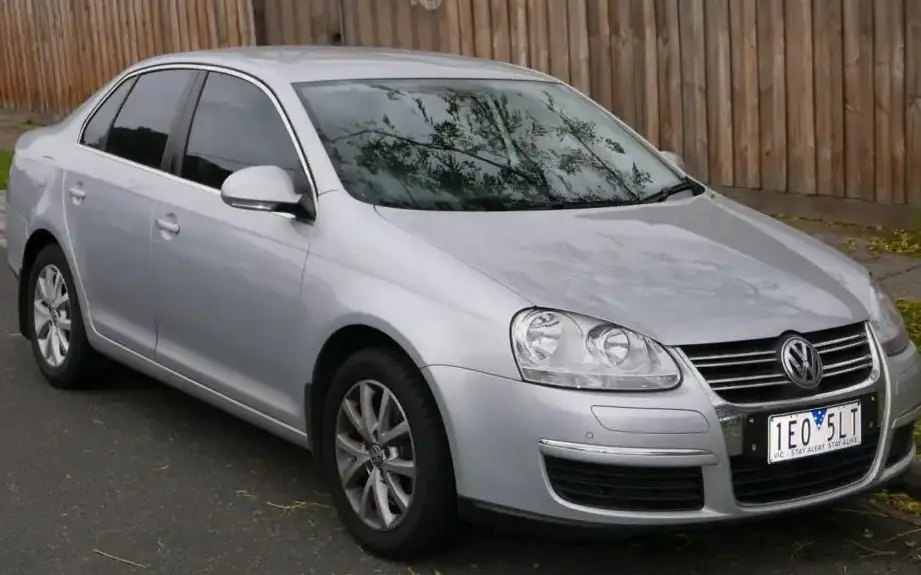
The Volkswagen Jetta V 1.6 FSI, produced from 2005 to 2007, represented an entry point into the fifth generation (Mk5) Jetta lineup. Positioned as a fuel-efficient and affordable option, it served as a key model for attracting buyers seeking a practical and modern compact sedan. The Jetta V, built on the Volkswagen Group’s A5 (or 1HX) platform – shared with the Golf Mk5 – aimed to offer a more refined driving experience and improved interior quality compared to its predecessor. This 1.6 FSI variant was primarily marketed in Europe and other regions where smaller displacement engines were favored due to tax regulations and fuel costs. It offered a balance between reasonable performance and economy, making it a popular choice for daily commuting and family use.
Technical Specifications
| Brand | Volkswagen |
| Model | Jetta |
| Generation | Jetta V |
| Type (Engine) | 1.6 FSI (115 Hp) |
| Start of production | 2005 |
| End of production | 2007 |
| Powertrain Architecture | Internal Combustion engine |
| Body type | Sedan |
| Seats | 5 |
| Doors | 4 |
| Fuel consumption (urban) | 9 l/100 km (26.1 US mpg, 31.4 UK mpg, 11.1 km/l) |
| Fuel consumption (extra urban) | 5.6 l/100 km (42 US mpg, 50.4 UK mpg, 17.9 km/l) |
| Fuel consumption (combined) | 6.9 l/100 km (34.1 US mpg, 40.9 UK mpg, 14.5 km/l) |
| Fuel Type | Petrol (Gasoline) |
| Acceleration 0 – 100 km/h | 11.1 sec |
| Acceleration 0 – 62 mph | 11.1 sec |
| Acceleration 0 – 60 mph | 10.5 sec |
| Maximum speed | 194 km/h (120.55 mph) |
| Emission standard | Euro 4 |
| Weight-to-power ratio | 11.1 kg/Hp, 90.5 Hp/tonne |
| Weight-to-torque ratio | 8.2 kg/Nm, 122 Nm/tonne |
| Power | 115 Hp @ 6000 rpm |
| Power per litre | 72 Hp/l |
| Torque | 155 Nm @ 4000 rpm (114.32 lb.-ft. @ 4000 rpm) |
| Engine layout | Front, Transverse |
| Engine Model/Code | BLF |
| Engine displacement | 1598 cm3 (97.52 cu. in.) |
| Number of cylinders | 4 |
| Engine configuration | Inline |
| Cylinder Bore | 76.5 mm (3.01 in.) |
| Piston Stroke | 86.9 mm (3.42 in.) |
| Compression ratio | 12:1 |
| Number of valves per cylinder | 4 |
| Fuel injection system | Direct injection |
| Engine aspiration | Naturally aspirated engine |
| Valvetrain | DOHC |
| Engine oil capacity | 3.5 l (3.7 US qt | 3.08 UK qt) |
| Coolant | 5.6 l (5.92 US qt | 4.93 UK qt) |
| Kerb Weight | 1271 kg (2802.08 lbs.) |
| Max. weight | 1870 kg (4122.64 lbs.) |
| Max load | 599 kg (1320.57 lbs.) |
| Trunk (boot) space – minimum | 527 l (18.61 cu. ft.) |
| Fuel tank capacity | 55 l (14.53 US gal | 12.1 UK gal) |
| Length | 4554 mm (179.29 in.) |
| Width | 1781 mm (70.12 in.) |
| Height | 1459 mm (57.44 in.) |
| Wheelbase | 2578 mm (101.5 in.) |
| Front track | 1534 mm (60.39 in.) |
| Rear (Back) track | 1512 mm (59.53 in.) |
| Minimum turning circle | 10.9 m (35.76 ft.) |
| Drivetrain Architecture | The Internal combustion engine (ICE) drives the front wheels of the vehicle. |
| Drive wheel | Front wheel drive |
| Number of gears and type of gearbox | 6 gears, manual transmission |
| Front suspension | Coil spring, Wishbone, Transverse stabilizer |
| Rear suspension | Independent multi-link suspension, Transverse stabilizer |
| Front brakes | Ventilated discs |
| Rear brakes | Disc |
| Assisting systems | ABS (Anti-lock braking system) |
| Steering type | Steering rack and pinion |
| Power steering | Electric Steering |
| Tires size | 205/55 R16 |
| Wheel rims size | 6.5 x 16 |
Powertrain & Engine Architecture
The heart of the Jetta V 1.6 FSI is the BLF engine code, a 1.6-liter inline-four cylinder gasoline engine. This engine utilizes Volkswagen’s FSI (Fuel Stratified Injection) technology, a direct injection system that injects fuel directly into the combustion chamber, rather than into the intake manifold. This allows for more precise fuel control, resulting in improved fuel efficiency and reduced emissions. The engine features a double overhead camshaft (DOHC) valvetrain with four valves per cylinder, contributing to its relatively high power output for its displacement. The 1.6 FSI engine produces 115 horsepower at 6000 rpm and 155 Nm (114 lb-ft) of torque at 4000 rpm. The engine’s relatively high compression ratio of 12:1 further enhances its efficiency. The standard transmission for this variant was a 6-speed manual gearbox, although a 6-speed automatic transmission was also available as an option. The automatic transmission was designed to provide smooth shifts and contribute to the overall refinement of the driving experience.
Driving Characteristics
The Jetta V 1.6 FSI with the manual transmission offered a reasonably engaging driving experience, though it wasn’t designed for outright performance. Acceleration from 0 to 60 mph took around 10.5 seconds, and top speed was approximately 120.55 mph. The engine felt responsive enough for everyday driving, with adequate torque for merging onto highways and overtaking slower vehicles. The 6-speed manual transmission allowed drivers to keep the engine in its optimal power band. The automatic transmission, while providing convenience, did slightly diminish performance due to its inherent efficiency losses. Compared to the more powerful 2.0 FSI or the diesel variants, the 1.6 FSI felt noticeably less potent, but it excelled in fuel economy. The suspension provided a comfortable ride, absorbing bumps and imperfections in the road well. Steering was precise and well-weighted, contributing to a confident feel behind the wheel.
Equipment & Trim Levels
The 1.6 FSI Jetta V typically came with a standard equipment list that included air conditioning, power windows, power door locks, and a basic audio system. Safety features such as ABS (Anti-lock Braking System) and front airbags were also standard. Higher trim levels, such as the Trendline or Comfortline, added features like alloy wheels, upgraded audio systems, cruise control, and automatic climate control. Interior upholstery was typically cloth, with options for upgraded materials available on higher trims. Optional extras included a sunroof, navigation system, and parking sensors.
Chassis & Braking
The Jetta V utilized an independent suspension system, with coil springs and wishbones at the front and a multi-link suspension at the rear. This setup provided a good balance between ride comfort and handling. The front brakes were ventilated discs, while the rear brakes were solid discs. The ABS system helped to maintain control during hard braking. The chassis was designed to be rigid and provide a stable platform for the suspension to work effectively. Stabilizer bars were fitted to both the front and rear axles to reduce body roll during cornering.
Market Reception & Comparison
The Jetta V 1.6 FSI was generally well-received by automotive critics as a practical and fuel-efficient compact sedan. It was praised for its comfortable ride, refined interior, and modern features. However, some critics noted that the engine lacked the power of its larger counterparts. Compared to the 2.0 FSI, the 1.6 FSI offered significantly better fuel economy but at the expense of performance. The diesel variants, such as the 1.9 TDI, provided even better fuel economy and more torque, but they were typically more expensive to purchase. The 1.6 FSI appealed to buyers who prioritized fuel efficiency and affordability over outright performance.
Legacy
The BLF 1.6 FSI engine, while generally reliable, has been known to exhibit some issues with carbon buildup on the intake valves, a common problem with direct injection engines. Regular use of fuel system cleaners and occasional professional cleaning can help to mitigate this issue. The Jetta V 1.6 FSI remains a relatively affordable and practical used car option today. Its fuel efficiency and comfortable ride make it a good choice for daily commuting and family use. However, potential buyers should be aware of the potential for carbon buildup and ensure that the vehicle has been properly maintained. The Jetta V 1.6 FSI represents a significant step forward in terms of refinement and technology compared to previous generations of the Jetta, and it continues to be a popular choice among used car buyers.