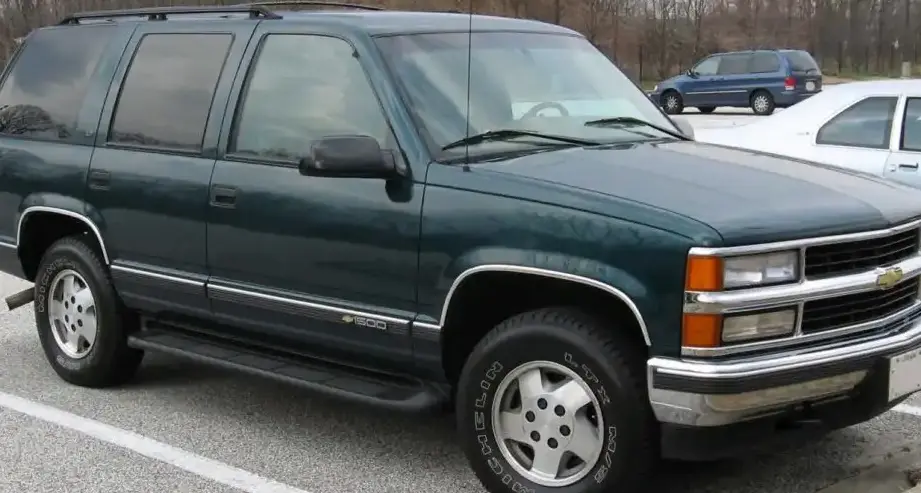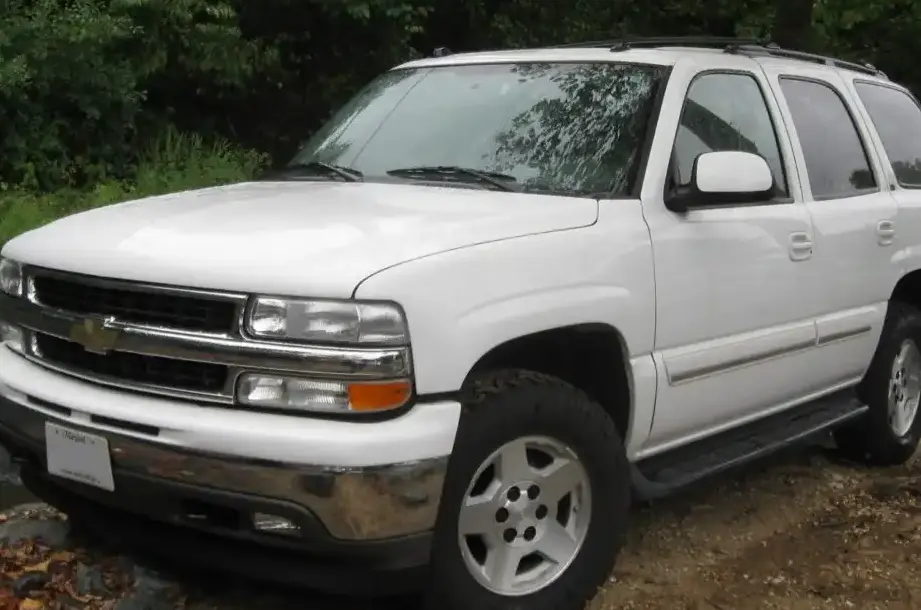
The Chevrolet Tahoe (GMT820) with the 6.0-liter V8 engine, producing 305 horsepower, represents a significant iteration of Chevrolet’s full-size SUV. Produced from 1999 through 2007, this generation Tahoe (internally designated GMT820) was a mainstay of the American SUV market, offering a blend of spaciousness, towing capacity, and V8 power. This particular variant, equipped with the 6.0L engine and a four-speed automatic transmission, occupied a mid-to-upper position within the Tahoe lineup, appealing to buyers needing substantial capability without opting for the more expensive, and later introduced, four-wheel drive models or specialized trims.
Technical Specifications
| Brand | Chevrolet |
| Model | Tahoe |
| Generation | Tahoe (GMT820) |
| Type (Engine) | 6.0 i V8 (305 Hp) |
| Start of production | 1999 |
| End of production | 2007 |
| Powertrain Architecture | Internal Combustion engine |
| Body type | SUV |
| Seats | 5 |
| Doors | 5 |
| Fuel consumption (urban) | 22 l/100 km (10.7 US mpg, 12.8 UK mpg, 4.5 km/l) |
| Fuel consumption (extra urban) | 12 l/100 km (19.6 US mpg, 23.5 UK mpg, 8.3 km/l) |
| Fuel Type | Petrol (Gasoline) |
| Maximum speed | 170 km/h (105.63 mph) |
| Weight-to-power ratio | 7.7 kg/Hp, 130.1 Hp/tonne |
| Weight-to-torque ratio | 4.9 kg/Nm, 205.1 Nm/tonne |
| Power | 305 Hp @ 4800 rpm |
| Power per litre | 51.1 Hp/l |
| Torque | 481 Nm @ 4000 rpm (354.77 lb.-ft. @ 4000 rpm) |
| Engine layout | Front, Longitudinal |
| Engine displacement | 5967 cm3 (364.13 cu. in.) |
| Number of cylinders | 8 |
| Engine configuration | V-engine |
| Cylinder Bore | 101.6 mm (4 in.) |
| Piston Stroke | 92 mm (3.62 in.) |
| Compression ratio | 9.4:1 |
| Number of valves per cylinder | 2 |
| Fuel injection system | Multi-port manifold injection |
| Engine aspiration | Naturally aspirated engine |
| Engine oil capacity | 5.7 l (6.02 US qt | 5.02 UK qt) |
| Coolant | 15 l (15.85 US qt | 13.2 UK qt) |
| Kerb Weight | 2345 kg (5169.84 lbs.) |
| Max. weight | 3085 kg (6801.26 lbs.) |
| Max load | 740 kg (1631.42 lbs.) |
| Trunk (boot) space – minimum | 460 l (16.24 cu. ft.) |
| Trunk (boot) space – maximum | 2920 l (103.12 cu. ft.) |
| Fuel tank capacity | 98 l (25.89 US gal | 21.56 UK gal) |
| Length | 5052 mm (198.9 in.) |
| Width | 2004 mm (78.9 in.) |
| Height | 1885 mm (74.21 in.) |
| Wheelbase | 2946 mm (115.98 in.) |
| Front track | 1651 mm (65 in.) |
| Rear (Back) track | 1676 mm (65.98 in.) |
| Drivetrain Architecture | The Internal combustion engine (ICE) drives the rear wheels of the vehicle. |
| Drive wheel | Rear wheel drive |
| Number of gears and type of gearbox | 4 gears, automatic transmission |
| Front suspension | Torsion |
| Rear suspension | Transverse stabilizer |
| Front brakes | Ventilated discs |
| Rear brakes | Disc |
| Assisting systems | ABS (Anti-lock braking system) |
| Power steering | Hydraulic Steering |
| Tires size | 245/75 R16 |
Powertrain & Engine Architecture
The heart of this Tahoe variant is the 5.7-liter (350 cubic inch) Vortec 5700 V8 engine. This engine, part of Chevrolet’s Vortec family, is a cast-iron block, aluminum-headed design. The engine code is typically associated with the L31 designation. It utilizes a multi-port fuel injection system, delivering fuel directly to each cylinder for optimized combustion. The valvetrain consists of two valves per cylinder, operated by hydraulic lifters. The 4L60E four-speed automatic transmission was the standard pairing for this engine. This transmission is known for its durability and relatively smooth shifting, although it can be prone to issues with age and high mileage. The 4L60E features electronic control for shift points and torque converter lockup, contributing to both performance and fuel efficiency.
Driving Characteristics
The 305 horsepower and 355 lb-ft of torque provided by the 6.0L V8 and 4L60E combination delivered respectable performance for a full-size SUV. Acceleration from 0 to 60 mph was typically in the 7.5 to 8.5 second range, depending on load and road conditions. While not a sports car, the Tahoe offered ample power for merging onto highways and towing trailers. Compared to the smaller 4.8L V8 offered in lower trims, the 6.0L provided a noticeable increase in both power and towing capacity. The four-speed automatic transmission, while adequate, lacked the refinement and efficiency of newer transmissions with more gears. Gear ratios were optimized for towing and cruising, resulting in a comfortable ride but potentially slower acceleration compared to a manual transmission equipped model (which was not offered in this generation Tahoe).
Equipment & Trim Levels
The 6.0L Tahoe typically came standard with features such as air conditioning, power windows and locks, and an AM/FM stereo. Higher trim levels, like the LT, added features like leather upholstery, heated seats, a premium sound system, and alloy wheels. Optional extras included a sunroof, rear entertainment system, and upgraded towing packages. Interior upholstery was typically cloth in base models, with leather available as an upgrade. The dashboard layout was functional and straightforward, prioritizing ease of use over stylistic flair.
Chassis & Braking
The GMT820 Tahoe utilized a body-on-frame construction, providing a robust and durable platform. The front suspension consisted of independent torsion bars, while the rear suspension employed a solid axle with leaf springs. This setup prioritized load-carrying capacity and towing stability over handling precision. Braking duties were handled by ventilated discs up front and discs in the rear, with ABS as standard equipment. The braking system was adequate for the vehicle’s weight, but stopping distances were longer than those of lighter vehicles.
Market Reception & Comparison
The 6.0L Tahoe was generally well-received by critics and consumers alike. It was praised for its spacious interior, strong V8 engine, and impressive towing capacity. Fuel economy, however, was a common criticism, with the 6.0L engine returning around 15 mpg in combined driving. Compared to the 4.8L Tahoe, the 6.0L offered a significant performance advantage, but at a higher price point. Compared to competitors like the Ford Expedition and GMC Yukon, the Tahoe offered a similar level of capability and features, often at a slightly lower price.
Legacy
The GMT820 Tahoe, particularly the 6.0L variant, has proven to be a relatively reliable vehicle, although age and mileage are beginning to take their toll. The Vortec 5700 engine is known for its durability, but common issues include oil leaks, intake manifold gasket failures, and sensor malfunctions. The 4L60E transmission can also experience problems, such as slipping gears and harsh shifting. Today, these Tahoes are popular choices for those seeking a capable and affordable full-size SUV, often used for towing, hauling, and off-road adventures. Parts availability remains good, and a strong aftermarket supports these vehicles, ensuring their continued presence on roads and trails for years to come.