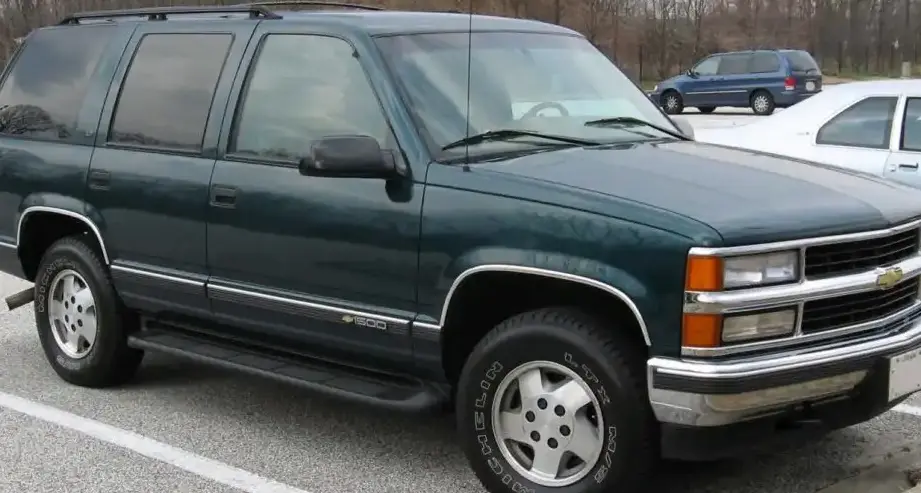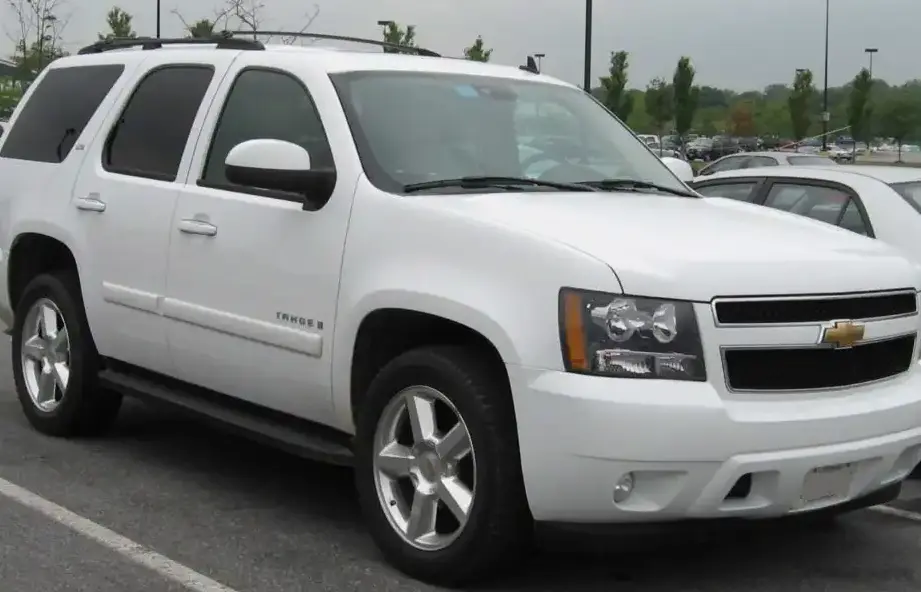
The Chevrolet Tahoe (GMT900) 4.8i V8 with an automatic transmission represents a significant iteration of Chevrolet’s full-size SUV, produced from 2007 to 2009. Positioned as a mid-range offering within the GMT900 Tahoe lineup, this variant aimed to balance capability with affordability, appealing to families and those needing substantial towing capacity without the premium price tag of the higher-trim levels. It was a key player in the highly competitive American full-size SUV market, directly competing with the Ford Expedition and GMC Yukon. The GMT900 generation marked a substantial redesign for the Tahoe, focusing on improved interior space, ride quality, and safety features compared to its predecessor.
Technical Specifications
| Brand | Chevrolet |
| Model | Tahoe |
| Generation | Tahoe (GMT900) |
| Type (Engine) | 4.8 i V8 (295 Hp) Automatic |
| Start of production | 2007 |
| End of production | 2009 |
| Powertrain Architecture | Internal Combustion engine |
| Body type | SUV |
| Seats | 9 |
| Doors | 5 |
| Fuel consumption (urban) | 14.7 l/100 km (16 US mpg, 19.2 UK mpg, 6.8 km/l) |
| Fuel consumption (extra urban) | 10.7 l/100 km (22 US mpg, 26.4 UK mpg, 9.3 km/l) |
| Fuel Type | Petrol (Gasoline) |
| Weight-to-power ratio | 8.1 kg/Hp, 123.6 Hp/tonne |
| Weight-to-torque ratio | 5.8 kg/Nm, 173.4 Nm/tonne |
| Power | 295 Hp @ 5600 rpm |
| Power per litre | 61.4 Hp/l |
| Torque | 414 Nm @ 4800 rpm (305.35 lb.-ft. @ 4800 rpm) |
| Engine layout | Front, Longitudinal |
| Engine Model/Code | LY2 |
| Engine displacement | 4801 cm3 (292.97 cu. in.) |
| Number of cylinders | 8 |
| Engine configuration | V-engine |
| Cylinder Bore | 96 mm (3.78 in.) |
| Piston Stroke | 83 mm (3.27 in.) |
| Compression ratio | 9.1:1 |
| Number of valves per cylinder | 2 |
| Fuel injection system | Multi-port manifold injection |
| Engine aspiration | Naturally aspirated engine |
| Engine oil capacity | 5.7 l (6.02 US qt, 5.02 UK qt) |
| Coolant capacity | 16.9 l (17.86 US qt, 14.87 UK qt) |
| Kerb Weight | 2387 kg (5262.43 lbs.) |
| Max. weight | 3220 kg (7098.88 lbs.) |
| Max load | 833 kg (1836.45 lbs.) |
| Trunk (boot) space – minimum | 479 l (16.92 cu. ft.) |
| Trunk (boot) space – maximum | 3084 l (108.91 cu. ft.) |
| Fuel tank capacity | 98 l (25.89 US gal, 21.56 UK gal) |
| Length | 5130 mm (201.97 in.) |
| Width | 2007 mm (79.02 in.) |
| Height | 1955 mm (76.97 in.) |
| Wheelbase | 2946 mm (115.98 in.) |
| Front track | 1732 mm (68.19 in.) |
| Rear (Back) track | 1702 mm (67.01 in.) |
| Ride height (ground clearance) | 289 mm (11.38 in.) |
| Minimum turning circle | 11.9 m (39.04 ft.) |
| Approach angle | 17° |
| Departure angle | 21.9° |
| Drivetrain Architecture | Rear wheel drive |
| Number of gears | 4 |
| Gearbox type | Automatic transmission |
| Front suspension | Independent, McPherson with coil spring and anti-roll bar |
| Rear suspension | Independent multi-link suspension |
| Front brakes | Disc |
| Rear brakes | Disc |
| Assisting systems | ABS (Anti-lock braking system) |
| Steering type | Steering rack and pinion |
| Tires size | 265/70 R17 |
| Wheel rims size | 7.5J x 17 |
Powertrain & Engine Architecture
The heart of this Tahoe variant is the 4.8-liter (293 cubic inch) LY2 V8 engine. This engine is a member of Chevrolet’s Vortec family, known for its robust construction and relatively simple design. The LY2 features a cast iron block with aluminum cylinder heads, a configuration chosen for its balance of durability and weight. It utilizes a 9.1:1 compression ratio and a multi-port fuel injection system, delivering a respectable 295 horsepower at 5600 rpm and 305 lb-ft of torque at 4800 rpm. The engine’s valvetrain employs two valves per cylinder, operated by a single camshaft. The automatic transmission paired with the LY2 is a 4-speed 4L60E unit. This transmission is known for its reliability, but its limited number of gears, compared to modern transmissions, impacts fuel economy and can result in higher engine speeds during highway cruising.
Driving Characteristics
The 4.8L V8 and 4-speed automatic combination in the Tahoe delivers adequate, but not exhilarating, performance. Acceleration is sufficient for everyday driving and towing, but it lacks the punch of the available 5.3L or 6.0L V8 options. The 4L60E transmission’s gear ratios are geared more towards towing and hauling than outright speed. This results in a noticeable lack of responsiveness when attempting quick acceleration. The transmission shifts smoothly under normal conditions, but can sometimes feel hesitant when downshifting. Compared to the manual transmission equipped Tahoes, the automatic version sacrifices some driver engagement and fuel efficiency. However, it provides a more relaxed driving experience, particularly in stop-and-go traffic.
Equipment & Trim Levels
The 4.8L automatic Tahoe typically came standard with features like air conditioning, power windows and locks, a CD player, and cloth upholstery. Higher trim levels, such as the LT, added features like leather seats, a Bose sound system, and heated front seats. Optional extras included a rear entertainment system, navigation, and a sunroof. The interior design was functional and spacious, prioritizing practicality over luxury. The third-row seating was a key selling point, making the Tahoe a viable option for large families.
Chassis & Braking
The GMT900 Tahoe utilizes a body-on-frame construction, providing a robust and durable platform. The front suspension consists of an independent McPherson strut setup with coil springs and an anti-roll bar. The rear suspension employs an independent multi-link design, also with coil springs. This suspension setup provides a comfortable ride, but can feel somewhat floaty, especially when fully loaded. Braking duties are handled by disc brakes on all four wheels, assisted by an Anti-lock Braking System (ABS). The braking performance is adequate for the vehicle’s weight, but the system can feel somewhat lacking in stopping power during emergency situations.
Market Reception & Comparison
The 4.8L Tahoe was generally well-received by critics as a capable and affordable full-size SUV. It was praised for its spacious interior, comfortable ride, and strong towing capacity. However, it was often criticized for its relatively low fuel economy and lack of refinement compared to some of its competitors. Compared to the 5.3L V8 Tahoe, the 4.8L version offered lower performance but better fuel economy. The 5.3L was the more popular choice for buyers who prioritized power and towing capability. The 4.8L variant appealed to buyers who needed the space and utility of a full-size SUV but didn’t require the extra power of the larger engines.
Legacy
The LY2 4.8L V8 and 4L60E transmission combination, while not known for being particularly groundbreaking, proved to be relatively reliable. With proper maintenance, these powertrains can often exceed 200,000 miles. On the used car market, the 2007-2009 Tahoe 4.8L automatic represents a good value proposition for buyers seeking a spacious and capable SUV at an affordable price. However, potential buyers should be aware of the potential for transmission issues and the relatively high fuel consumption. The GMT900 Tahoe, in general, remains a popular choice for those needing a durable and versatile vehicle for family transportation and light to medium-duty towing.