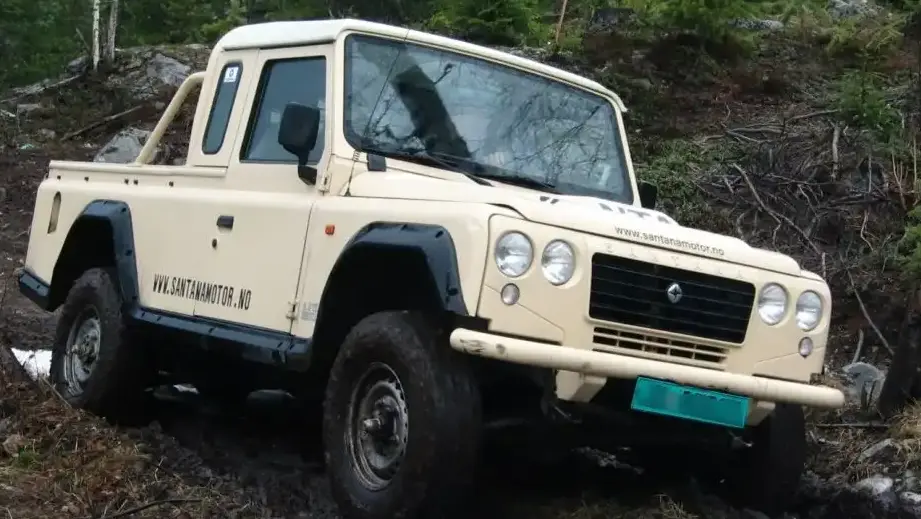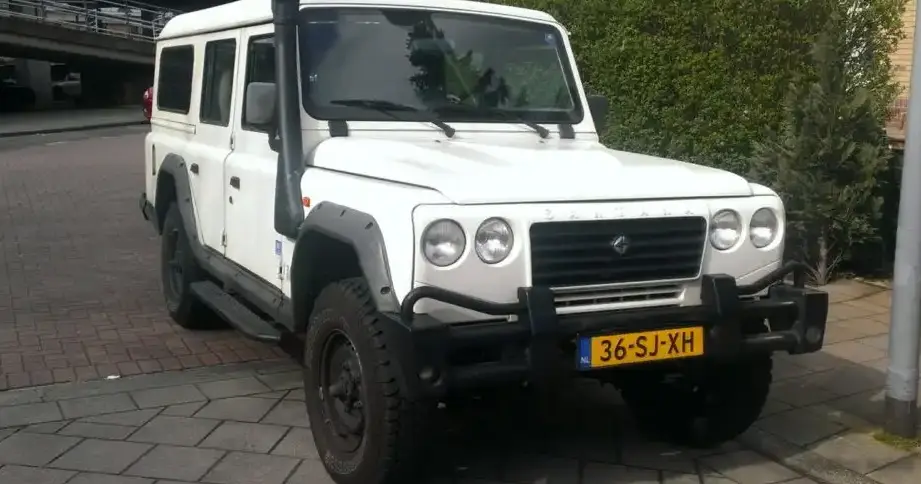
The Santana PS-10 SW 2.8 TD 4WD, produced from 2004 to 2011, represents a robust and utilitarian offering from the Spanish automaker Santana Motor. Built upon the foundations of the Land Rover Series III, which Santana produced under license, the PS-10 SW (Station Wagon) aimed to provide a durable and capable vehicle for both work and leisure, particularly in markets where ruggedness and off-road ability were highly valued. This specific 2.8 TD variant, equipped with a turbocharged diesel engine producing 106 horsepower, occupied a middle ground in the PS-10 lineup, offering a balance between performance, fuel economy, and towing capacity. It was primarily sold in Europe and Latin America, catering to agricultural, forestry, and general transportation needs.
Technical Specifications
| Brand | Santana |
| Model | PS-10 |
| Generation | PS-10 SW |
| Type (Engine) | 2.8 TD (106 Hp) 4WD |
| Start of production | 2004 |
| End of production | 2011 |
| Powertrain Architecture | Internal Combustion engine |
| Body type | Off-road vehicle, SUV |
| Seats | 5-9 |
| Doors | 5 |
| Fuel Type | Diesel |
| Emission standard | Euro 2 |
| Weight-to-power ratio | 20.2 kg/Hp, 49.5 Hp/tonne |
| Weight-to-torque ratio | 8.6 kg/Nm, 116.8 Nm/tonne |
| Power | 106 Hp @ 3600 rpm |
| Power per litre | 37.9 Hp/l |
| Torque | 250 Nm @ 1800 rpm (184.39 lb.-ft. @ 1800 rpm) |
| Engine layout | Front, Longitudinal |
| Engine Model/Code | 8140.43C |
| Engine displacement | 2800 cm3 (170.87 cu. in.) |
| Number of cylinders | 4 |
| Engine configuration | Inline |
| Cylinder Bore | 94.4 mm (3.72 in.) |
| Piston Stroke | 100 mm (3.94 in.) |
| Fuel injection system | Direct injection |
| Engine aspiration | Turbocharger, Intercooler |
| Engine oil capacity | 7 l (7.4 US qt | 6.16 UK qt) |
| Coolant | 12 l (12.68 US qt | 10.56 UK qt) |
| Kerb Weight | 2140 kg (4717.89 lbs.) |
| Max. weight | 3050 kg (6724.1 lbs.) |
| Max load | 910 kg (2006.21 lbs.) |
| Fuel tank capacity | 100 l (26.42 US gal | 22 UK gal) |
| Permitted trailer load with brakes (12%) | 3500 kg (7716.18 lbs.) |
| Permitted trailer load without brakes | 750 kg (1653.47 lbs.) |
| Length | 4714 mm (185.59 in.) |
| Width | 1750 mm (68.9 in.) |
| Height | 2000 mm (78.74 in.) |
| Wheelbase | 2769 mm (109.02 in.) |
| Front track | 1486 mm (58.5 in.) |
| Rear (Back) track | 1486 mm (58.5 in.) |
| Front overhang | 670 mm (26.38 in.) |
| Rear overhang | 1275 mm (50.2 in.) |
| Ride height (ground clearance) | 200 mm (7.87 in.) |
| Minimum turning circle (turning diameter) | 14.6 m (47.9 ft.) |
| Approach angle | 50° |
| Departure angle | 30° |
| Ramp-over (brakeover) angle | 29° |
| Climb angle | 45° |
| Wading depth | 500 mm (19.69 in.) |
| Drivetrain Architecture | The Internal combustion engine (ICE) drives the rear wheels permanently, and the front wheels are driven through an electrically or mechanically operated clutch if necessary. |
| Drive wheel | All wheel drive (4×4) |
| Number of gears and type of gearbox | 5 gears, manual transmission |
| Front suspension | Rigid axle suspension, Leaf spring |
| Rear suspension | Rigid axle suspension, Leaf spring |
| Front brakes | Ventilated discs |
| Rear brakes | Disc |
| Power steering | Hydraulic Steering |
| Tires size | 235/85 R16 |
| Wheel rims size | 16 |
Powertrain & Engine Architecture
The heart of the PS-10 SW 2.8 TD is the 8140.43C engine, a 2.8-liter inline-four cylinder diesel. This engine, while based on designs originating from Peugeot and later adapted by other manufacturers, was known for its durability and relatively simple mechanical construction. It features direct injection, a turbocharger, and an intercooler to enhance power and efficiency. The direct injection system, crucial for modern diesel performance, allows for precise fuel delivery directly into the combustion chamber, maximizing energy extraction. The turbocharger forces more air into the engine, increasing power output, while the intercooler cools the compressed air, further improving efficiency and reducing emissions. The engine is longitudinally mounted in the chassis, a layout common in vehicles designed for off-road use, contributing to a more balanced weight distribution. The PS-10 SW 2.8 TD utilized a robust five-speed manual transmission, chosen for its reliability and suitability for demanding conditions. Automatic transmissions were not offered on this variant.
Driving Characteristics
The 106 horsepower and 250 Nm (184 lb-ft) of torque delivered by the 2.8 TD engine provided adequate, though not exhilarating, performance for the PS-10 SW. The engine’s peak torque was available at a relatively low 1800 rpm, making it well-suited for towing and navigating challenging terrain. However, compared to higher-output versions of the PS-10, or those equipped with gasoline engines, the 2.8 TD felt somewhat underpowered, particularly when fully loaded or traveling at highway speeds. The five-speed manual transmission offered a reasonable spread of gears, allowing the driver to keep the engine within its optimal operating range. The gearing was geared towards low-end torque, prioritizing usability over outright speed. The vehicle’s substantial weight (2140 kg / 4718 lbs) further contributed to its deliberate, rather than sporty, driving experience.
Equipment & Trim Levels
The PS-10 SW 2.8 TD 4WD was typically equipped with a functional, rather than luxurious, interior. Standard features included basic cloth upholstery, a simple dashboard layout, and manually operated windows and door locks. Air conditioning was often an optional extra, as were features like a radio/cassette player. The focus was on durability and practicality, with hard-wearing materials used throughout the cabin. The vehicle’s spacious interior could accommodate up to nine passengers, depending on the seating configuration. The station wagon body style provided a generous cargo area, making it ideal for carrying equipment or supplies.
Chassis & Braking
The PS-10 SW’s chassis was a ladder-frame construction, a design known for its strength and rigidity, essential for off-road capability. Both the front and rear suspension utilized a rigid axle setup with leaf springs, providing a comfortable ride over rough terrain, albeit at the expense of on-road handling precision. The braking system consisted of ventilated discs at the front and solid discs at the rear. Hydraulic power steering was standard, making the vehicle easier to maneuver, particularly at low speeds. The 235/85 R16 tires, mounted on 16-inch steel wheels, were chosen for their durability and off-road traction.
Market Reception & Comparison
The Santana PS-10 SW 2.8 TD 4WD was generally well-regarded for its robustness and off-road capabilities. Critics praised its durability and practicality, but noted its relatively low power output and somewhat dated interior. Compared to other trims in the PS-10 lineup, such as those equipped with gasoline engines, the 2.8 TD offered superior fuel economy and torque, making it a popular choice for those who prioritized utility over performance. Its Euro 2 emissions standard, while acceptable at the time of production, is now considered relatively high by modern standards. The manual transmission was favored by many for its reliability and control, although it did require more driver involvement than an automatic.
Legacy
The Santana PS-10 SW 2.8 TD 4WD has proven to be a remarkably durable vehicle, with many examples still in use today. The 8140.43C engine, while not known for its refinement, is generally considered to be reliable and relatively easy to maintain. The vehicle’s simple mechanical construction makes it accessible to amateur mechanics, and spare parts are still reasonably available. In the used car market, the PS-10 SW 2.8 TD 4WD is valued for its ruggedness and off-road capability, making it a popular choice for those seeking a dependable and affordable workhorse. However, potential buyers should be aware of the vehicle’s age and the potential for corrosion, particularly in areas exposed to harsh weather conditions.