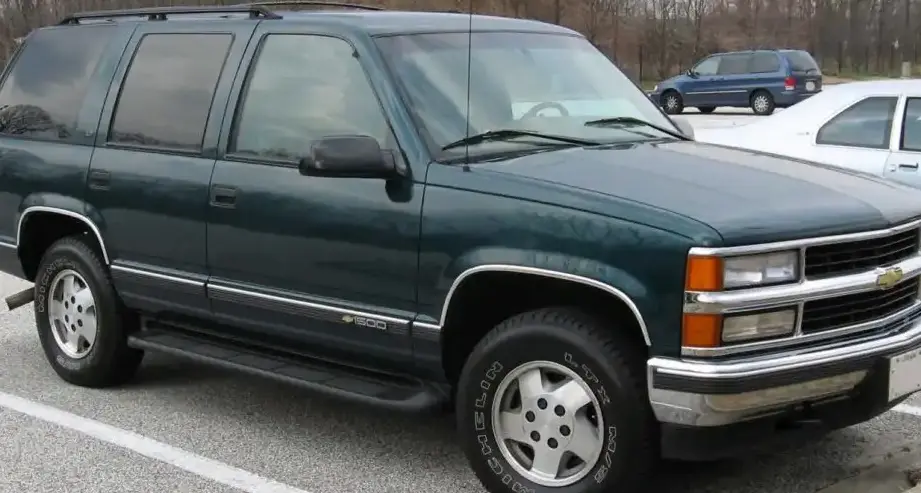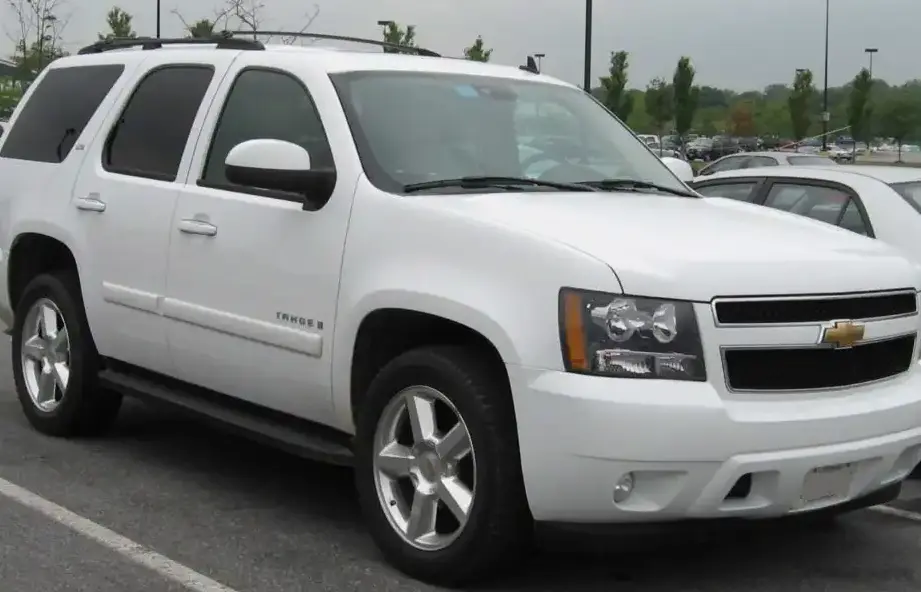
The Chevrolet Tahoe GMT900 6.0L V8 Hybrid with All-Wheel Drive and a Continuously Variable Transmission (CVT) was produced from 2009 to 2013. This variant represented Chevrolet’s foray into hybrid technology within its full-size SUV lineup, aiming to offer improved fuel economy without sacrificing the Tahoe’s renowned capability and spaciousness. Positioned as a mid-to-upper trim level, it bridged the gap between the standard V8 models and the more luxurious trims. The GMT900 generation Tahoe, introduced in 2007, was a significant redesign of the iconic SUV, and the hybrid powertrain was a key feature differentiating it from competitors.
Technical Specifications
| Brand | Chevrolet |
| Model | Tahoe |
| Generation | Tahoe (GMT900) |
| Type (Engine) | 6.0 V8 (370 Hp) Hybrid AWD CVT |
| Start of production | 2009 |
| End of production | 2013 |
| Powertrain Architecture | FHEV (Full Hybrid Electric Vehicle) |
| Body type | SUV |
| Seats | 8 |
| Doors | 5 |
| Fuel consumption (urban) | 11.7 l/100 km (20.1 US mpg, 24.1 UK mpg, 8.5 km/l) |
| Fuel Type | Petrol (Gasoline) |
| Weight-to-power ratio | 7.2 kg/Hp, 139.8 Hp/tonne |
| Weight-to-torque ratio | 4.1 kg/Nm, 241.8 Nm/tonne |
| Electric motor power | 82 Hp |
| Electric motor Torque | 320 Nm (236.02 lb.-ft.) |
| System power | 370 Hp @ 5100 rpm |
| System torque | 640 Nm @ 4100 rpm (472.04 lb.-ft. @ 4100 rpm) |
| Internal combustion engine power | 332 Hp @ 5100 rpm |
| Power per litre | 55.7 Hp/l |
| Internal combustion engine torque | 498 Nm @ 4100 rpm (367.31 lb.-ft. @ 4100 rpm) |
| Maximum engine speed | 6000 rpm |
| Engine layout | Front, Longitudinal |
| Engine Model/Code | LFA |
| Engine displacement | 5965 cm3 (364.01 cu. in.) |
| Number of cylinders | 8 |
| Engine configuration | V-engine |
| Cylinder Bore | 101.6 mm (4 in.) |
| Piston Stroke | 92 mm (3.62 in.) |
| Compression ratio | 10.8:1 |
| Number of valves per cylinder | 2 |
| Fuel injection system | Multi-port manifold injection |
| Valvetrain | OHV |
| Engine oil capacity | 5.7 l (6.02 US qt | 5.02 UK qt) |
| Coolant capacity | 17.3 l (18.28 US qt | 15.22 UK qt) |
| Kerb Weight | 2647 kg (5835.64 lbs.) |
| Max. weight | 3311 kg (7299.51 lbs.) |
| Max load | 664 kg (1463.87 lbs.) |
| Trunk (boot) space – minimum | 478 l (16.88 cu. ft.) |
| Trunk (boot) space – maximum | 3084 l (108.91 cu. ft.) |
| Fuel tank capacity | 93 l (24.57 US gal | 20.46 UK gal) |
| Permitted trailer load with brakes (12%) | 2721 kg (5998.78 lbs.) |
| Length | 5130 mm (201.97 in.) |
| Width | 2007 mm (79.02 in.) |
| Height | 1954 mm (76.93 in.) |
| Wheelbase | 2946 mm (115.98 in.) |
| Front track | 1732 mm (68.19 in.) |
| Rear (Back) track | 1702 mm (67.01 in.) |
| Ride height (ground clearance) | 229 mm (9.02 in.) |
| Drag coefficient (Cd) | 0.34 |
| Minimum turning circle (turning diameter) | 11.9 m (39.04 ft.) |
| Approach angle | 17° |
| Departure angle | 21.9° |
| Drive wheel | All wheel drive (4×4) |
| Number of gears and type of gearbox | automatic transmission CVT |
| Front suspension | Independent coil spring |
| Rear suspension | Independent multi-link suspension |
| Front brakes | Ventilated discs |
| Rear brakes | Disc |
| Assisting systems | ABS (Anti-lock braking system) |
| Steering type | Steering rack and pinion |
| Tires size | 265/65 R18 |
| Wheel rims size | 8.0J x 18 |
Powertrain & Engine Architecture
The heart of this Tahoe variant is the 6.0-liter (364 cubic inch) LFA V8 engine. This engine utilizes a cast iron block with aluminum cylinder heads, and features a traditional Overhead Valve (OHV) valvetrain. The LFA engine is equipped with multi-port fuel injection, delivering fuel directly into the intake ports. The key differentiating factor is the integration of the Two-Mode Hybrid system. This system combines the V8 engine with a 300-volt nickel-metal hydride battery pack and two electric motors. One electric motor is used for low-speed propulsion and regenerative braking, while the second motor provides additional power during acceleration and assists the engine at higher speeds. The Continuously Variable Transmission (CVT) was specifically tuned to work with the hybrid system, providing seamless transitions between electric and gasoline power. The electric motors contribute 82 horsepower and 320 Nm (236 lb-ft) of torque.
Driving Characteristics
The 6.0L Hybrid Tahoe offered a unique driving experience compared to its conventionally powered siblings. While the total system output of 370 horsepower and 472 lb-ft of torque was comparable to other Tahoe trims, the power delivery felt different. The electric motors provided instant torque at low speeds, resulting in brisk acceleration from a standstill. The CVT, while efficient, lacked the traditional gear shifts of an automatic transmission, which some drivers found less engaging. The hybrid system prioritized fuel efficiency, and the vehicle would frequently operate in electric-only mode at lower speeds. Compared to the 6-speed automatic transmissions found in other Tahoe models, the CVT focused more on maintaining optimal engine RPM for fuel economy rather than providing sporty acceleration. The added weight of the hybrid components did slightly impact handling, but the independent suspension helped to mitigate this.
Equipment & Trim Levels
The 6.0L Hybrid Tahoe typically came well-equipped, reflecting its position as a mid-to-upper trim level. Standard features included tri-zone automatic climate control, a premium audio system, leather upholstery, power-adjustable front seats, and rear parking sensors. Optional extras included a navigation system, a rear-seat entertainment system, and upgraded interior trim. The exterior styling was largely consistent with other GMT900 Tahoes, but the hybrid model often featured unique badging and wheel designs to distinguish it. The interior generally featured dark colors and woodgrain accents.
Chassis & Braking
The Tahoe GMT900 utilized a body-on-frame construction, providing a robust and durable platform. The suspension consisted of an independent coil spring setup at the front and an independent multi-link suspension at the rear. The hybrid model’s added weight necessitated a slightly stiffer suspension tuning to maintain stability. Braking duties were handled by ventilated discs at all four corners, coupled with an Anti-lock Braking System (ABS). The all-wheel-drive system provided enhanced traction in various weather conditions. The rear brakes were discs, a step up from the drums found on some base model Tahoes.
Market Reception & Comparison
The Chevrolet Tahoe Hybrid received mixed reviews upon its release. Critics praised its improved fuel economy compared to the standard V8 models, but some found the CVT transmission to be less responsive. The hybrid system added a significant cost to the vehicle, making it more expensive than comparable non-hybrid Tahoes. Compared to the 5.3L V8 Tahoe, the hybrid offered better fuel economy but a similar level of overall performance. Against competitors like the Ford Expedition, the Tahoe Hybrid offered a unique hybrid option, but the Expedition generally provided more towing capacity. Reliability reports indicated that the hybrid system was generally reliable, but the complex powertrain could be more expensive to repair than a traditional gasoline engine.
Legacy
The Chevrolet Tahoe 6.0L V8 Hybrid GMT900 represented an important step in Chevrolet’s efforts to improve fuel efficiency in its full-size SUV lineup. While the hybrid system was discontinued after a few years, it paved the way for future hybrid and electric vehicle offerings from Chevrolet. Today, these vehicles are found in the used car market, often appealing to buyers seeking a spacious SUV with improved fuel economy. The powertrain, while complex, has proven to be reasonably durable with proper maintenance. The Tahoe Hybrid remains a unique and interesting variant within the GMT900 generation, showcasing Chevrolet’s early attempts at hybridization in a popular SUV segment.