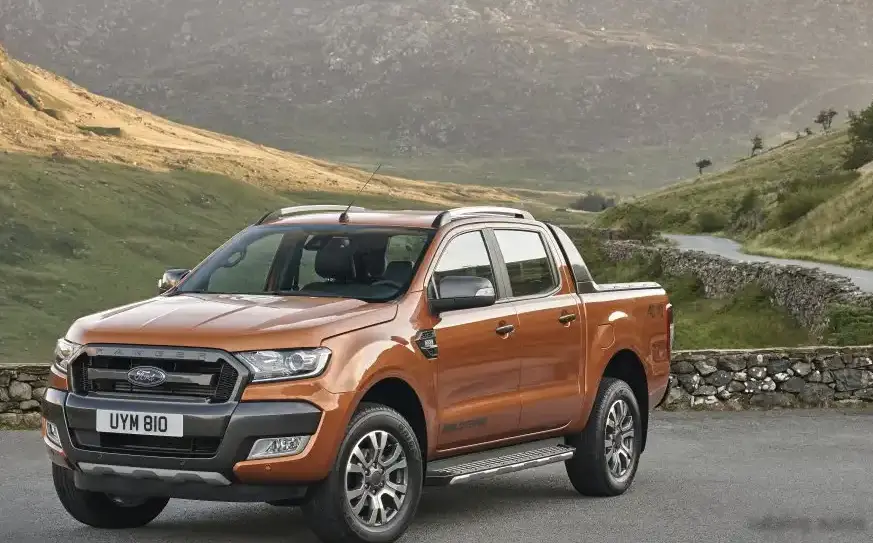
The Ford Ranger III Double Cab (facelift 2015) equipped with the 3.2 TDCi engine producing 200 horsepower was a significant offering in the mid-size pickup truck segment, particularly in markets outside of North America. Introduced as part of the T6 platform’s mid-life refresh, this variant aimed to balance robust performance with reasonable fuel efficiency and practicality for both work and family use. Production of this specific configuration ran from 2015 to 2018, solidifying its place as a popular choice for buyers needing a versatile and capable pickup. This model represented Ford’s attempt to cater to a broader audience seeking a pickup that wasn’t solely focused on heavy-duty tasks.
Technical Specifications
| Brand | Ford |
| Model | Ranger |
| Generation | Ranger III Double Cab (facelift 2015) |
| Type (Engine) | 3.2 TDCi (200 Hp) |
| Start of production | 2015 |
| End of production | 2018 |
| Powertrain Architecture | Internal Combustion engine |
| Body type | Pick-up |
| Seats | 5 |
| Doors | 4 |
| Fuel consumption (combined) | 8.2 l/100 km (28.7 US mpg, 34.4 UK mpg, 12.2 km/l) |
| CO2 emissions | 217 g/km |
| Fuel Type | Diesel |
| Maximum speed | 175 km/h (108.74 mph) |
| Emission standard | Euro 5 |
| Weight-to-power ratio | 9.4 kg/Hp, 106.2 Hp/tonne |
| Weight-to-torque ratio | 4 kg/Nm, 249.6 Nm/tonne |
| Power | 200 Hp @ 3000 rpm |
| Power per litre | 62.5 Hp/l |
| Torque | 470 Nm @ 1500-2750 rpm (346.65 lb.-ft. @ 1500-2750 rpm) |
| Engine layout | Front, Longitudinal |
| Engine displacement | 3198 cm3 (195.15 cu. in.) |
| Number of cylinders | 5 |
| Engine configuration | Inline |
| Cylinder Bore | 89.9 mm (3.54 in.) |
| Piston Stroke | 100.8 mm (3.97 in.) |
| Compression ratio | 15.7:1 |
| Number of valves per cylinder | 4 |
| Fuel injection system | Diesel Commonrail |
| Engine aspiration | Turbocharger, Intercooler |
| Engine oil capacity | 9.75 l (10.3 US qt | 8.58 UK qt) |
| Coolant | 13.5 l (14.27 US qt | 11.88 UK qt) |
| Kerb Weight | 1883 kg (4151.3 lbs.) |
| Max. weight | 3200 kg (7054.79 lbs.) |
| Max load | 1317 kg (2903.49 lbs.) |
| Fuel tank capacity | 80 l (21.13 US gal | 17.6 UK gal) |
| Length | 5277-5354 mm (207.76 – 210.79 in.) |
| Width | 1860 mm (73.23 in.) |
| Height | 1815 mm (71.46 in.) |
| Wheelbase | 3220 mm (126.77 in.) |
| Front track | 1590 mm (62.6 in.) |
| Rear track | 1590 mm (62.6 in.) |
| Front overhang | 908 mm (35.75 in.) |
| Rear overhang | 1149 mm (45.24 in.) |
| Ride height (ground clearance) | 232 mm (9.13 in.) |
| Approach angle | 28° |
| Departure angle | 28° |
| Ramp-over angle | 25° |
| Climb angle | 32° |
| Wading depth | 600 mm (23.62 in.) |
| Drivetrain Architecture | Rear wheel drive |
| Number of gears | 6 |
| Gearbox type | Manual transmission |
| Front suspension | Independent coil spring |
| Rear suspension | Dependent suspension of two longitudinal semi-elliptic leaf springs |
| Front brakes | Ventilated discs |
| Rear brakes | Drum |
| Assisting systems | ABS (Anti-lock braking system) |
| Steering type | Steering rack and pinion |
| Power steering | Electric Steering |
| Tires size | 215/70 R16; 255/70 R16; 265/65 R17; 265/60 R18 |
| Wheel rims size | 16; 17; 18 |
Powertrain & Engine Architecture
The heart of this Ranger variant is the 3.2-liter Duratorq TDCi inline-five cylinder diesel engine. This engine, designated with various codes depending on the market, is a robust and relatively simple design known for its durability. The 3.2L engine utilizes a common-rail direct fuel injection system, delivering fuel at extremely high pressure for optimized combustion. A variable geometry turbocharger (VGT) with an intercooler further enhances performance by increasing air intake and reducing intake air temperature. The engine produces 200 horsepower at 3000 rpm and a substantial 470 Nm (346.65 lb-ft) of torque between 1500 and 2750 rpm. This broad torque curve is particularly beneficial for towing and hauling. The 6-speed manual transmission was the standard offering, providing drivers with full control over gear selection. The transmission’s gear ratios were tuned to maximize fuel efficiency and provide adequate acceleration, though it wasn’t geared for outright speed.
Driving Characteristics
The 3.2 TDCi with a manual transmission offered a balanced driving experience. While not as quick as some of the gasoline-powered alternatives, the ample torque made it capable of handling heavy loads and navigating challenging terrain. The manual gearbox allowed for precise control, especially when off-roading or towing. The gear ratios were well-suited for everyday driving, providing sufficient power for overtaking and maintaining highway speeds. Compared to the lower-powered 2.2-liter TDCi variants, the 3.2 offered a noticeable improvement in performance, particularly when fully loaded. However, it wasn’t as refined or fuel-efficient as the smaller engine. The suspension, tuned for both on-road comfort and off-road capability, provided a reasonably smooth ride, even on rough surfaces.
Equipment & Trim Levels
The Ranger III Double Cab (facelift 2015) 3.2 TDCi was typically offered in mid-to-high trim levels, depending on the market. Standard features often included air conditioning, power windows and locks, a basic audio system, and steel wheels. Higher trims added features such as alloy wheels, a more advanced audio system with Bluetooth connectivity, cruise control, and fog lights. Optional extras included a navigation system, leather upholstery, and a reversing camera. The interior was functional and durable, with a focus on practicality rather than luxury. The double cab configuration provided seating for five passengers, making it a suitable option for families.
Chassis & Braking
The Ranger III utilized a body-on-frame construction, providing a robust and durable chassis. The front suspension consisted of independent coil springs, while the rear suspension employed a traditional leaf spring setup. This combination offered a good balance of ride comfort and load-carrying capacity. The braking system featured ventilated discs on the front wheels and drum brakes on the rear. Anti-lock Braking System (ABS) was standard, enhancing safety during emergency braking situations. The steering was rack and pinion with electric power assistance, providing precise and responsive handling.
Market Reception & Comparison
The Ford Ranger III Double Cab 3.2 TDCi was generally well-received by critics and buyers alike. It was praised for its robust engine, capable chassis, and practical double cab configuration. However, some reviewers noted that the interior was somewhat basic compared to some of its competitors. Fuel economy was considered reasonable for a diesel pickup of its size, but not class-leading. Compared to the 2.2-liter TDCi variants, the 3.2 offered significantly more power and torque, making it a better choice for those who frequently tow or haul heavy loads. It also offered a more refined driving experience than some of the older, more basic pickup trucks on the market.
Legacy
The 3.2 TDCi engine proved to be a reliable and durable powerplant, and examples of the Ranger III equipped with this engine continue to be sought after in the used car market. While maintenance costs can be higher than those of smaller engines, the 3.2’s robust construction and readily available parts supply ensure that it remains a viable option for buyers seeking a capable and dependable pickup truck. The Ranger III, particularly the facelifted models, helped to solidify Ford’s reputation as a leading manufacturer of mid-size pickup trucks, paving the way for the next generation of Ranger models.