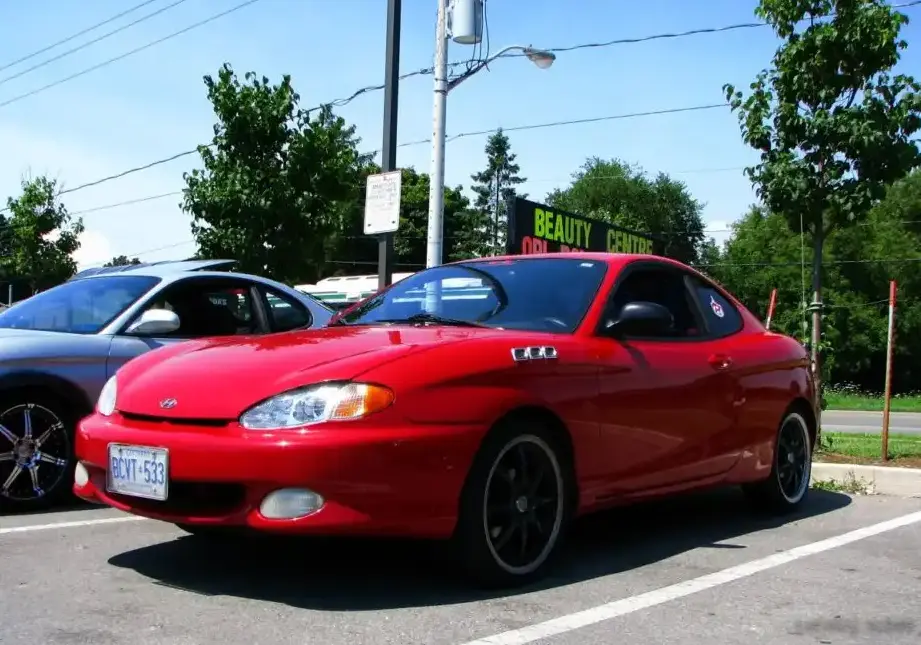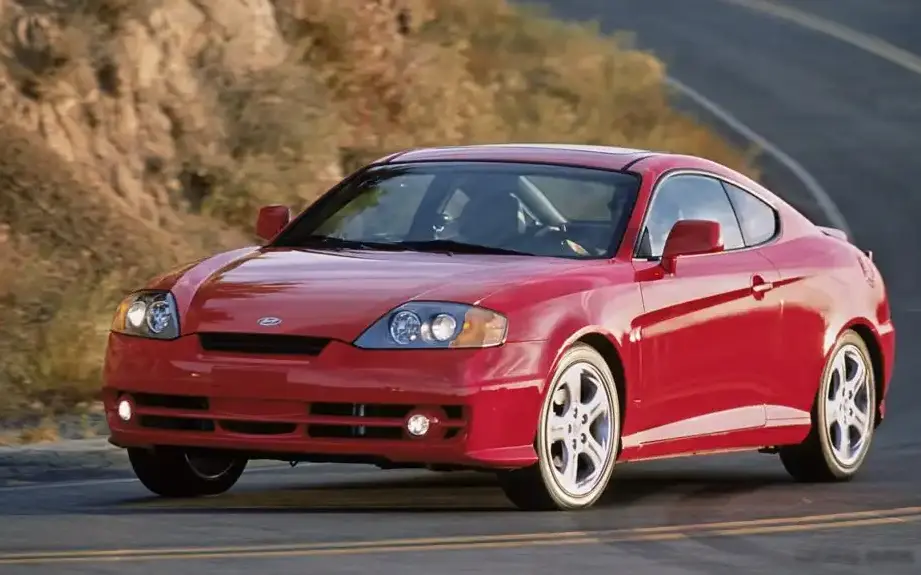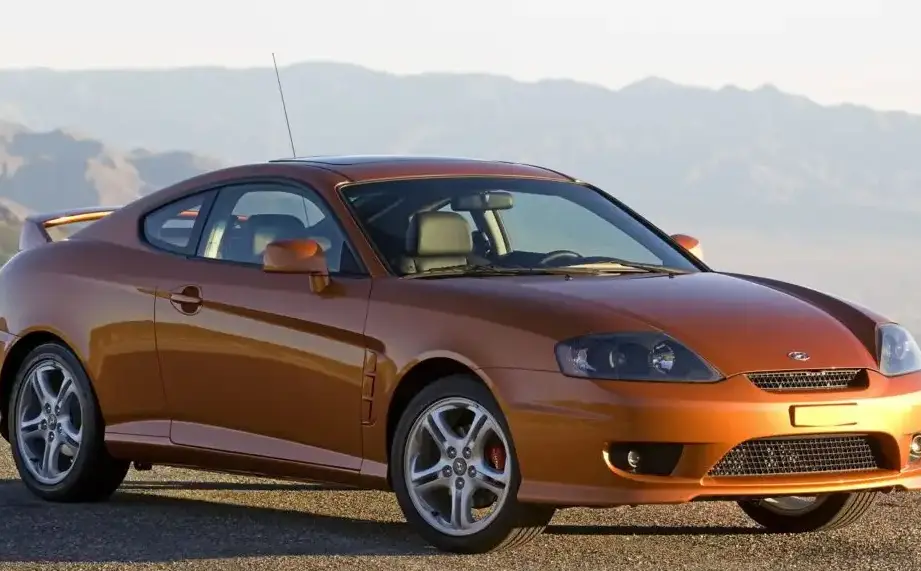
The Hyundai Tiburon II, specifically the facelifted version produced from 2004 to 2006, represented a significant step forward for Hyundai in terms of styling and performance. This generation, internally designated GK, aimed to attract a younger demographic with its sporty coupe design. Within the GK lineup, the 2.7-liter V6 engine paired with the “Shiftronic” four-speed automatic transmission occupied a mid-range position, offering a balance between performance and convenience. It sat above the base 2.0-liter inline-four models and below any potential limited-edition or higher-performance variants that were not widely released in the US market. The Tiburon II was Hyundai’s attempt to establish a foothold in the competitive North American sports coupe segment, challenging established players like the Honda Civic Coupe and Mitsubishi Eclipse.
Technical Specifications
| Brand | Hyundai |
| Model | Tiburon |
| Generation | Tiburon II (GK, facelift 2004) |
| Type (Engine) | 2.7 V6 (172 Hp) Shiftronic |
| Start of production | September, 2004 |
| End of production | 2006 |
| Powertrain Architecture | Internal Combustion engine |
| Body type | Coupe |
| Seats | 4 |
| Doors | 3 |
| Fuel consumption (urban) | 12.4 l/100 km (19 US mpg) |
| Fuel consumption (extra urban) | 9 l/100 km (26.1 US mpg) |
| Fuel Type | Petrol (Gasoline) |
| Weight-to-power ratio | 7.9 kg/Hp |
| Weight-to-torque ratio | 5.6 kg/Nm |
| Power | 172 Hp @ 6000 rpm |
| Power per litre | 64.8 Hp/l |
| Torque | 245 Nm @ 3800 rpm (180.7 lb.-ft. @ 3800 rpm) |
| Engine layout | Front, Transverse |
| Engine Model/Code | Delta / G6BA |
| Engine displacement | 2656 cm3 (162.08 cu. in.) |
| Number of cylinders | 6 |
| Engine configuration | V-engine |
| Cylinder Bore | 86.7 mm (3.41 in.) |
| Piston Stroke | 75 mm (2.95 in.) |
| Compression ratio | 10:1 |
| Number of valves per cylinder | 4 |
| Fuel injection system | Multi-port manifold injection |
| Engine aspiration | Naturally aspirated engine |
| Valvetrain | DOHC |
| Engine oil capacity | 4.5 l (4.76 US qt | 3.96 UK qt) |
| Coolant capacity | 8 l (8.45 US qt | 7.04 UK qt) |
| Kerb Weight | 1365 kg (3009.31 lbs.) |
| Trunk (boot) space | 419 l (14.8 cu. ft.) |
| Fuel tank capacity | 55 l (14.53 US gal | 12.1 UK gal) |
| Length | 4395 mm (173.03 in.) |
| Width | 1760 mm (69.29 in.) |
| Height | 1330 mm (52.36 in.) |
| Wheelbase | 2530 mm (99.61 in.) |
| Front track | 1490 mm (58.66 in.) |
| Rear track | 1490 mm (58.66 in.) |
| Drivetrain | Front wheel drive |
| Number of gears | 4 |
| Gearbox type | automatic transmission Shiftronic |
| Front suspension | Independent, type McPherson with coil spring and anti-roll bar |
| Rear suspension | Independent multi-link spring suspension with stabilizer |
| Front brakes | Ventilated discs |
| Rear brakes | Disc |
| Assisting systems | ABS (Anti-lock braking system) |
| Steering type | Steering rack and pinion |
| Power steering | Hydraulic Steering |
| Tires size | 215/45 R17 |
| Wheel rims size | 7J x 17 |
Powertrain & Engine Architecture
The heart of this Tiburon variant is the Hyundai Delta 2.7-liter V6 engine, bearing the code G6BA. This engine is a naturally aspirated, 60-degree V6 utilizing a cast iron block and aluminum cylinder heads. It employs multi-port fuel injection (MPI) to deliver fuel to each cylinder, and features a double overhead camshaft (DOHC) valvetrain with four valves per cylinder. This configuration allowed for reasonable power output and a relatively smooth power delivery. The engine produces 172 horsepower at 6000 rpm and 245 Nm (180.7 lb-ft) of torque at 3800 rpm. The “Shiftronic” transmission is a conventional four-speed automatic, but it includes a manual shift mode allowing the driver some control over gear selection. While not as sophisticated as modern transmissions with more gears, it was a step up from a purely automatic experience.
Driving Characteristics
The 2.7L V6 with the Shiftronic automatic provided a comfortable and reasonably responsive driving experience. Acceleration was adequate for everyday driving, but it wasn’t particularly quick compared to some of its competitors. The automatic transmission, while offering convenience, did detract somewhat from the sporty feel of the Tiburon. Gear changes weren’t always the quickest or smoothest, and the lack of a higher number of gears meant the engine could sometimes feel strained at highway speeds. The front-wheel-drive layout contributed to some torque steer under hard acceleration. Compared to the available manual transmission, the automatic version felt noticeably less engaging, but it appealed to buyers prioritizing ease of use over outright performance.
Equipment & Trim Levels
The 2.7 V6 Shiftronic Tiburon typically came with a decent level of standard equipment. This included air conditioning, power windows and locks, a CD player with multiple speakers, and alloy wheels. Interior upholstery was usually cloth, though leather was available as an option. Common optional extras included a sunroof, upgraded audio system, and side airbags. The dashboard layout was relatively straightforward, with clearly marked gauges and controls. The overall interior design aimed for a sporty aesthetic, but the materials used were generally of average quality for its price point.
Chassis & Braking
The Tiburon II utilized an independent suspension system at all four wheels. The front suspension employed McPherson struts with coil springs and an anti-roll bar, while the rear featured a multi-link setup with a stabilizer bar. This suspension configuration aimed to provide a balance between ride comfort and handling. Braking duties were handled by ventilated discs at the front and solid discs at the rear. Anti-lock Braking System (ABS) was standard, enhancing safety during emergency braking situations. The chassis was designed to be relatively lightweight, contributing to the car’s agility, but it wasn’t exceptionally rigid compared to more modern platforms.
Market Reception & Comparison
The 2.7L V6 Shiftronic Tiburon received mixed reviews from automotive critics. While the styling was generally praised, the performance of the automatic transmission was often criticized. Fuel economy was also a concern, with the EPA rating of 19 mpg city and 26 mpg highway being fairly typical for a V6 engine of that era, but not particularly impressive. Compared to the base 2.0-liter models, the V6 offered a significant power boost, but at the cost of increased fuel consumption. Compared to competitors like the Honda Civic Coupe or Mitsubishi Eclipse, the Tiburon offered a similar level of performance and features at a potentially lower price point, but lacked the brand recognition and established reputation of those rivals.
Legacy
The Hyundai Tiburon II, including the 2.7 V6 Shiftronic variant, has developed a modest following among enthusiasts. The Delta V6 engine is generally considered to be a reliable unit, although regular maintenance is crucial. The Shiftronic transmission, however, is sometimes reported to have issues with long-term durability. Today, these Tiburons can be found on the used car market at relatively affordable prices. They represent an interesting option for buyers looking for a stylish and reasonably sporty coupe from the early 2000s, but potential buyers should be aware of the potential for transmission issues and the age-related wear and tear common to vehicles of this era. The Tiburon II played a role in Hyundai’s evolution as a brand, demonstrating their ability to produce vehicles that were competitive in terms of design and features.