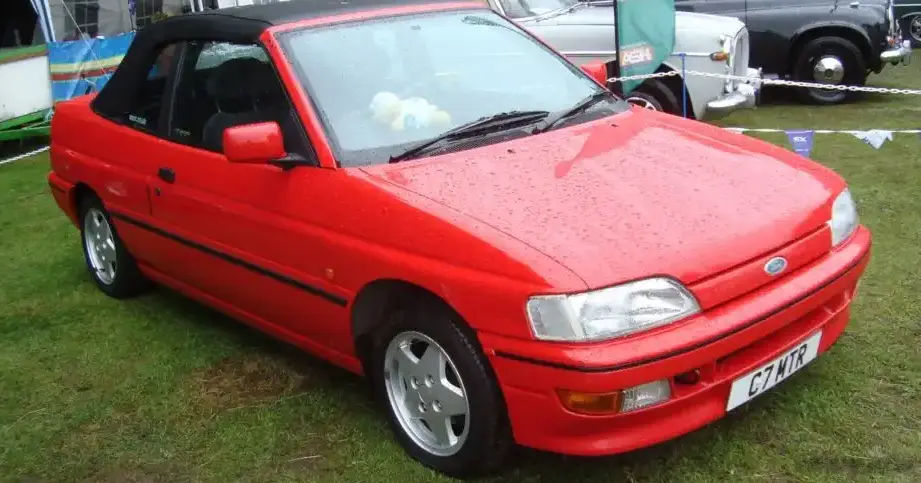
The Ford Escort V Cabrio 1.8 16V XR3i, produced briefly in 1992, represents a unique offering within the fifth generation of the Ford Escort. This variant, built on the Mk V Escort platform, aimed to provide a sporty, open-top experience. While the Escort V generation itself spanned from 1990 to 1993, the XR3i Cabriolet was a limited-run model, primarily intended for the European market. It combined the aesthetics of the XR3i trim level with the appeal of a convertible body style, offering a more premium experience than the base Escort Cabrio models.
Technical Specifications
| Brand | Ford |
| Model | Escort |
| Generation | Escort V Cabrio (ALL) |
| Type (Engine) | 1.8 16V XR3i (105 Hp) |
| Start of production | 1992 |
| End of production | 1992 |
| Powertrain Architecture | Internal Combustion engine |
| Body type | Cabriolet |
| Fuel Type | Petrol (Gasoline) |
| Power | 105 Hp |
| Engine Model/Code | RDA |
| Engine aspiration | Naturally aspirated engine |
| Engine oil capacity | 4.25 l (4.49 US qt | 3.74 UK qt) |
| Coolant capacity | 7 l (7.4 US qt | 6.16 UK qt) |
Powertrain & Engine Architecture
The heart of the Escort V Cabrio XR3i is the Ford RDA engine, an 1.8-liter, naturally aspirated inline-four cylinder powerplant. This engine featured a 16-valve cylinder head, contributing to its relatively high output for the time. The RDA engine was part of Ford’s Zetec engine family, known for its improved breathing and responsiveness compared to earlier Ford engines. Fuel delivery was managed by a Bosch fuel injection system, providing precise control over the air-fuel mixture. The engine utilized a single overhead camshaft (SOHC) design, simplifying the valvetrain and reducing weight.
The XR3i Cabriolet was exclusively offered with a four-speed automatic transmission. This transmission, while providing ease of use, was a key differentiator from the manual transmission options available in other XR3i models. The automatic transmission was chosen to appeal to buyers seeking a more comfortable and relaxed driving experience, particularly suited for open-top motoring. The transmission’s gear ratios were tuned for a balance between acceleration and fuel efficiency, though it didn’t offer the same level of driver engagement as a manual gearbox.
Driving Characteristics
The 105 horsepower output of the 1.8-liter engine, coupled with the four-speed automatic transmission, resulted in a driving experience that prioritized comfort and usability over outright performance. Acceleration was adequate for everyday driving, but noticeably slower than the manual transmission XR3i variants. The automatic transmission, while smooth, did exhibit some inherent power loss compared to a manual, and the gear changes weren’t particularly quick or sporty. The car’s weight, typical for a convertible of the era, further impacted its acceleration and handling.
Steering was relatively light, making it easy to maneuver in urban environments. The suspension, while tuned for a slightly firmer ride than the standard Escort Cabrio, still prioritized comfort. The XR3i trim did include a slightly lowered suspension and stiffer springs compared to base models, improving handling and reducing body roll, but it wasn’t a dedicated sports suspension. The overall driving experience was best described as refined and enjoyable, rather than exhilarating.
Equipment & Trim Levels
The XR3i trim level placed the Cabriolet variant in the upper-mid range of the Escort lineup. Standard equipment included features such as power steering, central locking, electric front windows, and a decent audio system. The interior featured sport seats upholstered in a unique cloth pattern, differentiating it from the more basic Escort Cabrio models. A leather-wrapped steering wheel and gearshift knob were also standard. The dashboard featured a revised instrument cluster with additional gauges, including a voltmeter and oil pressure gauge.
Optional extras included a sunroof (in addition to the convertible top), upgraded audio systems, and alloy wheels. Metallic paint options were also available at an extra cost. The XR3i trim also included body-colored bumpers and side skirts, giving it a more sporty appearance. The convertible top itself was a manually operated soft top, available in a range of colors.
Chassis & Braking
The Escort V Cabriolet utilized a MacPherson strut front suspension and a semi-independent twist beam rear suspension. This setup was a common configuration for front-wheel-drive cars of the era, offering a good balance between cost, weight, and handling. The XR3i trim included a slightly thicker front stabilizer bar compared to base models, reducing body roll during cornering.
Braking was handled by disc brakes on the front wheels and drum brakes on the rear wheels. This configuration was typical for Escorts of this period, and provided adequate stopping power for everyday driving. Anti-lock braking system (ABS) was available as an optional extra, enhancing safety in slippery conditions. The steering system was a rack-and-pinion setup, providing precise and responsive steering feel.
Market Reception & Comparison
The Escort V Cabrio XR3i was generally well-received by automotive critics, who praised its sporty styling and comfortable ride. However, the automatic transmission was a point of contention for some reviewers, who felt that it detracted from the overall driving experience. Compared to the manual transmission XR3i models, the automatic version offered less performance and driver engagement.
Fuel economy was comparable to other 1.8-liter Escort models, averaging around 28-32 mpg in mixed driving conditions. Reliability was generally good, although the automatic transmission could be prone to issues if not properly maintained. The XR3i Cabriolet was positioned as a more premium alternative to the base Escort Cabrio models, and its price reflected this. It competed with other small convertibles of the era, such as the Peugeot 205 Cabriolet and the Renault 5 Cabriolet.
Legacy
The Ford Escort V Cabrio XR3i, despite its short production run, has become a sought-after classic among Ford enthusiasts. The combination of sporty styling, comfortable ride, and open-top motoring appeal makes it a desirable collector’s item. The RDA engine is known for its durability and relatively simple maintenance requirements. However, finding parts for these cars can be challenging, as they are no longer in production.
The automatic transmission, while not as desirable as the manual version, is still relatively reliable if properly maintained. Today, well-maintained examples of the Escort V Cabrio XR3i command a premium price in the used car market. The car represents a unique chapter in Ford’s history, and a testament to the enduring appeal of the Escort nameplate. Its limited production numbers contribute to its collectibility and ensure its place as a memorable vehicle from the early 1990s.