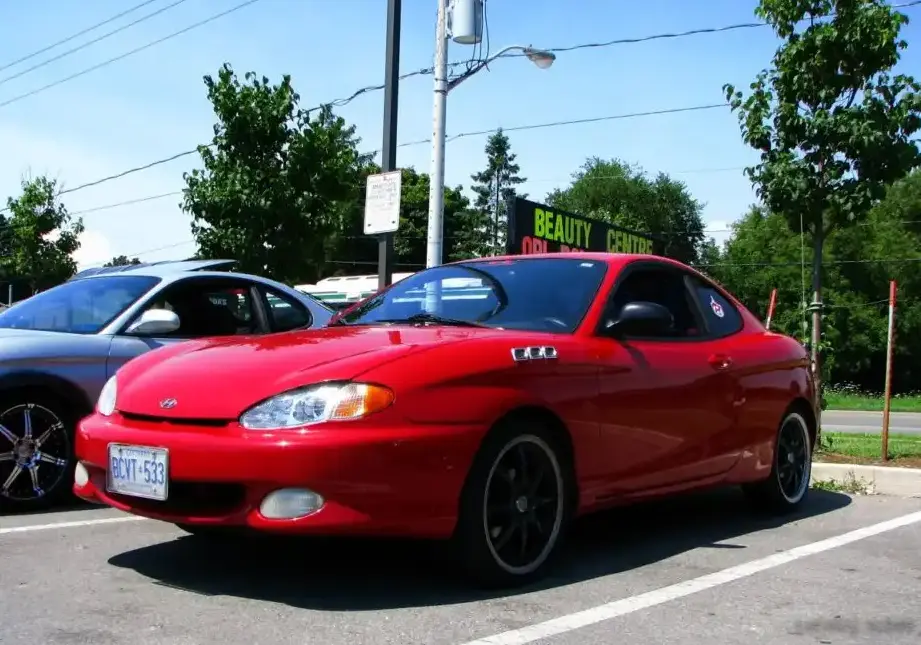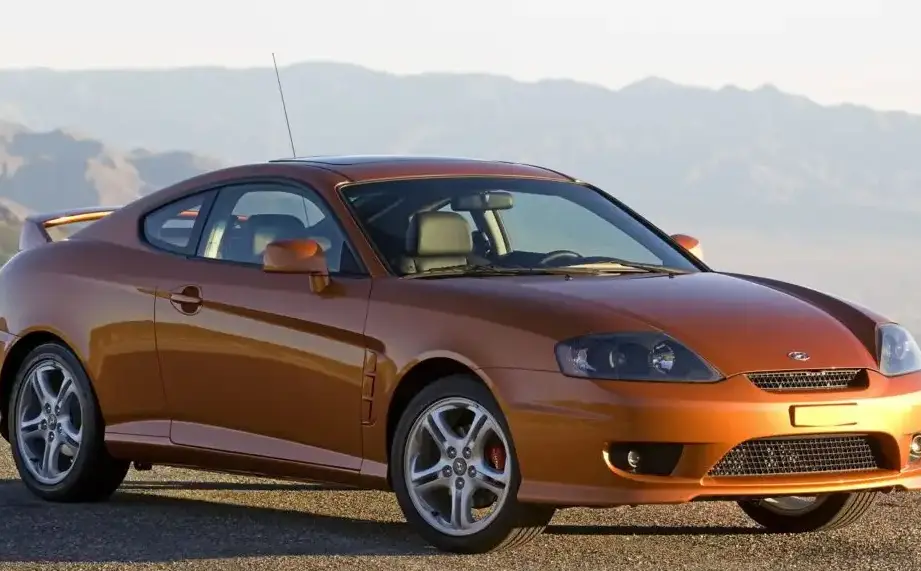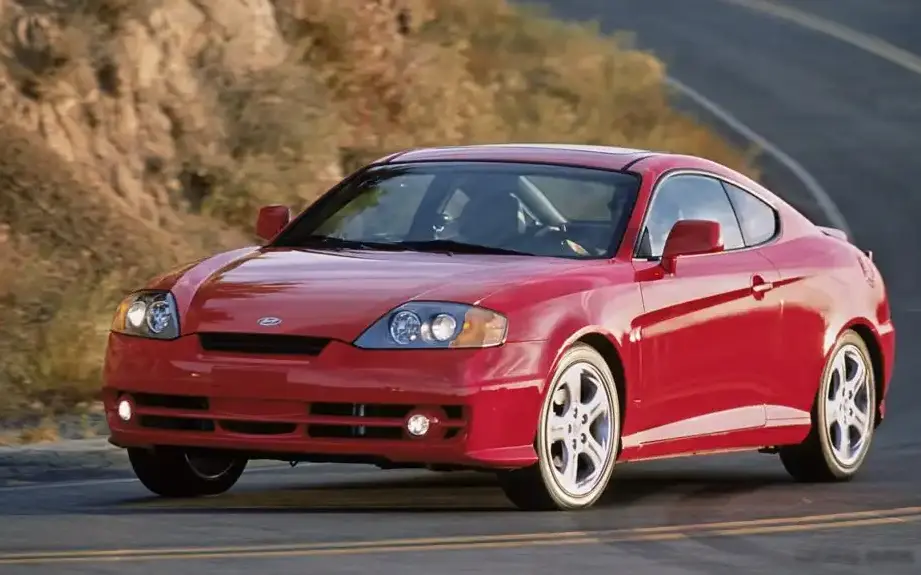
The Hyundai Tiburon II (GK) GT 2.7 V6, produced from 2002 to 2004, represented the top performance offering within the second generation Tiburon lineup. Positioned as the flagship model, it aimed to provide a sporty and relatively affordable coupe experience for the North American market, where the Tiburon found its greatest success. The GK generation, built on the Hyundai’s Y2 platform, sought to move the Tiburon upmarket with more refined styling and improved performance compared to its predecessor. This 2.7L V6 variant, paired with a 5-speed manual transmission, was designed to appeal to enthusiasts seeking a blend of power and driver engagement.
Technical Specifications
| Brand | Hyundai |
| Model | Tiburon |
| Generation | Tiburon II (GK) |
| Type (Engine) | GT 2.7 V6 (172 Hp) Manual 5-speed |
| Start of production | 2002 |
| End of production | 2004 |
| Powertrain Architecture | Internal Combustion engine |
| Body type | Coupe |
| Seats | 4 |
| Doors | 3 |
| Fuel consumption (urban) | 12.4 l/100 km (19 US mpg) |
| Fuel consumption (extra urban) | 9 l/100 km (26.1 US mpg) |
| Fuel Type | Petrol (Gasoline) |
| Weight-to-power ratio | 8 kg/Hp |
| Weight-to-torque ratio | 5.6 kg/Nm |
| Power | 172 Hp @ 6000 rpm |
| Power per litre | 64.8 Hp/l |
| Torque | 245 Nm @ 4000 rpm (180.7 lb.-ft. @ 4000 rpm) |
| Engine layout | Front, Transverse |
| Engine Model/Code | Delta / G6BA |
| Engine displacement | 2656 cm3 (162.08 cu. in.) |
| Number of cylinders | 6 |
| Engine configuration | V-engine |
| Cylinder Bore | 86.7 mm (3.41 in.) |
| Piston Stroke | 75 mm (2.95 in.) |
| Compression ratio | 10:1 |
| Number of valves per cylinder | 4 |
| Fuel injection system | Multi-port manifold injection |
| Engine aspiration | Naturally aspirated engine |
| Valvetrain | DOHC |
| Engine oil capacity | 4.5 l (4.76 US qt | 3.96 UK qt) |
| Coolant capacity | 8 l (8.45 US qt | 7.04 UK qt) |
| Kerb Weight | 1368 kg (3015.92 lbs.) |
| Trunk (boot) space | 416 l (14.69 cu. ft.) |
| Fuel tank capacity | 55 l (14.53 US gal | 12.1 UK gal) |
| Length | 4395 mm (173.03 in.) |
| Width | 1760 mm (69.29 in.) |
| Height | 1330 mm (52.36 in.) |
| Wheelbase | 2530 mm (99.61 in.) |
| Front track | 1490 mm (58.66 in.) |
| Rear track | 1490 mm (58.66 in.) |
| Drivetrain | Front wheel drive |
| Number of gears | 5 |
| Gearbox type | Manual transmission |
| Front suspension | Independent, McPherson with coil spring and anti-roll bar |
| Rear suspension | Independent multi-link spring suspension with stabilizer |
| Front brakes | Ventilated discs |
| Rear brakes | Disc |
| Assisting systems | ABS (Anti-lock braking system) |
| Steering type | Steering rack and pinion |
| Power steering | Hydraulic |
| Tires size | 215/45 R17 |
| Wheel rims size | 7J x 17 |
Powertrain & Engine Architecture
The heart of the Tiburon GT 2.7 V6 is the Hyundai Delta engine, specifically the G6BA code. This 2.7-liter, 60-degree V6 engine utilizes a cast iron block with an aluminum cylinder head. It features dual overhead camshafts (DOHC) and four valves per cylinder, contributing to its relatively high power output for its displacement. Fuel delivery is managed by a multi-port fuel injection system, providing precise fuel metering for optimal combustion. The engine’s 172 horsepower and 180.7 lb-ft of torque were respectable figures for a front-wheel-drive coupe in the early 2000s. The 5-speed manual transmission was a Getrag unit, known for its durability and precise shift feel. This transmission was chosen to complement the V6’s power delivery and provide a more engaging driving experience compared to the available 4-speed automatic.
Driving Characteristics
The 2.7L V6 with the 5-speed manual offered a noticeable step up in performance compared to the base 2.0L four-cylinder Tiburon. Acceleration was brisk, and the engine provided a smooth and linear power delivery. The manual transmission allowed for precise control over the engine’s power band, making it enjoyable to drive on winding roads. While not a track-focused machine, the Tiburon GT 2.7 V6 provided a satisfying level of performance for everyday driving and spirited weekend excursions. The front-wheel-drive configuration, however, could exhibit some torque steer under hard acceleration. The gear ratios were tuned for a balance between acceleration and fuel economy, with fifth gear serving as an overdrive for comfortable highway cruising.
Equipment & Trim Levels
The GT trim level came standard with a number of features designed to enhance the driving experience and provide a degree of luxury. These included sport seats with unique upholstery, a leather-wrapped steering wheel, power windows and locks, and an upgraded audio system. Optional extras included a sunroof, premium sound system, and alloy wheels. The interior design was generally considered modern for its time, with a driver-focused layout and clear instrumentation. The GT also featured unique exterior styling cues, such as a rear spoiler and body-colored side skirts, to differentiate it from the lower trim levels.
Chassis & Braking
The Tiburon II utilized an independent suspension system at all four wheels. The front suspension employed McPherson struts with coil springs and an anti-roll bar, while the rear featured a multi-link setup with a stabilizer bar. This suspension configuration provided a good balance between ride comfort and handling. The braking system consisted of ventilated discs at the front and solid discs at the rear. Anti-lock brakes (ABS) were standard, enhancing safety and control during emergency braking situations. The chassis was reinforced compared to the first-generation Tiburon, improving rigidity and handling precision.
Market Reception & Comparison
The Tiburon GT 2.7 V6 was generally well-received by automotive critics, who praised its sporty styling, strong engine performance, and relatively affordable price. However, some reviewers noted the interior materials weren’t quite as refined as those found in some of its Japanese and European competitors. Compared to the base 2.0L Tiburon, the GT offered a significant performance upgrade, but at a higher price point. It competed with other sporty coupes of the era, such as the Honda Civic Si, Acura RSX, and Mitsubishi Eclipse. In terms of fuel economy, the 2.7L V6 naturally consumed more fuel than the 2.0L four-cylinder, but it offered a more rewarding driving experience.
Legacy
The Hyundai Tiburon II, particularly the GT 2.7 V6 variant, has developed a modest following among enthusiasts. The G6BA engine is generally considered reliable, although regular maintenance is crucial. Common issues include oil leaks and occasional sensor failures. The 5-speed manual transmission is also known for its durability. Today, well-maintained examples of the Tiburon GT 2.7 V6 can be found on the used car market at relatively affordable prices. While it may not possess the prestige of some of its competitors, the Tiburon offers a unique blend of style, performance, and value, making it an appealing option for those seeking a sporty and affordable coupe.