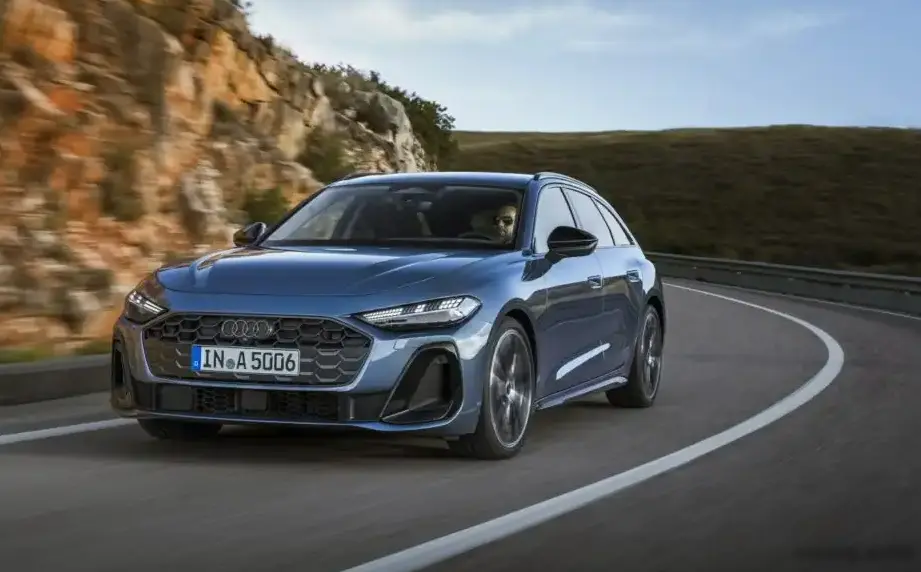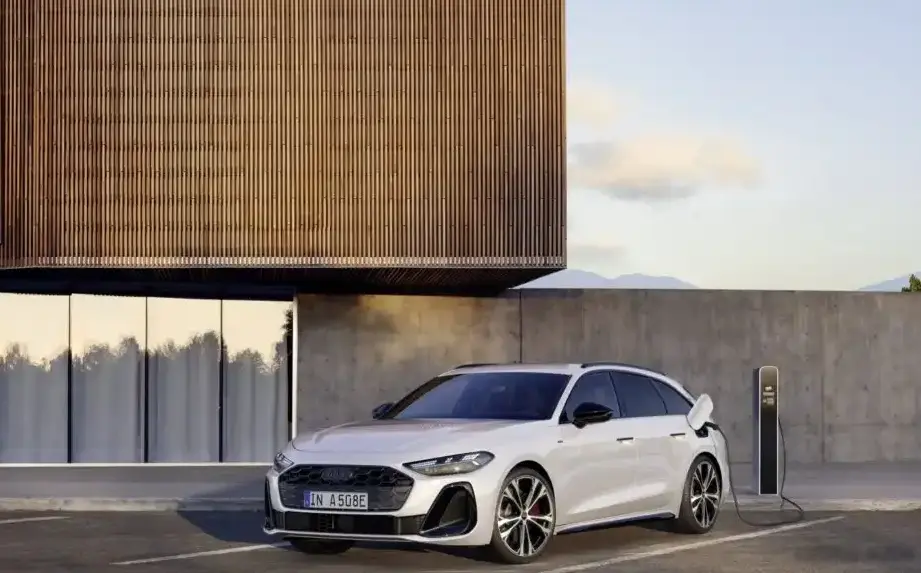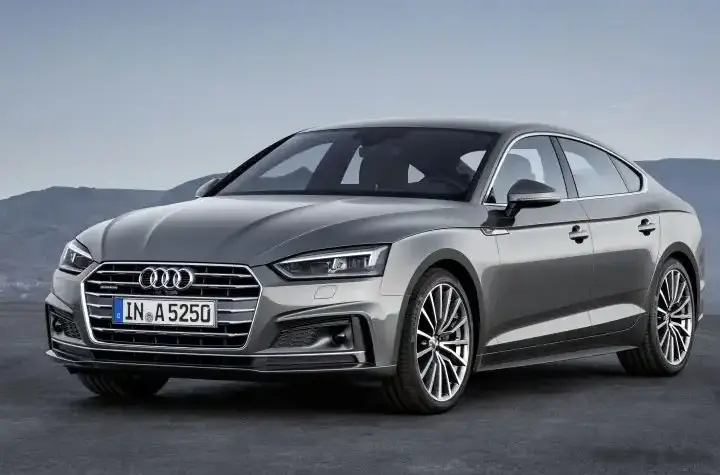
The Audi A5 Sportback (F5) 50 TDI quattro tiptronic represents a compelling blend of performance, efficiency, and practicality within the Audi A5 lineup. Introduced in February 2019 and continuing through October of the same year, this variant occupied a mid-to-upper position in the Sportback range, offering a significant step up in power and refinement compared to lower-trim models. It’s built on the A5 (F5) platform, sharing its underpinnings with the A4 and Q5, and aimed at buyers seeking a sporty yet comfortable grand tourer with all-weather capability. The Sportback body style, a five-door fastback, distinguishes itself from the coupe and cabriolet versions by offering enhanced rear passenger access and cargo space.
Technical Specifications
| Brand | Audi |
| Model | A5 |
| Generation | A5 Sportback (F5) |
| Type (Engine) | 50 TDI (286 Hp) quattro tiptronic |
| Start of production | February, 2019 |
| End of production | October, 2019 |
| Powertrain Architecture | Internal Combustion engine |
| Body type | Fastback |
| Seats | 5 |
| Doors | 5 |
| Fuel consumption (urban) | 7-7.2 l/100 km (33.6 – 32.7 US mpg, 40.4 – 39.2 UK mpg, 14.3 – 13.9 km/l) |
| Fuel consumption (extra urban) | 5.1-5.4 l/100 km (46.1 – 43.6 US mpg, 55.4 – 52.3 UK mpg, 19.6 – 18.5 km/l) |
| Fuel consumption (combined) | 5.8-6.1 l/100 km (40.6 – 38.6 US mpg, 48.7 – 46.3 UK mpg, 17.2 – 16.4 km/l) |
| CO2 emissions | 153-159 g/km |
| Fuel Type | Diesel |
| Acceleration 0 – 100 km/h | 5.3 sec |
| Acceleration 0 – 62 mph | 5.3 sec |
| Acceleration 0 – 60 mph | 5 sec (Calculated) |
| Maximum speed | 250 km/h (155.34 mph) – Electronically limited |
| Emission standard | Euro 6 |
| Weight-to-power ratio | 5.9 kg/Hp, 168.2 Hp/tonne |
| Weight-to-torque ratio | 2.7 kg/Nm, 364.7 Nm/tonne |
| Power | 286 Hp @ 3500-4000 rpm |
| Torque | 620 Nm @ 2250-3000 rpm (457.29 lb.-ft. @ 2250-3000 rpm) |
| Engine layout | Front, Longitudinal |
| Engine Model/Code | DCPC |
| Engine displacement | 2967 cm3 (181.06 cu. in.) |
| Number of cylinders | 6 |
| Engine configuration | V-engine |
| Cylinder Bore | 83 mm (3.27 in.) |
| Piston Stroke | 91.4 mm (3.6 in.) |
| Compression ratio | 16:1 |
| Number of valves per cylinder | 4 |
| Fuel injection system | Diesel Commonrail |
| Engine aspiration | Turbocharger, Intercooler |
| Valvetrain | DOHC |
| Engine oil capacity | 6.1 l (6.45 US qt | 5.37 UK qt) |
| Kerb Weight | 1700 kg (3747.86 lbs.) |
| Max. weight | 2315 kg (5103.7 lbs.) |
| Max load | 615 kg (1355.84 lbs.) |
| Trunk (boot) space – minimum | 480 l (16.95 cu. ft.) |
| Fuel tank capacity | 58 l (15.32 US gal | 12.76 UK gal) |
| AdBlue tank | 12 l (3.17 US gal | 2.64 UK gal) |
| Max. roof load | 90 kg (198.42 lbs.) |
| Permitted trailer load with brakes (8%) | 2100 kg (4629.71 lbs.) |
| Permitted trailer load with brakes (12%) | 1900 kg (4188.78 lbs.) |
| Permitted trailer load without brakes | 750 kg (1653.47 lbs.) |
| Permitted towbar download | 80 kg (176.37 lbs.) |
| Length | 4733 mm (186.34 in.) |
| Width | 1843 mm (72.56 in.) |
| Width including mirrors | 2029 mm (79.88 in.) |
| Height | 1386 mm (54.57 in.) |
| Wheelbase | 2824 mm (111.18 in.) |
| Front track | 1587 mm (62.48 in.) |
| Rear track | 1568 mm (61.73 in.) |
| Front overhang | 878 mm (34.57 in.) |
| Rear overhang | 1031 mm (40.59 in.) |
| Drag coefficient (Cd) | 0.27 |
| Minimum turning circle | 11.7 m (38.39 ft.) |
| Drivetrain Architecture | ICE to all wheels |
| Drive wheel | All wheel drive (4×4) |
| Number of gears | 8 |
| Gearbox type | automatic transmission tiptronic |
| Front suspension | Independent multi-link suspension |
| Rear suspension | Independent multi-link suspension |
| Front brakes | Ventilated discs |
| Rear brakes | Disc |
| Assisting systems | ABS (Anti-lock braking system) |
| Steering type | Steering rack and pinion |
| Power steering | Electric Steering |
| Tires size | 225/50 R17; 245/40 R18 |
| Wheel rims size | 7.5J x 17; 8.5J x 18 |
Powertrain & Engine Architecture
The heart of the A5 Sportback 50 TDI is the 3.0-liter V6 diesel engine, designated DCPC. This engine is a member of Audi’s modular engine family, known for its robust construction and sophisticated technology. It utilizes a common rail direct injection system, delivering fuel at extremely high pressures for optimized combustion. The engine employs a single turbocharger with an intercooler to boost power and efficiency. The valvetrain features Dual Overhead Camshafts (DOHC) and four valves per cylinder, contributing to its strong performance across the rev range. Paired with this engine is an eight-speed tiptronic automatic transmission, known for its smooth shifts and quick response. This transmission allows for both fully automatic operation and manual gear selection via steering wheel-mounted paddles or the gear selector. The quattro all-wheel-drive system distributes power between the front and rear axles as needed, providing excellent traction in all conditions.
Driving Characteristics
The 50 TDI powertrain delivers a refined and powerful driving experience. The 620 Nm (457.29 lb-ft) of torque, available from 2250-3000 rpm, provides strong acceleration in any gear. The 0-60 mph sprint takes approximately 5 seconds, making it a genuinely quick vehicle. The eight-speed tiptronic transmission is well-matched to the engine, offering seamless gear changes and contributing to relaxed cruising at highway speeds. Compared to the lower-powered 2.0-liter four-cylinder variants, the 50 TDI offers significantly more effortless performance and a more composed feel, especially when fully loaded or tackling inclines. While not as overtly sporty as the S5 models, the 50 TDI provides a satisfying balance of performance and comfort. The quattro all-wheel drive system inspires confidence in adverse weather conditions, providing enhanced stability and grip.
Equipment & Trim Levels
The A5 Sportback 50 TDI quattro tiptronic typically came well-equipped as standard. Features included Audi’s MMI infotainment system with a 7-inch display, tri-zone automatic climate control, leather upholstery, and a power liftgate. Optional extras included a larger 10.1-inch MMI touch response display, a Bang & Olufsen sound system, adaptive cruise control, a head-up display, and various driver assistance systems such as lane keep assist and blind spot monitoring. Interior trim options ranged from brushed aluminum to wood veneers, allowing buyers to personalize the cabin to their taste.
Chassis & Braking
The A5 Sportback 50 TDI features a sophisticated chassis designed to balance comfort and handling. It utilizes an independent multi-link suspension at both the front and rear, providing a smooth and controlled ride. The suspension is tuned to be slightly firmer than that of the A4 sedan, reflecting the Sportback’s more sporting aspirations. Braking duties are handled by ventilated discs at the front and solid discs at the rear. The anti-lock braking system (ABS) and electronic stability control (ESC) are standard features, enhancing safety and stability. The steering is a rack-and-pinion system with electric power assistance, providing precise and responsive steering feel.
Market Reception & Comparison
The A5 Sportback 50 TDI quattro tiptronic was generally well-received by automotive critics. It was praised for its powerful and refined engine, comfortable ride, and practical body style. Fuel economy was also a strong point, with combined figures ranging from 5.8-6.1 l/100 km (40.6 – 38.6 US mpg). Compared to the 2.0-liter TDI variants, the 50 TDI offered a significant performance upgrade, but at a higher price point. The V6 engine also tended to be more durable and less prone to issues than the four-cylinder units. Against competitors such as the BMW 4 Series Gran Coupe and the Mercedes-Benz C-Class Coupe, the A5 Sportback 50 TDI offered a compelling combination of style, performance, and technology.
Legacy
The 3.0-liter V6 TDI engine found in the A5 Sportback 50 TDI has proven to be a reliable and durable powertrain. While diesel engines have faced increased scrutiny in recent years, this particular engine has a good reputation for longevity, provided it is properly maintained. On the used car market, the A5 Sportback 50 TDI quattro tiptronic remains a desirable option for buyers seeking a refined and capable grand tourer. Its combination of performance, efficiency, and practicality continues to appeal to a wide range of drivers. Regular servicing, including oil changes and filter replacements, is crucial to maintaining the engine’s health and ensuring its long-term reliability.