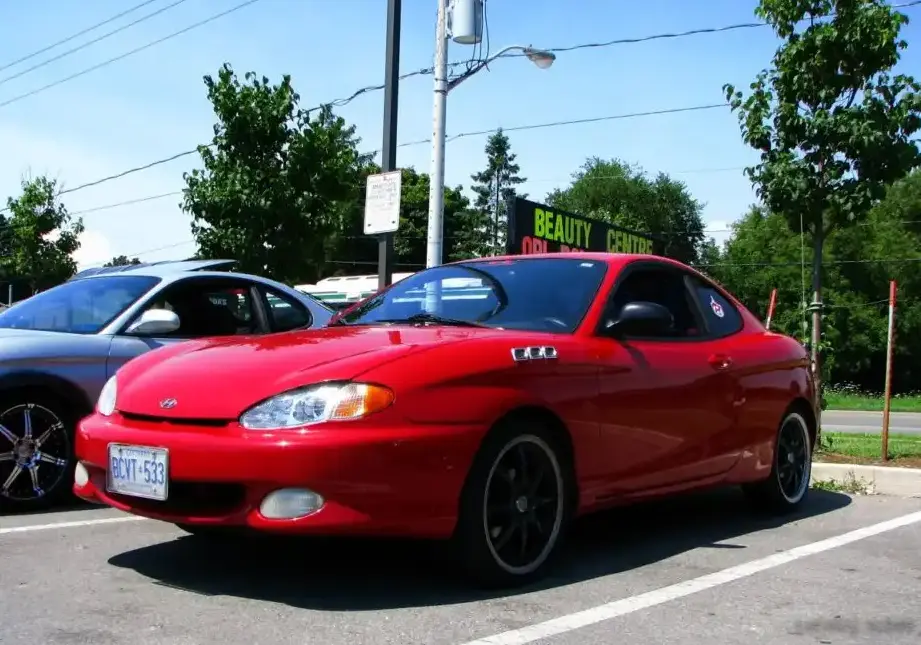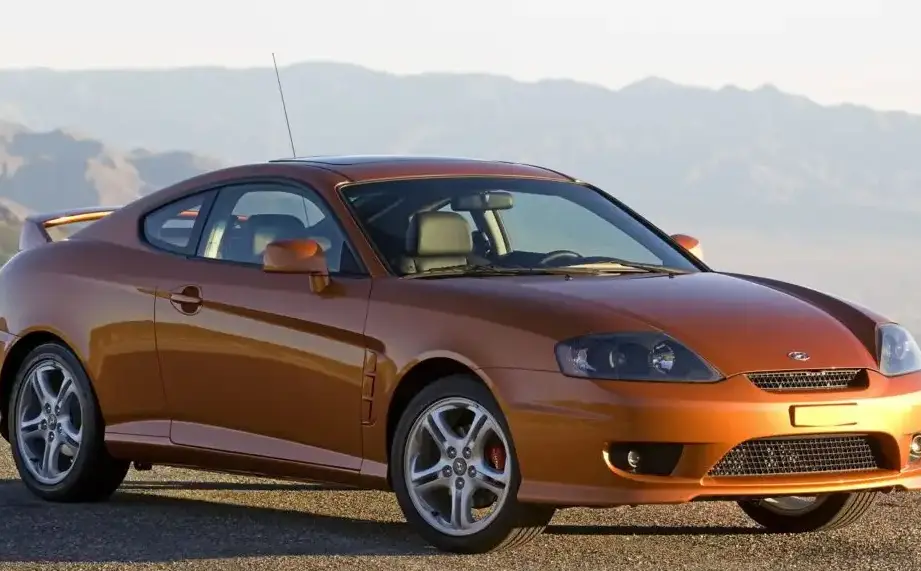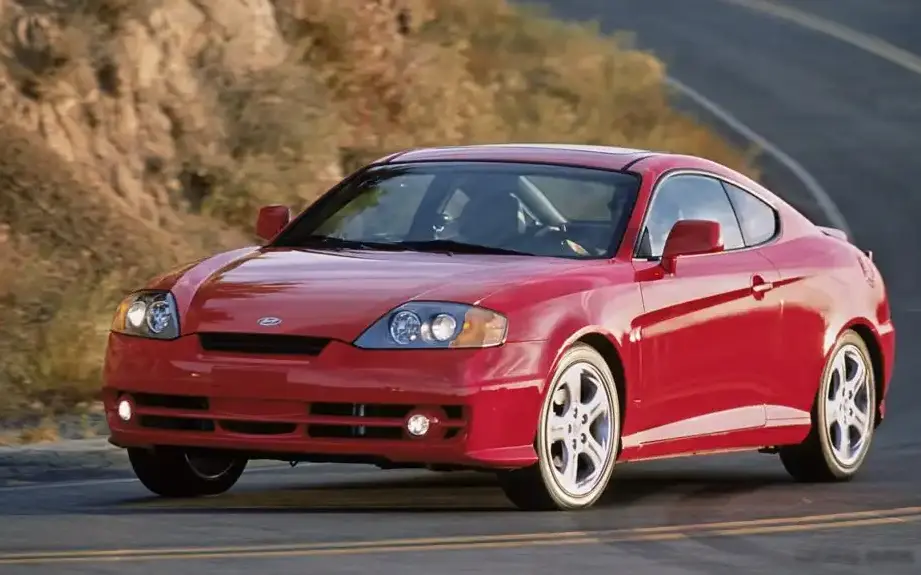
The Hyundai Tiburon II (GK) GT 2.7 V6 Shiftronic, produced from 2002 to 2004, represented the top-tier performance offering within the second generation Tiburon lineup. Positioned as the flagship model, it aimed to provide a more engaging driving experience compared to the base 2.0L trims. The GK generation Tiburon, built on the Hyundai’s Y2 platform, was a significant departure from the first generation, adopting a more aggressive and modern coupe design. This 2.7L V6 variant was primarily marketed towards enthusiasts seeking a sporty and relatively affordable coupe. It was sold exclusively in North America and select international markets.
Technical Specifications
| Brand | Hyundai |
| Model | Tiburon |
| Generation | Tiburon II (GK) |
| Type (Engine) | GT 2.7 V6 (172 Hp) Shiftronic |
| Start of production | 2002 |
| End of production | 2004 |
| Powertrain Architecture | Internal Combustion engine |
| Body type | Coupe |
| Seats | 4 |
| Doors | 3 |
| Fuel consumption (economy) – urban (EPA) | 11.8 l/100 km (19.9 US mpg) |
| Fuel consumption (economy) – extra urban (EPA) | 9 l/100 km (26.1 US mpg) |
| Fuel Type | Petrol (Gasoline) |
| Weight-to-power ratio | 8 kg/Hp, 124.7 Hp/tonne |
| Weight-to-torque ratio | 5.6 kg/Nm, 177.7 Nm/tonne |
| Power | 172 Hp @ 6000 rpm |
| Power per litre | 64.8 Hp/l |
| Torque | 245 Nm @ 4000 rpm (180.7 lb.-ft. @ 4000 rpm) |
| Engine layout | Front, Transverse |
| Engine Model/Code | Delta / G6BA |
| Engine displacement | 2656 cm3 (162.08 cu. in.) |
| Number of cylinders | 6 |
| Engine configuration | V-engine |
| Cylinder Bore | 86.7 mm (3.41 in.) |
| Piston Stroke | 75 mm (2.95 in.) |
| Compression ratio | 10:1 |
| Number of valves per cylinder | 4 |
| Fuel injection system | Multi-port manifold injection |
| Engine aspiration | Naturally aspirated engine |
| Valvetrain | DOHC |
| Engine oil capacity | 4.5 l (4.76 US qt | 3.96 UK qt) |
| Coolant | 8 l (8.45 US qt | 7.04 UK qt) |
| Kerb Weight | 1379 kg (3040.17 lbs.) |
| Trunk (boot) space – minimum | 416 l (14.69 cu. ft.) |
| Fuel tank capacity | 55 l (14.53 US gal | 12.1 UK gal) |
| Length | 4395 mm (173.03 in.) |
| Width | 1760 mm (69.29 in.) |
| Height | 1330 mm (52.36 in.) |
| Wheelbase | 2530 mm (99.61 in.) |
| Front track | 1490 mm (58.66 in.) |
| Rear (Back) track | 1490 mm (58.66 in.) |
| Drivetrain Architecture | The Internal combustion engine (ICE) drives the front wheels of the vehicle. |
| Drive wheel | Front wheel drive |
| Number of gears and type of gearbox | 4 gears, automatic transmission Shiftronic |
| Front suspension | Independent, type McPherson with coil spring and anti-roll bar |
| Rear suspension | Independent multi-link spring suspension with stabilizer |
| Front brakes | Ventilated discs |
| Rear brakes | Disc |
| Assisting systems | ABS (Anti-lock braking system) |
| Steering type | Steering rack and pinion |
| Power steering | Hydraulic Steering |
| Tires size | 215/45 R17 |
| Wheel rims size | 7J x 17 |
Powertrain & Engine Architecture
The heart of the Tiburon GT 2.7 V6 was the Hyundai Delta engine, specifically the G6BA code. This 2.7-liter, 60-degree V6 engine featured a dual overhead camshaft (DOHC) valvetrain with four valves per cylinder. It utilized a multi-port fuel injection system, delivering fuel directly into the intake ports. The engine produced 172 horsepower at 6000 rpm and 245 Nm (180.7 lb-ft) of torque at 4000 rpm. The ‘Shiftronic’ transmission was a four-speed automatic with a manual shift mode, allowing drivers some control over gear selection. While not a particularly advanced transmission by modern standards, it was a step up from the simpler automatics found in lower trims.
Driving Characteristics
The 2.7L V6 Shiftronic Tiburon offered a noticeable performance increase over the base 2.0L models. Acceleration was brisk, though not exceptionally quick by contemporary sports coupe standards. The four-speed automatic transmission, while offering convenience, did detract somewhat from the driving experience. Gear changes weren’t always the quickest or smoothest, and the lack of more gears meant the engine could sometimes feel strained at higher speeds. The front-wheel-drive layout, while common for its class, limited the car’s handling capabilities compared to rear-wheel-drive competitors. The suspension was tuned for a balance between comfort and handling, providing a reasonably compliant ride without feeling overly soft in corners.
Equipment & Trim Levels
The GT 2.7 V6 Shiftronic trim came standard with a number of features designed to enhance the driving experience and comfort. These included air conditioning, power windows and locks, a CD player with multiple speakers, and alloy wheels. Interior upholstery was typically cloth, though leather was available as an option. Optional extras included a sunroof, upgraded sound system, and anti-theft alarm. The dashboard featured a sporty design with metallic accents and well-placed controls. The GT trim also included unique exterior styling cues, such as a rear spoiler and body-colored side skirts.
Chassis & Braking
The Tiburon GT 2.7 V6 utilized an independent McPherson strut suspension in the front and an independent multi-link suspension in the rear. This setup provided a good balance of ride comfort and handling. The front brakes were ventilated discs, offering good stopping power, while the rear brakes were solid discs. Anti-lock Braking System (ABS) was standard, enhancing safety. The steering was a rack-and-pinion system with hydraulic power assistance, providing responsive and precise steering feel. The standard tire size was 215/45 R17, mounted on 7J x 17 inch alloy wheels.
Market Reception & Comparison
The Tiburon GT 2.7 V6 Shiftronic was generally well-received by automotive critics as a stylish and affordable coupe. However, the automatic transmission was often criticized for its lack of responsiveness compared to the available five-speed manual. Fuel economy was average for its class, with EPA estimates of 19.9 mpg city and 26.1 mpg highway. Compared to other coupes in its price range, such as the Honda Civic Si or the Nissan Sentra SE-R Spec V, the Tiburon offered a more powerful engine but less refined handling. The 2.0L Tiburon trims offered better fuel economy and a lower purchase price, while being more economical to maintain.
Legacy
The Hyundai Tiburon II (GK) GT 2.7 V6 Shiftronic, while not a groundbreaking vehicle, holds a place in automotive history as a stylish and relatively affordable performance coupe. The Delta 2.7L V6 engine proved to be reasonably reliable, although regular maintenance is crucial to prevent issues such as oil leaks and timing belt failures. On the used car market today, these Tiburons are often sought after by enthusiasts looking for a unique and affordable coupe. Their relatively low price and distinctive styling make them an attractive option for those seeking a sporty and eye-catching vehicle. However, potential buyers should be aware of the potential for age-related issues and the limitations of the four-speed automatic transmission.