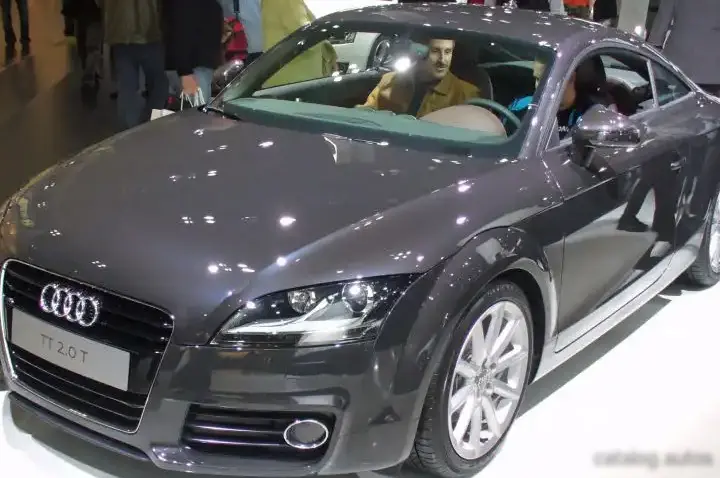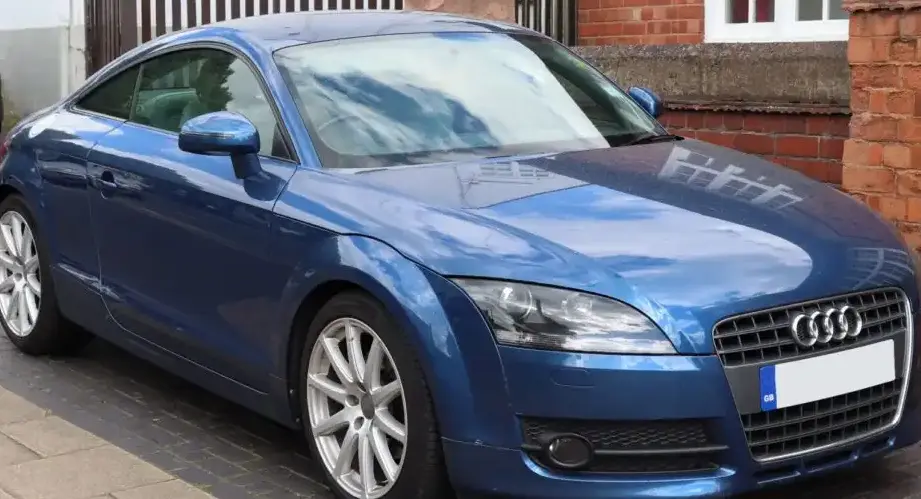
The Audi TT Coupe (8J) 2.0 TFSI, produced from 2006 to 2010, represents a significant iteration of Audi’s iconic sports coupe. Positioned as a mid-range offering within the 8J generation, which spanned from 2006 to 2014, this variant combined a potent turbocharged engine with a six-speed manual transmission, offering a balance between performance and accessibility. It played a crucial role in establishing the TT as a desirable entry point into the premium sports car segment, particularly in European and North American markets. The 8J TT was built on the Volkswagen Group’s A5 (PQ35) platform, shared with models like the Volkswagen Golf Mk5 and Audi A3.
Technical Specifications
| Brand | Audi |
| Model | TT |
| Generation | TT Coupe (8J) |
| Type (Engine) | 2.0 TFSI (200 Hp) |
| Start of production | 2006 |
| End of production | 2010 |
| Powertrain Architecture | Internal Combustion engine |
| Body type | Coupe |
| Seats | 4 |
| Doors | 3 |
| Fuel consumption (urban) | 10.7 l/100 km (22 US mpg, 26.4 UK mpg, 9.3 km/l) |
| Fuel consumption (extra urban) | 6 l/100 km (39.2 US mpg, 47.1 UK mpg, 16.7 km/l) |
| Fuel consumption (combined) | 7.7 l/100 km (30.5 US mpg, 36.7 UK mpg, 13 km/l) |
| CO2 emissions | 183 g/km |
| Fuel Type | Petrol (Gasoline) |
| Acceleration 0 – 100 km/h | 6.6 sec |
| Acceleration 0 – 62 mph | 6.6 sec |
| Acceleration 0 – 60 mph | 6.3 sec |
| Maximum speed | 240 km/h (149.13 mph) |
| Emission standard | Euro 4 |
| Weight-to-power ratio | 6.3 kg/Hp, 158.7 Hp/tonne |
| Weight-to-torque ratio | 4.5 kg/Nm, 222.2 Nm/tonne |
| Power | 200 Hp @ 5100-6000 rpm |
| Power per litre | 100.8 Hp/l |
| Torque | 280 Nm @ 1800-5000 rpm (206.52 lb.-ft. @ 1800-5000 rpm) |
| Engine layout | Front, Transverse |
| Engine Model/Code | BWA, CCZA |
| Engine displacement | 1984 cm3 (121.07 cu. in.) |
| Number of cylinders | 4 |
| Engine configuration | Inline |
| Cylinder Bore | 82.5 mm (3.25 in.) |
| Piston Stroke | 92.8 mm (3.65 in.) |
| Compression ratio | 10.3:1 |
| Number of valves per cylinder | 4 |
| Fuel injection system | Direct injection |
| Engine aspiration | Turbocharger, Intercooler |
| Valvetrain | DOHC |
| Engine oil capacity | 4.6 l (4.86 US qt | 4.05 UK qt) |
| Coolant | 9 l (9.51 US qt | 7.92 UK qt) |
| Kerb Weight | 1260 kg (2777.82 lbs.) |
| Max. weight | 1660 kg (3659.67 lbs.) |
| Max load | 400 kg (881.85 lbs.) |
| Trunk (boot) space – minimum | 290 l (10.24 cu. ft.) |
| Trunk (boot) space – maximum | 700 l (24.72 cu. ft.) |
| Fuel tank capacity | 55 l (14.53 US gal | 12.1 UK gal) |
| Length | 4178 mm (164.49 in.) |
| Width | 1842 mm (72.52 in.) |
| Height | 1352 mm (53.23 in.) |
| Wheelbase | 2468 mm (97.17 in.) |
| Front track | 1572 mm (61.89 in.) |
| Rear (Back) track | 1558 mm (61.34 in.) |
| Drag coefficient (Cd) | 0.30 |
| Minimum turning circle | 10.96 m (35.96 ft.) |
| Drivetrain Architecture | Front wheel drive |
| Number of gears | 6 gears, manual transmission |
| Front suspension | Independent, type McPherson with coil spring and anti-roll bar |
| Rear suspension | Independent multi-link suspension |
| Front brakes | Ventilated discs |
| Rear brakes | Disc |
| Assisting systems | ABS (Anti-lock braking system) |
| Steering type | Steering rack and pinion |
| Tires size | 225/55 R16 |
| Wheel rims size | 7.5J x 16 |
INTRODUCTION
The Audi TT Coupe (8J) 2.0 TFSI, launched in 2006, quickly became a popular choice for drivers seeking a stylish and engaging sports coupe. This variant utilized the 2.0-liter turbocharged four-cylinder engine, designated as the BWA or CCZA engine code depending on the specific production year and market. It occupied a sweet spot in the 8J TT lineup, offering a significant performance upgrade over the base 1.8-liter models while remaining more accessible than the flagship 3.2-liter V6. The 2.0 TFSI with a manual transmission was particularly favored by enthusiasts for its responsive handling and enjoyable driving experience.
Powertrain & Engine Architecture
At the heart of the 2.0 TFSI lies the EA888 engine family, a robust and technologically advanced four-cylinder powerplant. The BWA and CCZA codes represent variations within this family, with the CCZA generally featuring minor updates for emissions compliance. The engine employs direct fuel injection (FSI) and a K03 turbocharger, delivering a potent 200 horsepower and 280 Nm (206.52 lb-ft) of torque. The direct injection system precisely meters fuel into the combustion chamber, enhancing efficiency and power output. The DOHC (Dual Overhead Camshaft) valvetrain, with four valves per cylinder, further optimizes engine breathing. The six-speed manual transmission provided precise gear changes and contributed to the car’s sporty feel. The transmission featured a relatively short throw, enhancing driver engagement.
Driving Characteristics
The 2.0 TFSI-equipped TT Coupe offered a compelling driving experience. Acceleration from 0 to 60 mph was achieved in approximately 6.3 seconds, making it a genuinely quick car for its time. The turbocharger provided a noticeable boost in power, delivering strong acceleration in the mid-range. While not as brutally fast as the 3.2 V6, the 2.0 TFSI offered a more accessible and usable powerband. The front-wheel-drive configuration, combined with the manual transmission, allowed for spirited driving on twisty roads. However, torque steer could be noticeable under hard acceleration. The gear ratios were well-matched to the engine’s characteristics, providing ample power for both everyday driving and more enthusiastic pursuits.
Equipment & Trim Levels
The 2.0 TFSI typically came equipped with a generous level of standard features. Interior appointments included sport seats, leather trim on the steering wheel and gearshift knob, and aluminum interior accents. Climate control, a multi-function steering wheel, and a single-CD stereo system were also standard. Optional extras included leather upholstery, a premium sound system (Bose was a popular choice), navigation system, and xenon headlights. The TT’s interior design was known for its minimalist aesthetic and driver-focused layout. Trim levels varied slightly depending on the market, but generally, the 2.0 TFSI sat comfortably in the mid-range, offering a good balance of features and price.
Chassis & Braking
The 8J TT Coupe featured a McPherson strut front suspension and a multi-link rear suspension, providing a comfortable yet controlled ride. The suspension was tuned to prioritize handling and stability. Front ventilated disc brakes and rear disc brakes provided ample stopping power. ABS (Anti-lock Braking System) was standard. The car’s relatively low weight (approximately 1260 kg or 2777.82 lbs) contributed to its agile handling. The standard tire size was 225/55 R16, providing a good balance of grip and comfort.
Market Reception & Comparison
The Audi TT Coupe 2.0 TFSI was generally well-received by automotive critics. It was praised for its stylish design, engaging driving dynamics, and refined interior. Compared to the base 1.8-liter model, the 2.0 TFSI offered a significant performance boost, making it a more rewarding driving experience. While the 3.2 V6 offered even greater performance, it came at a higher price point. Fuel economy was respectable for a sports coupe, averaging around 30.5 US mpg in combined driving. Reliability was generally good, although some owners reported issues with the turbocharger and fuel injectors over the long term.
Legacy
The Audi TT Coupe (8J) 2.0 TFSI has proven to be a durable and desirable used car. The EA888 engine, while requiring regular maintenance, is generally considered reliable. The car’s timeless design and engaging driving dynamics continue to appeal to enthusiasts. Well-maintained examples command reasonable prices in the used car market. The 2.0 TFSI variant remains a popular choice for those seeking a stylish and sporty coupe that offers a good balance of performance, practicality, and affordability. The 8J TT, in general, helped solidify Audi’s reputation for building premium, driver-focused vehicles.