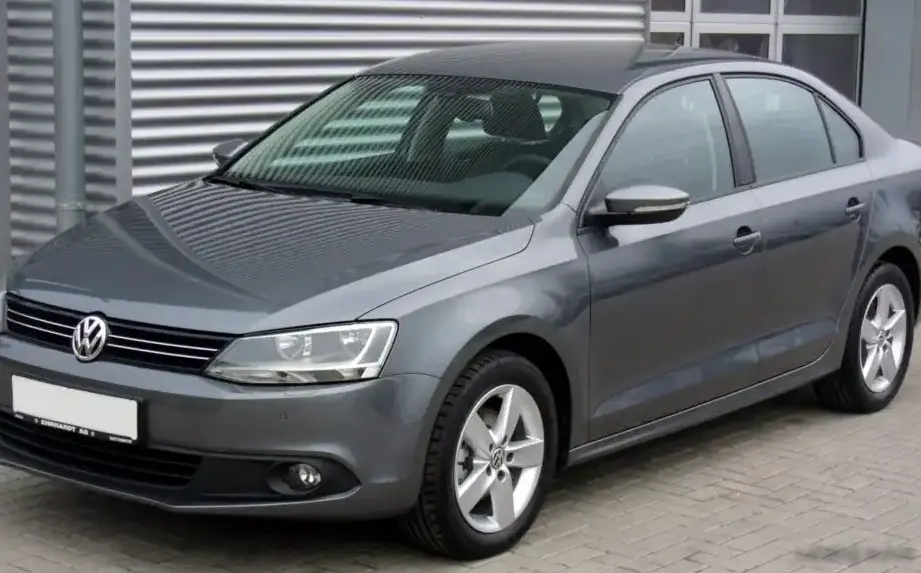
The Volkswagen Jetta VI 2.0 TDI with the 140 horsepower (Hp) Direct-Shift Gearbox (DSG) variant was produced between 2010 and 2014. This model occupied a significant position within the Jetta VI range (2010-2018), which itself was based on the Volkswagen Group’s A5 (later A6) platform, also known as the PQ35. The Jetta VI represented a departure from its predecessor, the Jetta V, with a more conservative and traditionally styled exterior aimed at appealing to a broader North American audience, while retaining the European engineering and driving dynamics. The 2.0 TDI/DSG combination was positioned as a mid-range offering, balancing fuel efficiency with respectable performance, and aimed at buyers seeking a practical and economical sedan with a touch of sophistication.
Technical Specifications
| Brand | Volkswagen |
| Model | Jetta |
| Generation | Jetta VI |
| Type (Engine) | 2.0 TDI (140 Hp) DSG |
| Start of production | 2010 |
| End of production | 2014 |
| Powertrain Architecture | Internal Combustion engine |
| Body type | Sedan |
| Seats | 5 |
| Doors | 4 |
| Fuel consumption (economy) – urban (NEDC) | 6.7 l/100 km (35.1 US mpg, 42.2 UK mpg, 14.9 km/l) |
| Fuel consumption (economy) – extra urban (NEDC) | 4.5 l/100 km (52.3 US mpg, 62.8 UK mpg, 22.2 km/l) |
| Fuel consumption (economy) – combined (NEDC) | 5.3 l/100 km (44.4 US mpg, 53.3 UK mpg, 18.9 km/l) |
| CO2 emissions (NEDC) | 138 g/km |
| Fuel Type | Diesel |
| Acceleration 0 – 100 km/h | 9.5 sec |
| Acceleration 0 – 62 mph | 9.5 sec |
| Acceleration 0 – 60 mph | 9 sec |
| Maximum speed | 208 km/h (129.25 mph) |
| Emission standard | Euro 5 |
| Weight-to-power ratio | 9.8 kg/Hp, 102.5 Hp/tonne |
| Weight-to-torque ratio | 4.3 kg/Nm, 234.3 Nm/tonne |
| Power | 140 Hp @ 4200 rpm |
| Torque | 320 Nm @ 1750-2500 rpm (236.02 lb.-ft. @ 1750-2500 rpm) |
| Engine layout | Front, Transverse |
| Engine Model/Code | CFFB, CLCB |
| Engine displacement | 1968 cm3 (120.09 cu. in.) |
| Number of cylinders | 4 |
| Engine configuration | Inline |
| Cylinder Bore | 81 mm (3.19 in.) |
| Piston Stroke | 95.5 mm (3.76 in.) |
| Compression ratio | 16.5:1 |
| Number of valves per cylinder | 4 |
| Fuel injection system | Diesel Commonrail |
| Engine aspiration | Turbocharger, Intercooler |
| Valvetrain | DOHC |
| Engine oil capacity | 4.3 l (4.54 US qt | 3.78 UK qt) |
| Kerb Weight | 1366 kg (3011.51 lbs.) |
| Max. weight | 1970 kg (4343.11 lbs.) |
| Max load | 604 kg (1331.59 lbs.) |
| Trunk (boot) space – minimum | 510 l (18.01 cu. ft.) |
| Fuel tank capacity | 55 l (14.53 US gal | 12.1 UK gal) |
| Max. roof load | 75 kg (165.35 lbs.) |
| Permitted trailer load with brakes (8%) | 1700 kg (3747.86 lbs.) |
| Permitted trailer load with brakes (12%) | 1500 kg (3306.93 lbs.) |
| Permitted trailer load without brakes | 720 kg (1587.33 lbs.) |
| Permitted towbar download | 75 kg (165.35 lbs.) |
| Length | 4644 mm (182.83 in.) |
| Width | 1778 mm (70 in.) |
| Width including mirrors | 2020 mm (79.53 in.) |
| Height | 1482 mm (58.35 in.) |
| Wheelbase | 2651 mm (104.37 in.) |
| Front track | 1535 mm (60.43 in.) |
| Rear (Back) track | 1538 mm (60.55 in.) |
| Ride height (ground clearance) | 139 mm (5.47 in.) |
| Minimum turning circle (turning diameter) | 11.1 m (36.42 ft.) |
| Drivetrain Architecture | The Internal combustion engine (ICE) drives the front wheels of the vehicle. |
| Drive wheel | Front wheel drive |
| Number of gears and type of gearbox | 6 gears, automatic transmission DSG |
| Front suspension | Coil spring, Wishbone, Transverse stabilizer |
| Rear suspension | Independent multi-link suspension, Transverse stabilizer |
| Front brakes | Ventilated discs |
| Rear brakes | Disc |
| Assisting systems | ABS (Anti-lock braking system) |
| Steering type | Steering rack and pinion |
| Power steering | Electric Steering |
| Tires size | 205/55 R16 |
| Wheel rims size | 6.5J x 16 |
Powertrain & Engine Architecture
The heart of the Jetta VI 2.0 TDI was the Volkswagen Group’s common rail direct injection diesel engine, specifically the CFFB or CLCB engine codes. These 1968cc inline-four cylinder engines featured a turbocharger with an intercooler to boost power and efficiency. The common rail system, operating at extremely high pressures, allowed for precise fuel metering and multiple injections per combustion cycle, resulting in reduced emissions and improved refinement. The engine utilized a double overhead camshaft (DOHC) valvetrain with four valves per cylinder, optimizing gas flow for increased power output. The 140 Hp output was achieved at 4200 rpm, while the impressive 320 Nm (236 lb-ft) of torque was available from a low 1750-2500 rpm, providing strong pulling power. Paired with this engine was the 6-speed DSG (Direct-Shift Gearbox), a dual-clutch transmission known for its quick and smooth gear changes. The DSG essentially combines the efficiency of a manual transmission with the convenience of an automatic.
Driving Characteristics
The 2.0 TDI/DSG Jetta VI offered a compelling blend of performance and economy. While not a sports sedan, the 140 Hp engine and the quick-shifting DSG provided brisk acceleration, with a 0-60 mph time of around 9 seconds. The readily available torque meant strong in-gear acceleration, making overtaking maneuvers easy. Compared to the base 2.0L gasoline engine, the TDI offered significantly more torque and better fuel economy. The DSG transmission, while generally responsive, could sometimes exhibit slight hesitation at low speeds. Compared to a manual transmission equipped Jetta, the DSG offered greater convenience, especially in city driving, but some enthusiasts preferred the more direct feel of a manual gearbox. The gear ratios were tuned for a balance between fuel efficiency and performance, prioritizing mid-range punch over outright top-end speed.
Equipment & Trim Levels
The 2.0 TDI/DSG trim typically included standard features such as air conditioning, power windows and locks, a basic audio system with CD player, and alloy wheels. Higher trim levels, such as the SEL and TDI Premium, added features like leather upholstery, a sunroof, upgraded audio systems, and advanced safety features like rear parking sensors and automatic headlights. Interior upholstery was typically cloth on the base models, with leather options available on higher trims. Dashboard configurations were relatively straightforward, with a focus on functionality and ease of use. Optional extras included navigation systems, Bluetooth connectivity, and various appearance packages.
Chassis & Braking
The Jetta VI featured a MacPherson strut front suspension and a multi-link independent rear suspension, providing a comfortable and controlled ride. The front suspension incorporated a transverse stabilizer bar to reduce body roll during cornering. Braking duties were handled by ventilated discs at the front and solid discs at the rear. ABS (Anti-lock Braking System) was standard. The suspension tuning was geared towards comfort and everyday usability, rather than outright sportiness. The weight distribution was reasonably balanced, contributing to predictable handling characteristics.
Market Reception & Comparison
The Jetta VI 2.0 TDI/DSG was generally well-received by automotive critics. It was praised for its fuel efficiency, comfortable ride, and refined engine. However, some reviewers noted that the interior materials were not as premium as those found in some competitors. Compared to other trims in the Jetta VI lineup, the TDI/DSG offered the best fuel economy and a significant torque advantage over the gasoline engines. It was often compared to similar diesel-powered sedans from competitors like Honda and Toyota, and generally held its own in terms of performance and efficiency.
Legacy
The 2.0 TDI engine, in various iterations, proved to be a reliable and durable powertrain. However, like many modern diesel engines, it was subject to scrutiny regarding emissions regulations. The DSG transmission, while generally reliable, could require more frequent maintenance than a traditional automatic transmission. In the used car market, the Jetta VI 2.0 TDI/DSG remains a popular choice for buyers seeking a fuel-efficient and practical sedan. Well-maintained examples can offer many years of reliable service, but potential buyers should be aware of the potential maintenance costs associated with the diesel engine and DSG transmission. The Jetta VI TDI represents a significant chapter in Volkswagen’s history, showcasing the brand’s commitment to diesel technology and efficient transportation.