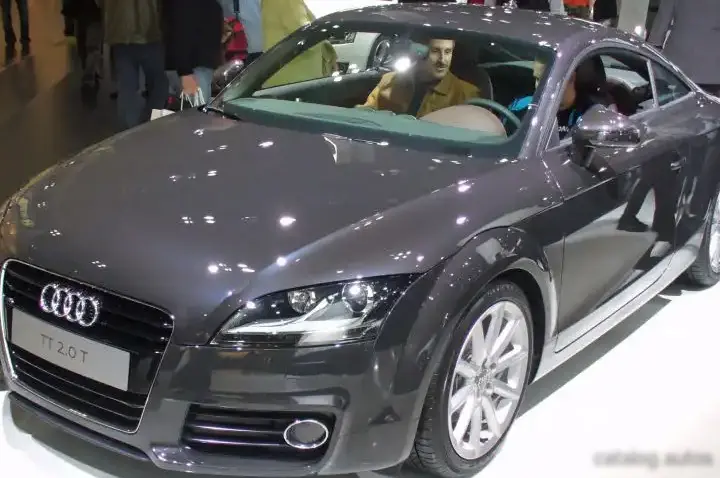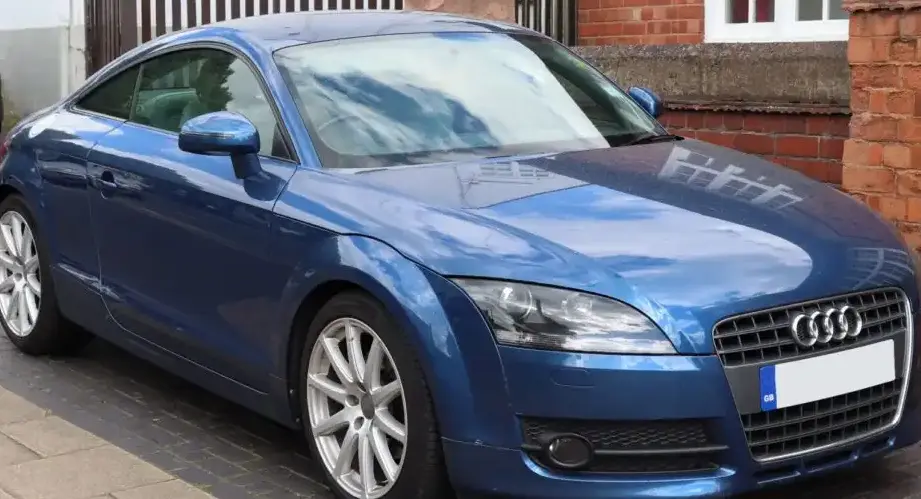
The Audi TT Coupe (8J) 2.0 TFSI quattro S tronic, produced from 2009 to 2010, represents a compelling blend of performance and practicality within the second generation (8J) TT lineup. Positioned as a mid-range offering, it slotted between the base 1.8 TFSI models and the more potent 3.2 V6 variants. This particular configuration, combining a 2.0-liter turbocharged four-cylinder engine with Audi’s quattro all-wheel-drive system and the S tronic dual-clutch transmission, aimed to deliver a sporty driving experience with enhanced grip and responsiveness. It was primarily marketed in Europe and other international markets, offering a more accessible entry point into the TT range than its higher-performance siblings.
Technical Specifications
| Brand | Audi |
| Model | TT |
| Generation | TT Coupe (8J) |
| Type (Engine) | 2.0 TFSI (200 Hp) quattro S tronic |
| Start of production | 2009 |
| End of production | 2010 |
| Powertrain Architecture | Internal Combustion engine |
| Body type | Coupe |
| Seats | 4 |
| Doors | 3 |
| Fuel consumption (economy) – urban | 10.6 l/100 km (22.2 US mpg, 26.6 UK mpg, 9.4 km/l) |
| Fuel consumption (economy) – extra urban | 6 l/100 km (39.2 US mpg, 47.1 UK mpg, 16.7 km/l) |
| Fuel consumption (economy) – combined | 7.7 l/100 km (30.5 US mpg, 36.7 UK mpg, 13 km/l) |
| Fuel Type | Petrol (Gasoline) |
| Acceleration 0 – 100 km/h | 6.2 sec |
| Acceleration 0 – 62 mph | 6.2 sec |
| Acceleration 0 – 60 mph | 5.9 sec |
| Maximum speed | 238 km/h (147.89 mph) |
| Emission standard | Euro 4 |
| Weight-to-power ratio | 6.8 kg/Hp, 147.1 Hp/tonne |
| Weight-to-torque ratio | 4.9 kg/Nm, 205.9 Nm/tonne |
| Power | 200 Hp @ 5100-6000 rpm |
| Power per litre | 100.8 Hp/l |
| Torque | 280 Nm @ 1800-5000 rpm (206.52 lb.-ft. @ 1800-5000 rpm) |
| Engine layout | Front, Transverse |
| Engine Model/Code | BWA, CCZA |
| Engine displacement | 1984 cm3 (121.07 cu. in.) |
| Number of cylinders | 4 |
| Engine configuration | Inline |
| Cylinder Bore | 82.5 mm (3.25 in.) |
| Piston Stroke | 92.8 mm (3.65 in.) |
| Compression ratio | 10.5:1 |
| Number of valves per cylinder | 4 |
| Fuel injection system | Direct injection |
| Engine aspiration | Turbocharger, Intercooler |
| Valvetrain | DOHC |
| Engine oil capacity | 4.6 l (4.86 US qt | 4.05 UK qt) |
| Kerb Weight | 1360 kg (2998.29 lbs.) |
| Max. weight | 1760 kg (3880.14 lbs.) |
| Max load | 400 kg (881.85 lbs.) |
| Trunk (boot) space – minimum | 290 l (10.24 cu. ft.) |
| Trunk (boot) space – maximum | 700 l (24.72 cu. ft.) |
| Fuel tank capacity | 60 l (15.85 US gal | 13.2 UK gal) |
| Length | 4178 mm (164.49 in.) |
| Width | 1842 mm (72.52 in.) |
| Height | 1352 mm (53.23 in.) |
| Wheelbase | 2468 mm (97.17 in.) |
| Front track | 1572 mm (61.89 in.) |
| Rear (Back) track | 1558 mm (61.34 in.) |
| Drag coefficient (Cd) | 0.30 |
| Minimum turning circle | 10.96 m (35.96 ft.) |
| Drive wheel | All wheel drive (4×4) |
| Number of gears and type of gearbox | 6 gears, automatic transmission S tronic |
| Front suspension | Independent, type McPherson with coil spring and anti-roll bar |
| Rear suspension | Independent multi-link suspension |
| Front brakes | Ventilated discs |
| Rear brakes | Disc |
| Assisting systems | ABS (Anti-lock braking system) |
| Steering type | Steering rack and pinion |
| Tires size | 225/50 R17 |
| Wheel rims size | 17 |
Powertrain & Engine Architecture
At the heart of the 2.0 TFSI quattro S tronic lies the Audi-developed 1.984-liter inline-four cylinder engine, typically identified by engine codes BWA or CCZA depending on the specific production year and market. This engine utilizes direct fuel injection (FSI) and a K03 turbocharger with an intercooler to deliver a potent 200 horsepower and 280 Nm (206.52 lb-ft) of torque. The direct injection system allows for precise fuel delivery, enhancing both power and efficiency. The engine features a dual overhead camshaft (DOHC) valvetrain with four valves per cylinder, optimizing airflow for improved performance. The S tronic transmission is a six-speed dual-clutch gearbox, offering incredibly fast and smooth gear changes. This transmission operates in two clutches, pre-selecting the next gear for near-instantaneous shifts, contributing significantly to the car’s sporty feel.
Driving Characteristics
The 2.0 TFSI quattro S tronic delivers a noticeably different driving experience compared to the base 1.8 TFSI or the more powerful 3.2 V6 models. The turbocharger provides a strong mid-range punch, making it responsive in everyday driving situations. While not as brutally fast as the V6, the 2.0 TFSI offers ample power for spirited driving. The S tronic transmission enhances the experience with its quick shifts, and the quattro all-wheel-drive system provides excellent traction, particularly in adverse weather conditions. The gear ratios are tuned for a balance between acceleration and fuel economy. Compared to a manual transmission, the S tronic offers convenience and ease of use, but some purists might miss the direct engagement of a manual gearbox.
Equipment & Trim Levels
The 2.0 TFSI quattro S tronic typically came well-equipped, reflecting its mid-range positioning. Standard features often included automatic climate control, a multi-function steering wheel, power windows and mirrors, and a basic audio system. Upholstery was usually a combination of cloth and leather, with options for full leather interiors. Common optional extras included a premium sound system (Bose was a popular choice), navigation system, parking sensors, and xenon headlights. The exterior styling remained consistent across the 8J TT range, but the 2.0 TFSI models often featured slightly larger alloy wheels compared to the base trims.
Chassis & Braking
The Audi TT Coupe (8J) utilized a McPherson strut front suspension and a multi-link rear suspension, providing a comfortable yet sporty ride. The suspension was tuned to balance handling and comfort, offering a good compromise for everyday driving. The quattro all-wheel-drive system distributes power between the front and rear axles as needed, enhancing grip and stability. Braking duties were handled by ventilated discs at the front and solid discs at the rear. Anti-lock braking system (ABS) was standard, providing enhanced stopping power and control. The chassis was relatively lightweight, contributing to the car’s agility.
Market Reception & Comparison
The 2.0 TFSI quattro S tronic was generally well-received by automotive critics. It was praised for its blend of performance, handling, and practicality. Fuel economy was considered reasonable for a performance coupe, averaging around 30.5 US mpg in combined driving. Compared to the 1.8 TFSI, the 2.0 TFSI offered a significant performance upgrade, while being more affordable and fuel-efficient than the 3.2 V6. Reliability was generally good, although some owners reported minor issues with the turbocharger and direct injection system.
Legacy
The Audi TT Coupe (8J) 2.0 TFSI quattro S tronic remains a popular choice in the used car market. The 2.0 TFSI engine is known for its durability, although regular maintenance is crucial to prevent issues with the turbocharger and direct injection system. The S tronic transmission is generally reliable, but it’s important to ensure that it has been serviced according to Audi’s recommendations. The combination of performance, style, and practicality has ensured that the 8J TT continues to appeal to enthusiasts seeking a sporty and refined coupe.