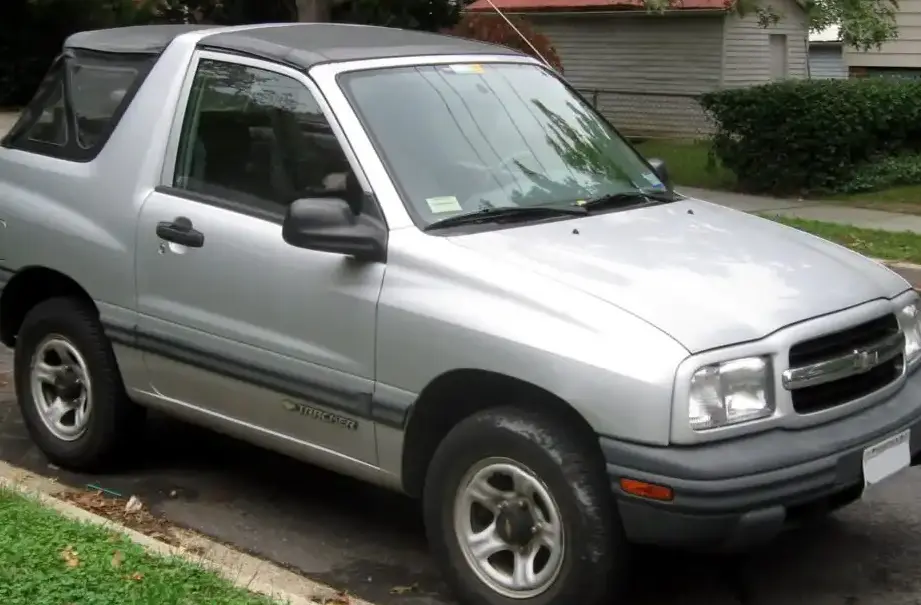
The Chevrolet Tracker Convertible II, specifically the 2.0 i 16V 4WD variant producing 129 horsepower, was a distinctive offering in the compact SUV segment. Produced from 1998 to 2004, this model represented a relatively niche vehicle, successfully blending the practicality of a small SUV with the open-air enjoyment of a convertible. It was primarily marketed in North America and select international markets, offering an alternative to more conventional small SUVs and soft-top convertibles. The Tracker Convertible II was built on the GM S-10 platform, sharing many components with the Chevrolet S-10 pickup truck and the GMC Sonoma. This particular 2.0L, four-wheel-drive configuration occupied a mid-range position within the Tracker Convertible II lineup, offering a balance between performance and affordability.
Technical Specifications
| Brand | Chevrolet |
| Model | Tracker |
| Generation | Tracker Convertible II |
| Type (Engine) | 2.0 i 16V 4WD (129 Hp) |
| Start of production | 1998 |
| End of production | 2004 |
| Powertrain Architecture | Internal Combustion engine |
| Body type | SUV |
| Seats | 5 |
| Doors | 3 |
| Fuel consumption (extra urban) | 8 l/100 km (29.4 US mpg) |
| Fuel Type | Petrol (Gasoline) |
| Maximum speed | 160 km/h (99.42 mph) |
| Weight-to-power ratio | 9.6 kg/Hp |
| Weight-to-torque ratio | 6.8 kg/Nm |
| Power | 129 Hp @ 6000 rpm |
| Power per litre | 64.7 Hp/l |
| Torque | 182 Nm @ 3000 rpm (134.24 lb.-ft. @ 3000 rpm) |
| Engine layout | Front, Longitudinal |
| Engine Model/Code | J20A |
| Engine displacement | 1995 cm3 (121.74 cu. in.) |
| Number of cylinders | 4 |
| Engine configuration | Inline |
| Cylinder Bore | 84 mm (3.31 in.) |
| Piston Stroke | 90 mm (3.54 in.) |
| Compression ratio | 9.5:1 |
| Number of valves per cylinder | 4 |
| Fuel injection system | Multi-port manifold injection |
| Engine aspiration | Naturally aspirated engine |
| Valvetrain | OHC |
| Engine oil capacity | 5.2 l (5.49 US qt | 4.58 UK qt) |
| Coolant | 6.5 l (6.87 US qt | 5.72 UK qt) |
| Kerb Weight | 1235 kg (2722.71 lbs.) |
| Trunk (boot) space – minimum | 290 l (10.24 cu. ft.) |
| Trunk (boot) space – maximum | 680 l (24.01 cu. ft.) |
| Fuel tank capacity | 56 l (14.79 US gal | 12.32 UK gal) |
| Length | 3780 mm (148.82 in.) |
| Width | 1694 mm (66.69 in.) |
| Height | 1689 mm (66.5 in.) |
| Wheelbase | 2200 mm (86.61 in.) |
| Front track | 1460 mm (57.48 in.) |
| Rear (Back) track | 1460 mm (57.48 in.) |
| Drive wheel | All wheel drive (4×4) |
| Number of gears and type of gearbox | 5 gears, manual transmission |
| Front suspension | Spring Strut |
| Rear suspension | Coil spring |
| Front brakes | Ventilated discs |
| Rear brakes | Drum |
| Assisting systems | ABS (Anti-lock braking system) |
| Steering type | Worm-reduction unit |
| Power steering | Hydraulic Steering |
| Tires size | 205/75 R15 |
Powertrain & Engine Architecture
The heart of the Tracker Convertible II 2.0 i 16V was the J20A engine, a 1.995-liter inline-four cylinder gasoline engine. This engine was part of the GM Family II engine series, known for its relatively simple design and durability. The J20A featured a single overhead camshaft (OHC) design operating four valves per cylinder, contributing to its 16-valve configuration. Fuel delivery was handled by a multi-port fuel injection system, providing precise fuel metering for improved efficiency and performance. The engine produced 129 horsepower at 6000 rpm and 182 Nm (134.24 lb-ft) of torque at 3000 rpm. This power was then sent to all four wheels through a five-speed manual transmission. The longitudinal engine placement was a consequence of the S-10 platform’s original truck-based design. The engine’s architecture prioritized reliability and ease of maintenance over cutting-edge performance, making it a practical choice for a vehicle intended for both on- and off-road use.
Driving Characteristics
The 2.0L engine and five-speed manual transmission combination in the Tracker Convertible II offered a reasonably engaging driving experience for its class. While not particularly quick, the engine provided adequate power for everyday driving and highway cruising. The four-wheel-drive system enhanced traction, particularly in inclement weather or on loose surfaces. The manual transmission allowed for greater driver control, but the gear ratios were tuned more for fuel economy than outright acceleration. Compared to the base engine options, the 2.0L provided a noticeable performance boost. However, it didn’t match the responsiveness of larger displacement engines found in some competing SUVs. The convertible top, while adding to the open-air experience, did slightly compromise structural rigidity, resulting in some noticeable body flex over uneven road surfaces. Steering feel was somewhat vague, typical of the platform, but predictable. Overall, the driving experience was best described as competent and enjoyable, rather than sporty or refined.
Equipment & Trim Levels
The Tracker Convertible II 2.0 i 16V 4WD typically came with a standard equipment list that included air conditioning, power steering, and an AM/FM stereo. Depending on the year and optional packages selected, features like upgraded audio systems, alloy wheels, and a leather-wrapped steering wheel were available. Interior upholstery was typically cloth, with options for leather upgrades. The dashboard layout was functional and straightforward, prioritizing usability over luxury. The convertible top was manually operated, adding a degree of driver involvement. Safety features included anti-lock brakes (ABS), which were becoming increasingly common during this period. Higher trim levels might have included features like cruise control and power windows, but the Tracker Convertible II generally remained a relatively basic vehicle in terms of amenities.
Chassis & Braking
The Tracker Convertible II utilized a body-on-frame construction, inherited from the S-10 pickup truck. The front suspension consisted of a spring strut setup, while the rear employed a coil spring arrangement. This suspension configuration provided a comfortable ride, although it wasn’t particularly sporty. The braking system featured ventilated discs at the front and drum brakes at the rear. The ABS system helped to maintain steering control during hard braking maneuvers. The relatively lightweight construction of the Tracker, at 1235 kg (2722.71 lbs), helped to offset the limitations of the braking system. The body-on-frame design, while robust, contributed to a higher center of gravity and a less refined ride compared to unibody construction found in many competing SUVs.
Market Reception & Comparison
The Chevrolet Tracker Convertible II was a niche vehicle that didn’t achieve mainstream success. Critics generally praised its unique combination of SUV practicality and convertible fun, but noted its relatively basic interior and somewhat compromised ride quality. Compared to other small SUVs of the time, such as the Honda CR-V and Toyota RAV4, the Tracker offered a more affordable price point but lacked the refinement and fuel efficiency of its Japanese competitors. Within the Tracker lineup, the 2.0L 4WD variant was considered a good all-around choice, offering a balance of performance, capability, and value. Fuel economy was rated at 8 l/100 km (29.4 US mpg) extra urban, which was competitive for the time. The Tracker’s appeal rested largely with buyers seeking a unique and affordable vehicle, rather than those prioritizing luxury or performance.
Legacy
The Chevrolet Tracker Convertible II, particularly the 2.0 i 16V 4WD variant, has developed a small but dedicated following among enthusiasts. The J20A engine is known for its reliability and relatively simple maintenance requirements. While not a high-performance vehicle, the Tracker Convertible II offers a unique and enjoyable driving experience. In the used car market, these vehicles are often sought after by those looking for a distinctive and affordable open-air SUV. Parts availability is generally good, thanks to the Tracker’s shared components with other GM vehicles. However, finding well-maintained examples can be challenging, as many have been subjected to years of use and exposure to the elements. The Tracker Convertible II represents a unique chapter in Chevrolet’s history, a testament to the enduring appeal of combining practicality with open-air fun.