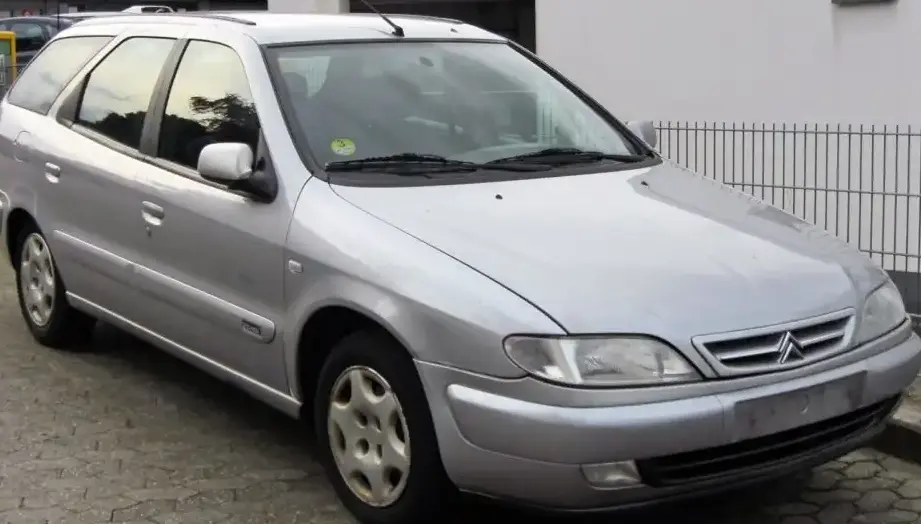
The Citroën Xsara Coupé 1.9 Turbo D, produced between 1998 and 1999, represented a compelling entry point into the sporty coupé market for European buyers. Part of the N0 series, the first generation of the Xsara Coupé, this variant utilized a turbocharged diesel engine paired with a five-speed manual transmission. It occupied a position as the diesel-powered offering in the initial lineup, aimed at drivers prioritizing fuel economy and torque over outright performance. The Xsara Coupé itself was a distinctive design, offering a more dynamic alternative to the conventional hatchback version and sharing its underpinnings with the Peugeot 306 Coupé, both vehicles being products of the PSA Group.
Technical Specifications
| Brand | Citroen |
| Model | Xsara |
| Generation | Xsara Coupe (N0, Phase I) |
| Type (Engine) | 1.9 Turbo D (90 Hp) |
| Start of production | 1998 |
| End of production | 1999 |
| Powertrain Architecture | Internal Combustion engine |
| Body type | Coupe |
| Seats | 5 |
| Doors | 3 |
| Fuel consumption (urban) | 8.8 l/100 km (26.7 US mpg, 32.1 UK mpg, 11.4 km/l) |
| Fuel consumption (extra urban) | 5.2 l/100 km (45.2 US mpg, 54.3 UK mpg, 19.2 km/l) |
| Fuel consumption (combined) | 6.6 l/100 km (35.6 US mpg, 42.8 UK mpg, 15.2 km/l) |
| CO2 emissions | 175 g/km |
| Fuel Type | Diesel |
| Acceleration 0 – 100 km/h | 12.8 sec |
| Acceleration 0 – 62 mph | 12.8 sec |
| Acceleration 0 – 60 mph | 12.2 sec |
| Maximum speed | 178 km/h (110.6 mph) |
| Emission standard | Euro 2 |
| Weight-to-power ratio | 12.8 kg/Hp, 78.1 Hp/tonne |
| Weight-to-torque ratio | 5.9 kg/Nm, 170.1 Nm/tonne |
| Power | 90 Hp @ 4000 rpm |
| Power per litre | 47.2 Hp/l |
| Torque | 196 Nm @ 2250 rpm (144.56 lb.-ft. @ 2250 rpm) |
| Engine layout | Front, Transverse |
| Engine Model/Code | DHY XUD9 TE/Y |
| Engine displacement | 1905 cm3 (116.25 cu. in.) |
| Number of cylinders | 4 |
| Engine configuration | Inline |
| Cylinder Bore | 83 mm (3.27 in.) |
| Piston Stroke | 88 mm (3.46 in.) |
| Number of valves per cylinder | 2 |
| Fuel injection system | Precombustion chamber injection |
| Engine aspiration | Turbocharger, Intercooler |
| Engine oil capacity | 4.8 l (5.07 US qt | 4.22 UK qt) |
| Coolant | 9 l (9.51 US qt | 7.92 UK qt) |
| Kerb Weight | 1152 kg (2539.73 lbs.) |
| Max. weight | 1690 kg (3725.81 lbs.) |
| Max load | 538 kg (1186.09 lbs.) |
| Trunk (boot) space – minimum | 408 l (14.41 cu. ft.) |
| Trunk (boot) space – maximum | 1190 l (42.02 cu. ft.) |
| Fuel tank capacity | 54 l (14.27 US gal | 11.88 UK gal) |
| Max. roof load | 75 kg (165.35 lbs.) |
| Permitted trailer load with brakes (12%) | 1100 kg (2425.08 lbs.) |
| Permitted trailer load without brakes | 610 kg (1344.82 lbs.) |
| Length | 4167 mm (164.06 in.) |
| Width | 1698 mm (66.85 in.) |
| Width including mirrors | 1994 mm (78.5 in.) |
| Height | 1405 mm (55.31 in.) |
| Wheelbase | 2540 mm (100 in.) |
| Front track | 1423 mm (56.02 in.) |
| Rear (Back) track | 1430 mm (56.3 in.) |
| Front overhang | 868 mm (34.17 in.) |
| Rear overhang | 759 mm (29.88 in.) |
| Minimum turning circle | 11.5 m (37.73 ft.) |
| Drivetrain Architecture | Front wheel drive |
| Drive wheel | Front wheel drive |
| Number of gears and type of gearbox | 5 gears, manual transmission |
| Front suspension | Independent, type McPherson with coil spring and anti-roll bar |
| Rear suspension | Torsion |
| Front brakes | Ventilated discs |
| Rear brakes | Drum |
| Assisting systems | ABS (Anti-lock braking system) |
| Steering type | Steering rack and pinion |
| Power steering | Hydraulic Steering |
| Tires size | 185/65 R14 |
Powertrain & Engine Architecture
The heart of the Xsara Coupé 1.9 Turbo D was the XUD9 TE/Y engine, a 1.9-liter inline-four diesel. This engine, designated DHY, was a mainstay of PSA’s diesel offerings for many years. It employed precombustion chamber injection, a system where fuel is partially combusted in a small chamber before entering the main cylinder, promoting more complete combustion and reducing noise. A turbocharger with an intercooler was fitted to boost power output to 90 horsepower at 4000 rpm and 196 Nm (144.56 lb-ft) of torque at 2250 rpm. The five-speed manual transmission was chosen for its efficiency and driver engagement, offering a balance between fuel economy and performance. This engine was known for its durability, but also for its characteristic diesel clatter and relatively slow response compared to modern common-rail diesels.
Driving Characteristics
The 1.9 Turbo D variant of the Xsara Coupé offered a distinctly different driving experience compared to the petrol-powered models. While lacking the outright acceleration of the higher-horsepower engines, it provided ample torque for relaxed cruising and overtaking. The five-speed gearbox was well-matched to the engine’s characteristics, allowing drivers to keep the engine in its optimal torque band. The gear ratios were relatively long, prioritizing fuel efficiency over rapid acceleration. Handling was typical of front-wheel-drive cars of the era, with a tendency towards understeer when pushed hard. However, the suspension provided a comfortable ride for everyday driving.
Equipment & Trim Levels
The 1.9 Turbo D Coupé typically came with a modest level of standard equipment. This included power steering, central locking, electric front windows, and an adjustable steering column. Interior upholstery was generally cloth, with a functional, if somewhat basic, dashboard layout. Optional extras included air conditioning, alloy wheels, and a sunroof. The trim level was positioned as a practical and economical choice, appealing to buyers who valued fuel efficiency and reliability over luxury features.
Chassis & Braking
The Xsara Coupé utilized a McPherson strut front suspension with a torsion beam rear suspension. This setup provided a good balance between ride comfort and handling. The front brakes were ventilated discs, offering adequate stopping power, while the rear brakes were drums, a cost-saving measure common in this class of vehicle. Anti-lock braking system (ABS) was standard, enhancing safety by preventing wheel lockup during hard braking.
Market Reception & Comparison
The Xsara Coupé 1.9 Turbo D was generally well-received by critics as a practical and economical coupé. It was praised for its fuel efficiency and torque, making it a good choice for long-distance driving. However, it was also criticized for its relatively slow acceleration and the characteristic noise of the diesel engine. Compared to the petrol-powered versions, the 1.9 Turbo D offered significantly better fuel economy but less excitement. It competed with other diesel-powered coupés of the time, such as the Peugeot 306 Coupé HDi and the Renault Mégane Coupé 1.9 dTi.
Legacy
The XUD9 engine, found in the Xsara Coupé 1.9 Turbo D, is renowned for its robustness and longevity. Many examples have covered high mileages with minimal major mechanical issues, provided they have been properly maintained. Today, the Xsara Coupé 1.9 Turbo D represents an affordable and reliable classic car. While not a performance icon, it offers a unique blend of style, practicality, and fuel efficiency. Parts availability is generally good, and the relatively simple mechanical design makes it a viable option for DIY mechanics. The car’s enduring appeal lies in its ability to provide comfortable and economical transportation with a touch of French flair.