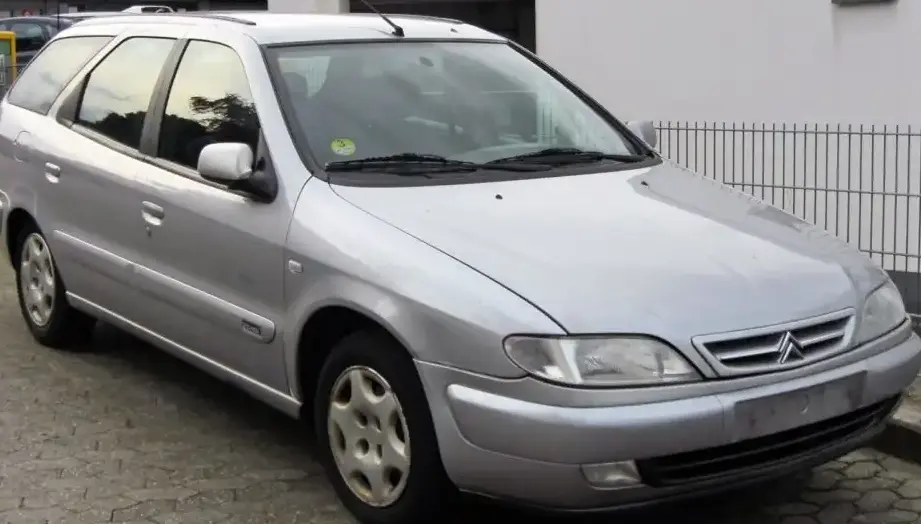
Technical Specifications
| Brand | Citroën |
| Model | Xsara |
| Generation | Xsara Coupé (N0, Phase I) |
| Type (Engine) | VTS 1.8 i 16V (110 Hp) |
| Start of production | 1998 |
| End of production | 2000 |
| Powertrain Architecture | Internal Combustion engine |
| Body type | Coupe |
| Seats | 5 |
| Doors | 3 |
| Fuel consumption (urban) | 12.1 l/100 km (19.4 US mpg, 23.3 UK mpg, 8.3 km/l) |
| Fuel consumption (extra urban) | 6.5 l/100 km (36.2 US mpg, 43.5 UK mpg, 15.4 km/l) |
| Fuel consumption (combined) | 8.5 l/100 km (27.7 US mpg, 33.2 UK mpg, 11.8 km/l) |
| CO2 emissions | 198 g/km |
| Fuel Type | Petrol (Gasoline) |
| Acceleration 0 – 100 km/h | 10.6 sec |
| Acceleration 0 – 62 mph | 10.6 sec |
| Acceleration 0 – 60 mph | 10.1 sec |
| Maximum speed | 198 km/h (123.03 mph) |
| Weight-to-power ratio | 10 kg/Hp, 99.8 Hp/tonne |
| Weight-to-torque ratio | 7.1 kg/Nm, 140.7 Nm/tonne |
| Power | 110 Hp @ 5500 rpm |
| Power per litre | 62.5 Hp/l |
| Torque | 155 Nm @ 4250 rpm (114.32 lb.-ft. @ 4250 rpm) |
| Engine layout | Front, Transverse |
| Engine Model/Code | LFY XU7JP4 |
| Engine displacement | 1761 cm3 (107.46 cu. in.) |
| Number of cylinders | 4 |
| Engine configuration | Inline |
| Cylinder Bore | 83 mm (3.27 in.) |
| Piston Stroke | 81.4 mm (3.2 in.) |
| Compression ratio | 10.4:1 |
| Number of valves per cylinder | 4 |
| Fuel injection system | Multi-port manifold injection |
| Engine aspiration | Naturally aspirated engine |
| Valvetrain | DOHC |
| Engine oil capacity | 4.75 l (5.02 US qt | 4.18 UK qt) |
| Coolant | 7 l (7.4 US qt | 6.16 UK qt) |
| Kerb Weight | 1102 kg (2429.49 lbs.) |
| Max. weight | 1620 kg (3571.49 lbs.) |
| Max load | 518 kg (1141.99 lbs.) |
| Trunk (boot) space – minimum | 408 l (14.41 cu. ft.) |
| Trunk (boot) space – maximum | 1190 l (42.02 cu. ft.) |
| Fuel tank capacity | 54 l (14.27 US gal | 11.88 UK gal) |
| Max. roof load | 75 kg (165.35 lbs.) |
| Permitted trailer load with brakes (12%) | 1100 kg (2425.08 lbs.) |
| Permitted trailer load without brakes | 585 kg (1289.7 lbs.) |
| Permitted towbar download | 70 kg (154.32 lbs.) |
| Length | 4167 mm (164.06 in.) |
| Width | 1696 mm (66.77 in.) |
| Width including mirrors | 1994 mm (78.5 in.) |
| Height | 1401 mm (55.16 in.) |
| Wheelbase | 2540 mm (100 in.) |
| Front track | 1433 mm (56.42 in.) |
| Rear (Back) track | 1442 mm (56.77 in.) |
| Front overhang | 868 mm (34.17 in.) |
| Rear overhang | 759 mm (29.88 in.) |
| Minimum turning circle | 11.5 m (37.73 ft.) |
| Drivetrain Architecture | The Internal combustion engine (ICE) drives the front wheels of the vehicle. |
| Drive wheel | Front wheel drive |
| Number of gears and type of gearbox | 5 gears, manual transmission |
| Front suspension | Independent, type McPherson with coil spring and anti-roll bar |
| Rear suspension | Torsion |
| Front brakes | Ventilated discs |
| Rear brakes | Disc |
| Assisting systems | ABS (Anti-lock braking system) |
| Steering type | Steering rack and pinion |
| Power steering | Hydraulic Steering |
| Tires size | 195/55 R15 |
The Citroën Xsara Coupé VTS 1.8i 16V, produced between 1998 and 2000, was a sporty iteration within the first generation (N0, Phase I) Xsara Coupé range. It aimed to deliver a more engaging driving experience than the standard models, appealing to buyers who wanted a stylish and practical vehicle with a bit more pep. The Xsara Coupé itself was a distinctive three-door hatchback, and the VTS (Volant Sportif Technique) trim, powered by its 1.8-liter engine, occupied a middle ground in the lineup, offering a balance between performance and affordability, positioned below the more powerful 2.0i 16V versions.
Powertrain & Engine Architecture
The core of the Xsara Coupé VTS 1.8i 16V is the LFY (or sometimes XU7JP4) 1.8-liter inline-four cylinder engine. This engine, a collaborative effort between Peugeot and Citroën, featured a double overhead camshaft (DOHC) valvetrain with four valves per cylinder. It employed multi-port fuel injection, a common technology for the time, delivering fuel directly into the intake ports. The engine’s 1761cc displacement, combined with a 10.4:1 compression ratio, generated 110 horsepower at 5500 rpm and 155 Nm (114 lb-ft) of torque at 4250 rpm. The engine was mounted transversely at the front of the vehicle, powering the front wheels. While not a particularly advanced engine by today’s standards, it was known for its relative reliability and willingness to rev. A five-speed manual transmission was the standard offering, favored by enthusiasts for its sporty feel. An automatic transmission was also available, but it diminished the driving experience.
Driving Characteristics
The 1.8-liter engine, coupled with the five-speed manual gearbox, provided a reasonably spirited driving experience. Acceleration from 0 to 60 mph took approximately 10.1 seconds, and the car could achieve a top speed of 123 mph. While not exceptionally quick, it was sufficient for enjoyable daily driving and occasional spirited runs on winding roads. The gear ratios were well-matched, offering a good balance between acceleration and fuel efficiency. Compared to the 2.0i 16V models, the 1.8 felt less aggressive, but it was also more forgiving and easier to manage at lower speeds. The optional automatic transmission, while convenient, noticeably reduced performance, resulting in slower acceleration and a less engaging driving feel.
Equipment & Trim Levels
The VTS trim level included several features designed to enhance the car’s sporty character. Standard equipment typically included alloy wheels, a sport-tuned suspension, and upgraded interior trim. The interior featured supportive front seats, often upholstered in a combination of cloth and Alcantara. Air conditioning, power windows, and central locking were also commonly included. Optional extras included a sunroof, an upgraded audio system, and metallic paint finishes. The dashboard layout was typical of Citroëns from that era, prioritizing functionality and ergonomics.
Chassis & Braking
The Xsara Coupé VTS 1.8i 16V utilized an independent McPherson strut suspension at the front, providing good handling and ride comfort. The rear suspension employed a torsion beam setup, a cost-effective solution that offered a reasonable compromise between handling and interior space. Braking was handled by ventilated discs at the front and solid discs at the rear, equipped with an Anti-lock Braking System (ABS) as standard. The steering was a hydraulic power-assisted rack and pinion system, delivering precise and responsive steering feel.
Market Reception & Comparison
The Citroën Xsara Coupé VTS 1.8i 16V was generally well-received by automotive critics. It was praised for its stylish design, comfortable interior, and engaging driving experience. However, some critics pointed out that the 1.8-liter engine lacked the outright performance of the larger 2.0-liter variant. In terms of fuel economy, the 1.8-liter model offered a slight advantage, achieving around 27.7 US mpg in combined driving. Reliability was generally good, but regular maintenance was crucial for optimal engine performance. Compared to competitors like the Peugeot 306 XSi and Renault Mégane Coupé, the Xsara Coupé offered a unique blend of style, comfort, and performance.
Legacy
The Citroën Xsara Coupé VTS 1.8i 16V has become a popular choice among enthusiasts and collectors. The engine, while not technologically advanced, is known for its durability and relatively simple maintenance requirements. Parts availability is generally good, although some specific trim pieces can be challenging to locate. Today, well-maintained examples of the Xsara Coupé VTS 1.8i 16V are sought after for their distinctive styling, engaging driving experience, and affordability. It represents a charming and capable French coupé from a past era, offering a refreshing alternative to more mainstream vehicles.