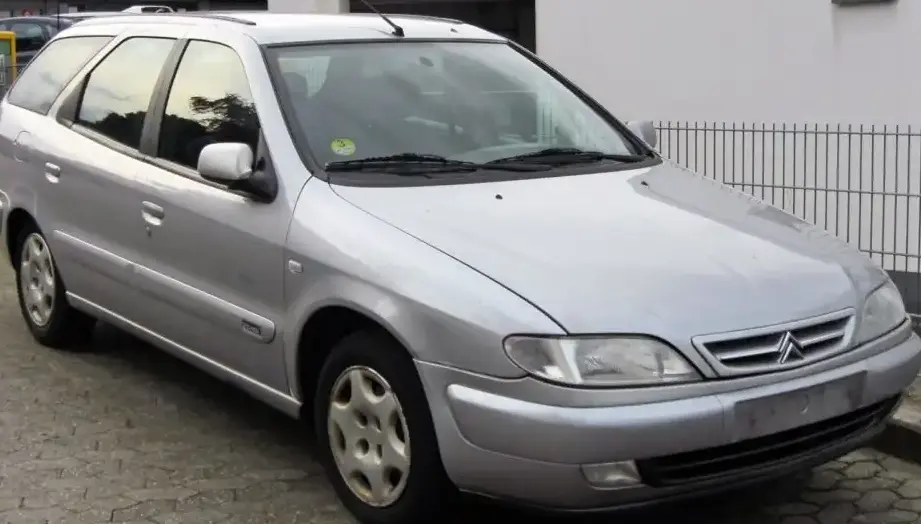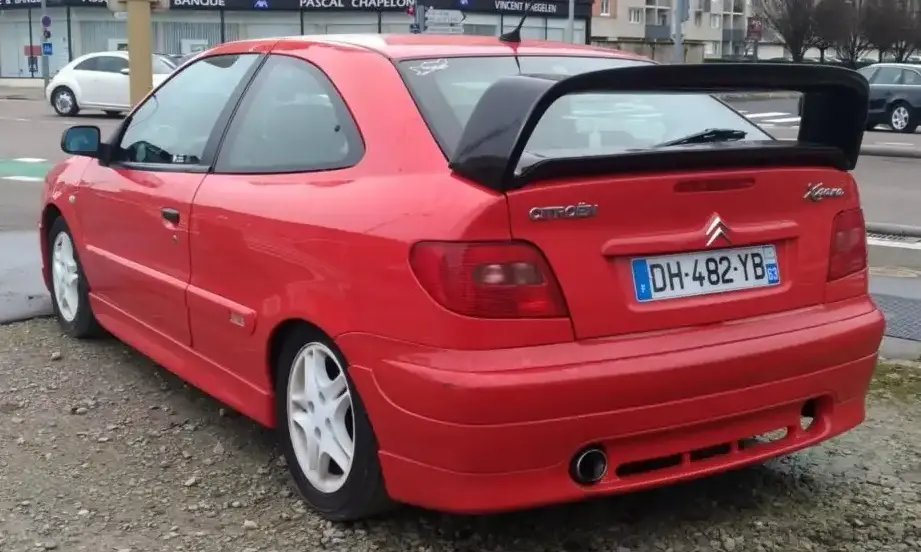
The Citroën Xsara Coupé VTS 2.0 16V, produced between 1998 and 2000, represented the performance-oriented variant of the Xsara Coupé (N0, Phase I) range. Positioned as the flagship model, it aimed to deliver a sporty driving experience within the compact coupé segment. The Xsara Coupé itself was a distinctive three-door design, offering a more stylish alternative to the conventional hatchback. The VTS (Volant Sportif Technique) designation signified Citroën’s commitment to performance, and this 2.0-liter 16-valve engine was the most powerful offered in the Coupé lineup during its initial production run. It was a key model for Citroën in the European market, appealing to buyers seeking a blend of practicality and driving enjoyment.
Technical Specifications
| Brand | Citroën |
| Model | Xsara |
| Generation | Xsara Coupé (N0, Phase I) |
| Type (Engine) | VTS 2.0 16V (163 Hp) |
| Start of production | 1998 |
| End of production | 2000 |
| Powertrain Architecture | Internal Combustion engine |
| Body type | Coupe |
| Seats | 5 |
| Doors | 3 |
| Fuel consumption (urban) | 13.6 l/100 km (17.3 US mpg, 20.8 UK mpg, 7.4 km/l) |
| Fuel consumption (extra urban) | 7.1 l/100 km (33.1 US mpg, 39.8 UK mpg, 14.1 km/l) |
| Fuel consumption (combined) | 9.4 l/100 km (25 US mpg, 30.1 UK mpg, 10.6 km/l) |
| CO2 emissions | 224 g/km |
| Fuel Type | Petrol (Gasoline) |
| Acceleration 0 – 100 km/h | 8.7 sec |
| Acceleration 0 – 62 mph | 8.7 sec |
| Acceleration 0 – 60 mph | 8.3 sec |
| Maximum speed | 220 km/h (136.7 mph) |
| Emission standard | Euro 2 |
| Weight-to-power ratio | 7.3 kg/Hp, 137 Hp/tonne |
| Weight-to-torque ratio | 6.2 kg/Nm, 162.2 Nm/tonne |
| Power | 163 Hp @ 6500 rpm |
| Power per litre | 81.6 Hp/l |
| Torque | 193 Nm @ 5500 rpm (142.35 lb.-ft. @ 5500 rpm) |
| Engine layout | Front, Transverse |
| Engine Model/Code | RFS XU104RS |
| Engine displacement | 1998 cm3 (121.93 cu. in.) |
| Number of cylinders | 4 |
| Engine configuration | Inline |
| Cylinder Bore | 86 mm (3.39 in.) |
| Piston Stroke | 86 mm (3.39 in.) |
| Compression ratio | 10.8:1 |
| Number of valves per cylinder | 4 |
| Fuel injection system | Multi-port manifold injection |
| Engine aspiration | Naturally aspirated engine |
| Valvetrain | DOHC |
| Engine oil capacity | 4.25 l (4.49 US qt | 3.74 UK qt) |
| Coolant | 9 l (9.51 US qt | 7.92 UK qt) |
| Kerb Weight | 1190 kg (2623.5 lbs.) |
| Max. weight | 1670 kg (3681.72 lbs.) |
| Max load | 480 kg (1058.22 lbs.) |
| Trunk (boot) space – minimum | 408 l (14.41 cu. ft.) |
| Trunk (boot) space – maximum | 1190 l (42.02 cu. ft.) |
| Fuel tank capacity | 54 l (14.27 US gal | 11.88 UK gal) |
| Max. roof load | 75 kg (165.35 lbs.) |
| Permitted trailer load with brakes (12%) | 1100 kg (2425.08 lbs.) |
| Permitted trailer load without brakes | 630 kg (1388.91 lbs.) |
| Permitted towbar download | 70 kg (154.32 lbs.) |
| Length | 4167 mm (164.06 in.) |
| Width | 1698 mm (66.85 in.) |
| Width including mirrors | 1994 mm (78.5 in.) |
| Height | 1405 mm (55.31 in.) |
| Wheelbase | 2540 mm (100 in.) |
| Front track | 1423 mm (56.02 in.) |
| Rear (Back) track | 1430 mm (56.3 in.) |
| Front overhang | 868 mm (34.17 in.) |
| Rear overhang | 759 mm (29.88 in.) |
| Minimum turning circle (turning diameter) | 11.5 m (37.73 ft.) |
| Drivetrain Architecture | The Internal combustion engine (ICE) drives the front wheels of the vehicle. |
| Drive wheel | Front wheel drive |
| Number of gears and type of gearbox | 5 gears, manual transmission |
| Front suspension | Coil spring |
| Rear suspension | Torsion |
| Front brakes | Ventilated discs |
| Rear brakes | Disc |
| Assisting systems | ABS (Anti-lock braking system) |
| Steering type | Steering rack and pinion |
| Power steering | Hydraulic Steering |
| Tires size | 195/55 R15 |
| Wheel rims size | 15 |
Powertrain & Engine Architecture
The heart of the Xsara Coupé VTS 2.0 16V is the RFS XU104RS engine, a naturally aspirated 1.998-liter inline-four cylinder powerplant. This engine was a mainstay in Peugeot and Citroën performance models of the era. It features a dual overhead camshaft (DOHC) valvetrain with four valves per cylinder, contributing to its high-revving nature and respectable power output. Fuel delivery is managed by a multi-port fuel injection system. The XU104RS engine is known for its robust construction and relative simplicity, making it a reasonably reliable unit. The engine’s 163 horsepower at 6500 rpm and 193 Nm (142.35 lb-ft) of torque at 5500 rpm provided a spirited driving experience. The engine is transversely mounted, driving the front wheels. The standard transmission was a five-speed manual gearbox, optimized for the engine’s powerband.
Driving Characteristics
The Xsara Coupé VTS 2.0 16V offered a noticeably more engaging driving experience than lower-spec models. While not a track weapon, it provided brisk acceleration – 0-60 mph in approximately 8.3 seconds – and a top speed of 136.7 mph. The five-speed manual transmission allowed drivers to fully exploit the engine’s powerband. The gear ratios were well-chosen, providing good acceleration in each gear. Compared to the base 1.6-liter engine, the VTS offered a significant performance boost. The suspension was tuned for a sportier feel, offering improved handling and reduced body roll, though it could be somewhat firm on rough road surfaces. Steering was precise and well-weighted, contributing to a confident feel behind the wheel.
Equipment & Trim Levels
The VTS trim level was the highest available on the Xsara Coupé, and as such, came equipped with a generous array of standard features. These typically included alloy wheels, sports seats with enhanced bolstering, a leather-wrapped steering wheel, and electric windows. Air conditioning was often standard, though it could be optional depending on the market. Interior trim was generally focused on a sporty aesthetic, with dark upholstery and minimal chrome accents. Optional extras could include a sunroof, upgraded audio system, and metallic paint finishes.
Chassis & Braking
The Xsara Coupé VTS utilized a coil spring suspension setup at the front and a torsion beam arrangement at the rear. This configuration provided a good balance between handling and ride comfort, although the torsion beam rear suspension was a simpler and less sophisticated design than independent rear suspension systems found in some competitors. Braking duties were handled by ventilated discs at the front and solid discs at the rear. An Anti-lock Braking System (ABS) was standard, enhancing safety and control during hard braking. The steering system employed a rack and pinion setup with hydraulic power assistance, providing precise and responsive steering feel.
Market Reception & Comparison
The Citroën Xsara Coupé VTS 2.0 16V was generally well-received by automotive critics. It was praised for its sporty handling, willing engine, and distinctive styling. However, some reviewers noted that the interior quality was not quite as refined as some of its rivals, such as the Peugeot 306 GTI-6. Fuel economy, at around 25 mpg combined, was reasonable for a performance-oriented vehicle of its era. Compared to the lower-spec Xsara Coupé models, the VTS offered a substantial performance upgrade, but at a higher price point. The VTS was often seen as a more affordable alternative to more established hot hatches like the Volkswagen Golf GTI.
Legacy
The Citroën Xsara Coupé VTS 2.0 16V has developed a loyal following among enthusiasts. The XU104RS engine is known for its durability and relatively straightforward maintenance. While not without its quirks, the engine is generally considered to be reliable if properly maintained. Today, well-maintained examples of the VTS are becoming increasingly sought after by collectors and enthusiasts. Parts availability is generally good, thanks to the engine’s widespread use in other Peugeot and Citroën models. The Xsara Coupé VTS represents a distinctive and enjoyable driving experience, and its unique styling continues to appeal to those seeking a stylish and affordable performance coupé.