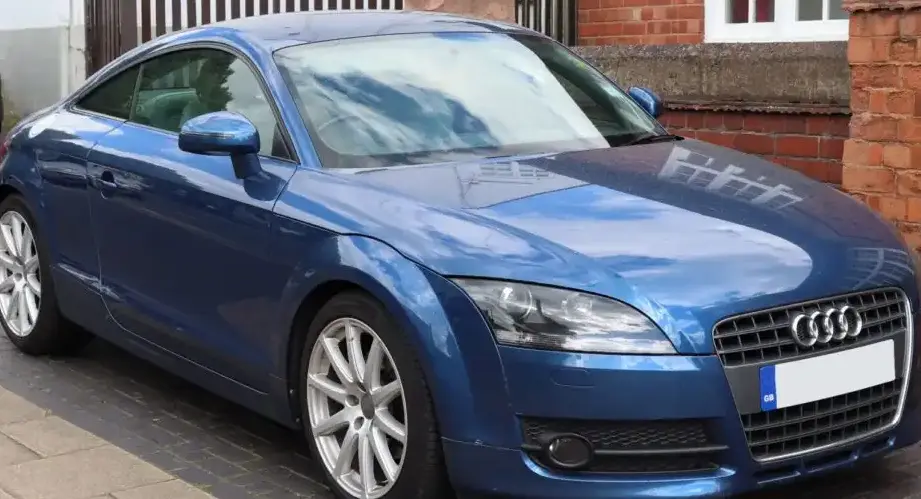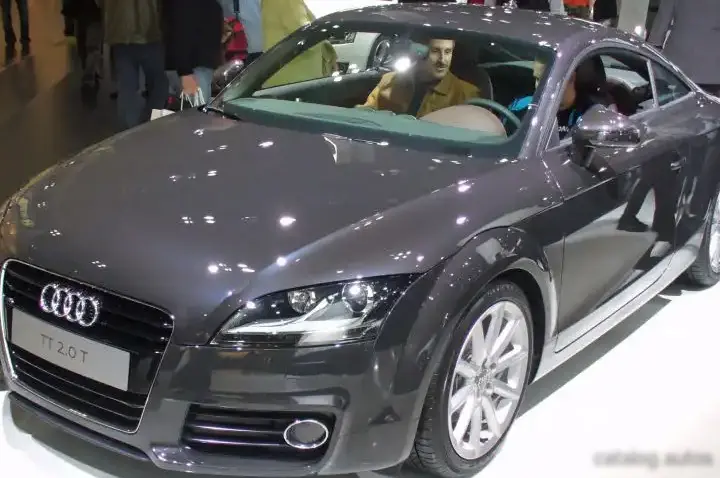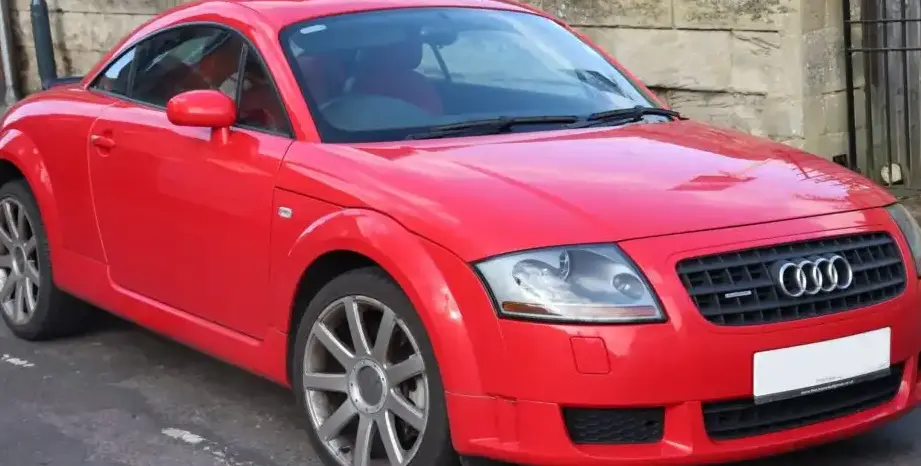
The Audi TT Coupe (8N), particularly the facelifted version introduced in 2000, represented a bold step for the German automaker. Launched initially in 1998, the 8N TT aimed to bring a more affordable and stylish sports coupe to market, challenging established players like the BMW Z3 and Porsche Boxster. The 1.8 T variant, producing 150 horsepower, was a key component of the TT lineup from January 2001 through June 2006. It served as a more accessible entry point into the TT experience, balancing performance with fuel efficiency and a lower price tag compared to the more potent 225 horsepower version. This model was built on the Volkswagen Group’s A4/Golf platform, known internally as the 1HX0/A3 platform, and quickly gained popularity for its distinctive Bauhaus-inspired design and engaging driving dynamics.
Technical Specifications
| Brand | Audi |
| Model | TT |
| Generation | TT Coupe (8N, facelift 2000) |
| Type (Engine) | 1.8 T (150 Hp) |
| Start of production | January, 2001 |
| End of production | June, 2006 |
| Powertrain Architecture | Internal Combustion engine |
| Body type | Coupe |
| Seats | 4 |
| Doors | 3 |
| Fuel consumption (urban) | 11.1 l/100 km (21.2 US mpg, 25.4 UK mpg, 9 km/l) |
| Fuel consumption (extra urban) | 6.3 l/100 km (37.3 US mpg, 44.8 UK mpg, 15.9 km/l) |
| Fuel consumption (combined) | 8.1 l/100 km (29 US mpg, 34.9 UK mpg, 12.3 km/l) |
| CO2 emissions | 194-197 g/km |
| Fuel Type | Petrol (Gasoline) |
| Acceleration 0 – 100 km/h | 8.6 sec |
| Acceleration 0 – 62 mph | 8.6 sec |
| Acceleration 0 – 60 mph | 8.2 sec |
| Maximum speed | 220 km/h (136.7 mph) |
| Emission standard | Euro 4 |
| Weight-to-power ratio | 8.5 kg/Hp, 117.2 Hp/tonne |
| Weight-to-torque ratio | 6.1 kg/Nm, 164.1 Nm/tonne |
| Power | 150 Hp @ 5700 rpm |
| Power per litre | 84.2 Hp/l |
| Torque | 210 Nm @ 1750-4600 rpm (154.89 lb.-ft. @ 1750-4600 rpm) |
| Engine layout | Front, Transverse |
| Engine Model/Code | AUM |
| Engine displacement | 1781 cm3 (108.68 cu. in.) |
| Number of cylinders | 4 |
| Engine configuration | Inline |
| Cylinder Bore | 81 mm (3.19 in.) |
| Piston Stroke | 86.4 mm (3.4 in.) |
| Compression ratio | 9.5:1 |
| Number of valves per cylinder | 5 |
| Fuel injection system | Multi-port manifold injection |
| Engine aspiration | Turbocharger, Intercooler |
| Valvetrain | DOHC |
| Engine oil capacity | 4.5 l (4.76 US qt | 3.96 UK qt) |
| Coolant | 7 l (7.4 US qt | 6.16 UK qt) |
| Kerb Weight | 1280 kg (2821.92 lbs.) |
| Max. weight | 1665 kg (3670.7 lbs.) |
| Max load | 385 kg (848.78 lbs.) |
| Trunk (boot) space – minimum | 270 l (9.53 cu. ft.) |
| Trunk (boot) space – maximum | 540 l (19.07 cu. ft.) |
| Fuel tank capacity | 55 l (14.53 US gal | 12.1 UK gal) |
| Max. roof load | 75 kg (165.35 lbs.) |
| Length | 4041 mm (159.09 in.) |
| Width | 1764 mm (69.45 in.) |
| Height | 1346 mm (52.99 in.) |
| Wheelbase | 2422 mm (95.35 in.) |
| Front track | 1528 mm (60.16 in.) |
| Rear (Back) track | 1513 mm (59.57 in.) |
| Drag coefficient (Cd) | 0.32 |
| Minimum turning circle | 10.6 m (34.78 ft.) |
| Drivetrain Architecture | ICE, Front wheel drive |
| Drive wheel | Front wheel drive |
| Number of gears | 5 |
| Gearbox type | Manual transmission |
| Front suspension | Independent, McPherson with coil spring and anti-roll bar |
| Rear suspension | Independent torsion suspension |
| Front brakes | Ventilated discs |
| Rear brakes | Disc |
| Assisting systems | ABS (Anti-lock braking system) |
| Steering type | Steering rack and pinion |
| Power steering | Hydraulic |
| Tires size | 205/55 R16 |
| Wheel rims size | 7J x 16 |
Powertrain & Engine Architecture
The heart of the 1.8 T variant was the Audi-developed, Volkswagen-built 1.8-liter inline-four cylinder engine, designated the AUM engine code. This engine featured a cast iron block and aluminum cylinder head, incorporating a single overhead camshaft (SOHC) design with five valves per cylinder (three intake, two exhaust). The key to its performance was a K03 turbocharger with an intercooler, providing forced induction to boost power output. Fuel delivery was managed by a Bosch Motronic multi-port fuel injection system. The engine’s 9.5:1 compression ratio was a compromise between performance and the ability to run on readily available fuel grades. The 1.8T engine was known for its relatively smooth power delivery and responsiveness. The standard transmission was a 5-speed manual, but a 4-speed automatic transmission was also offered, which is the focus of this article. This automatic transmission, while providing convenience, did impact acceleration and fuel economy compared to the manual version.
Driving Characteristics
The 1.8 T with the automatic transmission offered a comfortable and accessible driving experience. While not as overtly sporty as the 225 hp version or the manual 1.8T, it provided adequate power for everyday driving and occasional spirited runs. The automatic transmission, while smooth, had relatively long gear ratios, which meant the engine often felt strained during quick acceleration. 0-60 mph times were around 8.2 seconds, and top speed was limited to 136.7 mph. The turbocharger did provide a noticeable boost in power once it spooled up, but there was some degree of turbo lag. The front-wheel-drive configuration, combined with the relatively modest power output, meant that traction was generally not an issue, even in wet conditions.
Equipment & Trim Levels
The 1.8 T typically came with a reasonable level of standard equipment. This included power windows, power locks, air conditioning, and an AM/FM radio with a CD player. Interior upholstery was typically cloth, although leather options were available. Optional extras included a sunroof, heated front seats, and a premium sound system. The TT’s interior was characterized by its minimalist design, with a focus on functionality and driver ergonomics. The instrument cluster featured a distinctive aluminum finish, and the steering wheel was often leather-wrapped. The 1.8 T sat in the middle of the TT lineup, offering a balance of features and affordability.
Chassis & Braking
The TT’s chassis featured an independent McPherson strut suspension in the front and an independent torsion beam suspension in the rear. This setup provided a good balance of ride comfort and handling. The 1.8 T models typically came with ventilated disc brakes in the front and solid disc brakes in the rear. Anti-lock braking system (ABS) was standard. The suspension was tuned to provide a slightly softer ride than the more powerful 225 hp version, making it more comfortable for everyday driving. Stabilizer bars were fitted front and rear to reduce body roll during cornering.
Market Reception & Comparison
The Audi TT 1.8 T was generally well-received by automotive critics. It was praised for its stylish design, engaging driving dynamics, and relatively affordable price. However, some critics noted that the automatic transmission could feel sluggish and that the engine lacked the outright performance of the 225 hp version. Compared to the 225 hp TT, the 1.8 T offered better fuel economy and lower running costs. It also appealed to a broader audience, including those who prioritized comfort and convenience over outright performance. Against competitors like the BMW Z3 and Porsche Boxster, the TT offered a more modern and technologically advanced package.
Legacy
The Audi TT 1.8 T (8N) has proven to be a relatively reliable vehicle, with the AUM engine generally considered durable. Common issues include turbocharger failure and oil leaks. The automatic transmission, while generally reliable, can require servicing over time. Today, the 8N TT is a popular choice among enthusiasts and collectors, particularly well-maintained examples. Its distinctive design and engaging driving dynamics continue to appeal to those seeking a stylish and affordable sports coupe. The 1.8T automatic variant, while not the most sought-after version, remains a viable option for those looking for a comfortable and reliable entry point into the TT ownership experience.