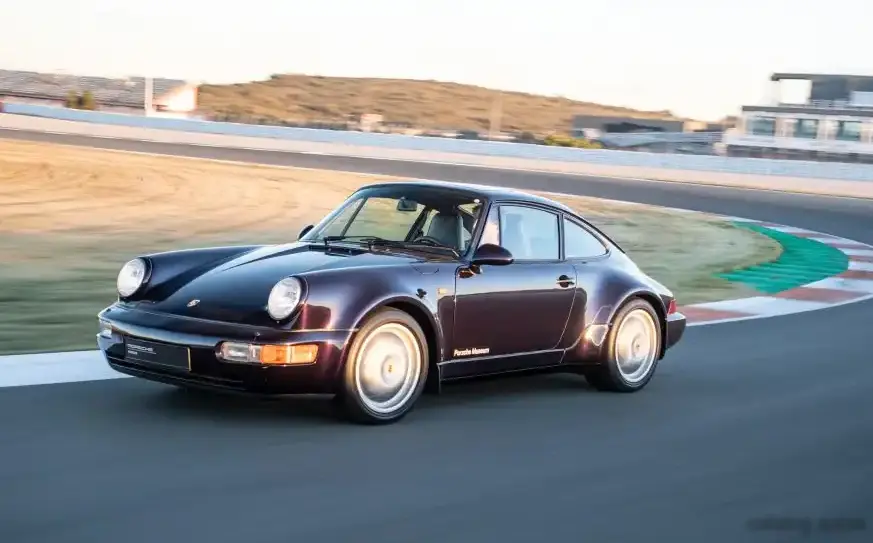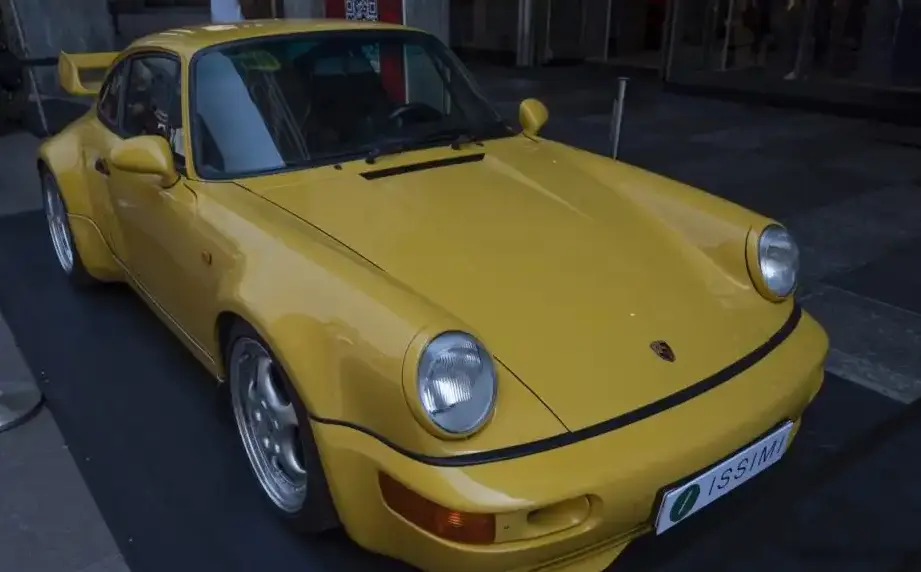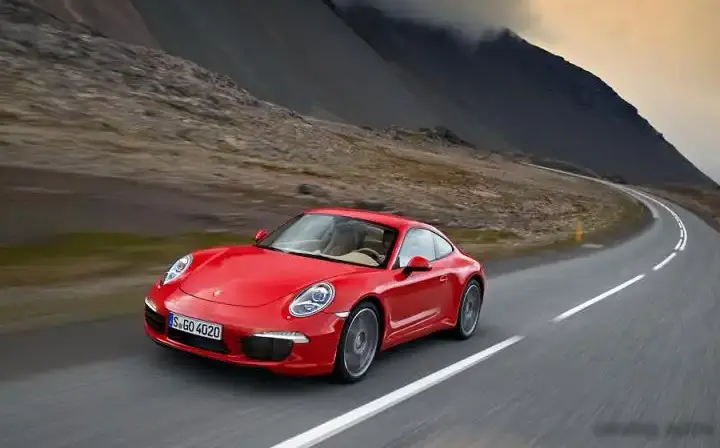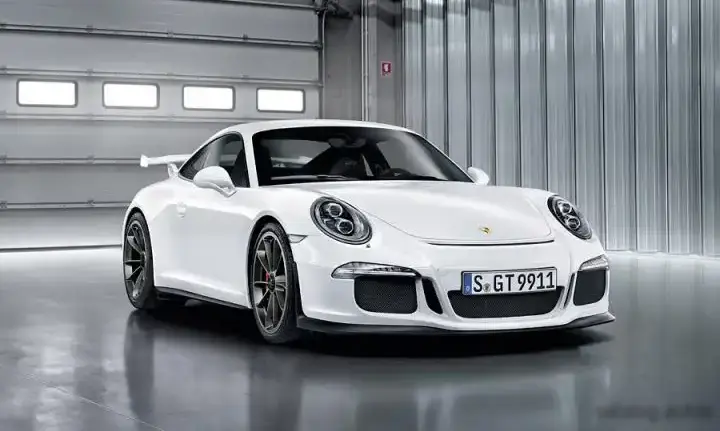
The Porsche 911 (991) GT3 RS 4.0 with the PDK dual-clutch transmission, produced from 2015 to 2017, represents a pinnacle of naturally aspirated performance within the 991 generation. Positioned as the most extreme, track-focused variant of the 911 at the time, it served as a swan song for the high-revving, large-displacement flat-six engine before Porsche increasingly embraced turbocharging. The GT3 RS 4.0 PDK was designed to bridge the gap between the hardcore, manual-transmission GT3 RS and those desiring the convenience and speed of Porsche’s advanced PDK gearbox. It was a limited-production model, further enhancing its exclusivity and collectibility.
Technical Specifications
| Brand | Porsche |
| Model | 911 |
| Generation | 911 (991) |
| Type (Engine) | GT3 RS 4.0 (500 Hp) PDK |
| Start of production | 2015 year |
| End of production | 2017 year |
| Powertrain Architecture | Internal Combustion engine |
| Body type | Coupe |
| Seats | 2 |
| Doors | 2 |
| Fuel consumption (economy) – urban | 19.2 l/100 km (12.3 US mpg, 14.7 UK mpg, 5.2 km/l) |
| Fuel consumption (economy) – extra urban | 8.9 l/100 km (26.4 US mpg, 31.7 UK mpg, 11.2 km/l) |
| Fuel consumption (economy) – combined | 12.7 l/100 km (18.5 US mpg, 22.2 UK mpg, 7.9 km/l) |
| CO2 emissions | 296 g/km |
| Fuel Type | Petrol (Gasoline) |
| Acceleration 0 – 100 km/h | 3.3 sec |
| Acceleration 0 – 62 mph | 3.3 sec |
| Acceleration 0 – 60 mph | 3.1 sec |
| Maximum speed | 310 km/h (192.63 mph) |
| Emission standard | Euro 6 |
| Weight-to-power ratio | 2.8 kg/Hp, 352.1 Hp/tonne |
| Weight-to-torque ratio | 3.1 kg/Nm, 323.9 Nm/tonne |
| Power | 500 Hp @ 8250 rpm |
| Power per litre | 125.1 Hp/l |
| Torque | 460 Nm @ 6250 rpm (339.28 lb.-ft. @ 6250 rpm) |
| Engine layout | Rear, Longitudinal |
| Engine Model/Code | MA1.76 |
| Engine displacement | 3996 cm3 (243.85 cu. in.) |
| Number of cylinders | 6 |
| Engine configuration | Boxer |
| Cylinder Bore | 102 mm (4.02 in.) |
| Piston Stroke | 81.5 mm (3.21 in.) |
| Compression ratio | 12.9:1 |
| Number of valves per cylinder | 4 |
| Fuel injection system | Direct injection |
| Engine aspiration | Naturally aspirated engine |
| Engine oil capacity | 8 l (8.45 US qt | 7.04 UK qt) |
| Coolant | 28 l (29.59 US qt | 24.64 UK qt) |
| Kerb Weight | 1420 kg (3130.56 lbs.) |
| Max. weight | 1720 kg (3791.95 lbs.) |
| Max load | 300 kg (661.39 lbs.) |
| Trunk (boot) space – minimum | 125 l (4.41 cu. ft.) |
| Trunk (boot) space – maximum | 260 l (9.18 cu. ft.) |
| Fuel tank capacity | 64 l (16.91 US gal | 14.08 UK gal) |
| Length | 4545 mm (178.94 in.) |
| Width | 1880 mm (74.02 in.) |
| Height | 1291 mm (50.83 in.) |
| Wheelbase | 2457 mm (96.73 in.) |
| Front track | 1587 mm (62.48 in.) |
| Rear (Back) track | 1557 mm (61.3 in.) |
| Drag coefficient (Cd) | 0.33 |
| Drivetrain Architecture | Rear wheel drive |
| Number of gears and type of gearbox | 7 gears, automatic transmission PDK |
| Front suspension | Independent type McPherson |
| Rear suspension | Independent multi-link suspension |
| Front brakes | Ventilated discs |
| Rear brakes | Ventilated discs |
| Assisting systems | ABS (Anti-lock braking system) |
| Steering type | Steering rack and pinion |
| Tires size | 265/35 ZR 20; 325/30 ZR 21 |
| Wheel rims size | 9.5J x 20; 12.5J x 21 |
Powertrain & Engine Architecture
At the heart of the GT3 RS 4.0 PDK lies the MA1.76 engine, a 3.996-liter naturally aspirated flat-six. This engine is a direct descendant of the motors used in Porsche’s successful GT3 racing programs. It features a dry-sump lubrication system, crucial for maintaining oil supply during aggressive cornering, and individual throttle bodies for each cylinder, contributing to its sharp throttle response. The engine utilizes direct fuel injection, optimizing combustion efficiency and power output. The 4.0-liter engine produces 500 horsepower at 8,250 rpm and 339 lb-ft of torque at 6,250 rpm. The PDK 7-speed dual-clutch transmission provides incredibly fast and precise shifts, enhancing both on-track performance and everyday drivability. Unlike a traditional automatic, the PDK allows the driver to select gears manually via steering wheel-mounted paddles or the gear lever.
Driving Characteristics
The GT3 RS 4.0 PDK delivers a driving experience that is both visceral and refined. The combination of the high-revving engine and the quick-shifting PDK transmission results in blistering acceleration. While the manual GT3 RS offered a more engaging, driver-focused experience, the PDK version provided quicker lap times due to its consistently fast gear changes. The PDK’s programming is geared towards performance, holding gears longer and downshifting aggressively under braking. The car feels incredibly balanced and planted, thanks to its lightweight construction and sophisticated suspension. The steering is precise and communicative, providing ample feedback to the driver. Compared to the standard 911 Carrera, the GT3 RS 4.0 PDK is significantly more focused, with a stiffer suspension and less sound insulation, making it less comfortable for daily commuting but far more capable on the track.
Equipment & Trim Levels
The GT3 RS 4.0 PDK came standard with a comprehensive suite of performance-oriented features. The interior was dominated by carbon fiber trim, lightweight bucket seats, and a minimalist dashboard layout. Standard equipment included Porsche Dynamic Chassis Control (PDCC), Porsche Torque Vectoring Plus (PTV Plus), and ceramic composite brakes (PCCB). Optional extras included a Clubsport package, which added a roll cage, six-point racing harnesses, and a fire extinguisher, further enhancing the car’s track capabilities. Exterior features included a prominent rear wing, aggressive front and rear bumpers, and lightweight alloy wheels. While customization options were available, the GT3 RS 4.0 PDK was generally delivered with a purposeful, track-focused specification.
Chassis & Braking
The chassis of the GT3 RS 4.0 PDK is a lightweight aluminum-steel composite construction, optimized for rigidity and weight reduction. The suspension features adjustable dampers and coil-over springs, allowing drivers to fine-tune the car’s handling characteristics. The front suspension utilizes a McPherson strut design, while the rear employs a multi-link setup. Braking duties are handled by ventilated ceramic composite discs, providing exceptional stopping power and fade resistance. The car also features an advanced ABS system and electronic stability control, enhancing safety and control.
Market Reception & Comparison
The Porsche 911 (991) GT3 RS 4.0 PDK was widely praised by automotive journalists for its exceptional performance and track capabilities. Critics lauded the engine’s responsiveness, the transmission’s speed, and the car’s overall balance. Compared to the manual GT3 RS, the PDK version was often seen as the more accessible option for drivers who preferred the convenience of an automatic transmission. However, some purists argued that the manual version offered a more engaging and rewarding driving experience. Fuel economy, while not a primary concern for buyers of this vehicle, was relatively poor at 18.5 US mpg combined. Reliability has generally been good, although the ceramic brakes can be expensive to replace.
Legacy
The Porsche 911 (991) GT3 RS 4.0 PDK holds a special place in Porsche history as one of the last naturally aspirated, high-performance 911s. Its limited production run and exceptional performance have made it a highly sought-after collectible. Today, well-maintained examples command premium prices in the used car market. The powertrain, while not without its maintenance requirements, has proven to be relatively durable, and the car continues to be enjoyed by enthusiasts around the world. It represents a high watermark for naturally aspirated Porsche performance and a testament to the brand’s commitment to driving excellence.