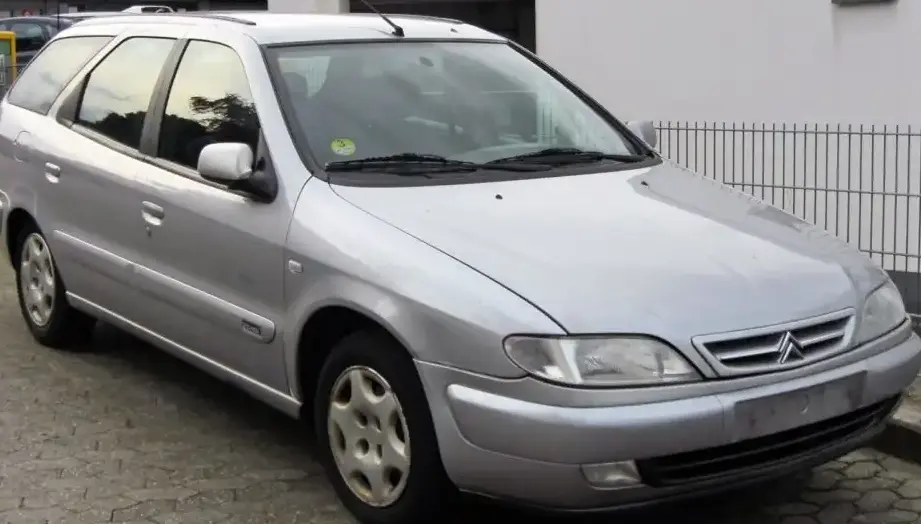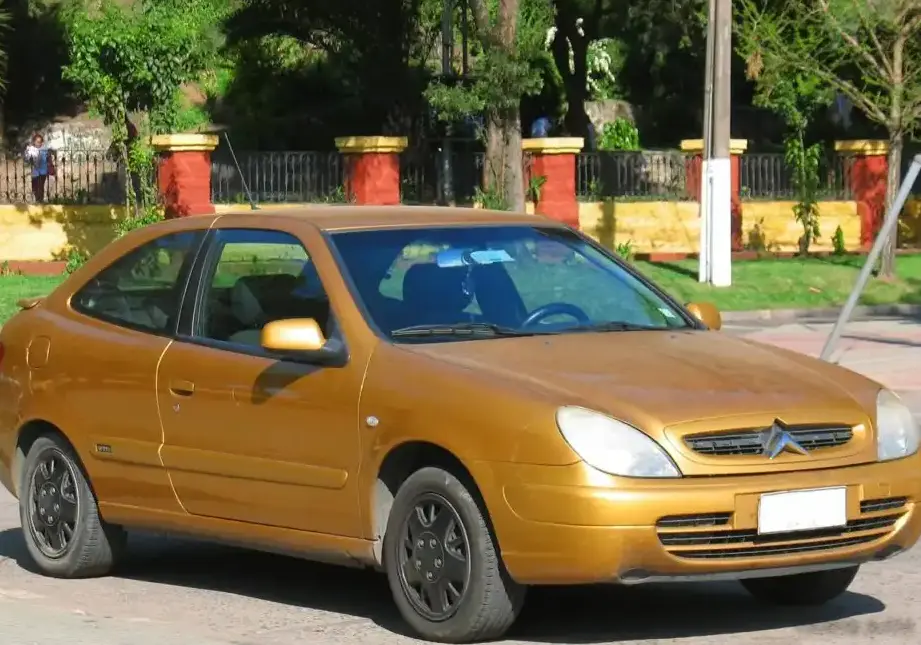
The Citroën Xsara Coupé VTS 2.0 HDi, produced between 2001 and 2003, represents a compelling blend of sporty styling and diesel efficiency within the second phase (N0) of the Xsara Coupé range. Positioned as a mid-range offering, it aimed to provide a more economical and refined alternative to the petrol-powered VTS models while still delivering a respectable level of performance. This variant played a significant role in Citroën’s European market strategy, appealing to buyers seeking a stylish, practical, and fuel-conscious coupé.
Technical Specifications
| Brand | Citroën |
| Model | Xsara |
| Generation | Xsara Coupé (N0, Phase II) |
| Type (Engine) | VTS 2.0 HDi (109 Hp) |
| Start of production | 2001 |
| End of production | 2003 |
| Powertrain Architecture | Internal Combustion engine |
| Body type | Coupe |
| Seats | 5 |
| Doors | 3 |
| Fuel consumption (urban) | 7 l/100 km (33.6 US mpg, 40.4 UK mpg, 14.3 km/l) |
| Fuel consumption (extra urban) | 4.2 l/100 km (56 US mpg, 67.3 UK mpg, 23.8 km/l) |
| Fuel consumption (combined) | 5.2 l/100 km (45.2 US mpg, 54.3 UK mpg, 19.2 km/l) |
| CO2 emissions | 138 g/km |
| Fuel Type | Diesel |
| Acceleration 0 – 100 km/h | 11.3 sec |
| Acceleration 0 – 62 mph | 11.3 sec |
| Acceleration 0 – 60 mph | 10.7 sec |
| Maximum speed | 195 km/h (121.17 mph) |
| Emission standard | Euro 3 |
| Weight-to-power ratio | 11.2 kg/Hp, 89.6 Hp/tonne |
| Weight-to-torque ratio | 4.9 kg/Nm, 205.6 Nm/tonne |
| Power | 109 Hp @ 4000 rpm |
| Power per litre | 54.6 Hp/l |
| Torque | 250 Nm @ 1750 rpm (184.39 lb.-ft. @ 1750 rpm) |
| Engine layout | Front, Transverse |
| Engine Model/Code | RHZ DW10ATED |
| Engine displacement | 1997 cm3 (121.86 cu. in.) |
| Number of cylinders | 4 |
| Engine configuration | Inline |
| Cylinder Bore | 85 mm (3.35 in.) |
| Piston Stroke | 88 mm (3.46 in.) |
| Compression ratio | 18:1 |
| Number of valves per cylinder | 2 |
| Fuel injection system | Diesel Commonrail |
| Engine aspiration | Turbocharger, Intercooler |
| Valvetrain | OHC |
| Engine oil capacity | 4.2 l (4.44 US qt | 3.7 UK qt) |
| Coolant | 5.8 l (6.13 US qt | 5.1 UK qt) |
| Kerb Weight | 1216 kg (2680.82 lbs.) |
| Max. weight | 1726 kg (3805.18 lbs.) |
| Max load | 510 kg (1124.36 lbs.) |
| Trunk (boot) space – minimum | 408 l (14.41 cu. ft.) |
| Trunk (boot) space – maximum | 1190 l (42.02 cu. ft.) |
| Fuel tank capacity | 54 l (14.27 US gal | 11.88 UK gal) |
| Max. roof load | 75 kg (165.35 lbs.) |
| Permitted trailer load with brakes (12%) | 1100 kg (2425.08 lbs.) |
| Permitted trailer load without brakes | 615 kg (1355.84 lbs.) |
| Permitted towbar download | 70 kg (154.32 lbs.) |
| Length | 4188 mm (164.88 in.) |
| Width | 1705 mm (67.13 in.) |
| Width including mirrors | 1976 mm (77.8 in.) |
| Height | 1405 mm (55.31 in.) |
| Wheelbase | 2540 mm (100 in.) |
| Front track | 1423 mm (56.02 in.) |
| Rear (Back) track | 1430 mm (56.3 in.) |
| Front overhang | 880 mm (34.65 in.) |
| Rear overhang | 768 mm (30.24 in.) |
| Minimum turning circle (turning diameter) | 11.5 m (37.73 ft.) |
| Drivetrain Architecture | The Internal combustion engine (ICE) drives the front wheels of the vehicle. |
| Drive wheel | Front wheel drive |
| Number of gears and type of gearbox | 5 gears, manual transmission |
| Front suspension | Independent, type McPherson with coil spring and anti-roll bar |
| Rear suspension | Torsion |
| Front brakes | Ventilated discs |
| Rear brakes | Drum |
| Assisting systems | ABS (Anti-lock braking system) |
| Steering type | Steering rack and pinion |
| Power steering | Hydraulic Steering |
| Tires size | 195/55 R15 |
INTRODUCTION
The Citroën Xsara Coupé VTS 2.0 HDi (produced 2001-2003) is a three-door coupé based on the N0 platform, shared with the Peugeot 307. It represents a significant step in Citroën’s diesel engine technology, combining the sporty aesthetics of the VTS trim level with the efficiency of a direct-injection diesel engine. This model aimed to broaden the appeal of the Xsara Coupé, offering a more economical alternative to the petrol-powered versions without sacrificing too much in terms of driving enjoyment. The ‘Phase II’ designation indicates updates to the original N0 series, including minor styling revisions and improvements to interior trim.
Powertrain & Engine Architecture
At the heart of the Xsara Coupé VTS 2.0 HDi lies the DW10ATED engine, commonly referred to by its code RHZ. This is a 1997cc, four-cylinder diesel engine utilizing common rail direct injection. The DW10 engine family is renowned for its robustness and efficiency. The HDi system, developed in partnership with Bosch, delivers fuel directly into the combustion chamber at extremely high pressure, resulting in improved combustion efficiency and reduced emissions. The engine features an overhead camshaft (OHC) valvetrain with two valves per cylinder. A turbocharger with an intercooler is employed to boost power and torque, providing 109 horsepower at 4000 rpm and a substantial 250 Nm (184 lb-ft) of torque at just 1750 rpm. The engine is transversely mounted, driving the front wheels. The 5-speed manual transmission was the standard offering, chosen for its balance of efficiency and driver engagement.
Driving Characteristics
The 2.0 HDi engine delivers a distinctly different driving experience compared to the petrol VTS models. While lacking the high-revving eagerness of the petrol engines, the HDi offers a strong surge of torque from low engine speeds. This makes it particularly well-suited for everyday driving and overtaking maneuvers. The 5-speed manual gearbox is well-matched to the engine’s characteristics, providing smooth and precise shifts. Acceleration from 0-60 mph takes around 10.7 seconds, and the car has a top speed of 121 mph. The relatively high kerb weight of 1216 kg does impact overall agility, but the well-tuned suspension provides a comfortable and controlled ride. Compared to the higher-output 2.0 HDi variants, this 109 hp version feels more relaxed and less demanding to drive, prioritizing fuel economy over outright performance.
Equipment & Trim Levels
The VTS trim level, even with the HDi engine, offered a reasonably well-equipped package. Standard features typically included alloy wheels, sports seats, air conditioning, electric front windows, and a CD stereo. The interior featured a sporty design with a leather-wrapped steering wheel and aluminum trim accents. Optional extras included a sunroof, rear parking sensors, and upgraded audio systems. The interior upholstery was generally cloth, although leather options were sometimes available. The dashboard layout was typical of Citroëns of the era, with a focus on functionality and ease of use.
Chassis & Braking
The Xsara Coupé VTS 2.0 HDi utilizes an independent McPherson strut suspension setup at the front, providing good handling and ride comfort. The rear suspension employs a torsion beam, a cost-effective and space-saving solution. The braking system consists of ventilated discs at the front and drum brakes at the rear. Anti-lock Braking System (ABS) was standard, enhancing safety and control during emergency braking. The steering is a hydraulic power-assisted rack and pinion system, offering precise and responsive steering feel. The standard tire size was 195/55 R15, providing a good balance of grip and ride comfort.
Market Reception & Comparison
The Citroën Xsara Coupé VTS 2.0 HDi was generally well-received by automotive critics. It was praised for its fuel efficiency, comfortable ride, and strong torque delivery. However, some reviewers noted that it lacked the outright excitement of the petrol-powered VTS models. Compared to the 2.0i 16V petrol version, the HDi offered significantly better fuel economy (around 45 mpg combined vs. 35 mpg) but slightly slower acceleration. Against competitors like the Ford Focus C-Max and Volkswagen Golf, the Xsara Coupé offered a distinctive styling and a competitive price point. The HDi engine proved to be reliable, although regular servicing and the use of high-quality diesel fuel were essential.
Legacy
The Citroën Xsara Coupé VTS 2.0 HDi has proven to be a durable and reliable vehicle. The DW10ATED engine is known for its longevity, and many examples are still on the road today. In the used car market, these models are often sought after by buyers looking for an affordable, economical, and stylish coupé. Maintenance costs are generally reasonable, although sourcing specific parts can sometimes be challenging. The combination of fuel efficiency, practicality, and distinctive styling has ensured that the Xsara Coupé VTS 2.0 HDi remains a popular choice for those seeking a classic French coupé with modern diesel technology.