
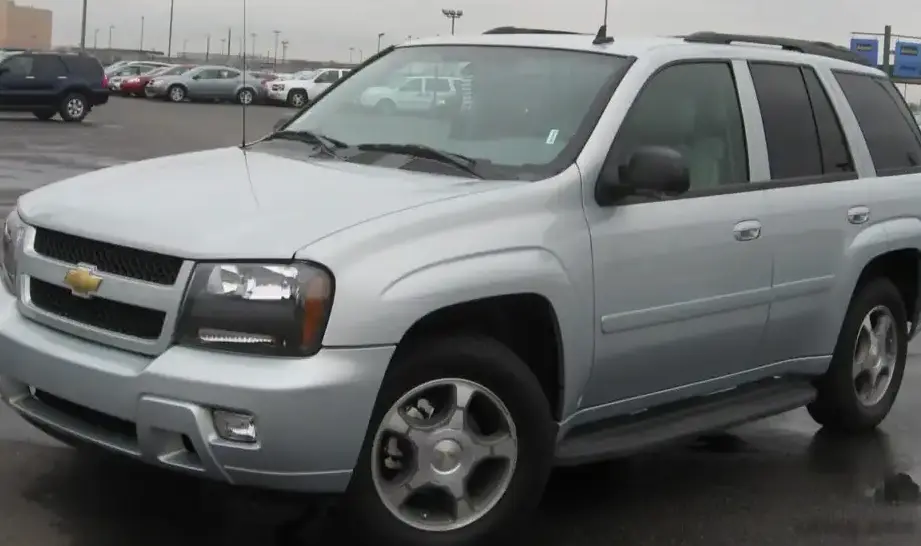
The Chevrolet Trailblazer, introduced for the 2006 model year, represented Chevrolet’s entry into the mid-size SUV market, positioned above the smaller Equinox and below the full-size Tahoe. The first generation Trailblazer (2006-2009) was based on the GMT360 platform, shared with the Buick Rainier and Isuzu Ascender. The 4.2i 24V variant, producing 295 horsepower, was a key offering in the lineup, aimed at buyers seeking a balance of power and towing capacity. This model year marked a shift for Chevrolet, moving away from truck-based SUVs towards more car-like crossover designs, though the Trailblazer retained a traditional body-on-frame construction.
Technical Specifications
| Brand | Chevrolet |
| Model | Trailblazer |
| Generation | Trailblazer I |
| Type (Engine) | 4.2 i 24V (295 Hp) |
| Start of production | 2006 year |
| End of production | 2009 year |
| Powertrain Architecture | Internal Combustion engine |
| Body type | SUV |
| Seats | 5 |
| Doors | 5 |
| Fuel consumption (economy) – urban | 14.7 l/100 km (16 US mpg, 19.2 UK mpg, 6.8 km/l) |
| Fuel consumption (economy) – extra urban | 11.2 l/100 km (21 US mpg, 25.2 UK mpg, 8.9 km/l) |
| Fuel Type | Petrol (Gasoline) |
| Acceleration 0 – 100 km/h | 8 sec |
| Acceleration 0 – 62 mph | 8 sec |
| Acceleration 0 – 60 mph | 7.6 sec |
| Maximum speed | 175 km/h (108.74 mph) |
| Weight-to-power ratio | 7 kg/Hp, 143.2 Hp/tonne |
| Weight-to-torque ratio | 5.5 kg/Nm, 182 Nm/tonne |
| Power | 295 Hp @ 6000 rpm |
| Power per litre | 71 Hp/l |
| Torque | 375 Nm @ 4800 rpm (276.59 lb.-ft. @ 4800 rpm) |
| Engine layout | Front, Longitudinal |
| Engine Model/Code | LL8 |
| Engine displacement | 4157 cm3 (253.68 cu. in.) |
| Number of cylinders | 6 |
| Engine configuration | Inline |
| Cylinder Bore | 93 mm (3.66 in.) |
| Piston Stroke | 102 mm (4.02 in.) |
| Compression ratio | 10.3:1 |
| Number of valves per cylinder | 4 |
| Fuel injection system | Multi-port manifold injection |
| Engine aspiration | Naturally aspirated engine |
| Valvetrain | DOHC |
| Engine oil capacity | 6.6 l (6.97 US qt | 5.81 UK qt) |
| Coolant | 9.2 l (9.72 US qt | 8.09 UK qt) |
| Kerb Weight | 2060 kg (4541.52 lbs.) |
| Max. weight | 2494 kg (5498.33 lbs.) |
| Max load | 434 kg (956.81 lbs.) |
| Trunk (boot) space – minimum | 1127 l (39.8 cu. ft.) |
| Trunk (boot) space – maximum | 2268 l (80.09 cu. ft.) |
| Fuel tank capacity | 83 l (21.93 US gal | 18.26 UK gal) |
| Length | 4872 mm (191.81 in.) |
| Width | 1895 mm (74.61 in.) |
| Height | 1892 mm (74.49 in.) |
| Wheelbase | 2870 mm (112.99 in.) |
| Front track | 1603 mm (63.11 in.) |
| Rear (Back) track | 1577 mm (62.09 in.) |
| Drivetrain Architecture | The Internal combustion engine (ICE) drives the rear wheels of the vehicle. |
| Drive wheel | Rear wheel drive |
| Number of gears and type of gearbox | 4 gears, automatic transmission |
| Front suspension | Double wishbone |
| Rear suspension | Coil spring |
| Front brakes | Ventilated discs |
| Rear brakes | Ventilated discs |
| Assisting systems | ABS (Anti-lock braking system) |
| Steering type | Steering rack and pinion |
| Power steering | Hydraulic Steering |
| Tires size | 245/70 R16 S |
Powertrain & Engine Architecture
The heart of the Trailblazer 4.2i was the LL8 engine, a 4.2-liter inline-six cylinder gasoline engine. This engine was part of GM’s Atlas family of engines, known for its robust construction and relatively simple design. The LL8 featured a cast iron block with aluminum cylinder heads, and a double overhead camshaft (DOHC) valvetrain operating four valves per cylinder. Fuel delivery was handled by a multi-port fuel injection system, providing precise fuel metering for optimal combustion. The 4L60-E four-speed automatic transmission was the sole transmission option for this engine. This transmission was a workhorse unit, known for its durability, but it lacked the efficiency of more modern transmissions with additional gears. The engine’s longitudinal mounting and rear-wheel-drive configuration were typical of traditional SUVs, providing a solid foundation for towing and off-road capability.
Driving Characteristics
The 4.2-liter engine, producing 295 horsepower and 375 lb-ft of torque, provided adequate power for the Trailblazer, allowing for a 0-60 mph time of around 7.6 seconds. However, the four-speed automatic transmission limited the engine’s potential, particularly in terms of fuel efficiency. The gear ratios were spaced relatively wide, resulting in noticeable shifts during acceleration. Compared to the available 4.0-liter inline-six (producing less power) or the potential for a more fuel-efficient V6, the 4.2L offered a noticeable performance boost, but at the cost of increased fuel consumption. The rear-wheel-drive setup provided a more engaging driving experience than many contemporary crossovers, but also required more driver skill in inclement weather. The Trailblazer 4.2L felt substantial on the road, offering a comfortable ride but lacking the nimble handling of smaller SUVs.
Equipment & Trim Levels
The Trailblazer 4.2i was typically offered in LT and LTZ trim levels. The LT trim included standard features such as air conditioning, power windows and locks, a CD player, and cloth upholstery. The LTZ trim added features like leather upholstery, heated front seats, a premium sound system, and alloy wheels. Optional extras included a sunroof, a navigation system, and a rear entertainment system. The interior design was functional and straightforward, prioritizing practicality over luxury. The Trailblazer’s spacious interior offered comfortable seating for five passengers and ample cargo space, especially with the rear seats folded down.
Chassis & Braking
The Trailblazer’s chassis featured a traditional body-on-frame construction, providing a robust and durable platform. The front suspension utilized a double wishbone design, while the rear suspension employed a coil spring setup. This suspension configuration provided a comfortable ride, but it wasn’t particularly sporty. Braking duties were handled by ventilated discs on all four wheels, coupled with an anti-lock braking system (ABS). The braking performance was adequate for the vehicle’s weight and intended use, but it wasn’t exceptional. The Trailblazer’s relatively heavy weight contributed to a noticeable amount of body roll during cornering.
Market Reception & Comparison
The Trailblazer 4.2i received mixed reviews from automotive critics. While the engine’s power and towing capacity were praised, the fuel economy and the outdated four-speed automatic transmission were common criticisms. Compared to competitors like the Ford Explorer and Jeep Grand Cherokee, the Trailblazer offered a more affordable price point, but it lacked some of the refinement and features of those vehicles. The 4.2L variant was generally considered a good choice for buyers who prioritized power and towing capability over fuel efficiency. Reliability was generally good, but the 4L60-E transmission could be prone to issues if not properly maintained.
Legacy
The Chevrolet Trailblazer I, particularly the 4.2i variant, has become a relatively affordable and capable used SUV. The LL8 engine is known for its durability, and with proper maintenance, it can provide many years of reliable service. However, potential buyers should be aware of the potential for transmission issues and the relatively poor fuel economy. The Trailblazer’s body-on-frame construction and rear-wheel-drive layout make it a popular choice for those who need a rugged and capable SUV for towing or off-road use. While it may not offer the latest technology or features, the Trailblazer 4.2i remains a viable option for buyers seeking a dependable and affordable mid-size SUV.
