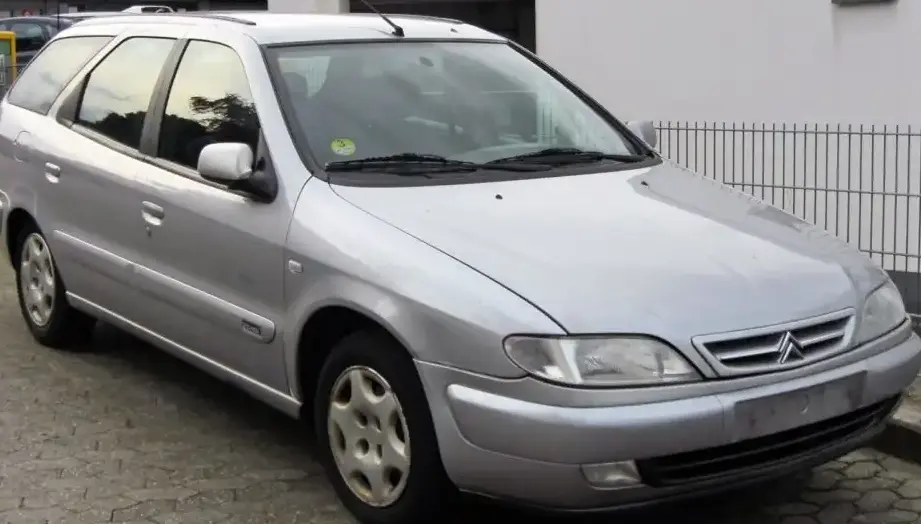
The Citroen Xsara Coupe (N0, Phase III) 2.0 HDi 90 hp, produced from February 2003 to 2004, represented a compelling blend of practicality and style within Citroen’s lineup. Positioned as a mid-range offering, it slotted between the lower-powered petrol variants and the more potent HDi 110 hp model. This three-door coupe, built on the PSA Group’s 1HX0/A3 platform (shared with the Peugeot 307), aimed to provide a more dynamic alternative to traditional hatchbacks, appealing to buyers seeking a sportier aesthetic without sacrificing everyday usability. The 2.0 HDi 90 hp version was particularly focused on fuel efficiency and reasonable performance, making it a popular choice in European markets where diesel engines were favored.
Technical Specifications
| Brand | Citroen |
| Model | Xsara |
| Generation | Xsara Coupe (N0, Phase III) |
| Type (Engine) | 2.0 HDi (90 Hp) |
| Start of production | February, 2003 |
| End of production | 2004 |
| Powertrain Architecture | Internal Combustion engine |
| Body type | Coupe |
| Seats | 5 |
| Doors | 3 |
| Fuel consumption (urban) | 7.3 l/100 km (32.2 US mpg, 38.7 UK mpg, 13.7 km/l) |
| Fuel consumption (extra urban) | 4.2 l/100 km (56 US mpg, 67.3 UK mpg, 23.8 km/l) |
| Fuel consumption (combined) | 5.4 l/100 km (43.6 US mpg, 52.3 UK mpg, 18.5 km/l) |
| CO2 emissions | 141 g/km |
| Fuel Type | Diesel |
| Acceleration 0 – 100 km/h | 13.2 sec |
| Acceleration 0 – 62 mph | 13.2 sec |
| Acceleration 0 – 60 mph | 12.5 sec |
| Maximum speed | 180 km/h (111.85 mph) |
| Emission standard | Euro 3 |
| Weight-to-power ratio | 13.4 kg/Hp, 74.8 Hp/tonne |
| Weight-to-torque ratio | 5.9 kg/Nm, 170.3 Nm/tonne |
| Power | 90 Hp @ 4000 rpm |
| Power per litre | 45.1 Hp/l |
| Torque | 205 Nm @ 1900 rpm (151.2 lb.-ft. @ 1900 rpm) |
| Engine layout | Front, Transverse |
| Engine Model/Code | RHY DW10TD |
| Engine displacement | 1997 cm3 (121.86 cu. in.) |
| Number of cylinders | 4 |
| Engine configuration | Inline |
| Cylinder Bore | 85 mm (3.35 in.) |
| Piston Stroke | 88 mm (3.46 in.) |
| Compression ratio | 18:1 |
| Number of valves per cylinder | 2 |
| Fuel injection system | Diesel Commonrail |
| Engine aspiration | Turbocharger |
| Valvetrain | OHC |
| Engine oil capacity | 4.2 l (4.44 US qt | 3.7 UK qt) |
| Coolant | 5.8 l (6.13 US qt | 5.1 UK qt) |
| Kerb Weight | 1204 kg (2654.37 lbs.) |
| Max. weight | 1699 kg (3745.65 lbs.) |
| Max load | 495 kg (1091.29 lbs.) |
| Trunk (boot) space – minimum | 408 l (14.41 cu. ft.) |
| Trunk (boot) space – maximum | 1190 l (42.02 cu. ft.) |
| Fuel tank capacity | 54 l (14.27 US gal | 11.88 UK gal) |
| Max. roof load | 75 kg (165.35 lbs.) |
| Permitted trailer load with brakes (12%) | 1100 kg (2425.08 lbs.) |
| Permitted trailer load without brakes | 625 kg (1377.89 lbs.) |
| Permitted towbar download | 70 kg (154.32 lbs.) |
| Length | 4188 mm (164.88 in.) |
| Width | 1705 mm (67.13 in.) |
| Width including mirrors | 2014 mm (79.29 in.) |
| Height | 1405 mm (55.31 in.) |
| Wheelbase | 2540 mm (100 in.) |
| Front track | 1433 mm (56.42 in.) |
| Rear (Back) track | 1442 mm (56.77 in.) |
| Front overhang | 880 mm (34.65 in.) |
| Rear overhang | 768 mm (30.24 in.) |
| Minimum turning circle | 11.5 m (37.73 ft.) |
| Drivetrain Architecture | Front wheel drive |
| Number of gears and type of gearbox | 5 gears, manual transmission |
| Front suspension | Independent, type McPherson with coil spring and anti-roll bar |
| Rear suspension | Torsion |
| Front brakes | Ventilated discs |
| Rear brakes | Disc |
| Assisting systems | ABS (Anti-lock braking system) |
| Steering type | Steering rack and pinion |
| Power steering | Hydraulic Steering |
| Tires size | 195/55 R15 |
| Wheel rims size | 6J x 15 |
Powertrain & Engine Architecture
The heart of the Xsara Coupe 2.0 HDi 90 was the RHY DW10TD engine, a 1.997-liter inline-four cylinder diesel. This engine was a mainstay of the PSA Group’s diesel offerings during the early 2000s. The ‘DW10’ designation refers to the engine family, while ‘RHY’ is the specific engine code. It featured a cast iron block and aluminum cylinder head, a common configuration for durability and weight reduction. Crucially, this engine utilized a second-generation common rail direct injection system, delivering fuel at extremely high pressures for improved combustion efficiency and reduced noise. The turbocharger, a variable geometry turbo (VGT), helped to broaden the engine’s powerband and minimize turbo lag. The overhead camshaft (OHC) operated two valves per cylinder. The 5-speed manual transmission was the standard offering, chosen for its efficiency and driver engagement. While an automatic transmission was available on other Xsara models, it wasn’t offered with the 2.0 HDi 90 hp engine.
Driving Characteristics
The 2.0 HDi 90 hp version of the Xsara Coupe prioritized fuel economy over outright performance. Acceleration from 0-60 mph took around 12.5 seconds, and top speed was limited to 111.85 mph. The engine produced a respectable 205 Nm (151.2 lb-ft) of torque at 1900 rpm, providing adequate pulling power for everyday driving and overtaking maneuvers. However, it lacked the punch of the 110 hp HDi variant. The gear ratios in the 5-speed manual transmission were well-matched to the engine’s characteristics, allowing for relaxed cruising at highway speeds. The suspension, tuned for comfort, provided a reasonably compliant ride, although it wasn’t as sporty as some of its rivals. The steering was light and precise, making the car easy to maneuver in urban environments.
Equipment & Trim Levels
The 2.0 HDi 90 hp Xsara Coupe typically came equipped with features such as power steering, central locking, electric front windows, and an RDS stereo. Higher trim levels, such as the Exclusive, added features like alloy wheels, air conditioning, a trip computer, and upgraded interior trim. Interior upholstery was typically cloth, with options for partial leather. Safety features included ABS brakes and driver and passenger airbags. Optional extras included a sunroof, metallic paint, and a CD changer.
Chassis & Braking
The Xsara Coupe featured an independent McPherson strut front suspension with a coil spring and anti-roll bar, providing good handling and stability. The rear suspension utilized a torsion beam setup, which was cost-effective and provided a comfortable ride. Braking duties were handled by ventilated discs at the front and solid discs at the rear. ABS (Anti-lock Braking System) was standard, enhancing braking performance and safety.
Market Reception & Comparison
The Citroen Xsara Coupe 2.0 HDi 90 hp was generally well-received by automotive critics for its fuel efficiency, comfortable ride, and stylish design. However, some reviewers noted that the engine lacked the performance of its rivals and the higher-powered HDi variants. Compared to the 2.0 HDi 110 hp model, the 90 hp version offered lower running costs but sacrificed performance. Against petrol-powered competitors, the HDi 90 provided significantly better fuel economy, making it an attractive option for high-mileage drivers.
Legacy
The DW10TD engine, in its various iterations, proved to be a remarkably durable and reliable powerplant. The 2.0 HDi 90 hp version of the Xsara Coupe, while not the most powerful or exciting model in the range, has earned a reputation for longevity and relatively low maintenance costs. Today, well-maintained examples are still found on the road, and the engine’s robust construction means that many continue to provide reliable service. In the used car market, these models represent an affordable and economical option for buyers seeking a practical and stylish coupe.