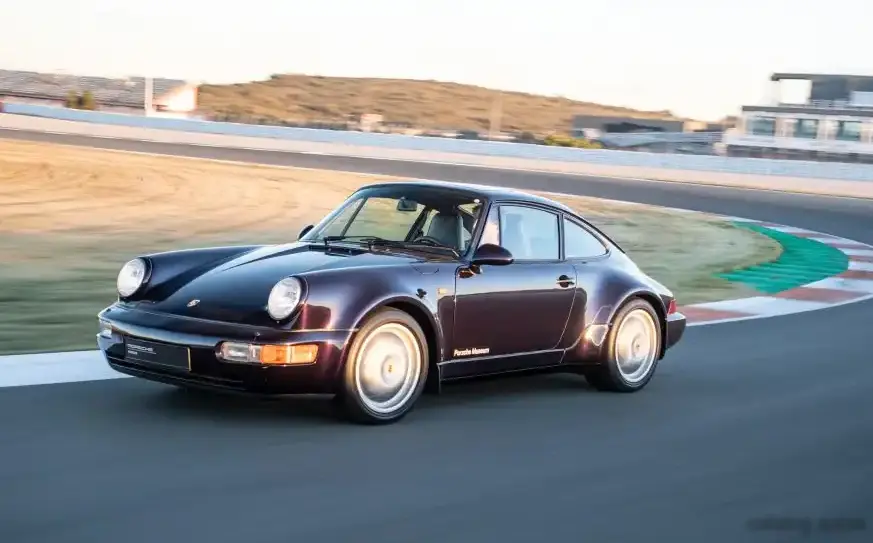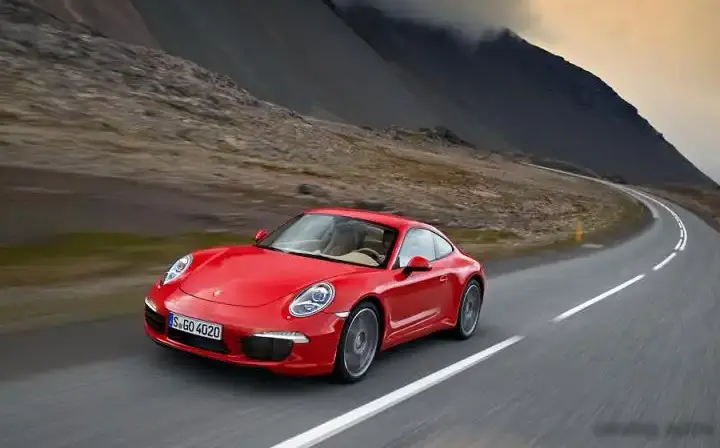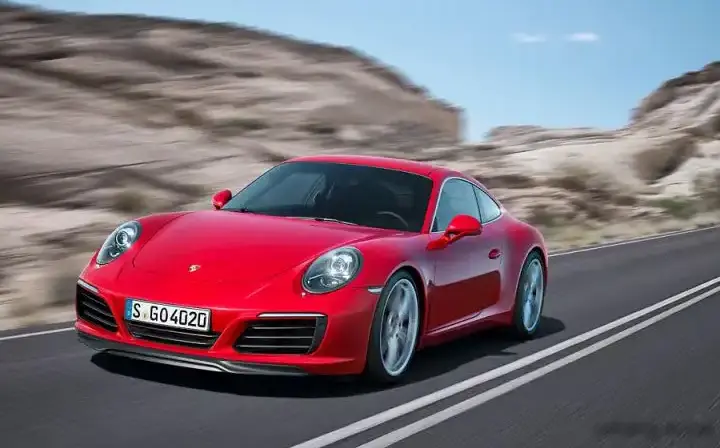
The Porsche 911 Carrera 4S 3.0, produced between 2015 and 2018, represents the second generation (991.2) of the iconic 911. This variant, distinguished by its all-wheel-drive system and 3.0-liter twin-turbocharged flat-six engine producing 420 horsepower, occupied a significant position within the 991.2 lineup as a performance-oriented, all-weather grand tourer. It bridged the gap between the base Carrera 4S and the more focused, track-oriented Carrera GTS models. The 991.2 generation brought substantial updates to the 911, including revised engine architecture, updated interior technology, and refined handling characteristics.
Technical Specifications
| Brand | Porsche |
| Model | 911 |
| Generation | 911 (991 II) |
| Type (Engine) | Carrera 4S 3.0 (420 Hp) |
| Start of production | 2015 |
| End of production | 2018 |
| Powertrain Architecture | Internal Combustion engine |
| Body type | Coupe |
| Seats | 4 |
| Doors | 2 |
| Fuel consumption (economy) – urban | 12.4 l/100 km (19 US mpg, 22.8 UK mpg, 8.1 km/l) |
| Fuel consumption (economy) – extra urban | 6.8 l/100 km (34.6 US mpg, 41.5 UK mpg, 14.7 km/l) |
| Fuel consumption (economy) – combined | 8.9 l/100 km (26.4 US mpg, 31.7 UK mpg, 11.2 km/l) |
| CO2 emissions | 204 g/km |
| Fuel Type | Petrol (Gasoline) |
| Acceleration 0 – 100 km/h | 4.2 sec |
| Acceleration 0 – 62 mph | 4.2 sec |
| Acceleration 0 – 60 mph | 4 sec |
| Maximum speed | 305 km/h (189.52 mph) |
| Emission standard | Euro 6 |
| Weight-to-power ratio | 3.5 kg/Hp, 281.9 Hp/tonne |
| Weight-to-torque ratio | 3 kg/Nm, 335.6 Nm/tonne |
| Power | 420 Hp @ 6500 rpm |
| Power per litre | 140.9 Hp/l |
| Torque | 500 Nm @ 1700-5000 rpm (368.78 lb.-ft. @ 1700-5000 rpm) |
| Engine layout | Rear, Longitudinal |
| Engine Model/Code | MA2.01, MA2.02 |
| Engine displacement | 2981 cm3 (181.91 cu. in.) |
| Number of cylinders | 6 |
| Engine configuration | Boxer |
| Cylinder Bore | 91 mm (3.58 in.) |
| Piston Stroke | 76.4 mm (3.01 in.) |
| Compression ratio | 10:1 |
| Number of valves per cylinder | 4 |
| Fuel injection system | Direct injection |
| Engine aspiration | BiTurbo, Intercooler |
| Engine oil capacity | 8 l (8.45 US qt | 7.04 UK qt) |
| Coolant | 28.3 l (29.9 US qt | 24.9 UK qt) |
| Kerb Weight | 1490 kg (3284.89 lbs.) |
| Max. weight | 1950 kg (4299.01 lbs.) |
| Max load | 460 kg (1014.13 lbs.) |
| Trunk (boot) space – minimum | 125 l (4.41 cu. ft.) |
| Trunk (boot) space – maximum | 260 l (9.18 cu. ft.) |
| Fuel tank capacity | 68 l (17.96 US gal | 14.96 UK gal) |
| Length | 4499 mm (177.13 in.) |
| Width | 1852 mm (72.91 in.) |
| Width with mirrors folded | 1978 mm (77.87 in.) |
| Height | 1298 mm (51.1 in.) |
| Wheelbase | 2450 mm (96.46 in.) |
| Front track | 1543 mm (60.75 in.) |
| Rear (Back) track | 1558 mm (61.34 in.) |
| Drag coefficient (Cd) | 0.30 |
| Drive wheel | All wheel drive (4×4) |
| Number of gears and type of gearbox | 7 gears, manual transmission |
| Front suspension | Independent type McPherson |
| Rear suspension | Independent multi-link suspension |
| Front brakes | Ventilated discs |
| Rear brakes | Ventilated discs |
| Assisting systems | ABS (Anti-lock braking system) |
| Steering type | Steering rack and pinion |
| Power steering | Electric Steering |
| Tires size | 245/35 ZR 20; 305/30 ZR 20 |
| Wheel rims size | 8.5J x 20; 11.5J x 20 |
Introduction
The 911 Carrera 4S 3.0, launched in 2015 as part of the 991.2 generation, marked a significant shift in the 911’s powertrain. Replacing the naturally aspirated flat-six engines of previous generations, Porsche introduced a new 3.0-liter twin-turbocharged flat-six engine across most 911 variants. The “4S” designation indicates the inclusion of Porsche’s sophisticated all-wheel-drive system, providing enhanced traction and stability, particularly in inclement weather. This model aimed to deliver a blend of exhilarating performance, everyday usability, and all-season capability, appealing to a broad spectrum of Porsche enthusiasts. It sat comfortably within the 991.2 range, offering a step up in performance and refinement from the base Carrera 4, while remaining more accessible than the track-focused Carrera GTS.
Powertrain & Engine Architecture
At the heart of the Carrera 4S 3.0 lies the MA2.01 or MA2.02 engine code, a 3.0-liter twin-turbocharged flat-six. This engine utilizes direct fuel injection, delivering fuel directly into the combustion chamber for improved efficiency and power. The twin-turbocharger setup, employing variable turbine geometry (VTG), minimizes turbo lag and provides a broad, flat torque curve. The engine produces 420 horsepower at 6500 rpm and 500 Nm (368.78 lb-ft) of torque between 1700 and 5000 rpm. The engine’s layout is rear-mounted and longitudinal, a defining characteristic of the 911. The standard transmission for this model was a 7-speed manual, though an optional 7-speed Porsche Doppelkupplung (PDK) dual-clutch automatic transmission was also available. The PDK transmission offered incredibly fast and smooth gear changes, further enhancing the car’s performance capabilities.
Driving Characteristics
The Carrera 4S 3.0 delivers a distinctly different driving experience compared to its predecessors. The twin-turbocharged engine provides immediate and potent acceleration, with minimal turbo lag. The all-wheel-drive system ensures excellent traction, allowing for confident cornering and acceleration even on slippery surfaces. The 7-speed manual transmission offers a rewarding and engaging driving experience, while the PDK transmission provides seamless and lightning-fast shifts. Compared to the naturally aspirated 991.1 models, the 991.2 Carrera 4S feels more muscular and responsive at lower engine speeds, thanks to the increased torque output. While not as raw and visceral as the older engines, the 3.0-liter turbo offers a refined and powerful driving experience.
Equipment & Trim Levels
The Carrera 4S 3.0 came standard with a comprehensive list of features, including a leather interior, bi-xenon headlights, Porsche Communication Management (PCM) with a 7-inch touchscreen display, and a high-quality sound system. Optional extras were plentiful, allowing buyers to personalize their vehicles. Popular options included Porsche Dynamic Chassis Control (PDCC), which minimizes body roll during cornering, adaptive sports seats, and a sunroof. Interior upholstery options ranged from standard leather to more luxurious leather packages with extended trim. Dashboard configurations were relatively consistent across the 991.2 range, with a focus on driver ergonomics and functionality.
Chassis & Braking
The 991.2 Carrera 4S utilizes an independent suspension system, with McPherson struts at the front and a multi-link setup at the rear. Porsche’s Active Suspension Management (PASM) system, available as an option, allows drivers to adjust the suspension damping to suit their driving preferences. Braking duties are handled by ventilated discs on all four wheels, providing ample stopping power. The Carrera 4S also features Porsche Stability Management (PSM), an electronic stability control system that helps to maintain control in challenging driving conditions. The all-wheel-drive system utilizes a viscous coupling to distribute power between the front and rear axles, optimizing traction based on available grip.
Market Reception & Comparison
The 991.2 Carrera 4S was generally well-received by automotive critics. Praise was directed towards the engine’s performance, the improved responsiveness of the twin-turbocharged setup, and the enhanced all-weather capability provided by the all-wheel-drive system. Some critics noted a slight loss of the traditional 911 engine sound, but the overall driving experience was overwhelmingly positive. Compared to the base Carrera 4, the 4S offered a noticeable performance upgrade, while the GTS models provided an even more focused and track-oriented experience. Fuel economy was respectable for a high-performance sports car, with combined fuel consumption figures around 26.4 US mpg.
Legacy
The 991.2 Carrera 4S 3.0 has proven to be a reliable and well-regarded sports car. The twin-turbocharged engine, while more complex than its naturally aspirated predecessors, has demonstrated good long-term durability. On the used car market, these models hold their value well, reflecting their performance, refinement, and iconic status. Regular maintenance, including oil changes and inspections, is crucial for ensuring the longevity of the engine and drivetrain. The 991.2 generation, and particularly the Carrera 4S, represents a significant evolution in the 911 lineage, blending modern technology with the classic Porsche driving experience.