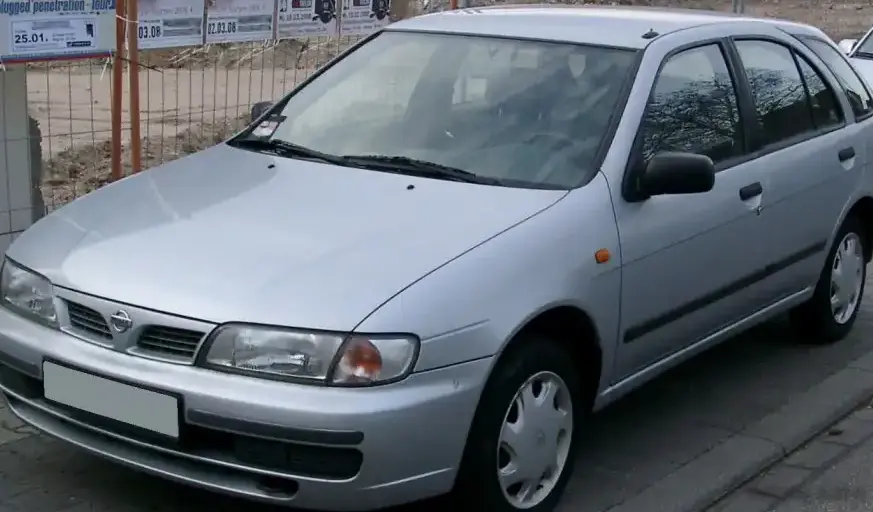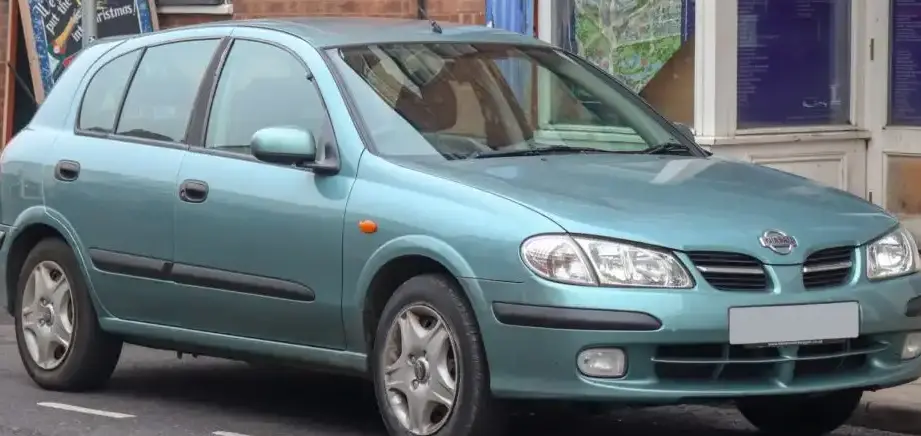
The Nissan Almera II Hatchback, specifically the 1.8 16V variant with an automatic transmission, was produced between 2002 and 2003. This model, designated as part of the N16 series, represented Nissan’s entry into the compact hatchback segment in the European market. Positioned as a practical and affordable option, it aimed to provide comfortable transportation for families and individuals. The Almera N16 was a significant model for Nissan, representing a move towards more contemporary styling and improved build quality compared to its predecessor. This particular 1.8L automatic configuration occupied a mid-range position within the Almera II lineup, offering a balance between performance and convenience.
Technical Specifications
| Brand | Nissan |
| Model | Almera |
| Generation | Almera II Hatchback (N16) |
| Type (Engine) | 1.8 16V (116 Hp) Automatic |
| Start of production | 2002 |
| End of production | 2003 |
| Powertrain Architecture | Internal Combustion engine |
| Body type | Hatchback |
| Seats | 5 |
| Doors | 3/5 |
| Fuel consumption (urban) | 10.6 l/100 km (22.2 US mpg) |
| Fuel consumption (extra urban) | 6.2 l/100 km (37.9 US mpg) |
| Fuel consumption (combined) | 7.8 l/100 km (30.2 US mpg) |
| Fuel Type | Petrol (Gasoline) |
| Acceleration 0 – 100 km/h | 12.5 sec |
| Acceleration 0 – 62 mph | 12.5 sec |
| Acceleration 0 – 60 mph | 11.9 sec |
| Maximum speed | 176 km/h (109.36 mph) |
| Weight-to-power ratio | 10.2 kg/Hp |
| Weight-to-torque ratio | 7.3 kg/Nm |
| Power | 116 Hp @ 5600 rpm |
| Torque | 163 Nm @ 4000 rpm (120.22 lb.-ft. @ 4000 rpm) |
| Engine layout | Front, Transverse |
| Engine Model/Code | QG18DE |
| Engine displacement | 1769 cm3 (107.95 cu. in.) |
| Number of cylinders | 4 |
| Engine configuration | Inline |
| Cylinder Bore | 80 mm (3.15 in.) |
| Piston Stroke | 88 mm (3.46 in.) |
| Compression ratio | 9.5:1 |
| Number of valves per cylinder | 4 |
| Fuel injection system | Multi-port manifold injection |
| Engine aspiration | Naturally aspirated engine |
| Valvetrain | DOHC |
| Engine oil capacity | 2.9 l (3.06 US qt | 2.55 UK qt) |
| Coolant capacity | 6.7 l (7.08 US qt | 5.9 UK qt) |
| Kerb Weight | 1187 kg (2616.89 lbs.) |
| Max. weight | 1735 kg (3825.02 lbs.) |
| Max load | 548 kg (1208.13 lbs.) |
| Trunk (boot) space – minimum | 355 l (12.54 cu. ft.) |
| Trunk (boot) space – maximum | 1020 l (36.02 cu. ft.) |
| Fuel tank capacity | 60 l (15.85 US gal | 13.2 UK gal) |
| Length | 4184 mm (164.72 in.) |
| Width | 1706 mm (67.17 in.) |
| Height | 1448 mm (57.01 in.) |
| Wheelbase | 2535 mm (99.8 in.) |
| Front track | 1470 mm (57.87 in.) |
| Rear track | 1455 mm (57.28 in.) |
| Drivetrain Architecture | Front wheel drive |
| Number of gears | 4 |
| Gearbox type | Automatic transmission |
| Front suspension | Spring Strut |
| Rear suspension | Rigid axle suspension |
| Front brakes | Ventilated discs |
| Rear brakes | Disc |
| Assisting systems | ABS (Anti-lock braking system) |
| Steering type | Steering rack and pinion |
| Power steering | Hydraulic Steering |
| Tires size | 185/65 R15 |
Powertrain & Engine Architecture
The heart of this Almera variant is the QG18DE engine, a 1.8-liter inline-four cylinder gasoline engine. This engine is a naturally aspirated design, meaning it doesn’t utilize a turbocharger or supercharger. It features a double overhead camshaft (DOHC) valvetrain with four valves per cylinder, contributing to its relatively efficient breathing. Fuel delivery is managed by a multi-port fuel injection system, providing precise fuel metering for optimal combustion. The QG18DE is known for its generally robust design and relatively simple maintenance requirements. The automatic transmission paired with this engine is a four-speed unit. While not the most modern transmission by today’s standards, it provided smooth and convenient shifting for everyday driving. The transmission’s gear ratios were tuned for fuel efficiency and comfortable cruising, rather than outright performance.
Driving Characteristics
The 116 horsepower and 120 lb-ft of torque produced by the 1.8L engine and automatic transmission combination resulted in adequate, but not exhilarating, performance. Acceleration from 0 to 60 mph took around 11.9 seconds, and top speed was approximately 109 mph. Compared to the manual transmission version of the same engine, the automatic suffered a slight performance penalty due to the inherent losses within the torque converter. It also felt less responsive during quick overtaking maneuvers. However, the automatic transmission provided a more relaxed driving experience, particularly in urban traffic. The gear ratios were spaced to prioritize fuel economy, making it a suitable choice for drivers prioritizing comfort and convenience over sporty handling. The suspension setup, featuring a spring strut front and rigid axle rear, provided a comfortable ride, but didn’t offer particularly engaging handling characteristics.
Equipment & Trim Levels
The 1.8L automatic Almera typically came equipped with a reasonable level of standard features. These included power steering, central locking, electric front windows, and an AM/FM radio. Higher trim levels, often denoted by “SE” or “S” designations, added features such as alloy wheels, air conditioning, and upgraded interior trim. Interior upholstery was typically cloth, with a relatively simple dashboard layout. Optional extras included a sunroof, upgraded audio systems, and metallic paint finishes. The overall interior design was functional and practical, prioritizing usability over luxury.
Chassis & Braking
The Almera N16 utilized a front-wheel-drive layout with a MacPherson strut suspension in the front and a torsion beam rear suspension. This setup was chosen for its cost-effectiveness and ability to provide a comfortable ride. Braking duties were handled by ventilated discs in the front and solid discs in the rear. Anti-lock Braking System (ABS) was standard, enhancing safety by preventing wheel lockup during hard braking. The steering system employed a hydraulic power steering rack and pinion, providing reasonably light and precise steering feel.
Market Reception & Comparison
The Nissan Almera II 1.8 Automatic was generally well-received as a practical and affordable family car. Critics praised its comfortable ride and spacious interior, but noted its somewhat uninspiring performance and handling. Compared to other trims in the Almera lineup, such as the more powerful 1.8 manual or the fuel-efficient diesel variants, the 1.8 automatic appealed to drivers who prioritized convenience and ease of use. Fuel economy was respectable for its class, averaging around 30 mpg in combined driving. Reliability was generally good, although some owners reported minor issues with the automatic transmission over time.
Legacy
The Nissan Almera N16 1.8 Automatic has become a relatively affordable and readily available used car. The QG18DE engine is known for its durability, and with proper maintenance, can provide many years of reliable service. While the four-speed automatic transmission is not as sophisticated as modern units, it is generally dependable. Today, these Almeras are often sought after as economical and practical transportation for students, commuters, or as a second family vehicle. Parts availability remains good, making maintenance relatively straightforward and cost-effective. The Almera N16 represents a solid, if unspectacular, example of a late 1990s/early 2000s compact hatchback.