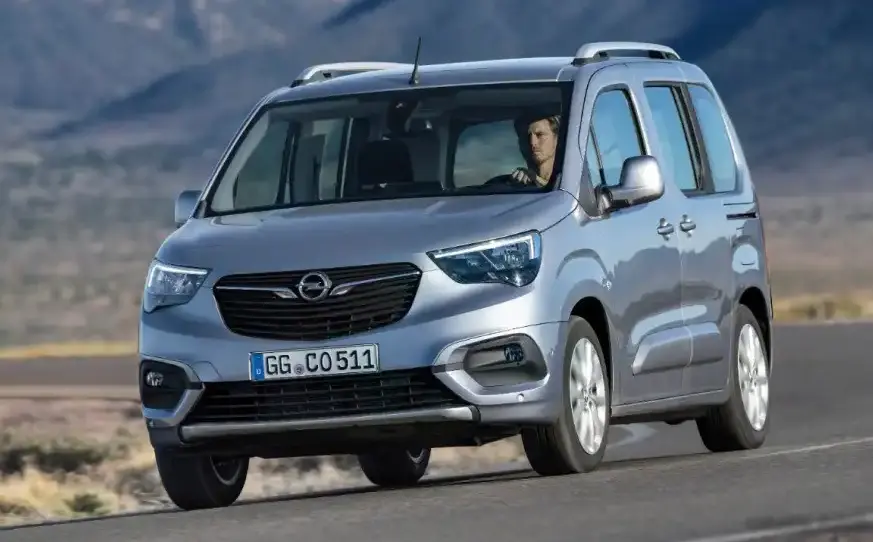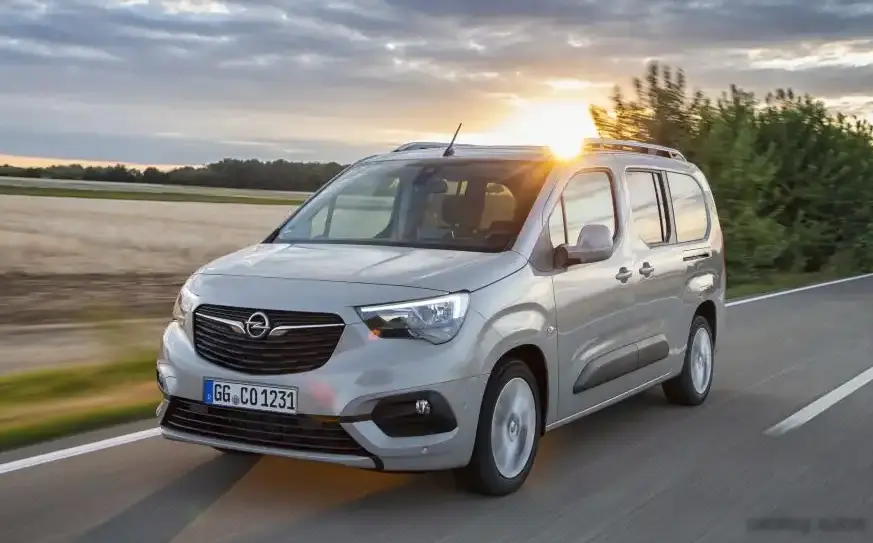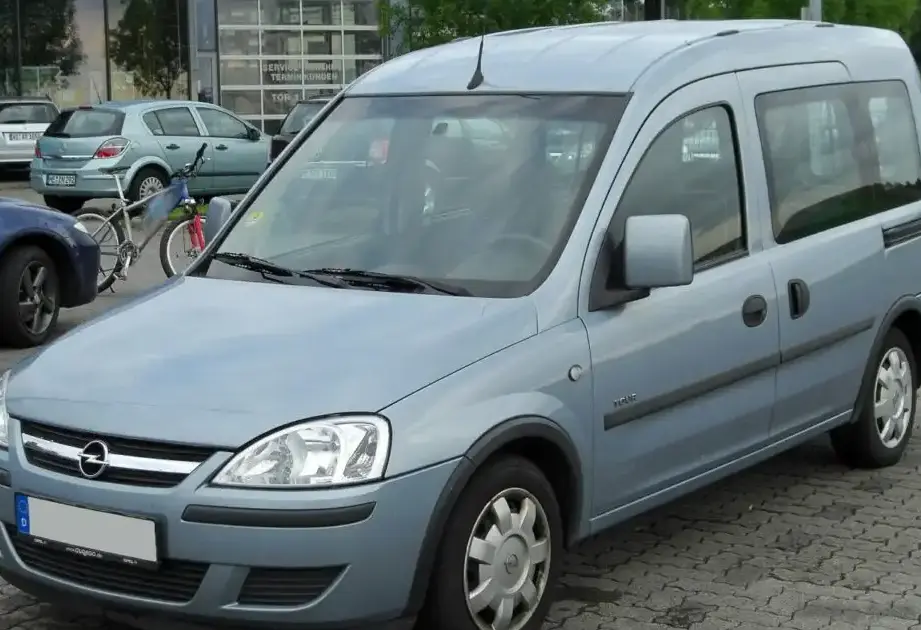
The Opel Combo Tour C (facelift, introduced in 2003) 1.6 CNG (94 horsepower) ecoFLEX represents a unique offering within the Combo Tour C range, produced from November 2007 to September 2010. This variant was specifically designed to appeal to environmentally conscious buyers and those seeking lower running costs, leveraging the benefits of Compressed Natural Gas (CNG) as an alternative fuel. Positioned as a practical and economical choice, it served as a niche model within the broader Combo lineup, which also included petrol and diesel engine options. The Combo Tour C itself was based on the shared GM/Fiat platform, also underpinning vehicles like the Fiat Doblo and Renault Kangoo, making it a popular choice in the compact van/leisure activity vehicle segment in Europe.
Technical Specifications
| Brand | Opel |
| Model | Combo |
| Generation | Combo Tour C (facelift 2003) |
| Type (Engine) | 1.6 CNG (94 Hp) ecoFLEX |
| Start of production | November, 2007 |
| End of production | September, 2010 |
| Powertrain Architecture | Internal Combustion engine |
| Body type | Minivan |
| Seats | 5 |
| Doors | 5 |
| Fuel consumption (urban) | 10.1 l/100 km (23.3 US mpg, 28 UK mpg, 9.9 km/l) |
| Fuel consumption (extra urban) | 5.9 l/100 km (39.9 US mpg, 47.9 UK mpg, 16.9 km/l) |
| Fuel consumption (combined) | 7.5 l/100 km (31.4 US mpg, 37.7 UK mpg, 13.3 km/l) |
| CO2 emissions | 133 g/km |
| Fuel Type | Petrol / CNG |
| Acceleration 0 – 100 km/h | 15 sec |
| Acceleration 0 – 62 mph | 15 sec |
| Acceleration 0 – 60 mph | 14.3 sec |
| Maximum speed | 165 km/h (102.53 mph) |
| Emission standard | Euro 4 |
| Weight-to-power ratio | 13.8 kg/Hp, 72.6 Hp/tonne |
| Weight-to-torque ratio | 9.7 kg/Nm, 102.7 Nm/tonne |
| Power | 94 Hp @ 6200 rpm |
| Power per litre | 58.8 Hp/l |
| Torque | 133 Nm @ 4200 rpm (98.1 lb.-ft. @ 4200 rpm) |
| Engine layout | Front, Transverse |
| Engine Model/Code | Z16YNG |
| Engine displacement | 1598 cm3 (97.52 cu. in.) |
| Number of cylinders | 4 |
| Engine configuration | Inline |
| Cylinder Bore | 79 mm (3.11 in.) |
| Piston Stroke | 81.5 mm (3.21 in.) |
| Compression ratio | 10.5:1 |
| Number of valves per cylinder | 4 |
| Fuel injection system | Multi-port manifold injection |
| Engine aspiration | Naturally aspirated engine |
| Engine oil capacity | 3.5 l (3.7 US qt, 3.08 UK qt) |
| Coolant capacity | 6.1 l (6.45 US qt, 5.37 UK qt) |
| Kerb Weight | 1295 kg (2854.99 lbs.) |
| Max. weight | 1930 kg (4254.92 lbs.) |
| Max load | 635 kg (1399.94 lbs.) |
| Trunk (boot) space – minimum | 455 l (16.07 cu. ft.) |
| Trunk (boot) space – maximum | 2700 l (95.35 cu. ft.) |
| Length | 4322 mm (170.16 in.) |
| Width | 1684 mm (66.3 in.) |
| Width including mirrors | 1892 mm (74.49 in.) |
| Height | 1801 mm (70.91 in.) |
| Wheelbase | 2716 mm (106.93 in.) |
| Front track | 1417 mm (55.79 in.) |
| Rear (Back) track | 1440 mm (56.69 in.) |
| Front overhang | 747 mm (29.41 in.) |
| Rear overhang | 859 mm (33.82 in.) |
| Ride height (ground clearance) | 160 mm (6.3 in.) |
| Drivetrain Architecture | The Internal combustion engine (ICE) drives the front wheels of the vehicle. |
| Drive wheel | Front wheel drive |
| Number of gears and type of gearbox | 5 gears, manual transmission |
| Front suspension | Spring Strut |
| Rear suspension | Coil spring |
| Front brakes | Ventilated discs |
| Rear brakes | Drum |
| Assisting systems | ABS (Anti-lock braking system) |
| Steering type | Steering rack and pinion |
| Power steering | Hydraulic Steering |
| Tires size | 175/65 R14 |
| Wheel rims size | 14 |
Powertrain & Engine Architecture
The heart of the Combo Tour C 1.6 CNG ecoFLEX is the Z16YNG engine, a 1.6-liter inline-four cylinder powerplant specifically adapted for both petrol and Compressed Natural Gas operation. This engine utilizes a multi-point fuel injection system for precise fuel delivery. The engine produces 94 horsepower at 6200 rpm and 133 Nm (98.1 lb-ft) of torque at 4200 rpm. The engine features a compression ratio of 10.5:1. The key difference from standard 1.6-liter Opel engines lies in the reinforced cylinder head, modified pistons, and the addition of a CNG fuel system. This system includes a high-pressure fuel tank (typically located under the floor of the vehicle), a pressure regulator, and dedicated fuel injectors for CNG. The engine can seamlessly switch between petrol and CNG, offering flexibility depending on fuel availability and cost. The transmission is a 5-speed manual gearbox, chosen for its efficiency and suitability for the engine’s power characteristics.
Driving Characteristics
The 1.6 CNG 94 hp Combo Tour C offers a driving experience geared towards practicality and economy rather than outright performance. Acceleration from 0-100 km/h (0-62 mph) takes around 15 seconds, making it noticeably slower than petrol or diesel-powered versions. The CNG engine delivers a relatively smooth power delivery, but the lower horsepower and torque figures are evident, particularly when fully loaded or tackling inclines. The 5-speed manual transmission is well-matched to the engine, allowing drivers to keep the engine in its optimal power band. While not a sporty vehicle, the Combo Tour C 1.6 CNG provides adequate performance for everyday driving and urban commuting. The benefit lies in the significantly lower fuel costs associated with CNG, and reduced emissions.
Equipment & Trim Levels
The 1.6 CNG ecoFLEX variant of the Combo Tour C typically came with a fairly basic level of equipment, reflecting its position as an economy-focused model. Standard features generally included power steering, ABS brakes, a driver’s airbag, and basic cloth upholstery. Air conditioning, electric windows, and a radio/CD player were often optional extras. The interior was functional and durable, prioritizing practicality over luxury. Trim levels were relatively limited, with most examples featuring a simple dashboard layout and minimal cosmetic enhancements.
Chassis & Braking
The Combo Tour C 1.6 CNG utilizes a conventional front-wheel-drive layout with a MacPherson strut front suspension and a coil spring rear suspension. The braking system consists of ventilated discs on the front wheels and drum brakes on the rear. This configuration was typical for vehicles in this weight class and provided adequate stopping power for everyday use. The suspension setup prioritized ride comfort over sporty handling, offering a reasonably compliant ride on most road surfaces.
Market Reception & Comparison
The Opel Combo Tour C 1.6 CNG ecoFLEX was generally well-received by critics and buyers seeking an economical and environmentally friendly vehicle. Its primary advantage was its significantly lower running costs compared to petrol or diesel alternatives, thanks to the lower price of CNG in many European markets. However, the limited availability of CNG refueling stations was a drawback. Compared to the petrol and diesel versions of the Combo Tour C, the CNG model offered lower performance but compensated with improved fuel economy and reduced emissions. The diesel versions, particularly the 1.7 CDTi, offered superior torque and fuel efficiency, while the petrol versions provided more power but at a higher running cost.
Legacy
The Opel Combo Tour C 1.6 CNG ecoFLEX represents an early attempt by Opel to offer an alternative fuel vehicle to the mass market. While CNG never achieved widespread adoption, the Combo Tour C CNG demonstrated the potential of this technology for reducing emissions and lowering fuel costs. Today, these vehicles are relatively rare on the used car market, but they remain a viable option for buyers seeking an economical and environmentally conscious vehicle, provided access to a CNG refueling infrastructure is available. The Z16YNG engine, when properly maintained, is known for its reliability, although the CNG-specific components may require specialized servicing.