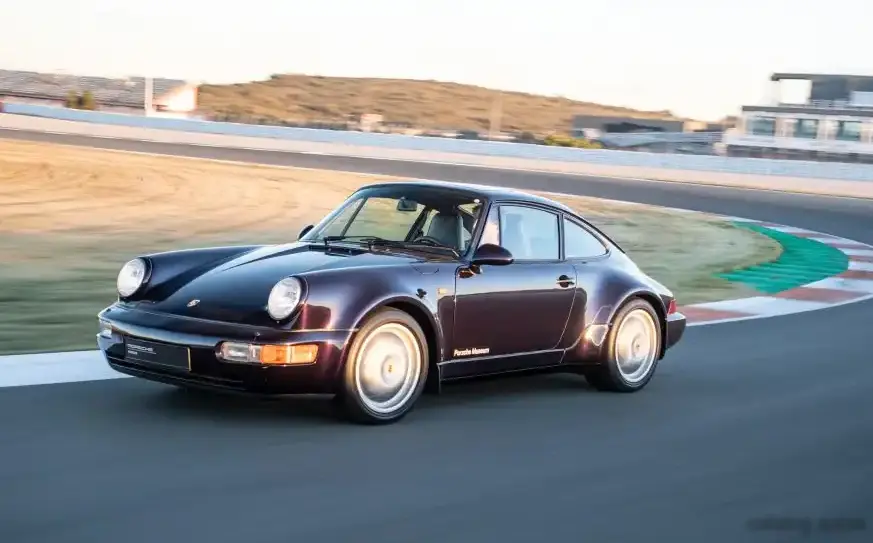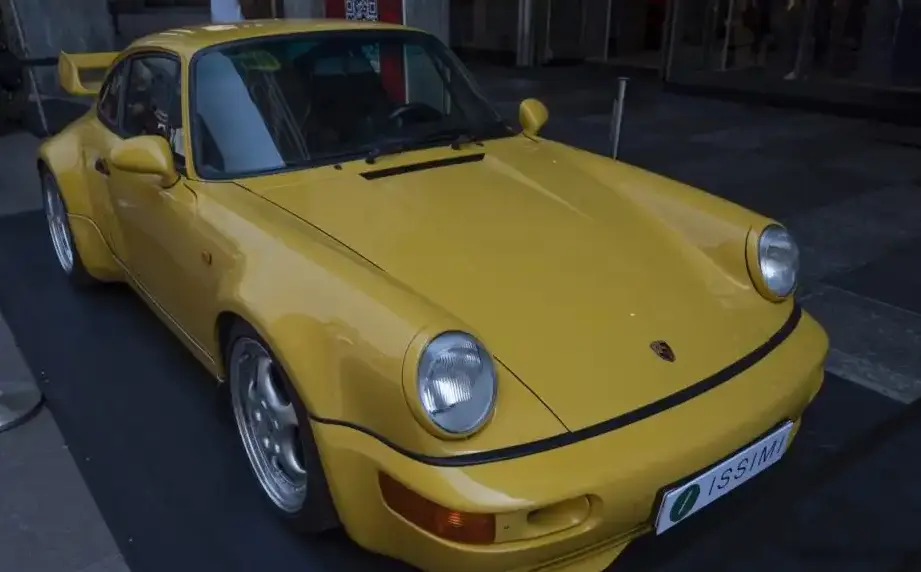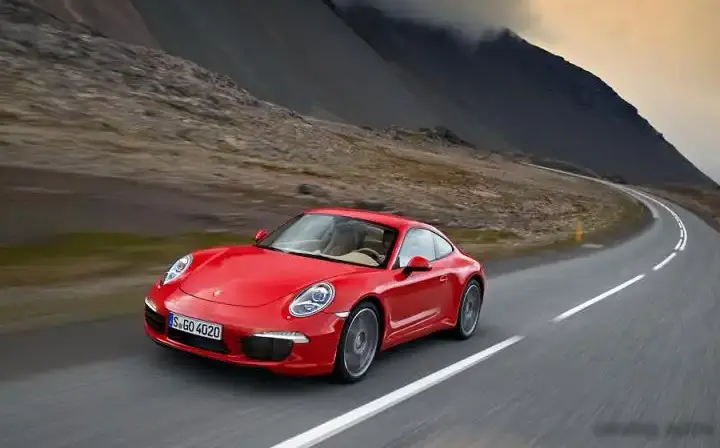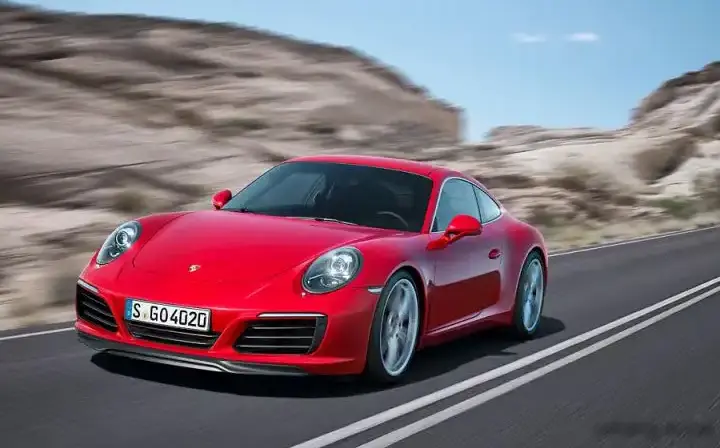
The Porsche 911 Carrera S 3.0, produced from 2015 to 2018, represents a significant evolution within the 991.2 generation of Porsche’s iconic sports car. This variant, distinguished by its twin-turbocharged 3.0-liter flat-six engine producing 420 horsepower, served as a performance-oriented mid-range offering within the 911 lineup, positioned above the base Carrera and below the more track-focused GTS models. The 991.2 series brought substantial updates over the initial 991, including the adoption of turbocharging across the Carrera range, improved aerodynamics, and a revised interior featuring Porsche’s Communication Management (PCM) system. The Carrera S 3.0 aimed to deliver a compelling blend of everyday usability and exhilarating performance, appealing to enthusiasts seeking a refined yet engaging driving experience.
Technical Specifications
| Brand | Porsche |
| Model | 911 |
| Generation | 911 (991 II) |
| Type (Engine) | Carrera S 3.0 (420 Hp) |
| Start of production | 2015 |
| End of production | 2018 |
| Powertrain Architecture | Internal Combustion engine |
| Body type | Coupe |
| Seats | 4 |
| Doors | 2 |
| Fuel consumption (economy) – urban | 12.2 l/100 km (19.3 US mpg, 23.2 UK mpg, 8.2 km/l) |
| Fuel consumption (economy) – extra urban | 6.6 l/100 km (35.6 US mpg, 42.8 UK mpg, 15.2 km/l) |
| Fuel consumption (economy) – combined | 8.7 l/100 km (27 US mpg, 32.5 UK mpg, 11.5 km/l) |
| CO2 emissions | 199 g/km |
| Fuel Type | Petrol (Gasoline) |
| Acceleration 0 – 100 km/h | 4.3 sec |
| Acceleration 0 – 62 mph | 4.3 sec |
| Acceleration 0 – 60 mph | 4.1 sec |
| Maximum speed | 308 km/h (191.38 mph) |
| Emission standard | Euro 6 |
| Weight-to-power ratio | 3.4 kg/Hp, 291.7 Hp/tonne |
| Weight-to-torque ratio | 2.9 kg/Nm, 347.2 Nm/tonne |
| Power | 420 Hp @ 6500 rpm |
| Power per litre | 140.9 Hp/l |
| Torque | 500 Nm @ 1700-5000 rpm (368.78 lb.-ft. @ 1700-5000 rpm) |
| Engine layout | Rear, Longitudinal |
| Engine Model/Code | MA2.01, MA2.02 |
| Engine displacement | 2981 cm3 (181.91 cu. in.) |
| Number of cylinders | 6 |
| Engine configuration | Boxer |
| Cylinder Bore | 91 mm (3.58 in.) |
| Piston Stroke | 76.4 mm (3.01 in.) |
| Compression ratio | 10:1 |
| Number of valves per cylinder | 4 |
| Fuel injection system | Direct injection |
| Engine aspiration | BiTurbo, Intercooler |
| Engine oil capacity | 8 l (8.45 US qt | 7.04 UK qt) |
| Coolant | 28.3 l (29.9 US qt | 24.9 UK qt) |
| Kerb Weight | 1440 kg (3174.66 lbs.) |
| Max. weight | 1900 kg (4188.78 lbs.) |
| Max load | 460 kg (1014.13 lbs.) |
| Trunk (boot) space – minimum | 145 l (5.12 cu. ft.) |
| Trunk (boot) space – maximum | 260 l (9.18 cu. ft.) |
| Fuel tank capacity | 64 l (16.91 US gal | 14.08 UK gal) |
| Length | 4499 mm (177.13 in.) |
| Width | 1808 mm (71.18 in.) |
| Width including mirrors | 1978 mm (77.87 in.) |
| Height | 1302 mm (51.26 in.) |
| Wheelbase | 2450 mm (96.46 in.) |
| Front track | 1543 mm (60.75 in.) |
| Rear (Back) track | 1518 mm (59.76 in.) |
| Drag coefficient (Cd) | 0.30 |
| Drivetrain Architecture | Rear wheel drive |
| Drive wheel | Rear wheel drive |
| Number of gears and type of gearbox | 7 gears, manual transmission |
| Front suspension | Independent type McPherson |
| Rear suspension | Independent multi-link suspension |
| Front brakes | Ventilated discs |
| Rear brakes | Ventilated discs |
| Assisting systems | ABS (Anti-lock braking system) |
| Steering type | Steering rack and pinion |
| Tires size | 245/35 ZR 20; 305/30 ZR 20 |
| Wheel rims size | 8.5J x 20; 11.5J x 20 |
Powertrain & Engine Architecture
The heart of the 911 Carrera S 3.0 is the MA2.01 or MA2.02 engine, a 2.981-liter twin-turbocharged flat-six. This engine represents a departure from the naturally aspirated engines previously used in the Carrera S, embracing forced induction to deliver increased power and torque. The twin-turbocharger setup utilizes two BorgWarner turbochargers, one for each bank of cylinders, minimizing turbo lag and providing a broad torque curve. Direct fuel injection is employed, optimizing combustion efficiency and contributing to improved fuel economy. The engine boasts a compression ratio of 10:1 and features four valves per cylinder. The standard transmission for this model was a seven-speed manual, though an optional seven-speed Porsche Doppelkupplung (PDK) dual-clutch automatic transmission was also available. The PDK transmission offered incredibly fast and smooth gear changes, enhancing both acceleration and driving enjoyment.
Driving Characteristics
The 911 Carrera S 3.0 delivers a markedly different driving experience compared to its naturally aspirated predecessor. The twin-turbochargers provide a surge of torque from as low as 1700 rpm, resulting in strong acceleration in any gear. While the initial response might not be as immediate as a naturally aspirated engine, the readily available torque makes overtaking and highway cruising effortless. The 0-60 mph sprint takes approximately 4.1 seconds, and the car can reach a top speed of 191 mph. The standard sport suspension and precise steering contribute to a confident and engaging driving experience. Compared to the base Carrera, the S model benefits from larger brakes and a more aggressive suspension tune, further enhancing its performance capabilities. The optional PDK transmission allows for quicker acceleration and more consistent lap times, but some purists prefer the engagement of the manual gearbox.
Equipment & Trim Levels
The Carrera S 3.0 came standard with a comprehensive list of features, including a leather interior, bi-xenon headlights, Porsche Stability Management (PSM), and a basic PCM infotainment system. Optional extras were plentiful, allowing buyers to personalize their vehicles. Popular options included adaptive sport seats, a sport exhaust system, Porsche Dynamic Lighting System (PDLS), and various interior trim packages. The interior design of the 991.2 featured a revised dashboard layout with a larger touchscreen display for the PCM system, offering improved functionality and connectivity. Upholstery options ranged from standard leather to more luxurious Alcantara and leather combinations.
Chassis & Braking
The 911 Carrera S 3.0 utilizes a lightweight chassis construction, incorporating aluminum and high-strength steel to minimize weight and maximize rigidity. The suspension system features independent McPherson struts at the front and a multi-link setup at the rear. The S model benefits from a slightly stiffer suspension tune compared to the base Carrera, providing improved handling and reduced body roll. Braking duties are handled by ventilated discs on all four wheels, providing ample stopping power. The Carrera S also features Porsche’s Ceramic Composite Brakes (PCCB) as an optional upgrade, offering even greater braking performance and fade resistance.
Market Reception & Comparison
The 911 Carrera S 3.0 was generally well-received by automotive critics, who praised its performance, handling, and refined driving experience. The adoption of turbocharging was initially met with some skepticism from traditional Porsche enthusiasts, but the engine’s impressive power and torque delivery ultimately won over many. Compared to the base Carrera, the S model offered a significant performance upgrade, justifying its higher price tag. Against competitors such as the Audi R8 and Mercedes-AMG GT, the 911 Carrera S 3.0 stood out for its unique combination of everyday usability and track-worthy performance. Fuel economy was respectable for a sports car of this caliber, averaging around 27 mpg in combined driving.
Legacy
The 911 Carrera S 3.0 represents a pivotal moment in the 911’s history, marking the transition to turbocharged engines across the Carrera range. The MA2 engine proved to be a reliable and durable powerplant, and well-maintained examples continue to provide exhilarating performance today. On the used car market, the 991.2 Carrera S 3.0 commands a premium over earlier 991 models, reflecting its improved performance and modern features. Its blend of performance, luxury, and everyday usability has cemented its place as a desirable and collectible Porsche.