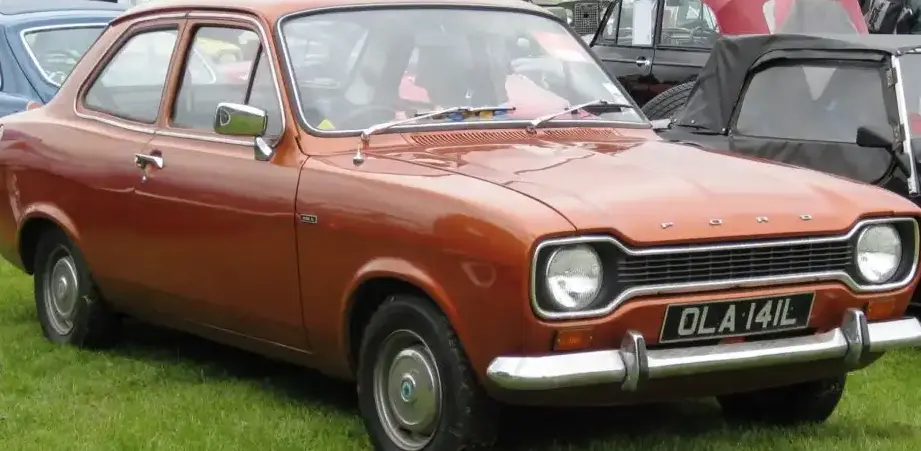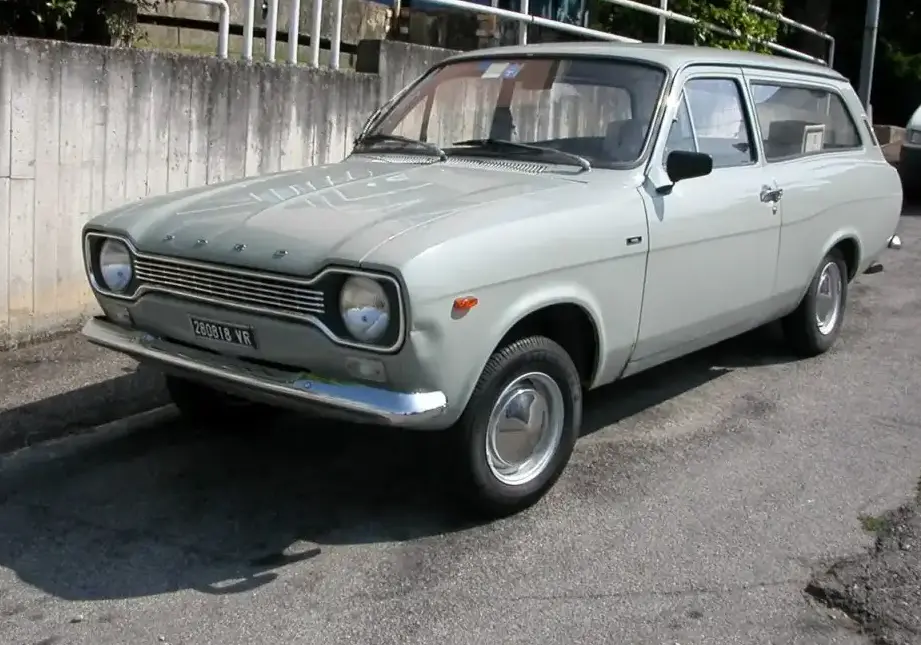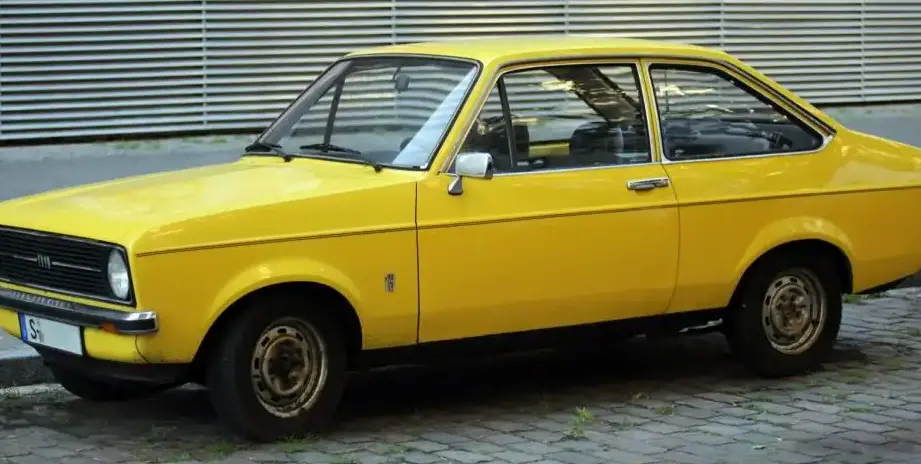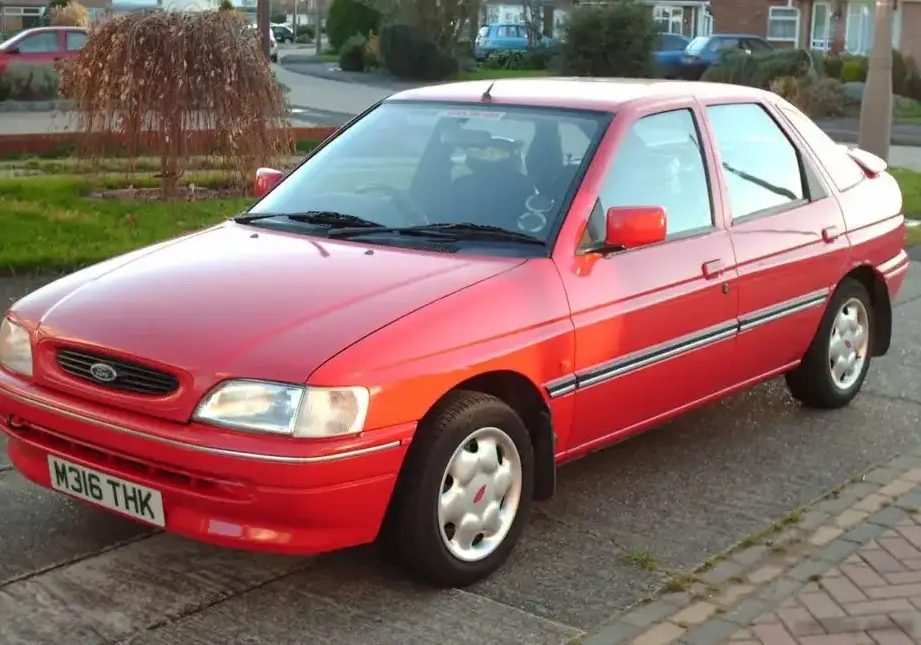
The Ford Escort VI Hatch 1.8 D, produced between 1993 and 1995, represented a budget-oriented offering within the broader Escort Mark VI (GAL) range. Positioned as an entry-level diesel variant, it catered to buyers prioritizing fuel economy and practicality over outright performance. This model played a significant role in the European market, where diesel engines were increasingly popular due to favorable taxation and fuel costs. The 1.8 D utilized Ford’s established diesel technology, offering a durable, if somewhat unrefined, driving experience. It was available in both 3-door and 5-door body styles, appealing to a wide range of customers.
Technical Specifications
| Brand | Ford |
| Model | Escort |
| Generation | Escort VI Hatch (GAL) |
| Type (Engine) | 1.8 D (60 Hp) |
| Start of production | 1993 |
| End of production | 1995 |
| Powertrain Architecture | Internal Combustion engine |
| Body type | Hatchback |
| Seats | 5 |
| Doors | 3/5 |
| Fuel consumption (combined) | 5.6 l/100 km (42 US mpg, 50.4 UK mpg, 17.9 km/l) |
| Fuel Type | Diesel |
| Acceleration 0 – 100 km/h | 17.9 sec |
| Acceleration 0 – 62 mph | 17.9 sec |
| Acceleration 0 – 60 mph | 17 sec |
| Maximum speed | 153 km/h (95.07 mph) |
| Weight-to-power ratio | 18.3 kg/Hp, 54.8 Hp/tonne |
| Weight-to-torque ratio | 10 kg/Nm, 100.5 Nm/tonne |
| Power | 60 Hp @ 4800 rpm |
| Power per litre | 34.2 Hp/l |
| Torque | 110 Nm @ 2500 rpm (81.13 lb.-ft. @ 2500 rpm) |
| Engine layout | Front, Transverse |
| Engine Model/Code | RTE, RTF, RTH |
| Engine displacement | 1753 cm3 (106.97 cu. in.) |
| Number of cylinders | 4 |
| Engine configuration | Inline |
| Cylinder Bore | 82.5 mm (3.25 in.) |
| Piston Stroke | 82 mm (3.23 in.) |
| Compression ratio | 21.5:1 |
| Number of valves per cylinder | 2 |
| Fuel injection system | Precombustion chamber injection |
| Engine aspiration | Naturally aspirated engine |
| Valvetrain | OHC |
| Engine oil capacity | 5 l (5.28 US qt | 4.4 UK qt) |
| Coolant | 9.3 l (9.83 US qt | 8.18 UK qt) |
| Kerb Weight | 1095 kg (2414.06 lbs.) |
| Max. weight | 1600 kg (3527.4 lbs.) |
| Max load | 505 kg (1113.33 lbs.) |
| Trunk (boot) space – minimum | 380 l (13.42 cu. ft.) |
| Trunk (boot) space – maximum | 735 l (25.96 cu. ft.) |
| Fuel tank capacity | 55 l (14.53 US gal | 12.1 UK gal) |
| Length | 4104 mm (161.57 in.) |
| Width | 1696 mm (66.77 in.) |
| Height | 1397 mm (55 in.) |
| Wheelbase | 2525 mm (99.41 in.) |
| Front track | 1440 mm (56.69 in.) |
| Rear (Back) track | 1462 mm (57.56 in.) |
| Drivetrain Architecture | The Internal combustion engine (ICE) drives the front wheels of the vehicle. |
| Drive wheel | Front wheel drive |
| Number of gears and type of gearbox | 5 gears, manual transmission |
| Front suspension | Wishbone |
| Rear suspension | Coil spring |
| Front brakes | Ventilated discs |
| Rear brakes | Drum |
| Assisting systems | ABS (Anti-lock braking system) |
| Steering type | Steering rack and pinion |
| Power steering | Hydraulic Steering |
| Tires size | 175/70 R13 |
Powertrain & Engine Architecture
The heart of the Escort VI 1.8 D was the Ford RTE, RTF, or RTH diesel engine. This 1.8-liter inline-four cylinder engine utilized precombustion chamber injection, a common diesel technology of the era. This system involved injecting fuel into a precombustion chamber connected to the main cylinder, promoting more complete combustion. The engine featured an overhead camshaft (OHC) valvetrain operating two valves per cylinder. The 60 horsepower output at 4800 rpm and 110 Nm (81.13 lb-ft) of torque at 2500 rpm were modest, but typical for a diesel engine of this displacement and age. The engine’s durability was a key selling point, though it lacked the refinement of more modern diesel designs. The manual transmission was a standard 5-speed unit, chosen for its simplicity and efficiency.
Driving Characteristics
The driving experience in the 1.8 D Escort was characterized by its economy-focused nature. Acceleration was slow, with a 0-60 mph time of around 17 seconds. The engine required frequent gear changes to maintain momentum, especially when climbing hills or overtaking. The 5-speed manual transmission helped to keep the engine within its optimal operating range, but the overall performance was significantly lower than that of the gasoline-powered Escort variants, such as the 1.6 or 1.8 models. Compared to the later 1.9 TDI versions, the 1.8 D felt noticeably less powerful and more agricultural in its operation. However, the diesel engine offered superior fuel economy, making it a popular choice for high-mileage drivers.
Equipment & Trim Levels
The 1.8 D Escort typically came with a basic level of equipment. Standard features included power steering, a basic stereo, and cloth upholstery. Trim levels were relatively limited, with the focus being on affordability. Options included a sunroof, upgraded stereo systems, and central locking. Interior appointments were functional rather than luxurious, with hard-wearing plastics dominating the cabin. The dashboard layout was straightforward and easy to use, prioritizing practicality over aesthetics.
Chassis & Braking
The Escort VI 1.8 D utilized a relatively simple chassis design. Front suspension consisted of wishbones, while the rear employed a coil spring setup. Braking was provided by ventilated discs at the front and drum brakes at the rear. ABS (Anti-lock Braking System) was often included as standard equipment, enhancing safety. The suspension was tuned for comfort rather than sporty handling, providing a reasonably compliant ride on most road surfaces. The relatively light weight of the vehicle (around 1095 kg or 2414 lbs) helped to mitigate the effects of the low engine power.
Market Reception & Comparison
The Escort VI 1.8 D was generally well-received as a practical and economical choice. Critics praised its fuel efficiency and durability, but noted its lack of performance and refinement. Compared to the gasoline-powered Escort models, the 1.8 D offered significantly better fuel economy but considerably slower acceleration. The later introduction of the 1.9 TDI diesel engine provided a more powerful and refined alternative, gradually diminishing the appeal of the 1.8 D. However, the 1.8 D remained a popular choice for budget-conscious buyers and those covering high annual mileages.
Legacy
The Ford Escort VI 1.8 D powertrain, while not particularly groundbreaking, proved to be remarkably durable. Many examples remain on the road today, testament to the engine’s robust construction. In the used car market, these Escorts are valued for their simplicity and affordability. Maintenance is relatively straightforward, and parts are generally readily available. However, potential buyers should be aware of the typical wear and tear associated with older diesel engines, such as injector issues and turbocharger wear (if equipped). The 1.8 D Escort represents a practical and reliable workhorse from a bygone era of automotive engineering.