
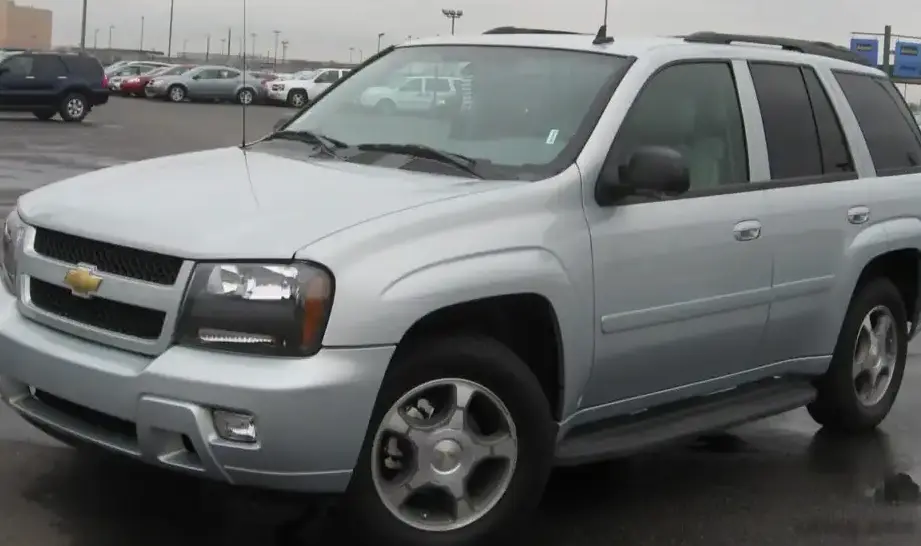
The Chevrolet Trailblazer I, specifically the 5.3i V8 2WD variant producing 288 horsepower, was a full-size SUV manufactured by General Motors from 2002 to 2004. Positioned as a more luxurious and refined alternative to the mechanically similar GMC Envoy, the Trailblazer aimed to capture a segment of the SUV market seeking a blend of capability, comfort, and V8 power. It was built on the GMT800 platform, shared with the Envoy, Oldsmobile Bravada, and Buick Rainier, and represented Chevrolet’s entry into the increasingly popular mid-to-full size SUV class. This particular 5.3L V8/2WD configuration occupied a mid-range position within the Trailblazer lineup, offering a step up in performance from the base 4.2L inline-six engine, while remaining more accessible than the available four-wheel drive models.
Technical Specifications
| Brand | Chevrolet |
| Model | Trailblazer |
| Generation | Trailblazer I |
| Type (Engine) | 5.3 i V8 2WD (288 Hp) |
| Start of production | 2002 |
| End of production | 2004 |
| Powertrain Architecture | Internal Combustion engine |
| Body type | SUV |
| Seats | 5 |
| Doors | 5 |
| Fuel Type | Petrol (Gasoline) |
| Maximum speed | 175 km/h (108.74 mph) |
| Power | 288 Hp @ 5200 rpm |
| Power per litre | 54.1 Hp/l |
| Torque | 440 Nm @ 4400 rpm (324.53 lb.-ft. @ 4400 rpm) |
| Engine layout | Front, Longitudinal |
| Engine Model/Code | LM4 |
| Engine displacement | 5327 cm3 (325.07 cu. in.) |
| Number of cylinders | 8 |
| Engine configuration | V-engine |
| Cylinder Bore | 96 mm (3.78 in.) |
| Piston Stroke | 92 mm (3.62 in.) |
| Compression ratio | 9.5:1 |
| Number of valves per cylinder | 2 |
| Fuel injection system | Multi-port manifold injection |
| Engine aspiration | Naturally aspirated engine |
| Engine oil capacity | 5.7 l (6.02 US qt | 5.02 UK qt) |
| Coolant | 11.6 l (12.26 US qt | 10.21 UK qt) |
| Max. weight | 2813 kg (6201.6 lbs.) |
| Trunk (boot) space – minimum | 631 l (22.28 cu. ft.) |
| Trunk (boot) space – maximum | 2839 l (100.26 cu. ft.) |
| Fuel tank capacity | 96 l (25.36 US gal | 21.12 UK gal) |
| Length | 5279 mm (207.83 in.) |
| Width | 1894 mm (74.57 in.) |
| Height | 1957 mm (77.05 in.) |
| Wheelbase | 3277 mm (129.02 in.) |
| Front track | 1603 mm (63.11 in.) |
| Rear (Back) track | 1577 mm (62.09 in.) |
| Drivetrain Architecture | The Internal combustion engine (ICE) drives the rear wheels of the vehicle. |
| Drive wheel | Rear wheel drive |
| Number of gears and type of gearbox | 4 gears, automatic transmission |
| Front suspension | Double wishbone |
| Rear suspension | Coil spring |
| Front brakes | Ventilated discs |
| Rear brakes | Disc |
| Assisting systems | ABS (Anti-lock braking system) |
| Power steering | Hydraulic Steering |
| Tires size | 245/70 R16 |
Powertrain & Engine Architecture
The heart of the Trailblazer 5.3i 2WD is the LM4 5.3-liter (325 cubic inch) small-block V8 engine. This engine, a member of Chevrolet’s long-running and highly successful small-block family, featured a cast iron block with aluminum cylinder heads. It utilized a multi-port fuel injection system, delivering fuel to each cylinder individually for optimized combustion. The engine produced 288 horsepower at 5200 rpm and 324 lb-ft of torque at 4400 rpm. The 4L60E four-speed automatic transmission was the sole transmission option for this variant. This transmission was known for its durability and smooth shifting characteristics, though it wasn’t particularly fuel-efficient by modern standards. The engine’s longitudinal mounting and rear-wheel-drive configuration contributed to the Trailblazer’s truck-like feel and towing capacity.
Driving Characteristics
The 5.3L V8 provided ample power for everyday driving and towing. Acceleration was brisk, though not particularly sporty, with a 0-60 mph time estimated around 7.5 seconds. The 4L60E transmission offered relatively smooth shifts, but the wide gear ratios meant the engine often ran at higher rpm during highway cruising. Compared to the base 4.2L inline-six, the V8 offered a significantly more refined and powerful driving experience. However, it lacked the responsiveness of the later 5.3L engines with Active Fuel Management (cylinder deactivation). The rear-wheel-drive configuration provided a more traditional truck-like feel, and while capable, it didn’t offer the all-weather confidence of a four-wheel-drive system.
Equipment & Trim Levels
The Trailblazer 5.3i 2WD typically came standard with features such as air conditioning, power windows and locks, a CD player, and cloth upholstery. Leather upholstery, heated seats, a sunroof, and a premium sound system were available as options. The interior design was functional and straightforward, prioritizing practicality over luxury. Trim levels varied slightly depending on the year, but generally included base models and more upscale LT trims. The LT trim added features like alloy wheels, upgraded interior trim, and additional convenience items.
Chassis & Braking
The Trailblazer I utilized a body-on-frame construction, providing a robust and durable chassis. The front suspension featured an independent double wishbone design, while the rear suspension employed a coil-spring setup. This configuration offered a comfortable ride, but handling was somewhat compromised due to the vehicle’s high center of gravity and substantial weight. Braking duties were handled by ventilated discs at the front and solid discs at the rear. Anti-lock brakes (ABS) were standard, providing enhanced stopping power and control. The rear-wheel-drive setup and relatively simple suspension design were geared towards maximizing towing capacity and off-road capability, rather than providing a sporty driving experience.
Market Reception & Comparison
The Trailblazer 5.3i 2WD was generally well-received by critics as a capable and comfortable SUV. It offered a compelling combination of power, space, and features at a competitive price point. However, some reviewers noted the vehicle’s relatively poor fuel economy and somewhat dated interior design. Compared to the four-wheel-drive Trailblazer models, the 2WD variant offered a lower price and slightly better fuel efficiency, but lacked the added traction and all-weather capability. Against competitors like the Ford Explorer and Jeep Grand Cherokee, the Trailblazer offered a more truck-like feel and a more powerful V8 engine, but often lagged behind in terms of refinement and handling.
Legacy
The Chevrolet Trailblazer I, particularly the 5.3L V8 variants, have developed a reputation for reliability and durability. The LM4 engine is known for its longevity, and the 4L60E transmission, while not without its potential issues, is generally considered a robust unit. Today, these vehicles can be found in the used car market at relatively affordable prices. They remain popular choices for those seeking a capable and reliable SUV for towing, hauling, or simply everyday transportation. However, potential buyers should be aware of the vehicle’s age and potential maintenance needs, such as worn suspension components and potential oil leaks. Despite its age, the Trailblazer 5.3i 2WD remains a testament to Chevrolet’s commitment to building durable and capable vehicles.
